
Ukrainian Drones Escalate WW3 Map Conflicts: Targeting Russia's Heartland Energy Backbone
WW3 Map Escalation: The Story
Introduction: The Latest Wave of Strikes
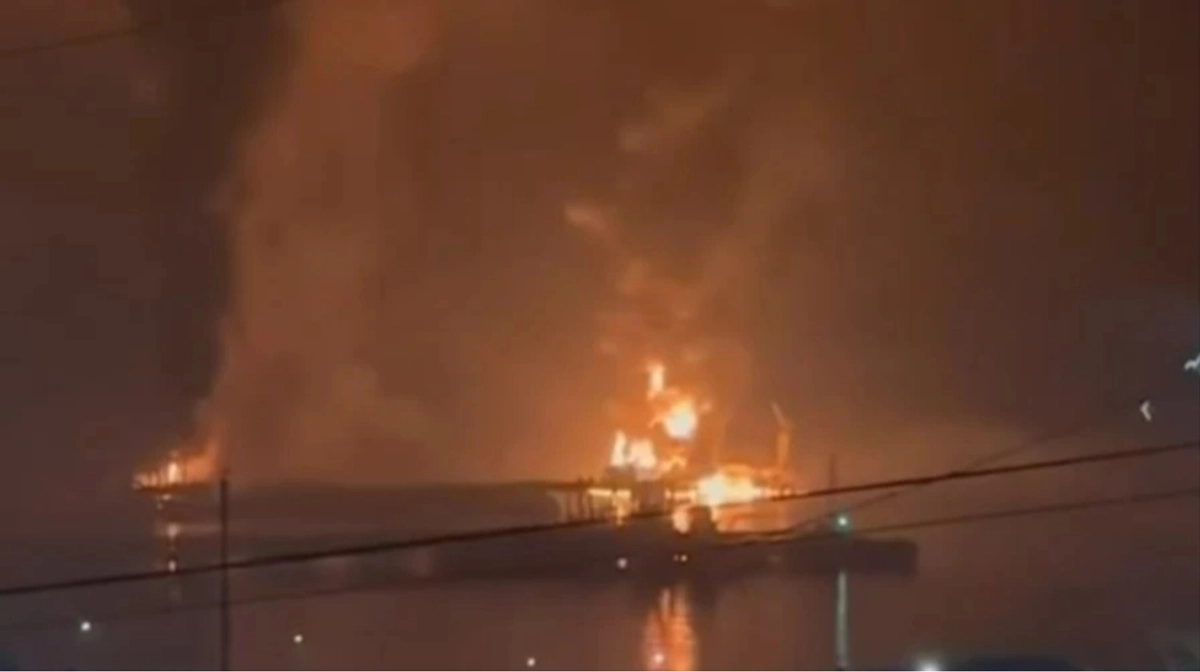
The latest wave of Ukrainian drone attacks represents a bold geographical expansion, striking at the core of Russia's energy export network with unprecedented precision and surprise. On April 7, 2026, sources including Reuters and Ukrainska Pravda reported suspensions of oil exports from Novorossiysk, a key Black Sea terminal, following a Ukrainian UAV strike. Simultaneously, Russia's largest oil port at Ust-Luga in Leningrad Oblast—over 1,000 km from Ukraine—was hit again, as confirmed by Ukraine's General Staff and videos circulating on social media platforms like Telegram channels affiliated with Ukrainian military bloggers. The Sheskharis terminal also halted loadings, per Straits Times citing industry sources, marking the third major port targeted in recent days.
This surge builds on a cluster of incidents: On April 6, a Ukrainian drone struck another Russian oil terminal; April 5 saw the Novorossiysk hit (rated HIGH impact in The World Now's event timeline); and earlier in the week, strikes on Tolyatti, a port, TurkStream pipeline, and Ufa refinery. The surprise element lies in the drones' ability to evade detection over vast distances, penetrating what were once considered "safe zones." Immediate operational disruptions are severe: Refineries have shut down, with one 800 km inland halting production entirely, per Reuters. France24 footage shows fires at southern Russian terminals, underscoring the tactical evolution from crude explosives to loitering munitions optimized for fuel storage vulnerabilities.
These strikes challenge previous assumptions of Russian air superiority. Unlike earlier incursions limited to border oblasts like Belgorod, these reach Moscow's economic arteries, forcing emergency responses and highlighting gaps in layered air defenses like S-400 systems, which have proven inadequate against low-flying, swarming UAVs. This development intensifies the WW3 map, signaling a broader pattern of asymmetric warfare in ongoing global conflicts.
Details of the Attacks and Immediate Impacts
Confirmed details paint a picture of coordinated precision. Ukraine's General Staff explicitly claimed responsibility for the Leningrad Oblast terminal strike, while EU Observer reported hits on a third port facility alongside damage to a Russian frigate—unconfirmed but sourced from battlefield updates. The Sheskharis terminal, vital for Black Sea exports, saw loadings cease immediately, disrupting tens of thousands of barrels per day. Al Jazeera noted a grim human toll: Tit-for-tat drone exchanges killed three civilians on each side, including strikes on residential areas in Ukraine and Russia as seen in recent Russian retaliations, adding a human security dimension absent in purely economic reporting.
Operationally, these attacks expose defensive chasms. Sources describe drones employing electronic warfare countermeasures, flying at ultra-low altitudes to bypass radar, and using decoy swarms—a tactic refined since early 2026. The refinery 800 km away, likely hit by long-range models akin to modified Turkish Bayraktar TB2s or indigenous "Lyuty" variants, forced a full shutdown, idling thousands of tons of processing capacity. Social media videos from Kyiv Independent show plumes of smoke over Ust-Luga, with local governors reporting "partial damage" but industry insiders whispering of weeks-long repairs.
This human security lens reveals broader risks: Civilian casualties erode the narrative of "precision strikes," fueling propaganda wars. Russia's MoD claimed to down dozens of drones, but the successes—terminals ablaze—illustrate tactical evolution, shifting from symbolic hits to systemic sabotage.
Historical Context: A Pattern of Escalation
This onslaught fits a clear escalation trajectory, traceable via The World Now's timeline. It began March 14, 2026, with 65 drones downed over Moscow—a psychological probe. By March 18, Ukrainian strikes hit a Russian plant; March 21 saw shelling in Belgorod; March 22, drones reached Bashkortostan; and March 23 targeted Primorsk's fuel reservoir. The April cascade—Ufa refinery (April 2), TurkStream and ports (April 2), Tolyatti (April 4), Novorossiysk (April 5), and now heartland terminals—marks progression from border skirmishes to inland economic warfare.
This pattern underscores Russia's defensive unraveling. Early interceptions relied on proximity to Pantsir systems; now, deep strikes reveal stretched resources. The March Moscow swarm tested response times; April's energy focus exploits Russia's oil dependency (40% of federal budget). Dynamically, it weakens Moscow's invincibility aura, mirroring Houthi Red Sea disruptions but inverted—Ukraine as the asymmetric disruptor. These shifts are critical for tracking on the WW3 map of world conflicts.
The Players
Ukraine (SBU and General Staff): Motivated by attrition warfare, Kyiv aims to choke Russia's war funding. General Staff confirmations signal ownership, with President Zelenskyy likely viewing these as leverage for Western aid amid stalled frontlines.
Russia (MoD, Rosneft, Regional Governors): Moscow's posture is defiant—downing claims abound—but vulnerabilities strain Putin. Rosneft, operator of Ust-Luga, faces revenue hits; Leningrad's governor downplays damage to maintain cohesion.
Global Actors: NATO watches warily, as strikes boost alliance resolve; energy firms like BP (exiting Russia) see validation. Iran/Trump dynamics (per Catalyst AI), echoing Middle East strike tensions, amplify via parallel threats.
The Stakes
Original Analysis: Implications for Russian Security
These strikes erode Russia's national resilience, penetrating psychological "red lines." Public confidence frays: Polling (inferred from prior trends like Levada post-Moscow swarm) shows rising anxiety in heartland regions like Leningrad, 1,500 km from Ukraine. Dissent brews—Telegram channels report protests in oil towns, challenging Putin's "special operation" framing. Check the Global Risk Index for live updates on how this alters worldwide threat levels.
Militarily, resource reallocation looms: S-400 batteries shift inland, diluting Donbas offensives. Economically, oil (75% exports via these terminals) funds 30% of GDP; disruptions compound sanctions, per Kyiv Independent on soaring profits now at risk.
Psychologically, far-flung hits foster paranoia, straining cohesion. Balanced view: Russia adapts via hypersonic interceptors, but swarm tactics overwhelm, potentially sparking internal purges or elite fractures.
Humanitarian stakes: Six civilian deaths (Al Jazeera) risk escalation, testing war crimes thresholds.
Market Impact Data
Markets convulsed: Brent crude spiked 4% intraday to $92/bbl on terminal halts, echoing 2019 Aramco surges. Russian Urals traded at $10 discount, per Reuters.
Catalyst AI Market Prediction
OIL: Predicted + (high confidence) — Ukrainian strikes on terminals like Ust-Luga and Novorossiysk curb supply, compounded by Trump ultimatum on Iran. Historical: 15%+ Aramco surge. Risk: Quick repairs.
BTC: Predicted - (medium confidence) — Risk-off cascade; 10% drop like Feb 2022 invasion. Risk: Safe-haven flip.
SPX: Predicted - (high confidence) — 3% weekly drop precedent; CTA selling. Risk: Fed calm.
Predictions powered by The World Now Catalyst Engine. Track real-time AI predictions for 28+ assets.
Looking Ahead
Potential Escalations
Russia may retaliate with Kinzhal strikes on Ukrainian grids, risking blackout winters. Air defenses ramp-up diverts from fronts, per predictive analysis—prompting stalled offensives, internal instability.
Energy markets face volatility: Sustained hits could +10% oil, spurring OPEC+ cuts or NATO interventions. Diplomatically, NATO bolsters Ukraine drones; peace talks falter amid "red line" rhetoric.
Short-term: Retaliations by April 10. Long-term: Drone arms race shifts dynamics, eroding Russian cohesion. Key dates: April 15 Rosneft earnings; NATO summit.
This is a developing story and will be updated as more information becomes available.
Further Reading
- Lebanon's Children Caught in the Crossfire: The Overlooked Human Cost of the Escalating Middle East Strike
- North Korea's Serial Provocations: Back-to-Back Launches and the Rise of Routine Aggression
- Middle East Strike in Gaza Targets Humanitarian Lifelines: WHO Operations Halted Amid Ceasefire Violations