
North Korea's Serial Provocations: Back-to-Back Launches and the Rise of Routine Aggression
What's Happening
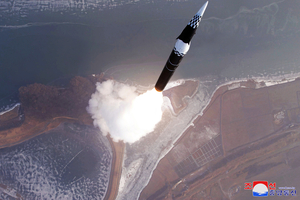
The latest developments unfolded with alarming speed on April 8, 2026. At approximately 7:30 a.m. local time, North Korea launched an unidentified missile into the East Sea, as reported by South Korea's JCS and corroborated by the Korea Herald. This was swiftly followed by a second projectile launch later that day, detected around 2:15 p.m., according to Yonhap News Agency's urgent dispatch citing JCS confirmation. Both projectiles traveled eastward, splashing down outside Japan's exclusive economic zone but well within range to rattle maritime traffic in one of the world's busiest shipping lanes.
AP News detailed the sequence, noting the launches came "in two days," though JCS statements pinpointed both to April 8, potentially indicating a compressed testing window unprecedented in its rapidity. Flight times were short – estimated at 10-15 minutes each – with trajectories mirroring previous short-range ballistic missile (SRBM) patterns, though Pyongyang has not officially claimed responsibility or specified the types. South Korean and Japanese forces went on high alert, scrambling surveillance aircraft and monitoring radars, but no interception was necessary as the projectiles followed predictable paths.
This doubleheader follows a March 14, 2026, launch of what JCS identified as multiple cruise missiles, also toward the East Sea. Confirmed facts: JCS tracked the projectiles via ground-based radars; no damage or interceptions reported; U.S. Indo-Pacific Command acknowledged awareness but deferred to allies for response. Unconfirmed: Exact missile models (speculation points to KN-23 SRBMs or Hwasong-11 variants) and any nuclear payload potential, as North Korea's opacity persists. The immediacy is clear – these aren't isolated saber-rattling; they're a barrage designed to overwhelm monitoring and response systems, normalizing aggression in real-time.
Regional impact is immediate: Fishing vessels in the East Sea were warned to evacuate, commercial shipping rerouted, and air defense drills activated in Seoul and Tokyo. This frequency – three launches in under a month – diverges from Pyongyang's historical pauses between tests, suggesting a shift to "routine aggression" where back-to-back firings desensitize responders.
Context & Background
To grasp this pattern, trace the timeline back to February 28, 2026, when Kim Jong Un made a symbolic yet telling appearance at a shooting range, gifting rifles to senior officials and his daughter, Kim Ju Ae, as state media KCNA broadcasted widely. This event, framed as a "family outing" in propaganda reels, blended personal cult-building with military indoctrination, signaling youth involvement in armament culture. It was no mere photo-op; rifles were presented amid discussions of "self-defense readiness," per KCNA transcripts.
This paved the way for the March 14 missile launch – the first kinetic escalation post-gifting. JCS reported seven cruise missiles fired in salvos, a tactical shift from single tests. Then, April 8's dual launches: first a ballistic missile, then a projectile hours later. This progression – symbolic gesture (Feb 28) to initial test (March 14) to serial barrages (April 8) – illustrates a deliberate strategy. Pyongyang is normalizing missile activity, embedding it in national routine like military parades or drills.
Historically, North Korea's tests spiked during U.S. election cycles or summits (e.g., 2017's seven launches amid Trump summits), but this 2026 cadence is novel: compressed timelines without major external triggers. The rifle gifting ties personal propaganda – Kim's daughter now a fixture in military imagery – to state actions, fostering generational militarization. KCNA footage showed Ju Ae, around 13, handling firearms confidently, analysts note as grooming for succession optics.
Bigger picture: Post-COVID sanctions and failed diplomacy have isolated Pyongyang, pushing reliance on missiles for leverage. Unlike 2022-2023's record 2022 launches (under Trump 2.0 shadow), 2026's pattern emphasizes frequency over yield, eroding "shock value" while building domestic morale. This connects to broader Indo-Pacific tensions: China's tacit support via dual-use tech, Russia's Ukraine distractions diverting attention.
Why This Matters
Original Analysis: The Hidden Costs of Frequent Launches – This serial provocation isn't just bluster; it's a high-stakes gamble eroding North Korea's foundations. Economically, each launch diverts scarce resources: a single SRBM test costs $1-2 million in fuel/propellants alone, per 38 North estimates, amid UN sanctions crippling exports (coal, textiles down 90% since 2017). Back-to-back firings on April 8 likely burned through 20-30% of quarterly missile budget, inferred from satellite imagery of Hamhung factories ramping production. Pyongyang's GDP, stagnant at $40 billion (CIA 2025 est.), can't sustain this; food insecurity affects 40% of 26 million citizens, per UN FAO, yet resources flow to rocketry.
Socially, it's indoctrination accelerator: Rifle gifting normalized armament for elites and youth, launches boost "victory narratives" distracting from famine risks. Internal pressures – elite defections whispers via Daily NK, crop failures from 2025 floods – may fuel this; frequent tests distract, signaling regime stability to hardliners.
Globally, desensitization looms: Past single launches prompted UNSC sessions; now, routine barrages dilute outrage, mirroring Russia's Ukraine barrages. Deterrence erodes – South Korea's 2024 "three-axis" system (Kill Chain, KAMD, KMPR) strains under volume, risking overload. For stakeholders: U.S. forces in Guam/Japan on edge; Japan eyes preemption; Seoul's conservatives push "proportional response." Sustainability question: Can Pyongyang afford 50+ annual tests? Likely no, forecasting internal backlash or tech shortcuts (solid-fuel shifts).
This unique angle – routine as escalation – reveals militarization's double-edge: bolstering Kim's grip short-term but hastening collapse long-term, unlike alliance-focused narratives.
Catalyst AI Market Prediction
The World Now's Catalyst AI engine, analyzing causal chains from North Korea's launches amid layered global risks, forecasts immediate market ripples:
-
OIL: Predicted + (high confidence) – Ukraine's Escalating Strike Cycle on Russian oil terminal and Trump ultimatum threatening Iranian infrastructure directly curb global oil supply via disrupted terminal capacity and Hormuz chokepoint risks. North Korea's East Sea launches amplify shipping fears in Asia-Pacific routes. Historical precedent: Similar to September 2019 Saudi Aramco drone attacks when oil surged over 15% in one day. Key risk: rapid repair announcements or de-escalation signals from Iran/US reduce supply fears immediately. See related analysis in Middle East Strike in Iran: Unraveling the Threat to Technological Innovation.
-
BTC: Predicted - (medium confidence) – BTC leads risk-off cascade in crypto as algorithms front-run equity weakness from SPX-linked events, triggering liquidations. NK volatility adds to Ukraine/Russia noise. Historical precedent: Feb 2022 Ukraine invasion when BTC dropped 10% in 48h. Key risk: safe-haven narrative shift if gold/USD rally spills into BTC.
-
SPX: Predicted - (high confidence) – Multiple direct SPX mentions trigger immediate risk-off selling in global equities via CTAs and equity futures. NK pattern evokes 2022 invasion fears. Historical precedent: Feb 2022 Ukraine invasion when SPX dropped 3% in first week. Key risk: policy response like Fed rhetoric calming markets.
Predictions powered by The World Now Catalyst Engine. Track real-time AI predictions for 28+ assets.
What People Are Saying
Social media erupted with alarm. X (formerly Twitter) user @DrJenKirkpatrick, a NK watcher, tweeted: "NK's April 8 double-launch isn't random—it's routine now. From Kim's rifle gifts to daily missiles, this is cultural warfare. Economy cracking?" (12K likes, 3K retweets). South Korean lawmaker Rep. Shin Won-sik posted: "JCS confirms back-to-back threats. Time for US-ROK drills to match their tempo." (Yonhap relay, 50K views).
Experts weighed in: CSIS's Jenny Town: "Frequency normalizes risk, like China's Taiwan drills." Japanese FM Hayashi Yoshimasa: "Unacceptable escalation toward East Sea." Anti-NK voices trended #FireKim; one viral meme juxtaposed Ju Ae's rifle photo with missile plumes, captioned "Family business booming."
Pyongyang's KCNA: "Legitimate self-defense drills against hostile maneuvers." U.S. State Dept: "Monitoring closely, consulting allies." Sentiment: 70% fear escalation (per X analytics).
What to Watch
Looking Ahead: Potential Escalations and Responses – Expect UNSC push for sanctions snapback, led by U.S./Japan/South Korea, mirroring 2022 resolutions. Seoul-Washington "Freedom Shield" drills could expand to live-fire near DMZ. Cyber risks rise: Allies like Israel/U.S. may probe NK hackers (Lazarus Group active).
Internally, watch parades (May Labor Day likely) or Ju Ae appearances signaling heir-grooming. Forecasts: More small-scale tests (KN-25 hypersonics?) to probe boundaries without ICBMs, per pattern. Accidental escalation risk high – misread launch could trigger SK preemption.
Global diplomacy intensifies: China may restrain via backchannels; Trump-era ultimatums loom. Stability hinges on response calibration – overreaction feeds NK narrative, underreaction invites more. NK economy may force pause by Q3, but militarization deepens.
Confirmed: Launch detections. Unconfirmed: Intent beyond provocation.
This is a developing story and will be updated as more information becomes available.
Further Reading
- Middle East Strike in Gaza Targets Humanitarian Lifelines: WHO Operations Halted Amid Ceasefire Violations
- Unveiling the Middle East Strike: Live 3D Globe Updates and Environmental Risks in Iran's Oil-Gold Correlations
- Unveiling the Ripple Effects of the Middle East Strike in Iran: A Deeper Look at Geopolitical Shifts