
Yemeni Government Forces Retake Mocha and Bab el-Mandeb Positions From Houthis
Government Offensive in the Southwest
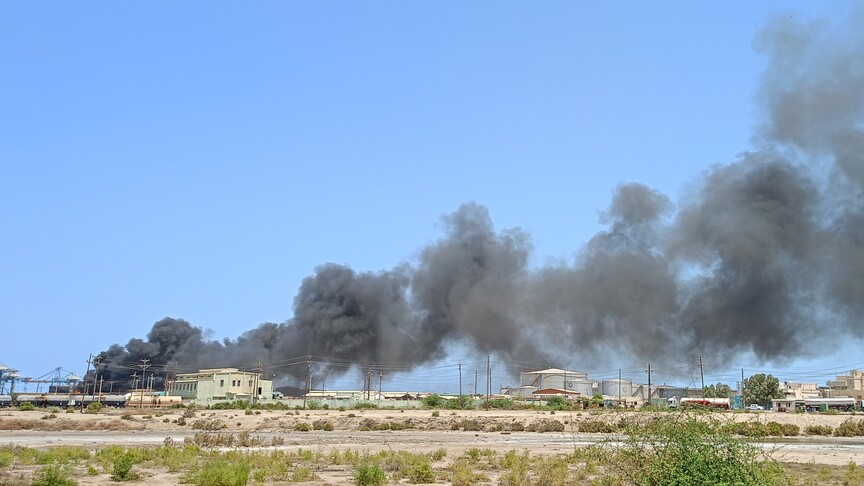
Yemeni government forces, supported by Saudi-led coalition air strikes, reached the outskirts of the port city of Mocha on Monday and announced that the city had fallen under their control. [4] [5] The advance allowed government troops to seize key positions in the Dhoubab district overlooking the Bab el-Mandeb strait, including an airstrip. [4] [5] A large part of Dhoubab district is now under army control thanks to massive aerial support from the Saudi-led coalition. [4] The Yemeni information minister stated that government forces captured the landing strip in Dhoubab. [4] Dhoubab lies on the western coast and contains a military base roughly thirty kilometres from the Bab el-Mandeb strait. [4] A government military source indicated that fighting continues in and around the base where the airstrip is located. [4] Government forces also took control of positions in the Bab el-Mandeb strait itself after Houthi fighters had advanced toward the strategic waterway the previous month. [4] [5] The rapid push forced Houthi fighters to withdraw toward inland mountainous areas. [5] Four government sources confirmed that the offensive formed part of broader efforts to retake coastal zones around the strait up to Mocha. [5]
Houthi Counterattacks on Saudi Arabia
Hours after the government advance, Houthi forces announced strikes on several Saudi targets. [4] [5] Houthi military spokesman Yahya Saree stated that the group had targeted King Khalid International Airport in Riyadh, the Aramco refinery at Rabigh, Abha International Airport and the Khamis Mushait military base. [5] Explosions were heard in Riyadh on Monday evening, with residents reporting windows shaking near the airport. [4] The Houthi strikes also hit other military and airport sites in southern Saudi Arabia. [4] [5] The group warned it would continue attacks on Saudi airspace. [5] These actions came in direct response to the government offensive near Mocha and the Bab el-Mandeb strait. [4]

Yemeni government forces retake Mocha and Bab el-Mandeb positions from Houthis with Saudi coalition support. — Source: gdelt
Allied Military Response and Coalition Strikes
Saudi Arabia, Turkey and Pakistan agreed at an emergency meeting in Riyadh on Monday to deploy military forces and capabilities to Saudi Arabia under the Mecca mutual defense pact. [4] [5] The three countries issued a joint statement condemning Houthi attempts to attack Mecca and Medina as well as ongoing strikes on Saudi cities and civilian infrastructure. [5] The Saudi-led coalition announced that its naval forces had carried out strikes in Hodeidah province, destroying weapons depots, facilities housing booby-trapped boats and mines while foiling a planned attack on southern Red Sea shipping lanes. [4] [5] Coalition spokesman Turki Al-Malki said the operation targeted military sites to protect the Bab el-Mandeb strait and support ground forces. [4] Saudi Arabia reported conducting hundreds of air strikes to provide cover for the strait and Yemeni ground troops. [5]
Houthi Advances Around Taiz
Houthi fighters recorded further gains near Taiz, seizing portions of a mountain road and damaging a drainage channel on the Taiz-Aden road, rendering it impassable. [5] The advances left government forces besieged inside Taiz, a city with a population exceeding half a million and a garrison of thousands of fighters. [5] Houthi forces also pushed into the al-Mawasit district of Taiz province and reached areas near the residence of Yemeni President Rashad al-Alimi. [5] A Houthi-controlled news agency cited a military source claiming government troops had been driven from the district. [5] One government source denied that the mountain road had been blocked. [5] Houthi fighters additionally advanced in al-Turbah on Sunday. [5] Government forces launched their own operation to seize Al-Wazi’iyah in Taiz as part of the Dawn of Yemen operations. [1]

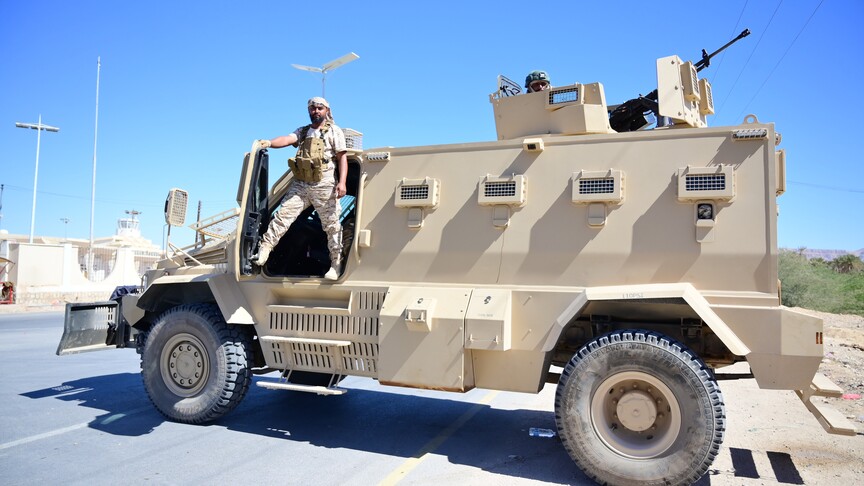
Yemeni government forces retake Bab el-Mandeb positions from Houthi rebels in Dhoubab district. — Source: gdelt
Humanitarian Impact and Displacement
Intense fighting has displaced more than 184,000 people in Yemen between 1 August and 4 October 2026, according to the International Organization for Migration Displacement Tracking Matrix. [2] [3] [5] The majority of displacements occurred since the beginning of September. [2] [3] During the week from 27 September to 3 October alone, the matrix recorded 21,798 people or 3,633 households displaced at least once, representing a 26 percent increase from the prior week. [2] [3] Renewed clashes have worsened Yemen’s humanitarian crisis in the poorest country in the Arab region. [5] Long queues formed at fuel stations in the al-Mudhaffar area on the edge of besieged Taiz as residents sought fuel and cooking gas. [5]
Political Statements and Context
Yemeni President Rashad al-Alimi vowed on Sunday to fight until the country is liberated from the grip of the terrorist militia. [5] The Yemeni defense minister confirmed that Mocha had fallen to government forces. [4] The information minister detailed the capture of the Dhoubab airstrip. [4] Government forces announced a strategic offensive on Sanaa to regain control of the capital from Houthi rebels. [4] Houthi authorities stated that government claims of gains were unfounded and reported that two people were killed and seven wounded in coalition strikes on Sanhan and Sa’wan districts in Sanaa province. [5] Houthi fighters have controlled Sanaa and many of Yemen’s most populous areas since 2014. [5]
What to watch next: Further Houthi strikes on Saudi targets and additional coalition naval operations in Hodeidah remain possible as both sides continue advances around Taiz and the Bab el-Mandeb strait.