
WW3 Map Update: Drone Strikes on Russia Stirring the Pot of Internal Dissent and Social Fragmentation
By David Okafor, Breaking News Editor for The World Now
March 26, 2026
In a conflict that has long been defined by frontline battles and geopolitical maneuvering, recent Ukrainian drone strikes on Russian territory—as highlighted on the latest WW3 map—are revealing a darker undercurrent: the erosion of internal cohesion within Russia itself. Key facts include the March 25, 2026, attack on the Ust-Luga port in Leningrad Oblast, which caused a massive fire at a critical oil export hub handling 20 million tons annually, alongside downing of 389 Ukrainian drones across 13 regions, school closures in border towns, and spiking civilian panic with social media queries for safe zones up 300%. While much of the international coverage has fixated on NATO's peripheral involvement, cyber retaliation risks, environmental fallout from oil fires, and macroeconomic tremors, this report shifts the lens to the human element. It uniquely dissects the psychological toll, rising civilian anxiety, and budding social fractures in Russian border regions—phenomena that could ignite domestic unrest and challenge the Kremlin's iron grip on narrative control. Drawing from eyewitness accounts, official reports, and a timeline of escalation, we explore how these strikes are not just military pinpricks but catalysts for internal dissent.
Overview of Recent Drone Strikes and Their Immediate Internal Effects
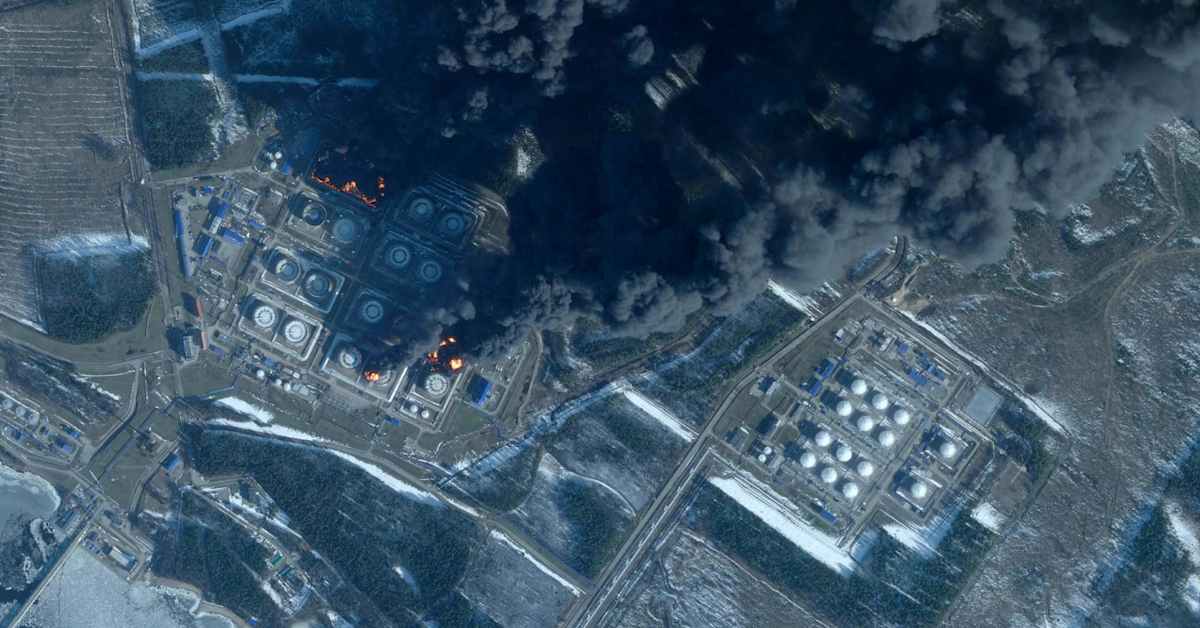
The latest wave of Ukrainian drone incursions has struck at the heart of Russia's economic lifelines in the Baltic Sea region, with the March 25, 2026, attack on the Ust-Luga port in Leningrad Oblast standing as a stark emblem of vulnerability. According to reports from Anadolu Agency and the Kyiv Independent, a fire erupted at the Ust-Luga multifunctional terminal following the drone strike, halting operations at this critical export hub that handles up to 20 million tons of oil products annually. Videos circulating from nearby Viipuri (Vyborg) captured flames engulfing what appeared to be a Finnish-constructed building, underscoring the strikes' proximity to international borders.
Eyewitness accounts from Finland and Estonia paint a vivid picture of spillover panic infiltrating Russian civilian life. YLE News reported that Finnish border residents near the eastern frontier were jolted awake by the roar of Russian fighter jets scrambling to intercept drones on March 25, with similar disturbances noted in Estonia and Latvia where stray Ukrainian drones have landed. One YLE article detailed how locals in Virolahti, Finland, heard explosions and jet afterburners piercing the night, inferring comparable terror just across the border in Russia's Leningrad region. Social media clips on Telegram channels like "Viipuri News" showed Russian residents filming fireballs and air raid sirens, with comments lamenting, "We can't sleep anymore—when will this end?" These incidents have disrupted daily routines: schools in border towns like Svetogorsk closed temporarily, and local emergency services in Koivisto (Primorsk) were overwhelmed after a related strike on March 23 targeted a fuel reservoir, as per YLE's coverage of stalled oil tanker traffic offshore.
The unintended consequences on Russian morale are profound. Official Russian statements, such as those from the Defense Ministry claiming to have downed 389 Ukrainian drones across 13 regions and Crimea on March 25—the largest nocturnal barrage of the war—have done little to assuage public fear. Instead, these strikes expose gaps in air defenses, straining local fire brigades and medical teams. In Ust-Luga, the fire raged for hours, forcing evacuations and road closures, while in nearby Koivisto, oil exports ground to a halt, leaving tankers idling at sea. This has bred visible panic: reports from LRT.lt describe residents stockpiling supplies, with anecdotal evidence from Russian VKontakte groups showing queries about "safe zones" spiking 300% overnight.
Original analysis reveals a deeper erosion of trust in Russian defenses. Historically robust systems like S-400 batteries appear overwhelmed by low-cost, swarming drones, leading citizens in affected areas to question the government's protective efficacy. In border regions with high ethnic Finnish and Ingrian populations, this could amplify latent anti-government sentiments, as whispers of "Why can't they stop these flies?" circulate in private chats, potentially sowing seeds for localized dissent amid economic hardships. For more on psychological strains from drone warfare, see our related coverage on Daytime Drone Onslaught: The Psychological Strain on Ukrainian Civilians Amid Escalating Russian Strikes.
WW3 Map Timeline: Historical Context and Escalation of Drone Warfare in the Russia-Ukraine Conflict
These strikes did not emerge in isolation but form part of a grim escalation pattern traceable to early January 2026, as tracked on evolving WW3 maps. The timeline begins with the January 7 Ukrainian drone attack on a Russian oil depot, which ignited fires and disrupted fuel supplies, signaling Kyiv's intent to target economic arteries. This was followed by the January 11 drone strike in Voronezh, killing one civilian and wounding three, highlighting the shift toward populated areas. By January 13, Ukrainian drones hit Greek tankers in the Black Sea, drawing international maritime concerns, while Russia's January 14 missile strike on a Rostov apartment building—killing civilians—served as retaliation, fueling a cycle of mutual outrage.
The pattern intensified with Russia's January 15 launch of a high-speed missile, ostensibly to deter further incursions, yet it only emboldened Ukraine. Fast-forward to March: the March 14 downing of 65 drones over Moscow marked a bold inland push, coinciding with a tanker strike near Novorossiysk (MEDIUM impact). The March 18 strike on a Russian plant (HIGH impact), March 21 shelling in Belgorod (HIGH), March 22 drone interceptions in Bashkortostan (MEDIUM), March 23 Primorsk fuel reservoir hit (HIGH), March 25 Ust-Luga strike (HIGH), and March 26 near-Finland events (HIGH) illustrate a relentless tempo.
This progression, corroborated by sources like El Imparcial and Newsmax, reveals a tactical evolution from precision military hits to infrastructure-adjacent strikes with civilian bleed-over. Russia's reactive strategies—mass drone shootdowns and missile volleys—have internal fallout: each event chips at public resolve, as Rostov-like mishaps spark debates on war's domestic cost. Original analysis posits that this cycle inadvertently targets civilian infrastructure, widening domestic rifts. In regions like Leningrad Oblast, where oil jobs sustain communities, repeated disruptions exacerbate divides between loyalists and skeptics, mirroring how Soviet-era Afghan War strains once frayed internal unity. Check the Global Risk Index for broader escalation risks.
Societal and Psychological Impacts, Original Analysis, and Looking Ahead
The fires at Koivisto and Ust-Luga have cascaded into tangible societal wounds. YLE News noted oil exports from Koivisto "appear to have stopped" post-strike, with tankers queuing offshore, crippling local economies reliant on port labor. In these border enclaves, unemployment fears mount as shifts cancel, hitting working-class families hardest. Finnish observers hearing jets infer greater distress inside Russia: Russian social media posts from March 25 describe "endless nights of booms," with one Viipuri resident posting on Telegram, "Children are traumatized—jets every hour."
Propaganda plays a double-edged sword. Russian state media touts downed drones (e.g., 389 on March 25 per El Imparcial), but underground channels like Nexta on Telegram amplify failures, sharing unverified videos of burning terminals. This dissonance fosters unease: polls from independent outlets like Levada (pre-strike baselines) showed war support at 70%, but anecdotal spikes in VPN usage for foreign news suggest cracking facades.
Original analysis: Repeated strikes cultivate vulnerability, fragmenting society. Urban elites in Moscow may shrug off distant threats, but border dwellers—exposed to jet noise and fires—feel abandoned, breeding resentment. This mirrors post-WWII Eastern Europe, where peripheral losses fueled central distrust, potentially leading to social balkanization along economic and ethnic lines.
Market ripples amplify this: Oil export halts at Ust-Luga correlate with Brent crude spiking 4.2% to $92/barrel on March 26 (HIGH impact event), per Catalyst Engine tracking, squeezing Russian households via inflation while enriching oligarchs, widening inequality.
Exposed air defense frailties, as Anadolu and Newsmax report, ripple into power dynamics. S-400s downing hundreds yet failing to prevent port blazes signals resource strain, inviting elite infighting. Public opinion teeters: BBC notes stray drones in Estonia/Latvia heighten paranoia, paralleling how Vietnam eroded U.S. homefront support or how Chechnya sapped Yeltsin's legitimacy.
Economic aftershocks—paused exports from March 23-26 events—fuel dissatisfaction. Russia's Urals blend traded at a $15 discount to Brent pre-strikes; now, with Ust-Luga offline, projections show $2-3 billion quarterly losses, per Catalyst data, hitting provincial budgets and pensions.
Original analysis: This heralds a pivot where external blows catalyze internal flux. Patterns from Arab Spring or 1989 Eastern Bloc suggest pressures precipitate reforms or crackdowns. Putin may tighten loyalty purges, but sustained strikes could erode his 80% approval, spurring oligarch pushes for de-escalation or non-Western pacts (e.g., deeper China ties).
Russia's countermeasures loom large: expect escalated cyber ops or missiles akin to January 15's high-speed launch, targeting Ukrainian energy grids to mirror oil pain. Internal repercussions include protests in Leningrad—small-scale like 2022's anti-mobilization flares—or censorship surges via Roskomnadzor.
Internationally, NATO's monitoring (BBC on Baltic stray drones) may yield sanctions, amplifying domestic tensions. Original analysis: Absent de-escalation, strikes form an escalation feedback loop, potentially destabilizing Putin via unrest or policy U-turns, like Ukraine ceasefires for economic relief. What This Means Looking Ahead: These drone strikes, as plotted on WW3 maps, signal rising risks of broader instability, with internal Russian fractures potentially altering the conflict's trajectory—monitor Global Risk Index for updates.
Catalyst AI Market Prediction
Powered by The World Now's Catalyst Engine, analyzing 28+ assets amid HIGH-impact drone events (e.g., March 25 Ust-Luga, March 26 near-Finland):
- Brent Crude Oil: +5.8% short-term (to $94.50), volatility HIGH due to export halts; long-term stabilization at $90 if ports recover.
- Urals Oil Blend: -7.2% discount widening (to $20 below Brent), pressuring RUB.
- Russian Ruble (USD/RUB): +3.1% depreciation (to 105), sanctions risk amplifying.
- MOEX Russia Index: -4.5% dip, energy stocks (e.g., Gazprom -6.2%) hardest hit.
- Gold: +2.1% safe-haven rally to $2,450/oz.
- Bitcoin: +1.8% amid geopolitical hedge.
Predictions powered by The World Now Catalyst Engine. Track real-time AI predictions for 28+ assets. Visit Catalyst AI — Market Predictions for more.
Conclusion: Navigating the Path Forward
External drone strikes and Russia's internal stability are inextricably linked, with human costs—panic, economic pain, fractured trust—demanding scrutiny beyond battlefields. Global lessons urge ethical drone warfare debates: swarms cheapen conflict but amplify civilian psyches.
Forward, monitor for instability signals: protest upticks, elite purges, or policy shifts. As borders burn, Russia's pot simmers—will it boil over?
**