
Strikes in Lebanon kill at least 24, Lebanese officials report
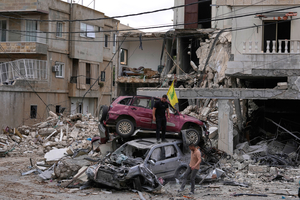
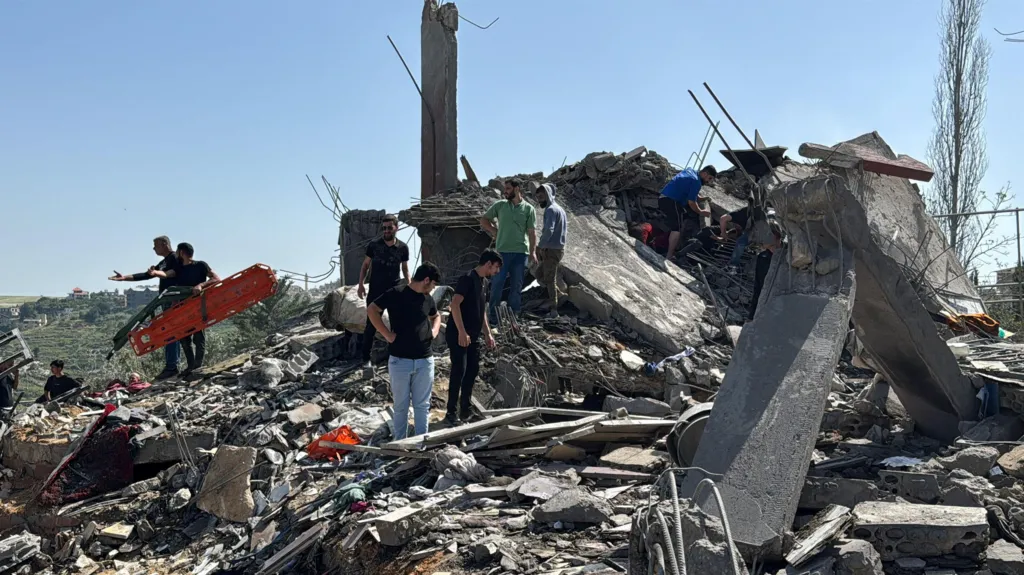
Israeli strikes in Lebanon have killed dozens of people, with reports indicating at least 24 fatalities as conflicts escalate.[1] Lebanon's health ministry has reported significant casualties from these attacks, while Israeli forces face ongoing challenges from Hezbollah's advanced drone operations in southern Lebanon.[2][3] A fragile ceasefire between Israel and Hezbollah, in place for three weeks, now appears increasingly at risk amid the latest strike Lebanon developments.[4]
Overview of Recent Strikes
The recent Israeli strikes in Lebanon represent a sharp escalation in the ongoing conflict, with multiple reports detailing substantial loss of life and heightened military activity.[1][3][4] According to coverage from various outlets, these strikes have targeted areas across Lebanon, resulting in dozens killed, including a confirmed figure of at least 24 people as reported in relation to Israeli actions.[1] Lebanon's health ministry has provided one of the most detailed tallies, stating that 39 individuals lost their lives in what was described as another day of intense Israeli strikes.[3] This comes alongside reports of at least 17 fatalities from the latest wave of attacks, underscoring the intensity and frequency of these operations.[4]
These strikes occur against a backdrop of persistent tensions in the region, where military engagements have shown little sign of abating despite diplomatic efforts. The Israeli military's actions appear aimed at countering threats from Hezbollah, but they have drawn sharp attention due to the civilian and military toll.[1][4] In southern Lebanon particularly, the strikes coincide with reports of Hezbollah's retaliatory capabilities, complicating the tactical landscape for Israeli forces.[2] The cumulative impact of these events has raised concerns about the stability of the area, as each new strike Lebanon incident adds to the cycle of violence that has defined the border region for weeks.[3]
Official statements from Lebanese authorities emphasize the scale of the devastation, with health ministry figures serving as a primary benchmark for assessing the human cost.[3] Meanwhile, international observers note that these strikes are not isolated but part of a broader pattern of exchanges that have persisted even as ceasefires are discussed.[4] The discrepancy in casualty reports—ranging from 17 to 39—highlights the challenges in real-time verification during active conflict zones, yet all sources converge on the fact that Israeli strikes have inflicted heavy losses.[1][3][4] This overview paints a picture of a conflict zone under sustained pressure, where each strike Lebanon operation risks drawing in wider regional actors.
Casualties and Health Ministry Reports
Lebanon's health ministry has emerged as a key authority in documenting the casualties from Israeli strikes, reporting that 39 people were killed in a single day of intense attacks.[3] This figure underscores the severity of the latest operations, which have struck multiple locations and resulted in significant loss of life.[3] Other reports align with this gravity, noting at least 17 deaths from recent strikes, further emphasizing the toll on Lebanese soil.[4]
The health ministry's announcements provide critical context for understanding the scope of the damage. Their statement frames the 39 deaths as occurring amid "another day of intense Israeli strikes in Lebanon," suggesting a pattern of repeated and forceful military actions.[3] These reports are vital for piecing together the human impact, as they come directly from official channels tasked with managing the aftermath. The variation in numbers—such as the 24 killed cited in broader coverage—reflects ongoing updates and confirmations as information emerges from affected areas.[1][3]
In the context of these strikes, the health ministry's role extends beyond mere tallying; it serves as a barometer for the strain on Lebanon's medical infrastructure. Repeated strikes have likely overwhelmed response capabilities, with the ministry's figures indicating a concentrated wave of violence that demands immediate attention.[3][4] Cross-referencing with other accounts, such as those reporting at least 17 killed, reveals consistency in the direction of escalating casualties, even if exact counts differ slightly due to timing and scope.[4] This section highlights how official Lebanese sources are central to narrating the strike Lebanon casualty narrative, offering a grounded perspective on the conflict's immediate consequences.[3]
Hezbollah's Drone Activities
Israeli forces are grappling with significant challenges from Hezbollah's fiber-optic drones, which have been repeatedly striking troops and vehicles in southern Lebanon.[2] A report details how the Israeli army is struggling to counter these advanced unmanned aerial vehicles, prompting the deployment of new targeting systems in response.[2]
These fiber-optic drones represent a tactical evolution in Hezbollah's arsenal, allowing for precise and hard-to-detect operations against Israeli positions.[2] The drones have successfully hit military personnel and equipment, creating vulnerabilities in southern Lebanon where ground operations are concentrated.[2] The Israeli military's reported difficulties stem from the drones' technological advantages, such as fiber-optic guidance that resists traditional jamming methods, forcing adaptations like specialized targeting technologies.[2]
This development adds a layer of complexity to the conflict dynamics. Hezbollah's ability to sustain drone strikes despite Israeli countermeasures indicates a persistent threat, particularly in the southern border areas where clashes are most frequent.[2] The report underscores that these attacks continue unabated, hitting troops and vehicles and thereby disrupting Israeli maneuvers.[2] In the broader strike Lebanon context, Hezbollah's drone activities serve as a counterbalance, escalating the risks for any ground-based responses and highlighting the asymmetric nature of the fighting.[2]
Impact on Regional Ceasefires
The latest Israeli strikes are threatening a fragile ceasefire between Israel and Hezbollah, which has held for three weeks.[4] This agreement, already tenuous, faces mounting pressure from the ongoing military exchanges, including strikes that have killed at least 17 people.[4] Broader reports indicate that Israel has killed 24 in Lebanon amid these tensions, further straining the truce.[1]
The ceasefire's fragility is evident in how recent strike Lebanon actions have reignited fears of full-scale resumption of hostilities.[4] In effect for three weeks, it was meant to provide a pause, but the strikes signal potential unraveling, as each incident tests the boundaries of restraint.[1][4] This impacts not only the Israel-Hezbollah front but also ripples into wider regional stability, where ceasefires are often interdependent.
Analysis of the situation shows that the strikes directly undermine the ceasefire's viability, with casualty reports serving as flashpoints.[1][4] The three-week duration highlights a brief period of calm now overshadowed by renewed violence, complicating diplomatic efforts to extend or reinforce the truce.[4]
Broader Tensions Involving Iran
Iran has issued a stern warning to the US against attacks on tankers, even as a US-Iran ceasefire remains in place.[1] This development unfolds alongside Israeli strikes in Lebanon that have killed dozens, including 24 people, drawing connections between Persian Gulf maritime tensions and Levantine conflicts.[1]
Tehran's caution to Washington emphasizes restraint amid reports of potential tanker targeting, with the US-Iran ceasefire holding steady for now.[1] Iran's position ties into the regional web, where actions in Lebanon amplify broader anxieties about escalation involving major powers.[1] The warning serves as a reminder of interconnected flashpoints, with the ceasefire providing a thin buffer against wider confrontation.[1]
In this context, Iran's statements reflect strategic positioning, cautioning against moves that could destabilize shipping lanes while monitoring developments like the Lebanon strikes.[1]
What to watch next: Observers will monitor whether the fragile Israel-Hezbollah ceasefire holds amid ongoing strikes and drone threats, alongside Iran's warnings to the US as the US-Iran truce persists.[1][2][4]