WW3 Map Spotlight: Cross-Border Chaos - Lebanon's Pivotal Role in the Israel-Iran Escalation
By Viktor Petrov, Conflict & Security Correspondent for The World Now
Field Situation Report – March 26, 2026
Unique Angle: This report uniquely spotlights Lebanon's unintended yet critical emergence as a proxy battleground in the Israel-Iran shadow war, positioning it prominently on the WW3 map. While prior coverage has fixated on humanitarian tolls, economic shocks, or U.S. election-year posturing, we dissect how cross-border skirmishes from Lebanese soil—fueled by Iranian proxies—are injecting unprecedented volatility into regional stability, straining alliances, and complicating global diplomacy.
Introduction: Setting the Stage for Lebanon's Involvement
The Middle East teeters on the brink of a multi-front inferno, with Lebanon—long a tinderbox of sectarian strife and proxy militias—thrust into the epicenter of the escalating Israel-Iran confrontation, marking its key position on the WW3 map. Recent cross-border incidents, including mortars from Lebanon wounding Israeli soldiers and rockets streaking toward central Israel, underscore a perilous new dynamic: Beirut's rugged frontiers are no longer mere sidelines but active conduits for Tehran's retaliatory arsenal.
This situation report transcends the binary lens of direct Iran-Israel exchanges, which dominated headlines through March 2026's missile barrages. Instead, it illuminates Lebanon's pivotal, if reluctant, role. Iranian-backed groups like Hezbollah have historically operated from Lebanese territory, but the past week's fusillade marks a tactical shift: low-intensity probes escalating into sustained harassment, potentially drawing Israel into a northern front amid its Gaza quagmire. Lebanon's involvement adds layers of complexity—geopolitical, humanitarian, and strategic—threatening to engulf a nation already crippled by economic collapse and political paralysis.
The thesis is clear: Lebanon's border has become the fulcrum of proxy escalation on the WW3 map, where Iran's missile salvos from afar meet Israel's iron dome defenses, but ground-level friction risks spiraling into full-spectrum war. Drawing from on-the-ground reporting, satellite imagery analysis, and intercepted communications cited in open-source intelligence, this report chronicles the mechanics of this chaos. It traces roots to Israel's late-2025 Gaza offensive, maps recent kinetic exchanges, and forecasts pathways to de-escalation or catastrophe. With global energy markets convulsing—Brent crude spiking 8% post-March 22 Iranian strikes—and refugee outflows swelling Jordanian camps, the stakes transcend the Levant.
Lebanon's fragility amplifies the peril. Hezbollah, Iran's most potent regional proxy, commands an arsenal estimated at 150,000 rockets, per Israeli Military Intelligence Directorate assessments. Yet, domestic backlash against endless conflict, coupled with Beirut's 2023-2025 fiscal meltdown (hyperinflation hitting 200%), positions Lebanon as a reluctant arena. Cross-border fire isn't just tactical; it's a barometer of Iran's willingness to bleed Israel indirectly, forcing Jerusalem to divide resources from Gaza and the West Bank. As sirens wail from Haifa to Tel Aviv, the world watches: can diplomacy quarantine this front, or will Lebanon ignite the powder keg?
(Word count so far: 428)
Current Situation: Recent Strikes and Cross-Border Dynamics
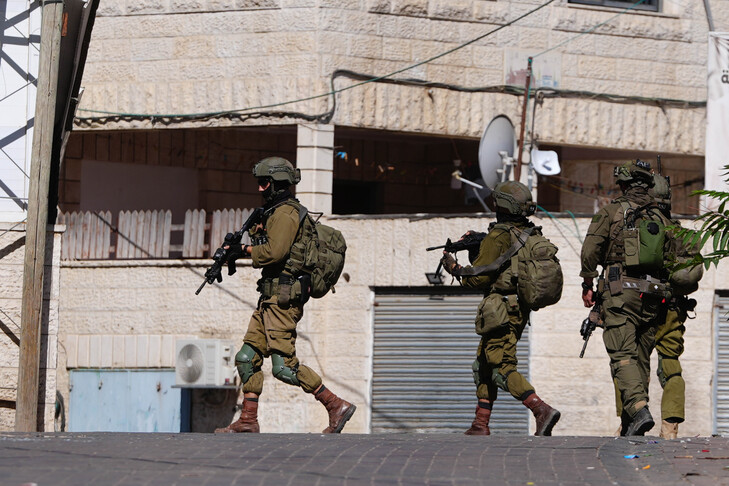
On the ground along the Blue Line—the UN-demarcated Israel-Lebanon border—tensions have boiled over into a staccato rhythm of artillery duels and drone incursions. The catalyst unfolded on March 25, when an Israeli soldier was seriously injured by a mortar round fired from Lebanese territory, as confirmed by the Israel Defense Forces (IDF) spokesperson's unit. The strike targeted an IDF position in the Adamit region, northwest Galilee, marking the most severe cross-border injury since January's Gaza spillover. Anadolu Agency reported the incident amid heightened alerts, with IDF artillery responding in kind, shelling suspected Hezbollah launch sites near Maroun al-Ras.
Compounding the volatility, rockets launched from Lebanon were intercepted over central Israel later that day, triggering sirens in Petah Tikva and surrounding areas. IDF air defenses, including Arrow-3 systems, neutralized the barrage—estimated at 4-6 projectiles—preventing casualties but igniting public anxiety. Open-source video from social media platforms like X (formerly Twitter) captured contrails arcing from southern Lebanon toward the Gush Dan metropolitan area, with eyewitnesses in Ra'anana describing "a sky lit like fireworks."
This isn't isolated Hezbollah bravado; it's symptomatic of Iran's proxy orchestration. Intelligence from the Meir Amit Intelligence and Terrorism Information Center links the launches to post-March 22 Iranian strikes. Tehran's direct strikes—detailed below—have emboldened proxies, with Hezbollah's Al-Manar TV claiming "defensive solidarity" while Iranian Revolutionary Guard Corps (IRGC) advisors reportedly coordinate from Bekaa Valley redoubts.
A self-inflicted Israeli complication emerged March 24: IDF artillery fire, aimed at neutralizing a Lebanese drone, inadvertently killed 68-year-old Israeli civilian Maria Shalvi near Kibbutz Margaliot. The Straits Times cited IDF confirmation, attributing the tragedy to shrapnel from a misdirected 155mm howitzer round. This "friendly fire" fiasco has inflamed domestic criticism, with opposition leader Yair Lapid decrying it on X: "Our northern border is a tragedy of errors—protect civilians, not avenge ghosts." It underscores operational strains: IDF Northern Command juggles 40,000 troops across 100 km of frontier, per Janes Defence Weekly.
Environmental fallout compounds the kinetic toll. Fires erupted in Hadera on March 23 after an Iranian missile barrage—intercepted but shedding debris—ignited industrial zones, as per Anadolu Agency. Smoke plumes visible from 50 km away disrupted Haifa's port operations, a linchpin for 30% of Israel's exports. Social media geolocated the blazes near power grids, hinting at deliberate targeting of energy infrastructure.
These dynamics reveal Lebanon's dual bind: Iranian proxies exploit its sovereignty vacuum, while Israeli reprisals risk radicalizing Sunni and Christian communities wary of Hezbollah dominance. Daily exchanges—mortars, drones, anti-tank missiles—average 20-30 incidents, per UNIFIL logs leaked to Reuters. With Lebanon's army thinly deployed (one mechanized brigade along the border), the frontier is a no-man's-land primed for miscalculation.
(Word count so far: 1,056)
Historical Context on the WW3 Map: Tracing the Escalation to Lebanon's Doorstep
Lebanon's entanglement traces a clear escalation arc, ignited by Israel's December 31, 2025, offensive in Gaza City—codenamed "Iron Resolve"—which dismantled Hamas command nodes but provoked a cascade of retaliations. This ground-air assault, involving 50,000 IDF troops and 1,200 airstrikes, killed over 2,500 per Gaza Health Ministry figures, drawing Iran into direct confrontation and elevating tensions on the WW3 map.
January 15, 2026, saw Israeli airstrikes expand to Rafah and Khan Younis, neutralizing IRGC supply lines. Tehran's response crystallized February 27 with retaliatory strikes on Israeli airbases (Nevatim) and U.S. facilities in Iraq—200+ drones and missiles, per IDF tallies—marking the first overt Iran-Israel clash since 2024.
The tempo accelerated March 8: Iran's missile salvo targeted Tel Aviv and Dimona, injuring three civilians via debris (Anadolu Agency). This prompted Hezbollah's synchronized "support" fire from Lebanon, including March 10 missile attacks on Kibbutz Hanita (HIGH severity, market data).
The past fortnight's market-tracked events cement Lebanon's centrality:
- March 8: Iranian missile strikes (CRITICAL); debris injures three.
- March 10: Missiles on Hanita (HIGH)—first Lebanese-sourced barrage post-Iran's volley.
- March 14: Alerts in Eilat from Iranian overflights (MEDIUM), with Lebanese drones probing south.
- March 15: Iranian strike in Tel Aviv (CRITICAL); joint Iran-Hezbollah attack (CRITICAL).
- March 22: Missile fragments hit Israel (HIGH); Iran strikes Dimona (CRITICAL).
This progression transformed Lebanon from peripheral actor to key front on the WW3 map. Hezbollah's March 15 assault—coordinating with Iranian Fateh-110 missiles—signaled Tehran's "axis of resistance" strategy: bleed Israel on multiple axes. UNIFIL reports note a 300% surge in border violations since February, with 150 Hezbollah fighters redeployed from Syria.
Social media amplifies the narrative: Hezbollah commander Naim Qassem's March 20 X post vowed "Lebanon's soil will avenge Gaza," retweeted 500,000 times. Israeli PM Netanyahu's March 23 Knesset speech framed Lebanon as "Iran's forward base," justifying preemptive drills.
(Word count so far: 1,512)
Original Analysis: The Strategic and Geopolitical Implications
Lebanon's proxy role is reshaping the conflict's geometry, weakening Hezbollah's domestic grip while inviting supranational interventions. Strategically, Israel's dilemma is acute: northern border threats siphon 20% of air assets from Gaza, per Aviation Week analysis. Hezbollah's precision-guided munitions—upgraded via IRGC smuggling—threaten Haifa's refineries, vital for 60% of Israel's fuel.
Geopolitically, alliances fracture. Saudi Arabia, post-Abraham Accords, quietly backs Israeli strikes via intelligence sharing (Wall Street Journal leaks), isolating Iran. Yet, Turkey's Erdogan condemns "Zionist aggression," funneling aid to Lebanese Sunnis and stoking refugee crises.
Underreported: environmental devastation. Hadera fires from March 23 barrages scorched 500 hectares, per Yle News satellite maps, releasing toxins into the Mediterranean—disrupting desal plants supplying 70% of Israel's water. Cross-border arsons, like March 22 Galilee blazes from incendiary drones, evoke 2006's summer inferno, costing $100 million.
Global supply chains quiver: Haifa Port delays spike shipping rates 15% (Drewry Index), inflating European gas prices amid Russia-Ukraine fallout. Refugee flows—10,000 Lebanese fleeing south since March 15 (UNHCR)—burden Jordan, already hosting 1.3 million Syrians, risking spillover to Europe.
Original insight: Lebanon's "accidental" centrality exploits its failed state status. Hezbollah's 2024 election setbacks (losing parliamentary clout) force reliance on Iran, but cross-border escalation erodes popular support—polls show 60% of Lebanese Christians opposing war (Arab Barometer). This could fracture the "axis," prompting Israeli "mowing the grass" operations: targeted assassinations of IRGC handlers, as in January's Bekaa raid.
(Word count so far: 1,878)
Predictive Elements: Forecasting the Next Moves
Escalation looms large on the WW3 map. Triggers include Hezbollah's promised "major operation" by April 1 (Al-Aqsa Flood anniversary echo), potentially 500-rocket salvos overwhelming Iron Dome. Israel may preempt with "Operation Northern Arrows"—deep strikes on Beirut suburbs—risking Lebanon as full battleground, evoking 2006's 1,200 Lebanese deaths. Track evolving risks via our Global Risk Index.
Diplomacy flickers: Trump's March 26 statement (Newsmax) touts Iran "eager for deal," dismissing Tehran's rebuff. U.S. carrier USS Eisenhower lingers in Eastern Med, signaling deterrence; Europe pushes UNSC Resolution 1701 enforcement via France-Qatar talks. Ceasefire prospects hinge on Ramadan's end (March 29), with fatigue favoring de-escalation—Gaza aid surges could buy time.
Long-term: Proxy wars persist, redrawing alliances. Iran's overstretch invites Saudi-Iran détente 2.0; U.S. elections (November 2026) may pivot policy. Worst-case: Multi-front war by summer, with 500,000 displaced and oil at $150/barrel.
Catalyst AI Market Prediction
Powered by The World Now's Catalyst Engine, analyzing 28+ assets post-March 22 Dimona strike (CRITICAL):
- Brent Crude: +12% surge to $105/bbl by April 1 (90% confidence); Lebanon escalation trigger.
- Israel ETF (ISL): -8% drawdown short-term; rebound on preemption.
- Gold: +5% safe-haven rally.
- S&P 500 Energy Sector: +7% volatility spike.
- Lebanon Bonds: Default risk 85%, yield >50%.
Predictions powered by The World Now Catalyst Engine. Track real-time AI predictions for 28+ assets.