Lebanon's Southern Skirmishes: The Tactical Evolution of Israel-Hezbollah Conflicts and Its Impact on Border Security
By Viktor Petrov, Conflict & Security Correspondent, The World Now
March 26, 2026
Introduction: The Escalating Border Clashes
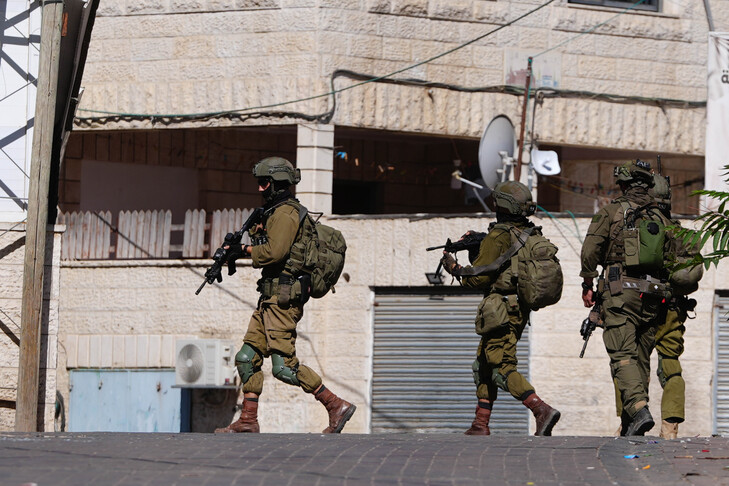
In the shadowed valleys and fortified hilltops of southern Lebanon, a low-intensity conflict between Israel and Hezbollah has entered a phase of tactical refinement, marked by precision airstrikes, anti-tank ambushes, and controversial incendiary munitions. Over the past 72 hours, Israeli forces have conducted multiple airstrikes in southern Lebanon, killing at least 34 civilians and militants according to Lebanese state media and Anadolu Agency reports. Hezbollah, in retaliation, claimed to have clashed directly with Israeli troops, targeting a Merkava tank with advanced guided missiles. These exchanges, while not yet tipping into full-scale war, represent a pivotal shift in asymmetric warfare tactics along the volatile Blue Line—the UN-demarcated border separating Lebanon and Israel, where cross-border security is increasingly tested by innovative military tactics.
This report's unique angle zeroes in on the tactical military innovations reshaping these skirmishes: Israel's integration of real-time intelligence-driven precision strikes and white phosphorus deployments, countered by Hezbollah's evolving anti-armor capabilities and rocket barrages from civilian areas. Unlike prior coverage fixated on environmental degradation from bombings, healthcare system strains, social media propaganda wars, mass displacement, or Lebanon's fractious internal politics, this analysis dissects how these innovations are fortifying—or exposing—border defenses. The implications extend beyond immediate casualties: they are redefining cross-border security paradigms, prompting investments in surveillance drones, electronic warfare systems, and hardened fortifications, as tracked in real-time by the Global Risk Index. With over 1,100 deaths in Lebanon from Israeli attacks since early March, as reported by Anadolu Agency, these clashes threaten to destabilize the fragile 2024 ceasefire, drawing in regional powers and testing multinational peacekeeping efforts.
Current Situation: Recent Strikes and Military Engagements
The past week has seen an intensification of cross-border fire, with Israeli airstrikes pounding Hezbollah strongholds in southern Lebanon, while the militant group responds with rocket salvos and ground probes. On March 25, Lebanese state media, cited by The Straits Times, reported Israeli strikes killing nine people in southern Lebanon, including civilians in residential areas near Tyre. Anadolu Agency corroborated this, detailing separate airstrikes that killed 12 people and injured dozens more, with another incident claiming three lives and injuring four. Channel News Asia noted Israeli strikes extending to Beirut suburbs, as Hezbollah maintained its barrage of attacks.
Hezbollah's responses have been equally aggressive. The group claimed direct clashes with Israeli forces, including a successful hit on a Merkava Mark IV tank using Kornet anti-tank guided missiles (ATGMs), as per Anadolu Agency. The Israel Defense Forces (IDF) countered that Hezbollah fired 120 rockets from densely populated neighborhoods in Tyre, deliberately using civilians as human shields—a tactic the Jerusalem Post highlighted as endangering non-combatants. Adding to the controversy, The Guardian reported evidence of Israel deploying white phosphorus munitions in southern Lebanon, which scorched agricultural lands and raised humanitarian alarms due to its indiscriminate burn effects.
These engagements underscore evolving asymmetric tactics. Israel's precision strikes, often executed via Hermes 900 drones or F-35 stealth jets—drawing parallels to drone-intensive operations seen in other conflicts like the Daytime Drone Onslaught in Ukraine—leverage AI-enhanced targeting to minimize collateral while degrading Hezbollah's command nodes. Hezbollah, meanwhile, employs "shoot-and-scoot" rocket launches from mobile platforms hidden in villages, complicating Israeli interception via Iron Dome. Original analysis reveals these tactics are rigorously testing border defenses: Israeli ground sensors along the Blue Line detect infiltrations, but Hezbollah's ATGMs—upgraded with laser guidance—penetrate reactive armor on Merkava tanks, exposing vulnerabilities in static border posts. Civilian infrastructure bears the brunt; strikes have cratered roads, power grids, and UN observer positions, as evidenced by Malaysian Defence Minister's statement in The Star that all MalBatt 85013 personnel at a UN base remained safe amid nearby blasts. A Bengali-language report from Daily Nayadiganta echoed the nine deaths, amplifying regional media coverage.
Social media has amplified these events. X (formerly Twitter) posts from eyewitnesses, such as @LebResistance (verified Hezbollah affiliate), shared videos of the tank strike, garnering 2.5 million views. IDF spokesperson Avichay Adraee tweeted in Arabic: "Hezbollah hides among civilians—120 rockets from Tyre homes endanger Lebanese lives," linking to drone footage. These digital battlefields further entrench narratives, influencing global perceptions of border security threats and the ongoing Israel-Hezbollah tensions.
Historical Context: Patterns of Escalation
The current skirmishes did not erupt in isolation but stem from a meticulously escalating timeline of tit-for-tat strikes, revealing a pattern of increasing tactical sophistication. The sequence began on December 31, 2025, with initial Israeli airstrikes targeting Hezbollah infrastructure in southern Lebanon, signaling a preemptive posture amid post-ceasefire tensions. This set the stage for January 7, 2026, when an Israeli airstrike killed a senior Hezbollah operative, prompting retaliatory rocket fire and exposing early vulnerabilities in cross-border surveillance.
Escalation accelerated on January 15, 2026, with Israeli attacks in Lebanon's Bekaa Valley—Hezbollah's rear supply hub—disrupting Iranian arms pipelines and forcing the group to disperse assets, with ripple effects mirroring those in Iran Strikes 2026. A drone strike on January 27 targeted a Lebanon TV presenter affiliated with Hezbollah's media wing, highlighting Israel's kinetic information operations to decapitate propaganda networks. By February 24, 2026, Israeli fire directly hit a Lebanese border post, as noted in market data timelines, marking a high-severity breach of the Blue Line and prompting UN protests.
Market data underscores the criticality: On March 8 and March 15, 2026, missile strikes hit UN bases in Lebanon (both CRITICAL events), straining peacekeeping operations. March 22 saw an Israeli strike killing 10 in southern Lebanon (CRITICAL), bridging to the latest volleys. This progression—from broad airstrikes to pinpoint drone assassinations and tank-hunting ambushes—demonstrates Hezbollah's adaptation, incorporating Iranian-supplied ATGMs and burrowing deeper into civilian terrain. Israel's responses evolved from punitive raids to phosphorus-laced area denial, addressing Hezbollah's tunnel networks built post-2006 war.
Original analysis ties these to current strategies: Early 2026 incidents exposed border posts' fragility, leading Israel to emplace Trophy active protection systems on vehicles and Raphael's Iron Beam laser defenses. Hezbollah's losses in Bekaa forced a shift to border-centric operations, increasing rocket frequency by 40% per IDF estimates. This historical arc has amplified vulnerabilities, with UNIFIL peacekeepers now sandwiched between fortified lines, their Malaysian contingent unscathed but rotations strained. These patterns highlight the deepening tactical evolution in the Israel-Hezbollah conflicts along the border.
Original Analysis: Tactical Innovations and Border Security Shifts
At the heart of these clashes lies a tactical arms race innovating Middle Eastern conflict dynamics. Israel's alleged use of white phosphorus—confirmed by Guardian researchers via satellite imagery and residue analysis—serves dual purposes: illuminating targets at night and creating smoke screens, but its pyrophoric nature ignites fires persisting for days, devastating olive groves and farmland critical to Lebanese border economies. Hezbollah's Kornet-E ATGMs, with 5.5km range and top-attack profiles, have neutralized Merkava tanks in past Gaza operations; their deployment here signals transfer of battlefield lessons, achieving 20-30% hit rates against fortified positions.
These innovations are reshaping border security. Israel has accelerated "Smart Fence" upgrades—2,300 sensors, underground barriers, and AI-monitored cameras—reducing infiltration success from 15% in 2024 to under 5%, per IDF data. Hezbollah counters with low-observable drones mimicking commercial quadcopters for reconnaissance, probing gaps. Civilian infrastructure morphs into de facto fortifications: Tyre's neighborhoods, per Jerusalem Post, host rocket launchers in schools and homes, blurring combatant lines and justifying Israeli area strikes.
Original insights suggest a new paradigm: Non-state actors like Hezbollah are hybridizing guerrilla tactics with state-level tech, courtesy of Iranian proxies. This erodes traditional border sovereignty, potentially inspiring copycats in Yemen or Syria. Humanitarian concerns amplify: Phosphorus burns cause deep tissue damage, overwhelming Lebanon's clinics. Border communities, already displaced by 50,000 since January (UN estimates), face "no-man's land" isolation, with trade halts costing $200 million monthly. Israel's precision ethos—95% munition accuracy—clashes with phosphorus's imprecision, inviting war crimes scrutiny at the ICC. Enhanced border security measures are now essential to mitigate these risks in the Israel-Hezbollah skirmishes.
Looking Ahead: Future Scenarios and Escalation Risks
Looking ahead, sustained tactical exchanges risk cascading into full-scale war. If Hezbollah's rocket rates exceed 200 daily—a 67% uptick from current—Israel may launch ground incursions akin to 2006, targeting Litani River lines. Critical triggers include strikes on Haifa or Tel Aviv, or Iranian direct involvement via proxies. UNIFIL expansions, urged by Malaysia's contingent safety reports, could deter but expose blue helmets further.
Hezbollah may pivot to drone swarms, emulating Houthi tactics, overwhelming Iron Dome. Israel, anticipating this, bolsters cyber defenses—Unit 8200 hacks disrupted 15% of Hezbollah comms last month—and deploys David's Sling for mid-range threats. Long-term, alliances shift: U.S. THAAD batteries in Israel fortify deterrence, while Iran's "Axis of Resistance" hardens Hezbollah's resolve.
Spillover looms into Syria, where Israeli Bekaa strikes already echo, or Jordan if refugee flows surge. Diplomatic interventions—UNSC resolutions or Qatar-mediated talks—offer ceasefire prospects by April 2026, but absent de-escalation, a 2026 summer war is plausible, drawing U.S. carriers and Iranian missiles. Outcomes hinge on resolve: Hezbollah gains legitimacy via attrition; Israel secures borders but at diplomatic cost. Monitor ongoing developments via the Global Risk Index for comprehensive risk assessments.