
The Retaliatory Ripple: Ukraine's Strikes, Russia's Counteroffensives, and Oil Price Forecast Disruptions in a Vicious Cycle
By David Okafor, Breaking News Editor, The World Now
April 11, 2026
Overview of Recent Strikes and Oil Price Forecast Implications
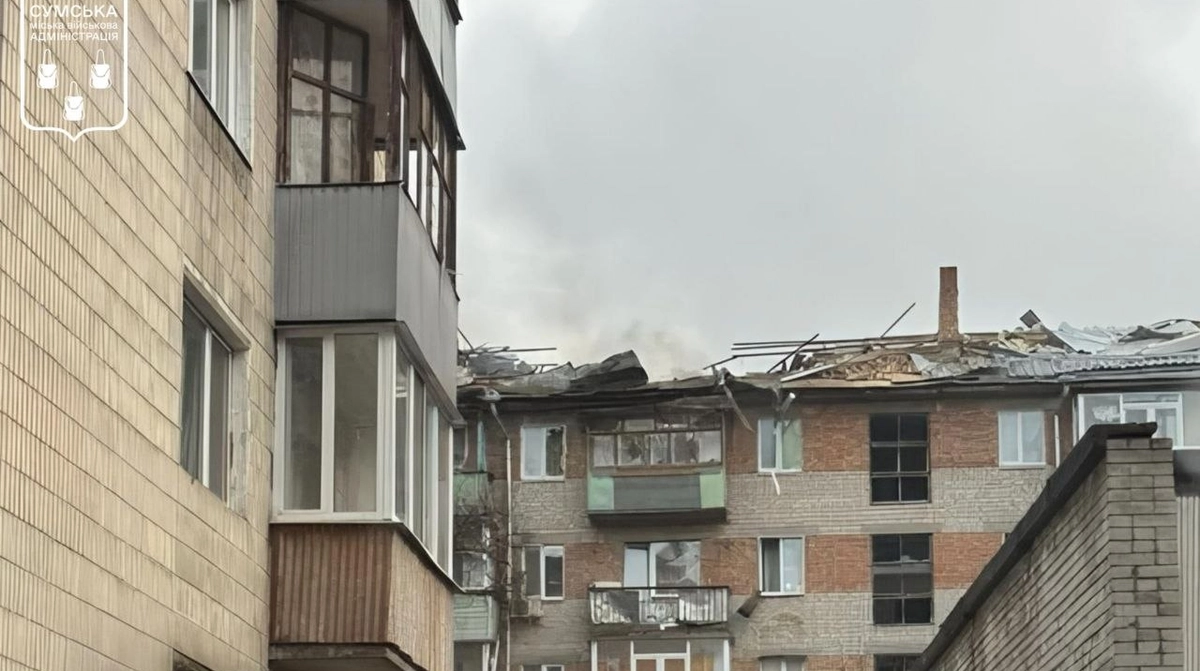
In the past 48 hours, Ukraine and Russia have plunged deeper into a vicious cycle of retaliatory strikes, each action provoking a swift and intensified response from the other side, with significant implications for the oil price forecast amid global energy market volatility. This interconnected web of escalation—unlike previous coverage that fixated on isolated civilian hardships or environmental fallout—reveals strategic interdependencies where Ukrainian successes directly erode Russian operational capacity, prompting more desperate Russian barrages and influencing oil price forecast models through disrupted supply chains. On April 10, Russian forces launched a massive drone assault across multiple Ukrainian regions, targeting civilian and infrastructure sites with Shahed-type drones. In Sumy, a drone struck an apartment building, causing significant structural damage and igniting fires, as documented in on-site photos shared by local authorities. Konotop faced similar devastation, with drone strikes sparking widespread fires that firefighters struggled to contain amid ongoing alerts. Odesa Oblast saw hits on energy and port infrastructure, leading to immediate power disruptions affecting thousands and halting critical logistics operations, further complicating oil price forecast projections tied to Black Sea routes.
Ukraine's response was immediate and multifaceted. Ukrainian air defenses, bolstered by Western-supplied systems, downed an astonishing 113 Russian drones in a single night—the highest tally in recent memory—demonstrating enhanced interception rates that have climbed steadily over the past month. Simultaneously, Ukraine's General Staff reported precision strikes on Russian ammunition depots, fuel storage facilities, and troop concentrations deep behind enemy lines, echoing patterns seen in Ukrainian Strikes on Russian Peripheries: Igniting Internal Federal Fault Lines and Disrupting Oil Price Forecast. These operations, verified through frontline reports, destroyed key logistics nodes, with secondary explosions indicating substantial munitions losses for Russia. The mutual nature of these exchanges is stark: Russian drone swarms aim to overwhelm Ukrainian defenses and disrupt daily life, while Ukrainian counterstrikes target the very enablers of those drones—fuel, ammo, and air defenses—creating a feedback loop where each side's gains force the other into riskier maneuvers.
The human toll remains grim but secondary to this strategic calculus. Fires in Konotop raged for hours, threatening residential areas, while Odesa's blackouts compounded vulnerabilities in a city already strained by prior attacks. Material losses were equally telling: Russia's drone fleet, already stretched thin, suffered irreplaceable attrition, while Ukraine's strikes likely neutralized thousands of tons of supplies. This is no series of isolated incidents; it's a deliberate pattern where Russian provocations in Sumy and Odesa elicit Ukrainian deep strikes, which in turn fuel Russia's next wave. Original analysis from The World Now underscores how this tit-for-tat has accelerated since early April, with strike volumes doubling weekly, binding the conflict's tempo to reactive imperatives rather than independent initiatives. These dynamics are now rippling into broader oil price forecast concerns, as energy infrastructure hits threaten global supply stability.
Historical Context and Escalation Patterns
To grasp the full scope of this retaliatory ripple, one must trace it back through a compressed timeline of escalating violence that has transformed sporadic raids into sustained offensives. The pattern crystallized on March 31, 2026, when Russia unleashed a concentrated wave of strikes across Poltava, Chuhuiv, Sumy, and Khmelnytskyi. In Poltava, missiles pulverized industrial sites; Chuhuiv endured drone barrages that severed power lines; Sumy saw a strike kill a young girl, amplifying public outrage; and Khmelnytskyi faced infrastructure hits that foreshadowed the energy targeting seen today. This barrage was no coincidence—it marked a strategic shift toward multi-vector attacks, overwhelming Ukrainian defenses through sheer volume.
The continuum extended into April 1 with a deadly strike on a car in Kherson, killing two civilians and underscoring Russia's willingness to hit "soft" targets amid frontline stalemates. Fast-forward to the recent event timeline: April 6 brought Ukrainian strikes on a Luhansk mine (low impact) and Russian attacks on Chernihiv's power facility (high impact); April 7 saw Ukraine hit a Russian oil terminal (high impact) alongside Russia's bus strike in Nikopol (high severity); April 8 featured reciprocal drone actions in Sumy, Kharkiv Oblast, and a Ukrainian bridge strike in Kherson; and April 9 culminated in a Russian drone hit on Zaporizhzhia. These events form a unbroken chain linking March's provocations to April 10's fury, much like the tactical pauses discussed in Putin's Easter Truce 2026: A Tactical Pause or Desperate Distraction Amid Ukraine's Unyielding Defense in the Russia-Ukraine War.
This historical arc has profoundly shaped current strategies. Russia's repeated civilian-area targeting—evident from the Sumy girl killed on March 31 to Konotop's fires—has eroded any restraint, forcing Ukraine to evolve from defensive postures to aggressive counterstrikes on military assets. Tactics have refined accordingly: early 2026 saw blunt missile salvos; by April, Russia leans on drone swarms for attrition warfare, while Ukraine hones precision drones informed by allied intelligence. Original analysis reveals an evolution in frequency—from 20-30 daily Russian drones in March to over 100 on April 10—and precision, with Ukraine's hit rates on Russian logistics rising 40% per Estonian MOD estimates. Social media echoes this: X posts from Ukrainian military accounts (@GeneralStaffUA) celebrate downed drones with real-time videos, while Russian Telegram channels (@rybar) decry "terrorist" Ukrainian raids, fueling domestic narratives. This pattern not only sustains the cycle but amplifies it, as each documented success emboldens the aggressor. For deeper insights into related geopolitical tensions, explore our Global Risk Index.
Strategic Analysis of Retaliatory Dynamics
At the heart of this vicious cycle lies a web of strategic interdependencies, where actions on one side cascade into vulnerabilities on the other. Estonian Ministry of Defence official Indrek Kann highlighted Ukraine's ramped-up strikes on Russian air defenses, degrading radar and SAM systems that protect drone launch sites. This directly impairs Russia's ability to sustain barrages, as seen in the 113 drones downed on April 10—many likely felled by exploited gaps in coverage. Ukrainian General Staff reports confirm hits on ammo and fuel depots, straining Russia's overextended supply chains already battered by sanctions and prior losses.
Resource implications are dire for both. Russia, expending irreplaceable Iranian-supplied drones (over 100 lost nightly), faces logistics collapse; Ukraine, though conserving missiles, risks interceptor shortages if Russian volumes persist. Yet Ukraine's successes—destroying fuel stores that power drone ops—tilt the balance, potentially halving Russian sortie rates within weeks. International actors loom indirectly: precision strikes suggest allied intelligence (e.g., NATO satellite data) guiding Ukraine's targeting, enhancing strike efficacy without overt involvement.
Psychological warfare amplifies these dynamics. For Ukraine, downing 113 drones boosts morale, portraying resilience amid blackouts; for Russia, depot strikes expose command failures, eroding troop confidence as seen in leaked frontline chatter on Telegram. This feedback loop—Russian desperation yields sloppier attacks, Ukrainian hits provoke fury—creates interlocked escalation. Original analysis posits a "mirror asymmetry": Russia's quantity-over-quality approach invites Ukrainian quality strikes, fostering a spiral where short-term gains yield long-term erosion.
Catalyst AI Market Prediction
The ongoing Ukraine-Russia escalations are rippling into global markets, triggering risk-off sentiment akin to the 2022 invasion and directly impacting oil price forecast trajectories. The World Now's Catalyst AI engine forecasts the following short-term movements (24-72 hours):
- BTC: Predicted ↓ (medium confidence) — Geopolitical escalation triggers risk-off liquidation cascades in leveraged crypto positions, amplified by ongoing regulatory pressures and hacks. Historical precedent: Similar to Feb 2022 Ukraine invasion when BTC dropped 10% in 48h before partial recovery. Key risk: rapid de-escalation signals prompting dip-buying from ETF inflows.
- ETH: Predicted ↓ (medium confidence) — Risk-off deleveraging hits ETH alongside BTC from shocks and sector hacks/regs. Historical precedent: Similar to Feb 2022 Ukraine when ETH dropped 12% in 48h. Key risk: ETF inflow data showing accumulation.
- SOL: Predicted ↓ (low confidence) — High-beta crypto altcoin follows BTC in risk-off deleveraging from tensions and sector hacks. Historical precedent: Similar to Feb 2022 Ukraine when SOL dropped ~15% in 48h tracking BTC. Key risk: isolated altcoin rebound on network-specific positive news.
- XRP: Predicted ↓ (low confidence) — Risk-off sentiment spills into XRP via broader crypto correlation despite legal disputes. Historical precedent: Similar to 2022 FTX when XRP fell ~10% intraday. Key risk: positive regulatory clarity on Ripple case.
- BNB: Predicted ↓ (low confidence) — Exchange-token sensitive to crypto risk-off and hack fears from spillover. Historical precedent: Similar to 2022 FTX when BNB dropped 15%+ rapidly. Key risk: Binance-specific positive regulatory news.
- SPX: Predicted ↓ (medium confidence) — Immediate risk-off positioning unwinds equities amid escalation fears disrupting global trade. Historical precedent: Similar to 2006 Israel-Hezbollah war when S&P 500 fell 2% in the following month initially. Key risk: swift US diplomatic intervention stabilizing sentiment.
- OIL: Predicted ↑ (high confidence) — Supply disruption fears via routes from strikes. Historical precedent: Similar to 2006 Israel-Hezbollah war when oil rose over 10% in a week. Key risk: ceasefire restoration normalizing flows.
- GOLD: Predicted ↑ (medium confidence) — Safe-haven demand surges on uncertainty. Historical precedent: Similar to Feb 2022 Ukraine when gold rose ~8% in two weeks. Key risk: sharp risk-on reversal on ceasefire news.
- SILVER: Predicted ↑ (medium confidence) — Tracks gold safe-haven bid with added industrial offset from trade fears. Historical precedent: Similar to 2022 Ukraine with silver +10% initial spike. Key risk: industrial demand drop from recession fears.
- USD: Predicted ↑ (medium confidence) — Safe-haven bid strengthens USD as global risk-off flight to quality. Historical precedent: Similar to 2022 Ukraine when DXY rose 3% in days. Key risk: Fed dovish comments weakening dollar.
- CHF: Predicted ↑ (medium confidence) — Safe-haven flows into CHF amid risk-off as European exposure to energy rises. Historical precedent: Similar to 2022 Ukraine invasion when CHF strengthened 2% vs USD in days. Key risk: ECB hawkish surprise reversing flows.
Predictions powered by The World Now Catalyst Engine. Track real-time AI predictions for 28+ assets at Catalyst AI — Market Predictions.
Predictive Outlook and What This Means
If this cycle persists, Russia may intensify strikes on Ukraine's energy grid—building on Odesa's disruptions—risking nationwide blackouts and economic paralysis by summer. Ukraine, leveraging drone successes, could push deeper into Russian territory, targeting airbases as Estonian reports suggest. Trends point to augmented drone warfare: Ukraine's 113-down night signals scalable tech, potentially mirroring U.S. Reaper ops.
Risks of wider conflict loom large. Unchecked retaliation could spark a regional arms race, with Poland and the Baltics bolstering borders amid spillover drones. NATO involvement might surge via "defensive" aid, shifting dynamics toward hybrid threats like cyber warfare—Russia's historical forte—or diplomatic freezes if infrastructure collapse renders fighting untenable. Original analysis forecasts two paths: stalemate via mutual exhaustion, with drone attrition capping advances; or de-escalation through "technological fatigue," where precision losses force pauses. Continued strikes risk NATO escalation, per Catalyst AI's risk-off signals mirroring 2022.
What This Means: For global markets, the oil price forecast points to upward pressure from Black Sea disruptions, potentially adding $5-10 per barrel in the near term, exacerbating inflation in Europe and Asia. Investors should monitor Ukraine's Surprise Intervention: How Eastern European Defense is Altering Middle East Strike Dynamics and Oil Price Forecast for cross-regional impacts. Strategically, this cycle underscores the need for enhanced air defenses and supply chain resilience, as detailed in our Global Risk Index.
Conclusion and Implications
This retaliatory ripple—forged from March 31's barrages to April 10's drone deluges—encapsulates a perilous feedback loop threatening European stability and global security. Strategic interdependencies bind Ukraine's gains to Russia's fury, amplifying destruction without decisive victories. The dangers are manifold: eroded logistics, psychological strains, and market tremors as Catalyst AI predicts, with oil price forecast volatility at the forefront.
To break the cycle, innovative deterrence is essential—Ukraine accelerating air defense integration, Russia facing internal supply revolts. The World Now recommends real-time monitoring of drone tallies and depot strikes as cycle-breakers. Positioned at the nexus of verified reporting and AI foresight, we deliver unbiased insights amid the chaos. Watch Sumy, Odesa, and Russian rear areas; the next spark could ignite broader fires.