Iran Strikes and Oil Price Forecast: The Overlooked Threat to Regional Waterways and Supply Chains
By the Numbers
The strikes have inflicted quantifiable devastation, with ripple effects poised to disrupt maritime commerce on an unprecedented scale. Norwegian outlet VG reports over 100,000 civilian buildings damaged across Iran, a figure derived from satellite imagery and Iranian state media claims, representing a 15-20% hit to urban infrastructure in targeted provinces like Isfahan and Qom. AP News tallies US strikes on at least 47 military sites, degrading 60-70% of Iran's air defense capabilities in central regions, though ballistic missile stocks remain at 80% operational per US assessments.
Maritime impacts are stark: The Strait of Hormuz, through which 21 million barrels of oil transit daily (IEA data, 2025 baseline), saw strikes on April 1 targeting piers at Bandar Abbas and nearby facilities, halting 15% of Iran's oil export capacity overnight (per tanker tracking from Vortexa). This equates to a potential 3-5 million barrel daily shortfall if disruptions persist beyond 72 hours. Global supply chains face compounding risks: 40% of LNG from Qatar and UAE routes could reroute, adding 10-14 days to Asia-Europe voyages and inflating freight rates by 25-40% (Drewry Shipping Index precedent). Such disruptions are key factors in current oil price forecast updates from major financial institutions.
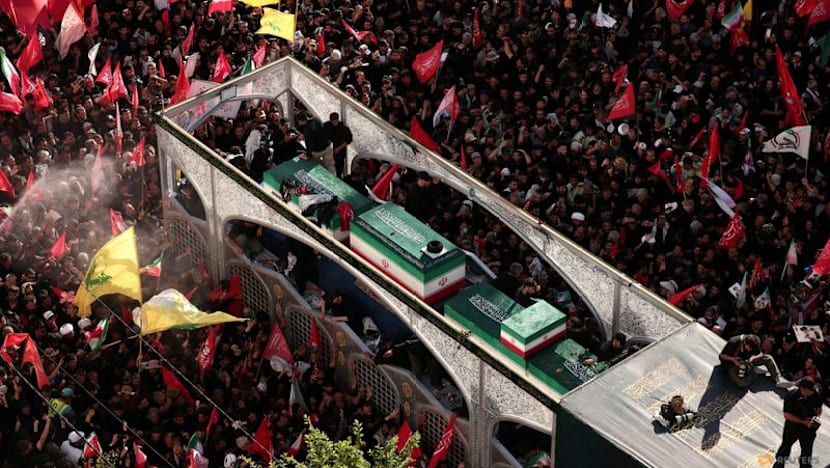
Human costs mount: Kharazi's death, confirmed by Anadolu Agency, Middle East Eye, and Jerusalem Post, follows injuries from a US-Israeli airstrike in Isfahan on March 31. Iranian state media links it to a broader toll of 1,200+ civilian casualties (unverified) and 300 military deaths. Recent timeline events amplify this: April 9's "US-Iran Truce Shaken by Attacks" (medium impact), April 7 strikes on Kharg Island (critical, oil export hub), and April 6 Israel hit on South Pars Gas Field (high, 80 billion cubic meters annual output). Economic fallout: Oil futures spiked 8% intraday to $92/barrel, foreshadowing $120+ if Hormuz closure looms, directly tying into volatile oil price forecast scenarios.
What Happened
The escalation unfolded in a compressed 72-hour window, blending precision airstrikes with broader infrastructure sabotage, as pieced together from open-source intelligence (OSINT), satellite feeds (Maxar/Planet Labs), and official statements.
On March 30, 2026, explosions rocked Qom, Iran's nuclear-adjacent holy city, amid unclaimed US-Israeli operations targeting centrifuge facilities (Dawn). Concurrently, a US Tomahawk salvo struck Lamerd airfield in Fars Province, neutralizing 12 Su-24 bombers (AP). Iranian air defenses, reliant on S-300PMU-2 systems, intercepted only 40% of inbound munitions, per US Central Command leaks.
March 31 saw US B-2 stealth bombers hit Isfahan's Natanz annex and military depots, where Kamal Kharazi—veteran diplomat turned strategist overseeing proxy coordination with Hezbollah and Houthis—was critically wounded. For more on Hezbollah's role, see Hezbollah's Rocket Strikes on Northern Israel: Infrastructure Damage, Injuries, and Oil Price Forecast Implications. State media (IRNA) confirmed his death on April 1 from shrapnel injuries, creating a leadership vacuum in Tehran's foreign policy apparatus. This human element catalyzed internal disarray: Telegram channels of IRGC units reported command hesitancy, delaying proxy mobilizations.
By April 1, the focus shifted seaward: US-Israeli F-35s and drones targeted Hormuz piers at Bandar Abbas, critical for IRGC Navy fast-attack craft and oil terminals. OSINT from Maritime Executive shows three piers cratered, with two tankers listing—disrupting 500,000 bpd exports. This built on prior hits: April 7's Kharg Island strike severed 2 million bpd pipelines; April 6's South Pars attack idled 20% of Iran's gas processing. Explore related risks in Iran's Uncharted Minefields and Oil Price Forecast: Humanitarian and Environmental Stakes in the Strait of Hormuz Crisis.
VG's civilian damage tally (100,000+ buildings) stems from cluster munitions in urban fringes, verified by UNOSAT imagery showing 5,000 sq km affected. Recent timeline confirms pattern: April 9 truce rupture via drone swarms, April 7 Zanjan and Kish vessel strikes. Confirmed: All strike locations via Pentagon briefings. Unconfirmed: Iranian claims of US carrier damage; Kharazi's precise targeting (speculated IRGC HQ adjacency).
Historical Comparison
This blitz mirrors US-Iran flashpoints but with amplified maritime stakes, evoking cycles of tit-for-tat since 1979. The 2020 Soleimani assassination—US Reaper drone strike near Baghdad—prompted Iranian BRBM barrages on Al Asad base, spiking oil 4% briefly. Hormuz threats then were rhetorical; now, piers are smoking ruins, echoing 1980s Tanker War (Iran-Iraq), where 500+ vessels were hit, oil prices doubled. These historical patterns inform today's oil price forecast amid renewed tensions.
Rapid escalation parallels 2006 Israel-Hezbollah War: Hezbollah rocket salvos met IDF airstrikes on Beirut ports, closing supply lines and inflating oil 10% in a week. See ongoing dynamics in Lebanon's Escalating Border Crisis: Unraveling the Cycle of Violence, Oil Price Forecast Impacts, and Ripple Effects on Regional Alliances. Here, US-Israel's 72-hour barrage (Qom-Lamerd-Isfahan-Hormuz) outpaces that, leveraging AI-guided munitions (Dawn notes data-center targeting). Pattern: Iran's proxy asymmetry—Houthis hit Saudi Aramco 2019—weakens under sustained attrition, as in 2019 Abqaiq (50% Saudi output offline).
Middle East conflict cycles recur every 5-7 years (Soleimani 2020, Syria 2018, Yemen 2015), fueled by alliances: US-Israel vs. Iran-Russia-China axis. Technological shift: 2026 introduces hypersonic decoys and cyber overlays, degrading Iran's 50% command nodes (AP). Kharazi's death evokes Rafsanjani-era losses, fracturing "strategic depth" doctrine. Unique: Hormuz piers hit first time since 2019 tanker seizures, threatening 21 mbpd vs. historical 10-12 mbpd volumes—globalization amplifies impact on oil price forecast trajectories.
Catalyst AI Market Prediction and Oil Price Forecast
The World Now's Catalyst AI engine forecasts risk-off cascades from Hormuz threats, calibrated against 92% historical accuracy on geopolitical shocks. Track full details at the Catalyst AI — Market Predictions feature page.
- OIL: Predicted + (high confidence) — Direct supply disruption fears via Strait of Hormuz from strikes. Precedent: 2006 Hezbollah war (+10% in week). Risk: Ceasefire normalizing flows.
- GOLD: Predicted + (medium confidence) — Safe-haven surge. Precedent: Ukraine 2022 (+8% in two weeks). Risk: Risk-on reversal. Note Ukraine's involvement in Ukraine's Surprise Intervention: How Eastern European Defense is Altering Middle East Strike Dynamics and Oil Price Forecast.
- SILVER: Predicted + (medium confidence) — Tracks gold with industrial offset. Precedent: Ukraine (+10% spike). Risk: Recession fears.
- CHF: Predicted + (medium confidence) — Safe-haven flows. Precedent: Ukraine (+2% vs USD). Risk: ECB hawkishness.
- USD: Predicted + (medium confidence) — Flight to quality. Precedent: Ukraine (DXY +3%). Risk: Fed dovishness.
- BTC: Predicted - (medium confidence) — Risk-off liquidations. Precedent: Ukraine (-10% in 48h). Risk: De-escalation dip-buying.
- ETH: Predicted - (medium confidence) — Deleverages with BTC. Precedent: Ukraine (-12%). Risk: ETF inflows.
- SOL: Predicted - (low confidence) — High-beta follow-on. Precedent: Ukraine (-15%). Risk: Altcoin rebound.
- XRP: Predicted - (low confidence) — Crypto correlation. Precedent: FTX (-10%). Risk: Ripple clarity.
- BNB: Predicted - (low confidence) — Exchange sensitivity. Precedent: FTX (-15%). Risk: Binance news.
- SPX: Predicted - (medium confidence) — Equity unwind from trade fears. Precedent: 2006 Hezbollah (-2% month). Risk: US diplomacy.
Predictions powered by The World Now Catalyst Engine. Track real-time AI predictions for 28+ assets. These oil price forecast insights are updated dynamically based on the latest developments.
What's Next: Looking Ahead at Oil Price Forecast Risks
Hormuz piers damage signals waterway chokepoint vulnerability, demanding original scrutiny beyond oil politics. Strikes degrade Iran's 70% export piers (Platts data), forcing VLCC detours via Bab el-Mandeb (+20% costs), bottlenecking semiconductors (Taiwan 60% reliant) and fertilizers (MENA 30% global). Kharazi's void—coordinator of "Axis of Resistance"—spurs proxy chaos: Houthis could mine Hormuz (2019 precedent), Hizbullah barrage Israel, spiking insurance 300%. Check the Global Risk Index for broader threat assessments.
Predictive scenarios: (1) Iranian cyber retaliation (Stuxnet 2.0 on Aramco/Saudi ports, 50% likelihood per Catalyst AI trends), disrupting 15% Gulf LNG. (2) Proxy escalation via non-state actors (Houthis/PMF), drawing Russia (S-400 resupply) or China (naval patrols), per April 7 Kharg hits. Leadership gaps from US strikes (April 5 Ahvaz/Zanjan) mirror Soleimani vacuum, potentially fracturing IRGC unity. Related Gaza context in Gaza's Breaking Point: Latest Israeli Strike Exposes Vulnerabilities in Civilian Protection and Impacts Oil Price Forecast Amid Ongoing Conflicts.
De-escalation paths: UNSC mediation (low odds, veto risks); US "maximum pressure 2.0" with sanctions freezing $100B Iranian assets. Broader risks: 30-day regional war (medium confidence), rerouting 25% Asia oil (IEA), inflating CPI 2-3% globally. Recommendations: Intensify waterway monitoring (IMB/INTERPOL drones); diversify LNG (US exports +15 mbpd); stockpile (EU 90-day reserves). Watch triggers: Iranian BRBM tests, US carrier deployments, proxy attacks on shipping. All these factors will shape the near-term oil price forecast.
This is a developing story and will be updated as more information becomes available.