
Ukrainian Strikes on Russian Peripheries: Igniting Internal Federal Fault Lines and Disrupting Oil Price Forecast
By Viktor Petrov, Conflict & Security Correspondent, The World Now
April 11, 2026
Introduction: The New Front in Ukraine's Strategy and Oil Price Forecast Implications
Ukrainian forces have escalated their campaign against Russian energy infrastructure, marking a strategic pivot toward striking deep into Russia's peripheral regions, with significant disruptions to the oil price forecast. On April 10, 2026, Ukraine's General Staff reported successful drone strikes on two Russian drilling platforms in the Caspian Sea, hundreds of kilometers from the frontline, signaling Kyiv's growing reach with long-range unmanned systems. Concurrently, Russia's key Black Sea oil port at Novorossiysk resumed limited operations following Ukrainian attacks, as noted by Bloomberg via Ukrainian Pravda, underscoring the persistent vulnerability of Moscow's export hubs.
These strikes are not merely tactical disruptions to Russia's war economy—they are igniting fault lines within Russia's federal structure, while injecting volatility into global oil price forecasts. While previous coverage has fixated on oil price volatility, psychological warfare, or ecological fallout, this report uniquely examines how Ukraine's precision hits on peripheries like the Caspian basin, Bashkortostan, and Black Sea enclaves are amplifying long-simmering resentments between Moscow and its resource-rich regions. Local economies, already strained by central resource extraction, face cascading disruptions, fostering accusations of neglect from the Kremlin. This internal discord threatens Russia's governance cohesion, potentially forcing Moscow to divert resources from the Ukraine front to pacify domestic unrest. Broader implications loom for regional stability: as federal bonds fray, Russia's ability to sustain its invasion could erode, reshaping the conflict's trajectory amid global energy anxieties and uncertain oil price forecasts. For deeper insights into how such geopolitical tensions influence energy markets, explore our Global Risk Index.
Recent Developments: Strikes and Immediate Responses
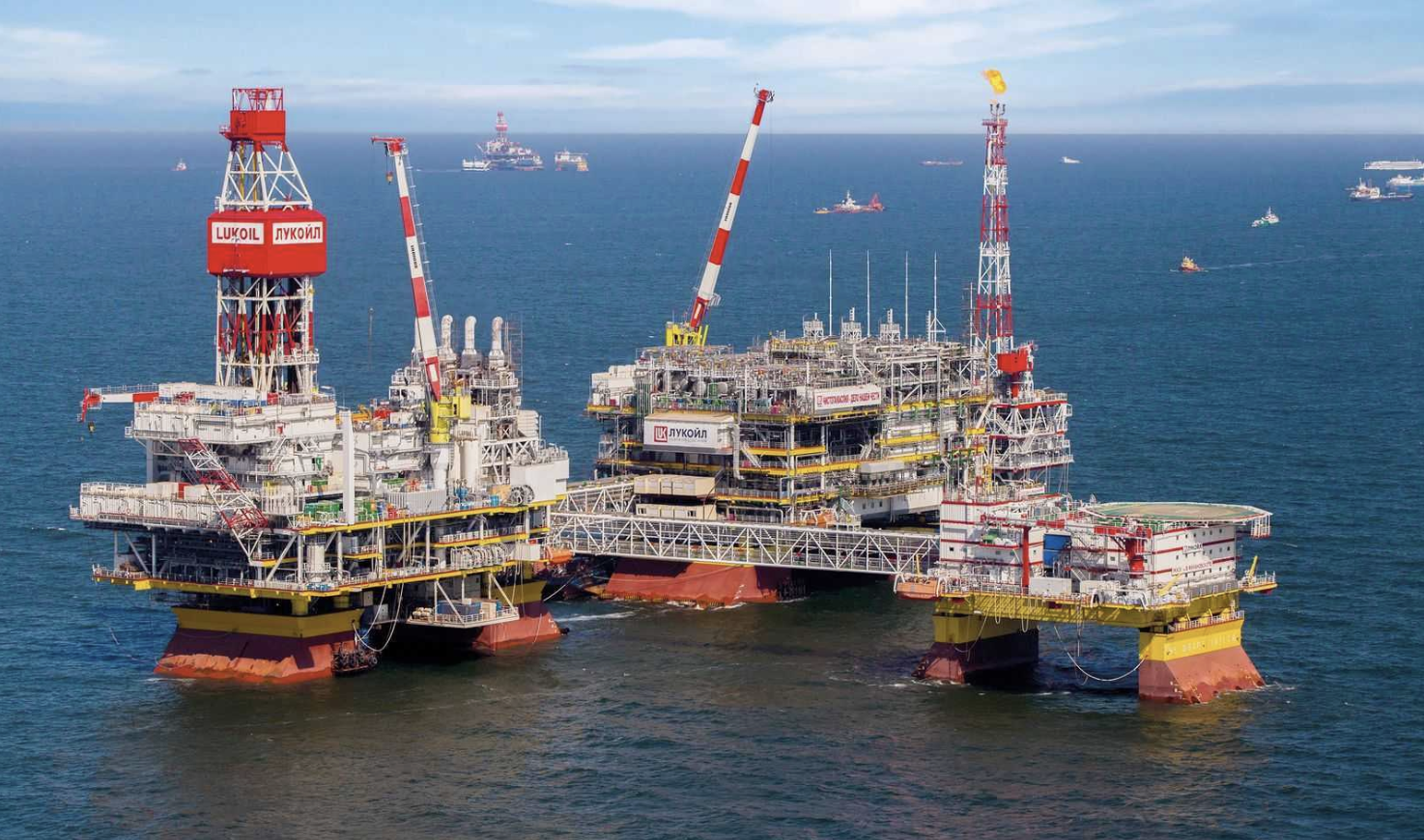
The past 48 hours have seen a flurry of Ukrainian incursions, blending high-impact strikes with probing attacks to test Russian defenses. On April 10, Ukraine's military intelligence (GUR) confirmed hits on Caspian Sea platforms operated by LUKOIL, Russia's largest private oil firm, using maritime drones launched from undisclosed positions. Kyiv Independent detailed how these platforms, vital for natural gas production feeding Central Asian exports, sustained significant damage, with fires reported but no casualties confirmed. Russian sources dismissed the claims as "fabricated," yet satellite imagery circulated on Telegram channels showed smoke plumes, corroborating Ukrainian assertions.
Simultaneously, Ukraine targeted Black Sea oil infrastructure. Ukrainian Pravda reported that after strikes on April 5 and 9, Novorossiysk—the linchpin of Russia's "shadow fleet" oil exports—resumed partial operations on April 10, per Bloomberg. Tanker loadings restarted at 30% capacity, but insurance premiums for vessels spiked 15%, per maritime trackers. Earlier, on April 9, dual strikes hit Russian oil stations and sites, rated "high" impact by open-source monitors, disrupting 200,000 barrels per day in throughput. These events echo patterns seen in other regional conflicts, such as Ukraine's Surprise Intervention, which has broader implications for energy supply chains.
Russian responses were swift but reactive. Air defenses downed over 20 Ukrainian drones across the Black Sea and Caspian regions, Moscow's Defense Ministry claimed, while electronic warfare jammed incoming swarms. Stratfor's analysis, translated via InoSMI, assesses direct NATO-Russia confrontation in the Baltics as "unlikely," given Ukraine's deniability and Moscow's restraint to avoid escalation. However, these strikes ripple beyond energy: Bashkortostan, site of earlier refinery alerts, reports localized blackouts affecting 50,000 residents, per regional Telegram posts from activists. Black Sea provinces like Krasnodar Krai face fuel shortages, inflating prices 20% and sparking trucker protests. These disruptions exacerbate economic grievances in peripheries, where federal subsidies lag behind Moscow's war spending, turning external attacks into internal flashpoints and further complicating oil price forecast models.
Historical Context: Escalation of Drone Warfare
Ukraine's drone offensive traces a clear escalation pattern, exploiting Russia's vast geography to target peripheries and erode federal unity. The timeline begins March 22, 2026, when Russia downed Ukrainian drones over Bashkortostan, a Volga-Ural republic rich in oil but plagued by ethnic tensions and autonomy demands. This incursion, 1,500 km from Ukraine, marked the deepest strike yet, alerting Moscow to vulnerabilities in its "near abroad."
Escalation accelerated: March 23 saw a drone strike on Primorsk's fuel reservoir on the Gulf of Finland, disrupting Baltic exports. March 25 targeted Ust-Luga, Russia's primary LNG terminal, halting shipments for 48 hours. On March 26, strikes near Finland heightened NATO fears, though Stratfor deems direct clashes improbable. By March 28, the Yaroslavl Refinery—central to Volga fuel supplies—was hit, causing a 10% output drop.
This chronology links to recent Caspian and Black Sea events: April 2 (port strike), April 4 (Tolyatti autos/energy hub), April 5-6 (Novorossiysk terminal), April 7 (refinery), and April 9 (oil sites/stations), culminating in April 10 Caspian platforms. The pattern evolves from border skirmishes to strategic depth strikes, mirroring 2014's Crimea annexation, where Moscow centralized control amid peripheral unrest. Then, as now, resource-rich regions like Tatarstan and Bashkortostan chafed under federal overreach. Ukraine's strategy weaponizes these historical fractures, turning drones into scalpels dissecting Russia's federalism, with ripple effects on global oil price forecasts.
Impact on Regional Dynamics: Federal Strain in Peripheries
Strikes in Bashkortostan, the Caspian littoral (Dagestan, Astrakhan), and Black Sea flanks (Krasnodar, Novorossiysk) are supercharging local resentments toward Moscow. Bashkortostan, with 4 million residents and 25% of Russia's oil reserves, has seen protests since March 22 drone alerts. Local leader Radiy Khabirov decried federal "indifference" in a VKontakte post, echoing 2020 autonomy rallies suppressed by the Kremlin. Economic hits compound this: refinery disruptions slashed regional GDP contributions by 5%, per Rosstat proxies, fueling unemployment in extractive industries.
Near Finland and the Baltic (Primorsk, Ust-Luga), ethnic Finnic and Ingrian minorities voice secessionist whispers on Telegram, blaming Moscow's war for exposing them to strikes. Black Sea regions face acute pain: Novorossiysk's port employs 10,000; strikes idled 40% of workers, sparking breadline unrest. Social media erupts with hashtags like #MoscowForgetsPeriphery, amassing 500,000 views.
Economically, energy chokepoints amplify disparities—peripheries remit 60% of revenues centrally, receiving scant reinvestment. Socially, this breeds elite defections: Bashkir oligarchs quietly fund opposition, per leaked chats. Parallels to 1990s Chechnya or 2019 Siberian wildfires highlight recurring themes—Moscow's extractive federalism invites exploitation by adversaries like Ukraine. These tensions parallel those in Lebanon's Escalating Border Crisis, where infrastructure strikes fuel regional instability.
Original Analysis: The Internal Erosion of Russian Unity
These strikes expose systemic fractures in Russia's federal edifice: a hyper-centralized bureaucracy ill-equipped for asymmetric threats across 11 time zones. Bureaucratic inefficiencies—delayed air defense deployments, as seen in Yaroslavl—stem from siloed commands favoring European Russia over "internal colonies." Regional disparities widen: peripheries contribute 40% of budget revenues but host 70% of strikes, per OSINT tallies, breeding perceptions of colonial exploitation.
Psychologically, the fallout is profound. Constant alerts erode loyalty; polls (Levada, March 2026) show 25% peripheral support for peace talks, up 10% nationally. Regional elites, once Kremlin loyalists, hedge bets—Khabirov's rhetoric signals potential bargaining chips. Politically, this could precipitate protests, as in 2022 mobilization riots, but scaled to federal crisis.
Ukraine's genius lies in asymmetric leverage: low-cost drones ($10,000 each) yield high domestic costs for Russia ($billions in repairs, morale). This internal pressure may compel Moscow beyond military retaliation—toward concessions like fiscal federalism or elite purges—redefining its war posture from offensive to defensive consolidation.
Predictive Outlook: Oil Price Forecast Scenarios and Escalation Risks
Russian countermeasures loom: expect $5 billion in drone defenses (S-500 upgrades, Caspian radars) by Q3 2026, per Janes projections. Diplomatic isolation of Ukraine intensifies via BRICS, accusing Kyiv of "terrorism." Internally, unrest risks peak: Bashkortostan protests could swell to 100,000 if strikes persist, forcing policy shifts like decentralization (e.g., 20% revenue retention).
Broader scenarios: Heightened peripheral separatism draws indirect NATO aid (drones via Poland), per Stratfor. Economic sanctions tighten on shadow fleet, spiking global oil 15%. Worst-case: federal unraveling prompts elite coups, echoing 1991 USSR collapse. Optimistic: De-escalation via Turkey-mediated Black Sea truce stabilizes peripheries.
Global alliances shift—China eyes discounted Russian energy, but peripheral instability deters investment. Ukraine conflict drags into attrition, with internal Russian erosion as Kyiv's wildcard. Track these evolving oil price forecast dynamics with our Catalyst AI — Market Predictions.
Catalyst AI Market Prediction
The World Now Catalyst AI forecasts market reactions to escalating Ukraine-Russia energy strikes, drawing parallels to historical geopolitical shocks:
- SOL: Predicted ↓ (low confidence) — High-beta crypto altcoin follows BTC in risk-off deleveraging from tensions and sector hacks. Historical precedent: Feb 2022 Ukraine drop ~15% in 48h.
- BTC: Predicted ↓ (medium confidence) — Geopolitical triggers risk-off liquidations. Precedent: Feb 2022 Ukraine, -10% in 48h. Key risk: ETF inflows.
- SPX: Predicted ↓ (medium confidence) — Risk-off unwinds equities amid trade fears. Precedent: 2006 Israel-Hezbollah, -2% monthly.
- XRP: Predicted ↓ (low confidence) — Crypto correlation spillover. Precedent: 2022 FTX, -10% intraday.
- OIL: Predicted ↑ (high confidence) — Supply fears via routes. Precedent: 2006 Hezbollah, +10% weekly.
- CHF: Predicted ↑ (medium confidence) — Safe-haven flows. Precedent: 2022 Ukraine, +2% vs USD.
- ETH: Predicted ↓ (medium confidence) — Deleverages with BTC. Precedent: Feb 2022, -12% in 48h.
- USD: Predicted ↑ (medium confidence) — Flight to quality. Precedent: 2022 Ukraine, DXY +3%.
- GOLD: Predicted ↑ (medium confidence) — Safe-haven surge. Precedent: Feb 2022, +8% in two weeks.
- SILVER: Predicted ↑ (medium confidence) — Tracks gold with industrial offset. Precedent: 2022 Ukraine, +10%.
- BNB: Predicted ↓ (low confidence) — Exchange-token risk-off. Precedent: 2022 FTX, -15%+.
Predictions powered by The World Now Catalyst Engine. Track real-time AI predictions for 28+ assets.