
Sudan’s Burhan Vows Military Campaign Until Every Inch Is Retaken in most dangerous countries
Sudan’s army chief Abdel Fattah al-Burhan has vowed to continue the military campaign against the Rapid Support Forces until every inch of the country is retaken, while new displacement and fighting in Yemen and Mali highlight ongoing global conflict hotspots in most dangerous countries.
Sudan’s Military Leadership Rejects Talks
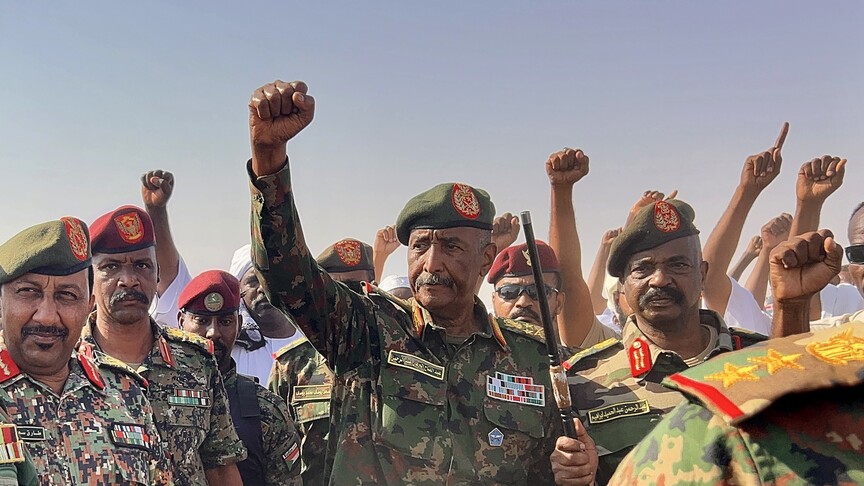
Sudan’s Burhan vows to continue military campaign until ‘every inch’ retaken. [1] Sovereign Council chief reiterates rejection of negotiations with RSF, pledges to press ahead with military option. [1] Burhan rejected negotiations with the RSF and pledged to press ahead with the military option in Sudan. [1] The statement from the sovereign council chief frames the effort as a total reclamation of territory without room for talks. [1]
Fresh Displacement in Blue Nile State
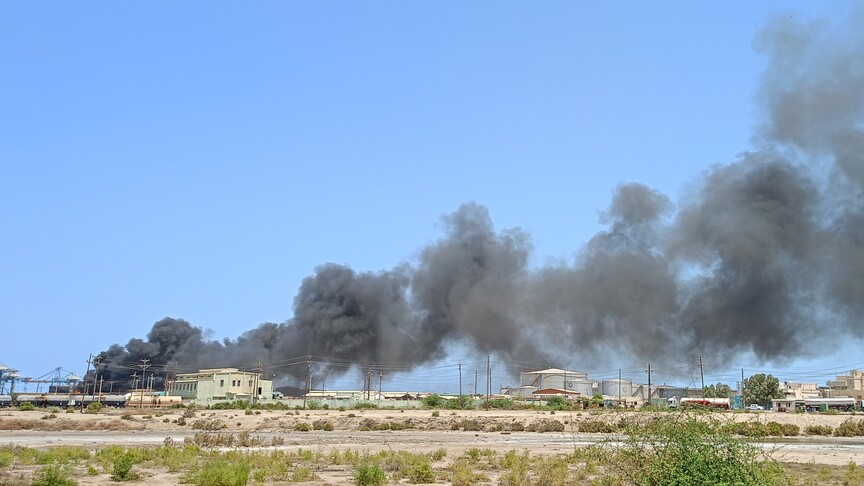
1,770 more people displaced in Sudan’s Blue Nile state: UN migration agency. [2] Deteriorating security forces 5,525 people to flee Wad al-Mahi villages during 3 days. [2] 1,770 more people were displaced in Sudan’s Blue Nile state in three days as security deteriorated in Wad al-Mahi villages. [2] The UN migration agency recorded the new figures amid worsening conditions that drove the larger total of 5,525 people from the villages over the three-day period. [2]
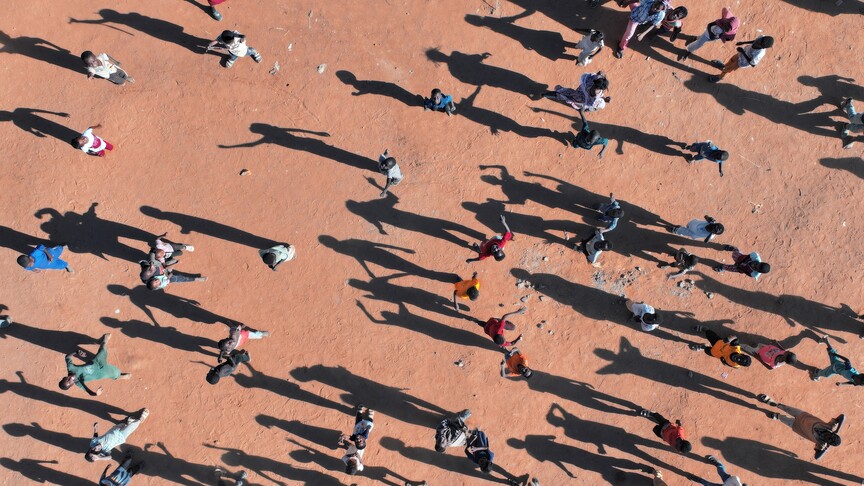
UN migration agency reports 1,770 more people displaced in Sudan’s Blue Nile state. — Source: anadolu
Yemen Government Counter-Attack at Bab el-Mandeb
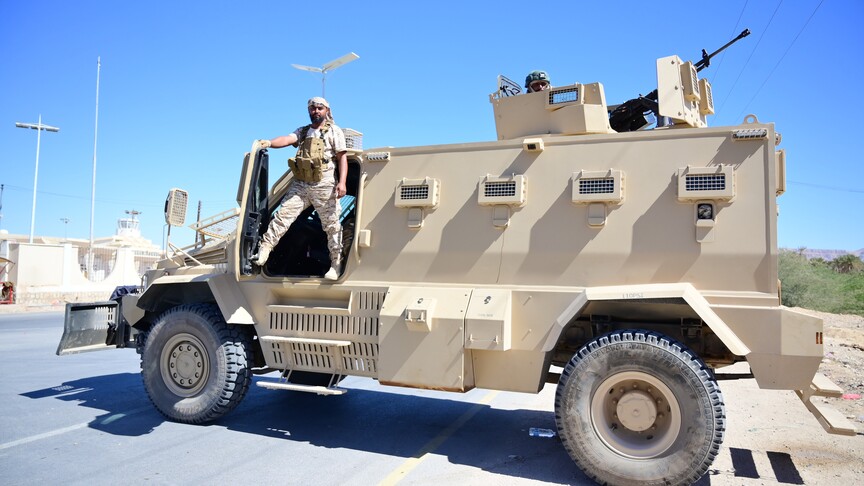
Video posted by government forces in Yemen showed them driving armoured cars over opposing fighters as they recaptured areas around the vital Bab el-Mandeb Strait from Iran-backed Houthis on Monday in a deadly new phase of the fragmented country’s war. [3] The videos gave a glimpse into the brutal closing stages of a pitched battle for control of territory near the strait that the Houthis had captured last month. [3] The videos, verified by Reuters and filmed from inside the armoured vehicles, showed them striking fighters with their vehicle. [3] Some were armed and some were walking or running. [3] However, others were unarmed and some were sitting, lying or crouching on the sandy shore and made no move to evade the oncoming vehicle as they were run over. [3] At one point, a vehicle hits a man, running and unarmed, and another crouching on the ground. [3] It then loops back to drive over two men, both with their hands up and unarmed. [3] Shooting can be heard during the video and at one point the vehicle’s windscreen is cracked by a gunshot. [3] A Houthi statement decried the videos as proof of war crimes, saying they showed “the true nature of the Saudi regime and the forces it has mobilised from extremist factions”. [3] The Saudi-led coalition backing the government forces in Yemen did not immediately respond to a request for comment on the videos or the Houthi accusations of war crimes. [3] A spokesperson for the Giants Brigade — the main Yemeni government force involved in the fighting at Bab el-Mandeb this week — did not immediately comment in response to a Reuters request. [3] The Homeland Shield Forces, a significant formation in the Yemeni government’s military coalition, did not comment directly on the videos but issued a directive on Tuesday urging troops to treat prisoners well and adhere to religious, ethical and legal standards. [3] Rights groups have previously accused the Houthis of war crimes, including sniper and shelling attacks on civilian targets, seizures of aid, abuse of prisoners and use of child soldiers. [3] The group has denied war crimes. [3] Reuters has not been able to independently verify the extent of government gains and the Houthis denied they had lost ground, saying the government claims of advances were baseless. [3] Intense fighting meanwhile continued around Yemen’s third-largest city of Taiz, where Houthi gains in a mountain district have in recent days cut off a main road to Aden, leaving government forces encircled. [3] Yemen’s civil war pits the Houthis against an uneasy coalition of sometimes rival military forces under the internationally recognised government, backed by Saudi Arabia and its allies. [3] The renewed clashes have added a new front to the Iran-US conflict, with the US rebuffing Saudi requests for military help to reverse Houthi gains on the Red Sea coast near Bab el-Mandeb last month and end the group’s missile and drone attacks on their territory. [3] “The operation itself is significant because it’s a turning point in the trajectory of the conflict between the Houthis and the Saudi-led coalition,” said Ahmed Nagi, Yemen analyst at International Crisis Group. [3] “The biggest test will be when they move towards the mountains,” he added. [3] The Giants Brigade is a southern military formation originally formed by students at ultra-conservative Sunni Muslim religious colleges. [3] That background gives both a religious and regional edge to their enmity with the Houthis, who originate in north Yemen and belong to the Zaydi school of Shi’ite Islam. [3] The Giants have themselves fractured this year, splitting between factions backed by Saudi Arabia and the United Arab Emirates, illustrating the internal divisions that have long beset the Yemeni government’s efforts to fight the Houthis. [3] As well as further squeezing global trade routes after Iran’s disruption of shipping in the Strait of Hormuz, the conflagration in Yemen has poured new fire onto Saudi Arabia, a US ally. [3] The Houthis have repeatedly targeted Saudi infrastructure, including airports, oil refineries and pipelines. [3] Residents of the Saudi capital Riyadh reported hearing booms overnight and two of the kingdom’s southern airports were targeted. [3] Saudi Arabia’s intervention in the latest wave of fighting included intense air strikes on Houthi forces on Monday as the Giants Brigade advanced along the flat coastal strip towards Bab el-Mandeb. [3] Within less than a week, the Houthis have reached Yemen’s southern Red Sea coast at Bab al-Mandab, taking the strategically positioned island of Mayyun. [4] From there, they are within reach of one of the world’s most consequential maritime crossings, through which roughly 12 percent of global trade passes. [4] The advance has given renewed urgency to understanding who the Houthis are and how they have acquired the ability to project power beyond Yemen. [4] In 2025, Washington and the Houthis reached an Oman-mediated understanding under which the Houthis agreed not to attack US vessels in exchange for an end to American strikes. [4] The latest escalation has led to similar understandings and commitments, while Oman again served as a mediation channel. [4] The Houthis reaffirmed their commitment not to disrupt international navigation, implicitly including Israeli vessels, while singling out Saudi Arabia as an exception. [4] It is clear that the Houthis, now that they made strategic military advances, will have specific demands before extending the same commitment to Saudi ships and interests. [4] President Trump’s announcement of talks with the Houthis naturally alarmed the Yemeni government. [4] A subsequent call between Trump and Yemen’s President Rashad Al-Alimi on September 20 was intended to reassure the Yemeni leadership that the talks did not represent a change in the U.S. position toward Yemen’s internationally recognized government. [4] Al-Alimi sought U.S. support against the Houthi advance, but Trump made no direct pledge of military support during the call. [4] Beyond these points, few details of the conversation have been publicly disclosed by either the Yemeni or American side. [4]
Mali Retakes Kidal from Separatists
The Malian army said it has entered the strategic northern city of Kidal, which was captured in April by Tuareg separatists who announced their withdrawal earlier Tuesday as the military advanced. [5] "We have just arrived in Kidal ahead of schedule," a staff officer told AFP, with a second officer confirming the arrival. [5] In a statement released on Tuesday, the general staff claimed for the first time to have "engaged in large-scale air-land operations in the Kidal region" with its "Russian partners" in order to "neutralize armed terrorist groups," "destroyed their sanctuaries" and "sustainably restored the security of the population" and their "freedom of movement." [5] Retaking the city would be a powerful symbol in favor of the transitional authorities, who had been humiliated by last April's defeat. [5] Meanwhile, the Tuareg separatist Azawad Liberation Front (FLA) said in a statement it had "decided to carry out a strategic and controlled withdrawal of its forces from the city of Kidal", after capturing it during April attacks alongside allied jihadists who aimed to weaken Mali's junta rulers. [5] Starting in late April, the JNIM and the FLA launched a series of assaults, capturing the northern city of Kidal and killing Mali's defence minister. [5] They also briefly captured the town of Anefis in fierce fighting in early July, among other assaults. [5] Mali has been gripped by a security crisis since 2012, fuelled notably by violence from groups affiliated with Al-Qaeda and the Islamic State jihadist group, as well as local criminal gangs and separatists. [5] Since two successive coups in 2020 and 2021, the country has been ruled by the military, which came to power on the promise of restoring security, so far without success. [5]
Regional and Global Repercussions
The Houthi advance sent shockwaves through the oil market and pushed up petrol and diesel prices worldwide. [3] Fighting continued near Bab el-Mandeb on Tuesday as Saudi-backed government forces battled to consolidate Monday’s counter-attack, besieging Houthi fighters at a military camp near the strait and pushing into hills to the east, Yemeni military sources said. [3] The Yemen clashes have affected global oil markets, raised shipping concerns through a vital trade route carrying 12 percent of global trade, and added to regional tensions involving Saudi Arabia, the UAE, Iran and the US. [3] [4]
What to watch next: Fighting continued near Bab el-Mandeb on Tuesday as Saudi-backed government forces battled to consolidate Monday’s counter-attack, while intense fighting meanwhile continued around Yemen’s third-largest city of Taiz.