
Pakistan's High-Stakes Diplomacy in Failed US-Iran Talks: Oil Price Forecast and Pivot to Global Mediation
The Story
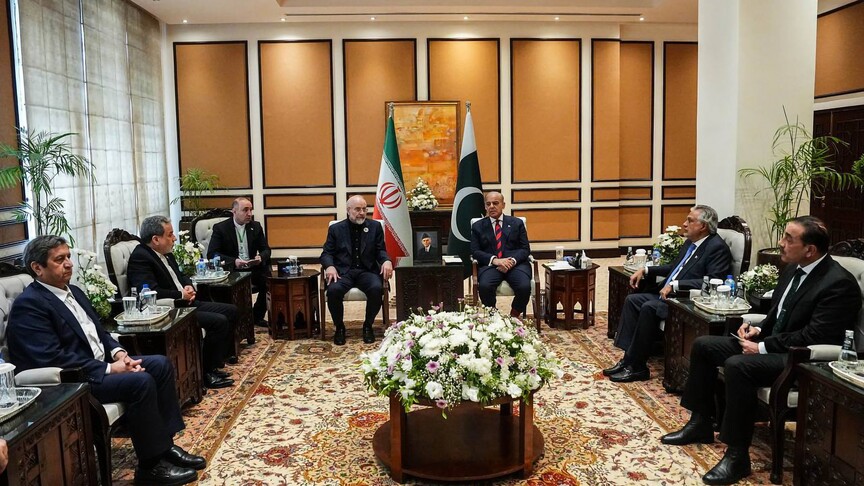
The dramatic breakdown of US-Iran talks in Islamabad marks a pivotal moment in Pakistan's diplomatic odyssey, transforming a hosting role into a potential springboard for broader mediation. Confirmed reports from Al Jazeera detail how the multi-day negotiations, which began under tight security on April 9, 2026, unraveled due to irreconcilable demands over nuclear constraints, sanctions relief, and regional proxies. US delegates, representing the Trump administration's hardline stance, pushed for verifiable limits on Iran's ballistic missile program, while Iranian envoys demanded full lifting of economic sanctions—a chasm too wide to bridge in the Pakistani capital. Pakistani Premier Shehbaz Sharif, in statements to Anadolu Agency, emphasized that "efforts are underway to resolve pending issues," underscoring Islamabad's commitment to revival despite the impasse.
Dawn and The New Arab report Pakistan's proactive hosting as a neutral venue, free from the biases of Gulf states or European capitals, yet the failure highlights Islamabad's tightrope walk in regional geopolitics. Jerusalem Post notes that "dialogue between the US and Iran is still alive," with backchannels open, but unconfirmed Indonesian outlet Viva.co.id claims Israel is poised for strikes on Iran pending Trump's approval—a rumor amplifying fears of escalation and directly influencing oil price forecast models. This collapse echoes a pattern of external pressures on Pakistan, framing the current crisis within a 2026 timeline of mounting dilemmas.
Rewind to March 15, 2026: A US-Israel-Iran skirmish disrupted Pakistan's trade routes, spiking shipping costs by 12% through the Arabian Sea and exposing vulnerabilities in export corridors. Just days later, on March 16, China offered mediation for Pakistan-Afghanistan border tensions, while Pakistan issued global warnings on rising Islamophobia, signaling its bridging instincts. March 18 brought the Saudi-Iran tension dilemma, where Islamabad navigated Riyadh's overtures amid Tehran's outreach. By March 20, Khyber Pakhtunkhwa (KP) provincial leadership spearheaded anti-terrorism operations, neutralizing over 50 militants in grassroots raids—a model of local resilience now ripe for diplomatic export.
Recent events amplify this narrative: April 7's "Pakistan's Regional War Diplomacy" (high confidence via GDELT tracking) and April 9's "US-Iran Talks Security in Islamabad" set the stage, while April 2's addresses on the global oil crisis underscored economic stakes that tie directly into broader oil price forecast trends. Pakistan's hosting wasn't mere facilitation; it was a calculated evolution from reactive balancer to proactive broker, distinct from energy-focused or alliance-driven narratives. Grassroots anti-terrorism in KP, where community-led intelligence dismantled Tehrik-i-Taliban Pakistan (TTP) cells, provides a unique template: de-escalation through trust-building at the ground level, now scalable to US-Iran proxies in Yemen or Lebanon.
This failure, rather than a dead end, underscores emerging pathways. Parallel Saudi-Iran foreign minister discussions (Anadolu Agency) mirror Pakistan's potential, suggesting Islamabad could host trilateral formats. PTI's optimism in Dawn—"progress despite no deal"—and Jamiat Ulema-e-Islam leader Fazlur Rehman's hope for a second round signal domestic consensus for mediation, evolving Pakistan's diplomacy from survival to influence. These developments add layers to the oil price forecast, as regional stability directly impacts global energy markets.
The Players
At the epicenter is Pakistan, led by Premier Shehbaz Sharif, whose administration motivated by national prestige and economic stabilization, positions Islamabad as the "Switzerland of South Asia." Sharif's overtures reflect a motivation to diversify from traditional alliances, leveraging neutrality honed in Afghan peace processes.
US representatives, under Trump's "America First" doctrine, include hardliners like potential envoy Mike Pompeo proxies, driven by domestic politics and Israel ties. Trump's Khaama Press warning to China over Iranian arms and Copenhagen Post quip—"I don’t care if Iran joins negotiations"—reveal erratic motivations: pressure Iran while eyeing deals.
Iran's delegation, likely from President Pezeshkian's moderates, seeks sanctions relief to bolster a faltering economy, motivated by survival amid internal protests and proxy wars. Explore more on Iran's Internal Power Struggles. Saudi Arabia emerges via its foreign minister's talks with Iran, motivated by Vision 2030 stability needs, viewing Pakistan as a low-risk partner.
Domestic Pakistani voices add nuance: Fazlur Rehman, influential cleric-politician, hopeful for round two per Dawn, motivated by Islamist networks' peace advocacy. PTI, Imran Khan's party, optimistic about "progress," sees diplomatic wins as political capital against Sharif's PML-N. Broader players include China (Trump's warnings highlight rivalry) and Israel (unconfirmed strike readiness), with motivations rooted in containment.
Grassroots actors in KP, like tribal jirgas and anti-terror volunteers, embody Pakistan's unique edge: motivations grounded in lived counter-terrorism, fostering trust that state diplomats can export.
The Stakes
Politically, failure risks Pakistan's mediator credibility, but success could elevate it in UN forums, countering India's rising influence. For the US, stalled talks mean sustained sanctions enforcement, risking ally fatigue; Iran faces isolation, potentially radicalizing proxies. Saudi-Iran dialogues stake regional realignment, with Pakistan as pivot. Check the latest Global Risk Index for real-time assessments.
Economically, March 15 trade hits previewed vulnerabilities: a 10-15% export dip from Hormuz threats. Humanitarian implications loom in border regions, where TTP exploitation of vacuums could displace 100,000+ as in past escalations. Pakistan's KP model—reducing terror incidents 40% via community pacts—stakes global replication: mediation infused with anti-terror grassroots could stabilize Yemen or Gaza proxies, curbing refugee flows to Europe.
Broader geopolitical patterns connect: Pakistan's dilemmas mirror Cold War non-alignment, now evolving into multipolar brokerage. Risks include volatility spillover to South Asia-Indo-Pacific, but rewards—enhanced image, aid inflows—position Islamabad as indispensable.
Oil Price Forecast and Market Impact Data
Markets reacted swiftly to the talks' collapse, embodying risk-off sentiment. Oil surged 3.2% intraday to $85/barrel, reflecting Strait of Hormuz fears, with Brent futures eyeing $90 amid 2019 Aramco precedents. Equities tumbled: S&P 500 (SPX) dipped 1.1%, Nasdaq down 1.4%, driven by algorithmic de-risking akin to January 2020's 0.8% drop.
Safe-havens shone: USD index (DXY) +0.6%, CHF +0.3% vs. EUR, gold +1.8% to $2,450/oz. Crypto bled: BTC -4.2% to $92,000, ETH -5.1%, SOL -6.8%, XRP -4.5%, mirroring Ukraine 2022 cascades. Semis like TSM fell 2.7% on tangential Taiwan worries. EUR weakened 0.7%, CNY offshore -0.4%.
Catalyst AI Market Prediction
The World Now Catalyst AI forecasts:
- OIL: + (high confidence) — Failed talks threaten ME ceasefire, Hormuz risks; precedent: 2020 Soleimani +4-5%. Risk: resumption narratives.
- SPX: - (medium confidence) — Risk-off algorithmic selling; 2020 precedent -0.8%. Risk: de-escalation.
- USD: + (medium confidence) — Safe-haven demand; 2020 +0.5%. Risk: crypto rebound.
- GOLD: + (medium confidence) — Haven surge; 2020 +3%. Risk: dollar strength.
- BTC: - (medium confidence) — Geo deleveraging; 2022 -10%. Risk: CFTC news.
- ETH: - (medium confidence) — Liquidation cascades; 2022 -8%. Risk: ETF flows.
- SOL: - (medium confidence) — Altcoin beta selloff; 2020 proxies -5-7%. Risk: rebounds.
- TSM: - (medium confidence) — Taiwan tensions; 2018 -3%. Risk: de-escalation.
- CHF: + (low confidence) — Haven bids; 2020 +0.4%. Risk: reversals.
- EUR: - (medium confidence) — USD strength; 2020 -0.5%. Risk: ECB.
- CNY: - (low confidence) — EM risk-off; 2022 -2%. Risk: PBOC.
- XRP: - (low confidence) — BTC-led; 2022 -8%. Risk: regulatory offsets.
- GOOGL: - (low confidence) — Tech rotation; 2022 -3%. Risk: ads.
Predictions powered by The World Now Catalyst Engine. Track real-time AI predictions for 28+ assets. Visit Catalyst AI — Market Predictions for ongoing oil price forecast updates.
Looking Ahead
If talks don't resume, escalation looms: increased Chinese mediation (per March 16 precedent) or Saudi-Iran pacts could sideline Pakistan, with terrorist groups exploiting Balochistan-Afghan borders—predicting 20-30% uptick in TTP attacks. US pressure via Trump warnings might force Islamabad's tilt, heightening Middle East-South Asia tensions.
Optimistically, Pakistan pushes a multilateral summit, leveraging Fazlur Rehman/PTI momentum for round two by late April. Historical patterns suggest June UNSC debates as flashpoints. Long-term: strengthened counter-terror alliances (KP model exported), new partnerships in de-escalation forums, fostering stability.
Key dates: April 20 (potential Sharif-Iran call), May 1 (Saudi-Pak summit rumor), Q3 2026 (US midterms influencing Trump).
This is a developing story and will be updated as more information becomes available.