
Iran's Internal Power Struggles: How IRGC Rifts Are Redrawing Middle East Alliances Amid US Blockades
Introduction: The Spark of Internal Discord
The breaking news catalyzing this crisis traces back to March 29, 2026, when unprecedented reports surfaced of internal power struggles within Iran's regime, particularly rifts between hardline IRGC factions and more pragmatic elements aligned with Supreme Leader Ali Khamenei. These divisions, long simmering under economic sanctions and proxy war fatigue, have been supercharged by recent U.S. threats. On April 13, 2026, President Trump explicitly warned in a CNN interview that U.S. forces would "blow up" Iranian ships daring to challenge the Hormuz blockade, a move already underway despite backchannel talks noted by Vice President JD Vance as showing "a lot of progress."
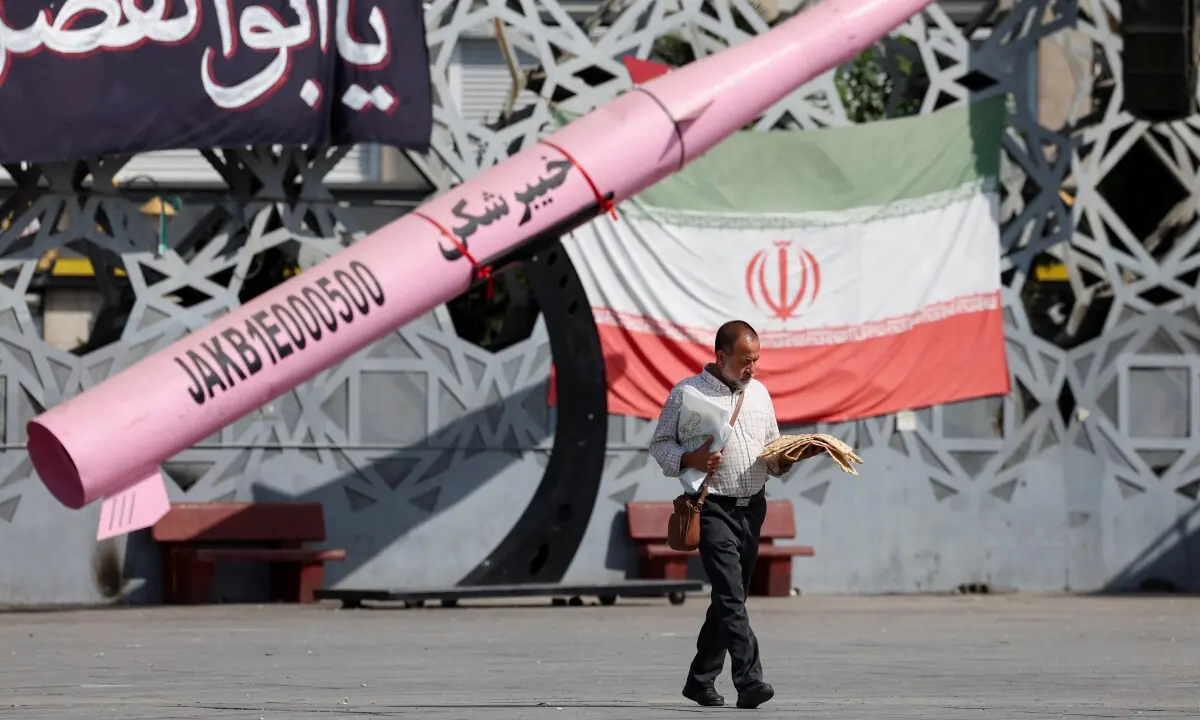
The IRGC, Iran's most powerful military and economic force, has historically been the regime's vanguard in geopolitics—controlling vast proxy networks from Hezbollah in Lebanon to Houthis in Yemen. Yet, confirmed reports of IRGC commanders clashing over responses to the blockade reveal a regime teetering on paralysis. Hardliners push for asymmetric retaliation via proxies, while moderates whisper of concessions to avert economic collapse. This internal discord matters now because it directly influences Iran's defiance: accusations of U.S. "attack plots" on March 29 have escalated into blockade standoffs, drawing in global players and risking a broader proxy war. Unlike prior analyses fixated on oil prices, this unique examination spotlights the human and strategic fissures—ambitious IRGC generals eyeing power vacuums and disillusioned officers leaking dissent—redrawing alliances from Moscow to Manila. Explore related cyber intrusions and internal divisions driving US geopolitics in our extended coverage.
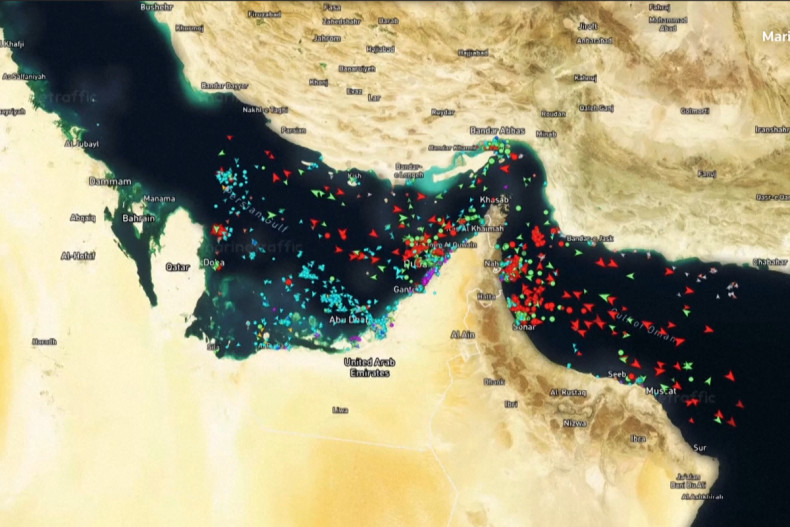
These rifts amplify international tensions, as evidenced by Hezbollah's April 2026 call on Lebanon's government to halt direct talks with Israel, signaling Tehran's proxies bracing for IRGC-led escalations. UN Secretary-General António Guterres's plea for "all parties" to respect navigation freedom underscores the stakes: 20% of global oil flows through Hormuz, now a flashpoint where internal Iranian chaos meets U.S. resolve. Track the Global Risk Index for real-time updates on these escalating Strait of Hormuz blockade risks.
Recent Developments: A Web of Global Responses
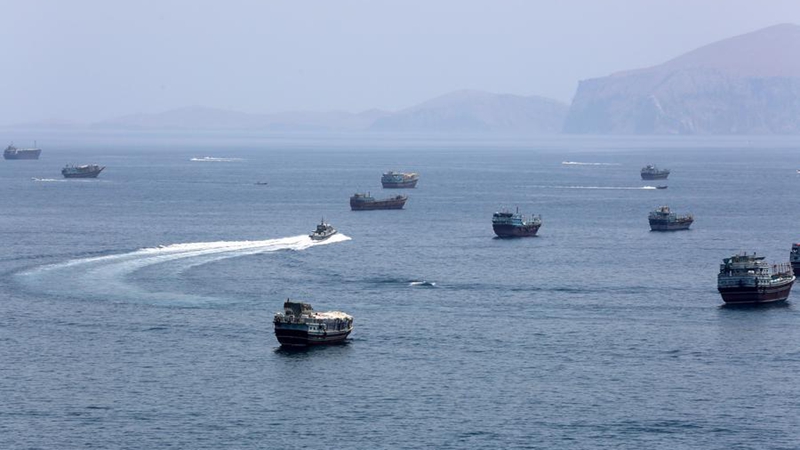
The past week has woven a tapestry of reactions, with Trump's blockade—initiated April 13 per Japan Times reporting—prompting a cascade of positions. Confirmed: U.S. naval assets, including carrier strike groups, are positioned to enforce the blockade, as detailed in Xinhua's explainer on its sustainability. Iran has accused the U.S. of plotting attacks, echoing March 29 claims, while eyeing more talks per Newsmax. Unconfirmed but circulating: IRGC threats to mine Hormuz, potentially spiking insurance rates 300%.
Hezbollah's Anadolu Agency-reported demand to cancel Israel talks ties directly to IRGC patronage; without unified Tehran backing, the group risks isolation. Globally, Hungary's next PM's openness to Putin calls (MyJoyOnline) hints at a pro-Moscow bloc eyeing Iranian oil routes amid Ukraine parallels—Budapest could pivot to Russian energy if Hormuz chokes. The Philippines' Japan Times warning of South China Sea "sabotage" after a cyanide seizure signals naval paranoia rippling from Hormuz, with Manila bolstering U.S. alliances against shared blockade threats. See how US-Iran tensions are fueling Asia-Pacific alliances as unseen catalysts. Germany's chancellor decrying West Bank "annexation" (Anadolu) reflects EU unease, potentially fracturing transatlantic unity as Berlin pushes for de-escalation to secure energy.
Russia's evacuation of the Bushehr nuclear plant on April 2—linked to IRGC rift fears of sabotage—marks a ripple effect, confirmed by satellite imagery. Indonesia's vessel securing in Hormuz on March 29 preempted blockades, forming ad-hoc coalitions with non-aligned states. Even India's outreach to "Balen" (Times of India)—possibly a proxy figure—suggests South Asia hedging bets. These responses form new alliances: a non-Western axis (Russia-Indonesia) versus U.S.-led naval pact, all exacerbated by Iran's internal paralysis. Delve into shifting alliances in the shadow of blockades for more on evolving Middle East geopolitics.
Historical Context: Escalation from Recent Events
To grasp the pattern, rewind to the 2026 timeline, framing current blockades as culminations of Iranian instability. On March 29, regime rifts erupted publicly: IRGC Aerospace Force commanders reportedly defied Khamenei's orders on proxy restraint, amid economic grimness from a failed April 11 ceasefire (per recent event logs). Indonesia simultaneously secured vessels in Hormuz, anticipating chaos, while Iran leveled U.S. attack plot accusations—unproven but fueling paranoia.
March 30 saw Trump's oil seizure threat, a direct riposte to rifts signaling weakness. By April 2, Russia's Bushehr evacuation echoed 2019 Abqaiq attacks, where nuclear sites were collateral risks; historical nuclear tensions (e.g., 2015 JCPOA collapse) now intensify, with IRGC hardliners invoking Stuxnet-era grudges. Recent logs amplify: April 7-11 Hormuz negotiations faltered amid "US shifts in Iran war strategy" (April 8), a failed ceasefire (April 9-11), and April 12 Lebanon-Hormuz talks crumbling into April 13's blockade and Iran's defiance.
This sequence—rifts to accusations to blockade—mirrors 2020 Soleimani fallout but with IRGC introspection: past unity yielded missile barrages; today's divisions risk fragmented responses, inviting exploitation. Proxy wars in Yemen and Syria, dormant since 2024 ceasefires, now stir, connecting dots to broader patterns like Russia's Ukraine playbook influencing Tehran.
Original Analysis: The Strategic Implications of Internal Divisions
IRGC rifts—between Quds Force operatives favoring Hezbollah escalation and domestic commanders prioritizing regime survival—could shatter Iran's deterrence. Policy implications are profound: a weakened IRGC invites U.S. seizures of 2 million bpd Iranian oil, per Xinhua estimates, crippling the $100 billion shadow fleet. Human elements emerge: leaked audio (unconfirmed, circulating on Telegram) reveals IRGC officers decrying proxy drains amid 50% youth unemployment, eroding loyalty.
This exposes military vulnerabilities—IRGC's 190,000 troops fragmented, naval assets outdated against U.S. carriers—potentially sparking proxy wars. Hezbollah, cash-strapped post-2024 losses, may freelance attacks on Israeli shipping, redrawing alliances: Russia, evacuating Bushehr, deepens ties via S-400 sales, while Indonesia's moves signal ASEAN hedging toward BRICS. Opportunities arise for new blocs: Hungary's Putin affinity could broker Europe-Russia-Iran energy pacts, bypassing U.S. sanctions.
Diplomatically, divisions force contradictions—Vance's "progress" in talks clashes with Trump's bellicosity, exploiting rifts for concessions like uranium caps. Vulnerabilities peak in Hormuz: IRGC mines could self-defeat via Indonesian patrols, isolating Tehran. Broader geopolitics shift: Philippines' SCS alerts parallel Hormuz, boosting QUAD cohesion; Germany's West Bank critique pressures EU arms to Israel, fracturing NATO flanks. Ultimately, these human power plays—ambitious generals vs. fatigued ranks—transform economic forecasts into strategic chess, where Iran's disunity invites realignment.
The Players
- IRGC Factions (Iran): Hardliners (e.g., Quds chief Esmail Qaani proxies) seek retaliation via Hezbollah; pragmatists fear collapse. Motivation: Power consolidation amid Khamenei's age (87).
- U.S. (Trump/Vance): Blockade enforcers, motivated by election optics and Israel security; Vance signals talks flexibility.
- Hezbollah/Russia: Proxies/allies urging defiance; Moscow evacuates assets to protect Bushehr investments.
- Global Hedgers (Hungary, Philippines, Indonesia, Germany): Navigating energy/naval risks, forming opportunistic blocs.
- UN/India: Neutral voices pushing navigation/dialogue.
The Stakes
Politically, IRGC collapse risks regime change, unleashing chaos like 1979 Revolution 2.0—humanitarian catastrophe for 85 million Iranians amid hyperinflation. Economically, Hormuz closure spikes oil to $120/bbl, per precedents. Regionally, proxy wars engulf Lebanon/Yemen; globally, alliance redraws pit U.S.-led navies vs. Sino-Russian shadows.
Catalyst AI Market Prediction
The World Now's Catalyst AI engine forecasts sharp reactions to IRGC rifts and Hormuz blockade, driven by supply fears and risk-off flows:
- OIL: + (high confidence) — Hormuz risks echo 2020 Soleimani spike (+4-5%); key risk: talks resumption.
- USD: + (medium confidence) — Safe-haven bids like Jan 2020 DXY +0.5%; crypto rebound risk.
- GOLD: + (medium confidence) — Haven surge akin to Soleimani +3%; dollar strength risk.
- SPX: - (medium confidence) — Algo selling mirrors 2020 -0.8%; de-escalation rebound possible.
- BTC/ETH/SOL: - (medium confidence) — Geo deleveraging like 2022 Ukraine (-10%); CFTC news upside.
- CHF: + (low confidence) — Marginal haven vs. EUR; headline reversals risk.
- EUR: - (low-medium confidence) — USD strength weakens; ECB hawkishness buffer.
- TSM: - (medium confidence) — Taiwan echoes amid semis; de-escalation rhetoric risk.
- XRP: - (low confidence) — BTC beta; regulatory offsets.
Predictions powered by The World Now Catalyst Engine — visit Catalyst AI — Market Predictions for live updates on IRGC rifts impacts.
Predictive Outlook: What Lies Ahead in the Geopolitical Chessboard
IRGC-driven escalations loom: Scenario 1 (60%): Proxy flare-ups—Hezbollah strikes Israeli assets, Houthis mine Red Sea—drawing Russia covertly via drones, igniting localized conflicts by May 2026. Scenario 2 (30%): Rifts force compromise; internal purge leads to diplomatic thaw, Hormuz reopens post-April 20 talks. Scenario 3 (10%): Wider crisis—China backs Iran logistically, naval clashes in Hormuz by June, spiking oil 20%.
Timeline: Watch April 15 UNSC session; April 18 Vance-Iran backchannel. Internal divisions could de-escalate via regime concessions or ignite via hardliner coups. Global impacts: Naval standoffs heighten, non-Western alliances (Russia-Indonesia-China) solidify, U.S. policy tests alliances amid 2026 midterms.
This is a developing story and will be updated as more information becomes available.