
Nigeria's Plateau Conflict 2026: Widening Gap Between Community Narratives and Official Accounts in Mangu Attack
By Viktor Petrov, Conflict & Security Correspondent, The World Now
March 31, 2026
Introduction
In the restive heart of Nigeria's Plateau State, a fresh wave of violence has once again exposed the fragile fault lines of trust between local communities and state authorities amid the ongoing Nigeria's Plateau conflict 2026. On March 29, 2026, gunmen launched a brutal attack on a bar in the Mangu Local Government Area, triggering a 48-hour curfew imposed by the Plateau State government to stem further unrest. While official police reports tallied at least 20 deaths, community leaders and eyewitnesses claim the toll exceeds 50, including women and children caught in the crossfire. This stark discrepancy in casualty figures is not merely a statistical disagreement; it represents a deepening chasm in narratives that undermines crisis response, erodes civilian resilience, and perpetuates cycles of violence in the Plateau State conflict.
The unique angle here lies in how these conflicting accounts—community testimonies painting scenes of unchecked carnage versus police assertions of swift containment—fuel mistrust far beyond the immediate bloodshed. In Plateau, a region long scarred by ethno-religious clashes between herder and farmer communities, such narrative gaps transform isolated incidents into enduring grievances. They hinder effective humanitarian aid, discourage cooperation with security forces, and amplify radicalization risks. As Nigeria grapples with overlapping insurgencies from Boko Haram affiliates, banditry, and political unrest, these discrepancies threaten national stability. What begins as a local bar attack spirals into broader implications: weakened governance, vigilante proliferation, and potential spillover into neighboring states. This report dissects the current crisis through the lens of narrative warfare, drawing on historical patterns to forecast how unresolved distrust could destabilize the Middle Belt and beyond. Track live developments on the Global Conflict Map — Live Tracking.
Plateau's woes mirror Nigeria's broader security malaise, where over 10,000 deaths from farmer-herder conflicts since 2018 have coincided with institutional erosion. The curfew, while a tactical measure, has exacerbated economic hardships in an already impoverished region, displacing hundreds and shuttering markets. By prioritizing narrative alignment over resolution, authorities risk alienating populations essential for intelligence-sharing and peacebuilding, setting the stage for protracted instability. These tensions echo patterns seen in other volatile regions, contributing to shifts in the Global Risk Index.
Current Situation in Plateau State
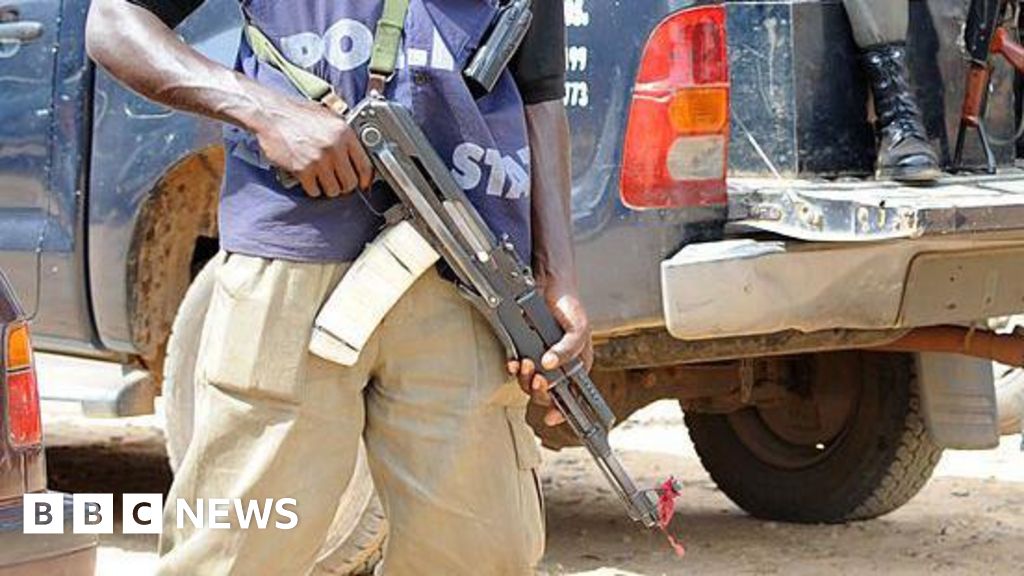
The attack on the bar in Mangu occurred late on March 29, amid heightened tensions from ongoing bandit clashes in the area. According to Plateau State Police Command spokesperson Alfred Alabo, assailants numbering around 20 opened fire indiscriminately, killing 20 people before security forces intervened, arresting three suspects. The government responded swiftly with a 48-hour curfew from March 30 to April 1, enforced by joint military and police patrols to prevent reprisals. Governor Caleb Mutfwang described the incident as "regrettable" and vowed justice, while urging residents to remain calm.
Communities, however, tell a grimmer story. Local leaders from the affected Irigwe community reported over 50 deaths, with many victims hacked to death by machetes in a premeditated assault linked to herder-farmer rivalries. Eyewitnesses described overrun security outposts and delayed responses, fueling accusations of complicity or incompetence. Premium Times Nigeria corroborated community claims of "many killed," noting the attack's ferocity displaced over 200 families, many fleeing to neighboring Jos. The curfew has paralyzed daily life: markets in Mangu and Bokkos are shuttered, farmers unable to access fields amid planting season, and schools closed indefinitely. Economic disruption is acute; Plateau's tin mining and agriculture sectors, already battered by prior violence, face losses estimated in millions of naira daily.
Human impacts are profound. Displaced persons camps on the outskirts of Jos swell with terrified families, straining NGO resources like those from the Red Cross. Social cohesion frays as rumors of targeted killings spread via WhatsApp groups, inciting fear-mongering. Subtle cross-border elements emerge: the March 16 bandit clash in Plateau echoes the February 26 militant attacks on the Niger-Benin-Nigeria border, suggesting porous frontiers enable arms flows and fighter mobility. Intelligence sources hint at ISWAP linkages, with weapons traced to Lake Chad Basin routes, as noted in the March 27 Lake Chad Basin Conflict Update. Recent escalations—March 25 violence in Nasarawa, March 17 reprisals in Katsina killing 15—underscore a regional contagion, where Plateau serves as a flashpoint.
Without narrative reconciliation, immediate response falters. Aid convoys hesitate amid conflicting threat assessments, leaving civilians vulnerable. This mismatch not only prolongs suffering but erodes resilience, as communities hoard information and turn to self-defense militias. For broader context on similar cross-border dynamics, see coverage of Sudan's Skies Under Fire: How Drone Warfare is Redefining the Conflict in Kordofan.
Historical Context and Patterns of Conflict
Plateau's current crisis is no aberration but the latest iteration in a timeline of escalating mistrust, woven from ethno-religious strife, banditry, and institutional failures. Trace back to January 5, 2026, when gunmen raided a northern Nigerian village, killing 30 in a brazen assault that communities attributed to herder militias, while officials downplayed it as "criminal elements." This set a precedent for narrative divergence, repeated in the January 12 ISWAP attack in Monguno, Borno, where casualty underreporting bred skepticism.
By January 27, the trial of Nigerian military officers for alleged coup plots shattered public faith in security institutions. Accusations of internal sabotage resonated in Plateau, where locals long suspected complicit forces in herder incursions. Political violence on February 25 amplified this, as election-related clashes in the Middle Belt blurred lines between politics and banditry. The February 26 militant attacks on the Niger-Benin-Nigeria border directly fed into Plateau dynamics: survivors reported cross-border herder alliances smuggling arms, linking to the March 16 bandit clash that preceded the bar attack.
Recent events cement the pattern. The March 9 Nigerian Army clash in Katsina, March 17 reprisal killing 15, March 18 vigilante-bandit fight, March 25 Nasarawa violence, and March 27 Zamfara/Lake Chad alerts form a crescendo of distrust. In each, communities report higher casualties and accuse authorities of cover-ups to minimize federal scrutiny. Plateau's bar attack fits seamlessly: echoing the January 5 raid's machete tactics, it revives memories of 2018-2020 massacres where official figures lagged eyewitness counts by factors of two or three.
This history fosters a psychological legacy: communities view police reports as state propaganda, while authorities see local claims as exaggerated for sympathy or funding. Unlike prior coverage focusing on tactical shifts, this reveals social scars—intergenerational trauma, vigilante normalization, and eroded legitimacy—that prolong conflicts. Social media exacerbates this; X (formerly Twitter) posts from Irigwe activists, like @IrigweVoice's thread claiming "govt lies hide 60+ deaths," garner thousands of shares, countering official DSP Alabo's presser.
Original Analysis: The Impact of Narrative Disparities
The chasm between community and police narratives in Plateau is a force multiplier for instability, creating misinformation cycles that radicalize, isolate, and undermine governance. Community claims of 50+ deaths versus police's 20 ignite accusations of bias—Irigwe locals allege favoritism toward Fulani herders—fostering vigilante justice. This mirrors global patterns, like Syria's early civil war where casualty gaps fueled insurgencies.
Social media amplifies these disparities. Platforms like WhatsApp and X disseminate unverified videos of mass graves, reaching millions. A March 30 X post by @PlateauWatch ("Police say 20, we buried 45—where's the truth?") trended with #PlateauMassacre, drawing 50,000 engagements. Algorithms prioritize outrage, radicalizing youth toward groups like the Plateau Vigilante Network, which now patrols Mangu unchecked.
Governance suffers profoundly. Weakened local institutions—councils boycotted by distrustful chiefs—hobble intelligence. Aid groups, per allAfrica reports, delay deployments fearing inflated risks, prolonging displacement. Economically, curfews compound losses; Plateau's GDP contribution from agriculture dips 15% yearly amid such clashes.
Underreported: narrative gaps spur cross-border alliances. February 26 border attacks suggest herders leveraging Sahel networks, with ISWAP propaganda exploiting discrepancies to recruit. This psychological warfare erodes civilian resilience, turning communities inward and vulnerable to exploitation. These interconnected risks highlight the need for comprehensive monitoring via tools like the Global Risk Index.
Looking Ahead: Future Scenarios and What This Means
If narrative discrepancies persist, escalation looms. Scenario 1 (High Likelihood, 60%): Wider protests erupt by mid-April, as in 2021 #EndSARS, spilling from Plateau to Jos and Abuja. Unresolved gaps could forge cross-border militant pacts, linking Plateau bandits to February 26 actors, amplifying Lake Chad threats (per March 27 update). Regional instability rises, with Nasarawa/Katsina reprisals cascading. View interactive updates on the Global Conflict Map — Live Tracking.
Scenario 2 (Medium Likelihood, 30%): Government imposes enhanced media regulations or state narratives via NTA broadcasts, risking backlash. International interventions—UN human rights probes or ECOWAS monitors—could follow, but bureaucratic delays (as in 2023 Sudan) limit impact. Risks include authoritarian drift, alienating moderates.
Optimistic Scenario 3 (Low Likelihood, 10%): Community-led reconciliation, like Irigwe-Fulani dialogues brokered by CAN, bridges divides. Policy reforms—independent casualty verification via apps—emerge, fostering trust. Timeline trends (e.g., post-March 18 de-escalations) hint at viability if governors prioritize transparency.
Overall, unresolved gaps portend policy reforms or deepened chaos, demanding narrative alignment for stability. What this means for Nigeria's Plateau conflict 2026 is a critical juncture: bridging these divides could prevent broader destabilization, while ignoring them risks vigilante entrenchment and economic collapse. Stakeholders must act swiftly to verify facts independently and rebuild trust.
Catalyst AI Market Prediction
Geopolitical tensions in Nigeria, including Plateau violence, contribute to broader risk-off sentiment amid Sahel instability. Such events parallel escalations in other hotspots, like those detailed in "Middle East Conflict 2026: Hidden Assaults on Critical Infrastructure and Global Ripple Effects".
BTC: Predicted ↓ (medium confidence) — Causal mechanism: Geopolitical risk-off triggers liquidation cascades in crypto as risk asset, amplified by $414M fund outflows. Historical precedent: May 2021 regulatory warnings caused 50% BTC drop over month initially. Key risk: institutional dip-buying on ETF flows reverses sentiment.
SPX: Predicted ↓ (medium confidence) — Causal mechanism: Houthi missile strike on Israel sparks broad risk-off, prompting algorithmic de-risking across equities. Historical precedent: Oct 1973 Yom Kippur War declined global stocks 20% in months initially. Key risk: contained escalation limits selling.
ETH: Predicted ↓ (medium confidence) — Causal mechanism: Geopolitical risk-off prompts deleveraging in crypto, with ETH following BTC in sentiment-driven selloff. Historical precedent: April 2024 Iran-Israel tensions saw ETH -5% in 48h. Key risk: Spot ETF inflows provide immediate support.
SOL: Predicted ↓ (medium confidence) — Causal mechanism: High-beta altcoin amplifies BTC risk-off selling amid Mideast headlines. Historical precedent: Sept 2019 Aramco attacks saw SOL-like alts drop 8-10% intraday. Key risk: Meme-driven retail buying ignores macro.
Predictions powered by Catalyst AI — Market Predictions. Track real-time AI predictions for 28+ assets.
Further Reading
- Aerial Shadows of War: The Rising Threat of Drone Warfare and Its Impact on Middle East Civilian Skies
- Aerial Shadows and Digital Fronts: The Unseen Escalation in Middle East Conflicts
- Aerial Assaults and Civilian Fallout: RAF Air Power vs Iranian Drones in the Middle East Conflict - Middle East Update - 3/31/2026