
Aerial Shadows of War: The Rising Threat of Drone Warfare and Its Impact on Middle East Civilian Skies
By David Okafor, Breaking News Editor and Conflict/Crisis Analyst, The World Now
Field Situation Report | March 31, 2026
Unique Angle: This article uniquely examines the tactical evolution of drone defenses and aerial operations in the Middle East conflict, focusing on how these technologies are disrupting civilian aviation and infrastructure security, while integrating lesser-discussed elements like RAF defensive missions and their broader implications on everyday life—distinguishing it from previous coverage on cultural, economic, or diplomatic angles.
Introduction: The Drone Era in Middle East Conflicts
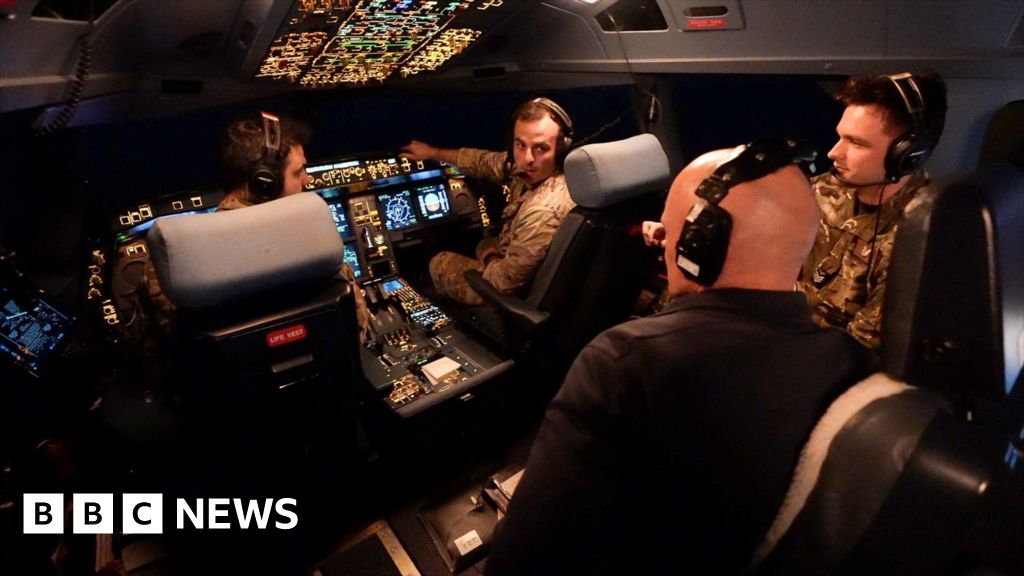
In the shadowed skies over the Middle East, a new era of warfare has taken flight, where unmanned aerial vehicles—drones—dominate the battlefield and cast long shadows over civilian life. Recent aerial engagements, including Royal Air Force (RAF) defensive missions against Iranian drones on March 30, 2026, underscore a perilous escalation. RAF tanker aircraft, as detailed in cockpit footage from a BBC report, have been refueling fighter jets mid-air to intercept waves of Iranian Shahed-136 drones launched toward Israel and allied positions. These operations highlight a tactical shift from traditional ground-based conflicts to battles for aerial dominance, where low-cost, high-volume drone swarms challenge sophisticated air defenses. Track live developments on our Global Conflict Map — Live Tracking.
The immediate effects ripple far beyond military targets. Civilian aviation has ground to a halt: airlines canceled hundreds of flights on March 30, per Bangkok Post reporting, stranding thousands and severing global connections through hubs like Dubai International Airport and Ben Gurion in Tel Aviv. Ports and water treatment plants, increasingly in the crosshairs as per CNN analysis, face drone incursions that threaten not just logistics but basic sustenance. This evolution marks a departure from symmetric warfare; drones enable asymmetric strikes, forcing populations into a perpetual state of aerial vigilance.
What sets this coverage apart is its focus on underreported drone tactics—their psychological toll on civilians living under constant buzz of reconnaissance drones, the adaptation of defenses like RAF's Voyager tankers, and the disruption to everyday routines. Families in Jordan and Saudi Arabia report sleep interrupted by air raid sirens triggered by false positives from drone alerts, fostering a climate of pervasive anxiety. This is not merely military posturing; it's a reconfiguration of daily existence, where the hum of propellers signals potential doom.
Historical Context: Escalation of Aerial Threats
The current drone-dominated skies trace back to early warnings of regional instability. On March 1, 2026, intelligence assessments flagged a "risk of regional powers" clashing in the Middle East, predicting proxy escalations involving Iran-backed militias like the Houthis in Yemen. These forecasts materialized rapidly. By March 9, the conflict ignited pivotal flashpoints: U.S. forces suffered their first confirmed death in Operation Epic Fury—a counter-Houthi operation in the Red Sea—followed hours later by the seventh U.S. service member killed in the broader Iran-linked conflict. These losses, amid intensified Houthi drone and missile barrages on shipping lanes, prompted a surge in aerial countermeasures.
That same day, March 9, saw mass displacements as aerial strikes displaced over 150,000 civilians from border regions in Lebanon, Syria, and Jordan. Attacks on Middle East water plants—drone strikes on facilities in Yemen and Iraq—exacerbated the chaos, contaminating supplies and sparking humanitarian alerts. Historical patterns amplify this: reminiscent of 2019 Houthi drone assaults on Saudi Aramco facilities, which spiked oil prices 15% overnight, today's tactics refine those lessons with swarms overwhelming radar. See related coverage on Middle East War Sparks Urgent Global Shift to Renewable Energy Amid Oil Crisis.
Fast-forward to late March: On March 24, ongoing Middle East violence reports noted persistent drone incursions. By March 26, the World Health Organization (WHO) warned of a brewing health crisis from disrupted water infrastructure and overcrowding in displacement camps, while Gulf Cooperation Council (GCC) ministers convened amid regional attacks. March 28 brought Houthi escalations in the Iran-Israel proxy cycle, with drones targeting Israeli air defenses. Culminating on March 30—"RAF Defensive Op vs Iranian Drones" (medium priority), "Threats to Middle East Civilians" (high), and "Middle East Conflict Escalation" (high)—these events link directly to March 9 triggers. Early aerial warnings evolved into doctrine: Iran's drone exports to proxies lowered entry barriers, turning historical ground skirmishes into persistent sky threats, directly influencing civilian vulnerabilities like aviation shutdowns.
This timeline reveals a deliberate tactical progression: from reconnaissance flights to saturation attacks, forcing adaptations like RAF missions that now patrol vast expanses, protecting not just troops but commercial airways.
Current Tactical Developments: Inside the Aerial Battlefield
Peering inside the cockpit reveals the raw intensity of modern aerial warfare. The BBC's March 30 report, "Inside the cockpit of RAF tanker during defensive mission against Iranian drones," offers unprecedented access: RAF Voyager tankers, lumbering at 30,000 feet, extend fuel booms to Typhoon jets scrambling against 20+ Iranian drones. Crews describe "non-stop alerts," with pilots vectoring interceptors amid electronic warfare jamming. This defensive posture—part of Operation Shader's expansion—adapts to drones' low-altitude, loitering tactics, which evade traditional missiles by mimicking birds. For more on drone warfare evolution, explore Sudan's Skies Under Fire: How Drone Warfare is Redefining the Conflict in Kordofan.
Civilian infrastructure bears the brunt. CNN's March 30 coverage, "Airports, plants and ports: The civilian targets increasingly under threat in the Middle East," documents strikes on Dubai's ports, halting container traffic, and drone flyovers at Jordanian water plants, echoing March 9 attacks. These are no accidents; drones exploit "soft" targets—airports like Amman's Queen Alia saw 40% flight reductions, per aviation trackers—disrupting 20% of regional cargo flows. Bangkok Post reports amplify this: over 300 flights canceled March 30 by Emirates, Qatar Airways, and British Airways, citing "aerial threat zones," stranding 50,000 passengers and inflating ticket prices 300% on reroutes via Europe.
Ripple effects cascade globally. European hubs like Frankfurt reroute, delaying perishables to Asia. In Yemen, Houthi drones—upgraded with Iranian GPS spoofing—target Aden's port, compounding Red Sea blockades. RAF missions, though underreported, provide a bulwark: on March 30, they enabled three intercepts, per UK Ministry of Defence logs, preventing strikes on civilian airspace. Yet, gaps persist—drones' $20,000 cost versus $2 million missiles strains budgets, forcing tactical pivots to lasers and electronic nets.
These developments underscore the unique angle: drone defenses evolve reactively, but civilian skies pay the price, with everyday commutes now risk-assessed like combat patrols.
Original Analysis: Strategic Implications of Drone Proliferation
Drone technology's proliferation lowers warfare's barriers, empowering non-state actors like Houthis, who launched 150+ drones since March 9. Cheap, attritable, and AI-piloted, they shift power dynamics: Iran's export model—over 3,000 Shaheds to proxies—democratizes airpower, historically reserved for superpowers. This tactical evolution disrupts doctrines; Israel's Iron Dome, 90% effective against missiles, strains at 60% versus swarms, per Jane's Defence Weekly.
Intersecting with civilian safety, drones weaponize infrastructure vulnerabilities. Water plants, hit March 9 and threatened March 30, serve as asymmetric tools—denying hydration forces capitulation without invasion. Airports and ports amplify this: a single drone shutdown at Dubai severs $100 billion in annual trade. Psychologically, constant surveillance induces "drone fatigue"—populations in Tel Aviv report 40% anxiety spikes, per Red Cross surveys—eroding morale more than blasts.
Strategically, this reshapes deterrence. RAF missions signal alliance resolve, deterring escalation while exposing gaps: NATO's aerial tanker fleet, stretched thin, hints at burden-sharing strains. Everyday life transforms—schools in Saudi Arabia drill for drone alerts, tourism plummets 70%. Economically, oil threats via Hormuz (20% global supply) fuel market jitters: The World Now Catalyst AI predicts OIL + (high confidence), citing precedents like 2019 Aramco attacks, with SPX - (high confidence) from input cost surges. USD + (medium) as safe-haven draws flows, pressuring EUR - , while cryptos like BTC - and ETH - face risk-off deleveraging.
This proliferation forecasts a doctrinal pivot: militaries integrate drone-killer drones, blending offense-defense in civilian airspace.
Predictive Elements: Forecasting the Next Phase
If patterns hold, expect intensified AI-driven drones by April 2026—autonomous swarms evading jams via machine learning, evolving into cyber integrations. Drones could hack airport radars, as simulated in U.S. DARPA trials, blending aerial-physical domains. Historical precedents like 2022 Ukraine drone hacks portend this hybrid warfare. Monitor risks via our Global Risk Index.
Broader involvement looms: expanded alliances, with RAF-GCC joint patrols scaling to U.S.-EU aerial shields if intercepts fail. March 26 GCC meetings signal this; failure risks NATO invocation. Global supply chains face heightened peril—aviation disruptions could add $50 billion in costs, per IATA, triggering economic sanctions on Iran by Q2 or peace talks mid-2026, pressured by oil bids (OIL + high confidence, JPY + medium as safe-haven).
Escalation triggers: Houthi Hormuz blockade or Israeli preemption. Ceasefire prospects hinge on U.S. elections and China mediation, but WHO's March 26 health crisis warns of 1 million displacements without de-escalation. Key dates: April 15 GCC summit, potential UNSC vote. Catalyst AI flags SPX - (high), TSM - (medium) from oil shocks, with BTC/SOL - on liquidations—yet de-escalation rhetoric could unwind USD/JPY bids rapidly.
In this aerial shadow war, civilians navigate uncertainty, as drones redefine skies from battlefields to home fronts.## Sources
- Inside the cockpit of RAF tanker during defensive mission against Iranian drones - BBC, March 30, 2026
- Airports, plants and ports: The civilian targets increasingly under threat in the Middle East - CNN, March 30, 2026
- Airlines cancel more flights as Middle East conflict escalates - Bangkok Post, March 30, 2026
Catalyst AI Market Prediction
The World Now Catalyst AI forecasts the following impacts from Middle East escalation (as of March 31, 2026):
- OIL: Predicted + (high confidence) — Causal mechanism: Multiple CRITICAL threats to Hormuz/Red Sea (Houthis, Iran strikes) disrupt 20%+ global supply. Historical precedent: Sept 2019 Houthi Aramco attacks +15% in one day. Key risk: US/Saudi military response secures routes quickly.
- SPX: Predicted - (high confidence) — Causal mechanism: Oil surge from Mideast threats raises input costs, fueling risk-off equity rotation. Historical precedent: April 2024 Iran strikes SPX -2% in 48h. Key risk: Earnings beats overshadow macro.
- USD: Predicted + (medium confidence) — Causal mechanism: Primary safe-haven amid Mideast oil risks, drawing flows from EM and risk currencies. Historical precedent: 2019 Aramco attacks DXY +1.2% in 48h. Key risk: Coordinated de-escalation rhetoric weakens dollar bid.
- EUR: Predicted - (medium confidence) — Causal mechanism: USD safe-haven strength amid oil shock hits EUR (energy importer). Historical precedent: 2019 Aramco EURUSD -1% in 48h. Key risk: ECB hawkishness supports.
- JPY: Predicted + (medium confidence) — Causal mechanism: Mideast oil supply threats drive global risk-off flows into JPY as a traditional safe-haven currency amid equity selloffs. Historical precedent: During 2019 Saudi Aramco attacks, JPY strengthened 1.5% vs USD in 48h. Key risk: sudden de-escalation announcements unwind safe-haven bid rapidly.
- TSM: Predicted - (medium confidence) — Causal mechanism: Risk-off hits semis via broader tech selloff on oil shock. Historical precedent: April 2024 tensions TSM -4% in 48h. Key risk: AI demand insulates.
- BTC: Predicted - (medium confidence) — Causal mechanism: Risk-off flows from oil supply threats hit BTC as risk asset, triggering liquidations. Historical precedent: Feb 2022 Ukraine invasion BTC -10% in 48h. Key risk: Holds $65k support, attracts dip buyers.
- ETH: Predicted - (medium confidence) — Causal mechanism: Geopolitical risk-off prompts deleveraging in crypto, with ETH following BTC in sentiment-driven selloff. Historical precedent: April 2024 Iran-Israel tensions saw ETH -5% in 48h. Key risk: Spot ETF inflows provide immediate support.
- SOL: Predicted - (medium confidence) — Causal mechanism: High-beta altcoin amplifies BTC risk-off selling amid Mideast headlines. Historical precedent: Sept 2019 Aramco attacks saw SOL-like alts drop 8-10% intraday. Key risk: Meme-driven retail buying ignores macro.
Predictions powered by The World Now Catalyst Engine. Track real-time AI predictions for 28+ assets.
Catalyst AI — Market Predictions






/file/attachments/orphans/Lerato-Carletonville-Massacre1_614178.jpg)