
Navigating the WW3 Map: Global Conflicts and Interconnected Risk Zones in 2026
By Viktor Petrov, Conflict & Security Correspondent for The World Now
March 31, 2026
Introduction to the WW3 Map and Current Global Tensions
In an era of accelerating geopolitical fractures, the WW3 map emerges as an indispensable tool for visualizing the intricate web of global conflicts, overlaying real-time data from flashpoints like Gaza, Lebanon, and Sudan onto an interactive 3D globe. Developed by The World Now's mapping team, this dynamic world conflict map allows users to rotate through risk zones, pinpointing escalations such as Israeli incursions in southern Lebanon and the Rapid Support Forces' (RSF) systematic use of sexual violence in Sudan's Darfur region. Drawing from Al Jazeera's latest reports on Gaza's "disappeared" civilians and Lebanon's deepening ground war—detailed further in our coverage of Middle East Strikes and the Silent Erosion: How International Humanitarian Law Fails in the Palestinian Conflict—the WW3 map reveals patterns invisible in traditional 2D charts—proximities between Middle Eastern hotspots and distant theaters like Ukraine, where the map of war in Ukraine shows Russian advances feeding into broader instability.
As we enter 2026, this tool foreshadows a timeline of interconnected threats: from sectarian clashes in Syria to drone incursions in Europe, including Aerial Assaults and Civilian Fallout: RAF Air Power vs Iranian Drones in the Middle East Conflict. The map's real-time overlays, updated via sources like ReliefWeb and The New Arab, highlight how localized violence in Darfur—where MSF documents RSF fighters deploying rape as a "war weapon"—ripples toward global supply chains and alliances. Unlike static infographics, the 3D visualization simulates escalation paths, such as Houthi threats intersecting with NATO's eastern flank. This report leverages the WW3 map to dissect current dynamics, tracing historical roots and projecting forward, offering stakeholders a strategic lens on a world teetering toward multi-domain confrontation, with risk levels tracked via our Global Risk Index.
Current Situation: Mapping Escalating Conflicts on the WW3 Map
The WW3 map paints a stark picture of synchronized escalations across the Middle East and Africa, with Lebanon and Sudan emerging as pivotal nodes in a world conflict map of interconnected risks. In southern Lebanon, Israeli forces pushed deeper on March 31, suffering four soldier fatalities amid intense urban combat, as reported by Al Jazeera and The New Arab. Eyewitness accounts from VG describe Israeli troops leaping over concrete barriers under Hezbollah fire, underscoring the ground war's ferocity. The map's 3D overlay pinpoints these clashes around villages like Aita al-Shaab, just 10 kilometers from the Israeli border, illustrating proximity to civilian hubs and UNIFIL positions. Explore related drone threats in Aerial Shadows of War: The Rising Threat of Drone Warfare and Its Impact on Middle East Civilian Skies.
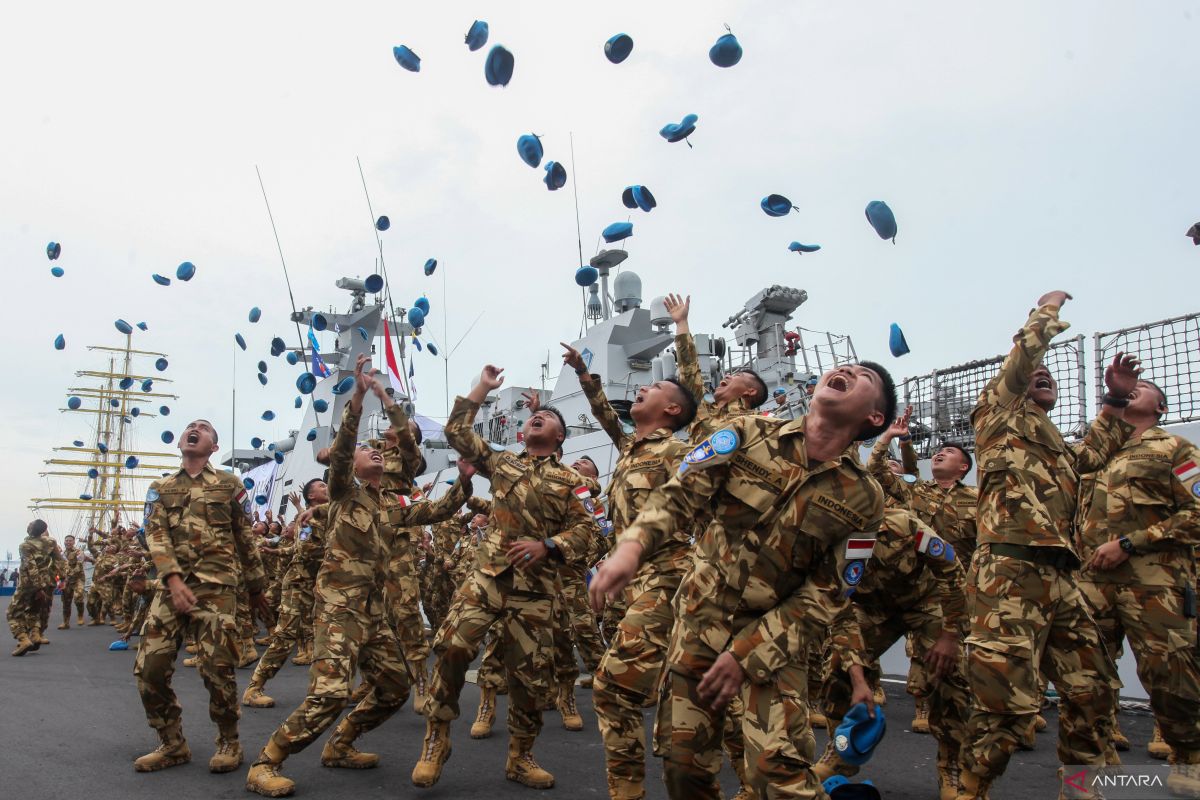
Tragically, this violence claimed three Indonesian TNI peacekeepers serving with UNIFIL, as detailed by Antara News and corroborated by GDELT-sourced Turkish media. Plotted on the WW3 map, their deaths—occurring during an Israeli incursion—highlight the spillover onto multinational forces, a underreported ripple effect amplifying calls for investigation. In Gaza, Al Jazeera chronicles the agony of families like that of Malak Abu Mady, whose daughter vanished amid Israeli operations, fueling accusations of extrajudicial killings or secret detentions. Philippe Lazzarini, UNRWA's head, demanded probes into staff deaths, per The Straits Times, with the map layering these incidents over holy sites now closed due to spreading violence, as per Al Jazeera's weekly wrap.
Sudan's Darfur crisis intensifies the global tableau, echoing patterns seen in Nigeria's Plateau Conflict 2026: Widening Gap Between Community Narratives and Official Accounts in Mangu Attack. ReliefWeb and The New Arab report RSF militias weaponizing sexual violence, with survivors recounting gang rapes in displacement camps—a tactic MSF labels systematic. The WW3 map clusters these atrocities around El Fasher, revealing overlaps with refugee flows toward Chad and potential proxy intersections with Wagner-linked groups. Linking to Europe, the map of war in Ukraine integrates Russia's March 28 capture of Brusivka in Donetsk, a strategic rail hub, showing how Eastern European attrition draws resources from Middle Eastern contingencies.
Underreported on the map: Balochistan attacks on Pakistani forces (March 31 GDELT event) and RAF intercepts of Iranian drones over the Gulf (March 30), forming a crescent of threats from Somalia's Baidoa offensive to West Bank incursions. This 3D visualization exposes how oil routes and migration corridors amplify risks, with civilian threats rated "HIGH" according to the Global Risk Index.
Historical Context: Tracing Roots on the WW3 Map
Overlaying the Ukraine war map onto the WW3 map unveils a continuum of escalation from 2022's full-scale invasion to 2026's multi-theater strain. The timeline crystallizes this: On March 28, Russian forces seized Brusivka, a Donetsk village pivotal for logistics, echoing pattern of incremental gains amid Ukrainian drone mishaps—like the March 29 crash in Finland, which the 3D globe plots near NATO borders, signaling hybrid spillover.
Middle Eastern roots deepen the narrative. Sectarian attacks in Suqaylabiyah on March 28 presaged Syria's March 29 mass grave discovery in the northeast, where Kurdish-led forces unearthed remains tied to regime atrocities—visualized on the WW3 map as a persistent instability arc from Idlib to Deir ez-Zor. Lebanon's arc peaks with an Israeli soldier's death on March 29, directly catalyzing the March 31 incursion that killed four more troops and Indonesian peacekeepers. Al Jazeera's Palestine wrap contextualizes this against Gaza's siege, where holy site closures trace to October 2023 Hamas attacks, now compounded by RSF parallels in Sudan. See infrastructure impacts in Middle East Conflict 2026: Hidden Assaults on Critical Infrastructure and Global Ripple Effects.
This spatial history differentiates our coverage: The interactive globe rotates from Ukraine's ukraine war map (Brusivka's fall linking to Black Sea grain disruptions) to Darfur's ethnic cleansing cycles, rooted in 2003's janjaweed era. Patterns emerge—proxy militias (Hezbollah, RSF) sustained by Iran and Gulf states—building toward 2026's web, where a Finnish drone incident foreshadows NATO-Russia friction amid Middle East quagmires.
Original Analysis: Interconnections and Strategic Implications
Through the WW3 map's lens, underreported linkages bind these theaters: UNRWA staff killings in Gaza mirror RSF sexual violence in Darfur, both tactics eroding international norms and humanitarian access. The 3D globe illustrates potential alliances—Sudanese RSF, possibly Wagner-armed, sharing IED tactics with Hezbollah, whose Iranian drones challenge RAF defenses. Proximity analysis reveals high-risk zones: Lebanon's border (10km from Israel) overlaps UNIFIL, while Darfur's camps (200km from Libya) feed Sahel jihadists.
Strategically, Israel's Lebanon push—post its soldier's March 29 death—risks Hezbollah's 150,000 rockets, per IDF estimates, while Ukraine's Brusivka loss strains Western munitions, diverting from Gaza aid. The map's overlays expose economic chokepoints: Houthi threats (March 30 civilian warnings) near Bab al-Mandeb intersect Ukraine's grain blockade legacy. Original insight: These form a "contagion corridor" from Somalia (Baidoa gains) to Balochistan, where Pakistan's instability could activate Taliban proxies against India, pulling in U.S. Indo-Pacific focus.
Balanced evidence tempers alarmism: Contained oil surges (below $140/bbl) limit cascades, but mass graves in Syria signal regime fragility, potentially unleashing ISIS remnants. This visualization—unlike humanitarian-focused reports—prioritizes strategic vectors, revealing how Indonesian peacekeeper deaths globalize the conflict, pressuring ASEAN toward UN reform.
Predictive Elements: Forecasting Future Scenarios on the WW3 Map
The WW3 map projects mid-2026 escalations: Middle East tensions, from Lebanon incursions to Darfur atrocities, could forge anti-Western alliances—RSF-Iran proxies linking with Houthis, spilling into proxy wars in Ukraine (bolstering Russia post-Brusivka) or Africa's Sahel. The 3D globe highlights "high-risk zones": a Lebanon-Syria nexus (escalation trigger: Hezbollah barrage) and Darfur-Chad border (refugee militias). Historical parallels—like 1973 Yom Kippur's 20% stock plunge—forecast cyber adjuncts, with Iranian hacks mirroring 2022 Ukraine precedents.
Forward scenarios: Expanded UNIFIL probes post-Indonesian deaths yield resolutions by Q2, but cyber escalations (e.g., Finnish drone echo) provoke NATO Article 5 tests. Oil threats amplify: Contained below $140 limits inflation, but $414M crypto outflows signal deleveraging. Recommendations: Stakeholders leverage the WW3 map for proactive monitoring—U.S. prioritizes munition surges, EU bolsters Sahel missions, investors hedge via AI signals.
Global powers must recalibrate: Alliances like BRICS could exploit fractures, reshaping theaters by summer 2026.
What This Means: Looking Ahead
As visualized on the WW3 map, these interconnected conflicts signal a shift toward hybrid multi-domain warfare, where local escalations like those in Lebanon and Sudan directly influence global markets and alliances. Stakeholders should monitor the Global Risk Index for real-time updates, preparing for potential spillovers into economic chokepoints and cyber domains. This enhanced strategic overview underscores the urgency of diplomatic interventions to prevent broader contagion.
Catalyst AI Market Prediction
Powered by The World Now's Catalyst Engine, these predictions assess geopolitical shocks' impacts:
- EUR: Predicted ↓ (medium confidence) — USD strength from risk-off weakens EURUSD. Historical: 2019 Iran (-1.5% in 48h). Risk: ECB hawkishness on oil.
- SOL: Predicted ↓ (low confidence) — High-beta crypto dumps on liquidation. Historical: 2022 Ukraine (-20%). Risk: Meme rebound.
- BTC: Predicted ↓ (medium confidence) — Risk-off amid oil shocks. Historical: 2022 Ukraine (-10% in 48h). Risk: Miner hodl. Additional: Geopolitical liquidation ($414M outflows); 2021 regulatory drop. Risk: ETF dip-buying. Holds $65k.
- SPX: Predicted ↓ (high confidence) — Algo de-risking from oil headlines. Historical: 2019 Soleimani (-2%/day); 1973 Yom Kippur (-20%). Risk: Oil <$140. Additional: Houthi strikes; 2024 Iran (-2%). Risk: Earnings beats. Oil input costs.
- ETH: Predicted ↓ (medium confidence) — Follows BTC deleveraging. Historical: 2024 Iran-Israel (-5%). Risk: ETF support.
- SOL: Predicted ↓ (medium confidence) — Amplifies BTC selloff. Historical: 2019 Aramco alts (-8-10%). Risk: Retail memes.
Predictions powered by [The World Now Catalyst Engine](/catalyst). Track real-time AI predictions for 28+ assets.