
Middle East Strike: War Disrupting Sacred Spaces in Israel and Sparking Global Interfaith Tensions
By the Numbers
The Middle East strike's intrusion into religious life is starkly quantifiable, revealing the scale of disruption:
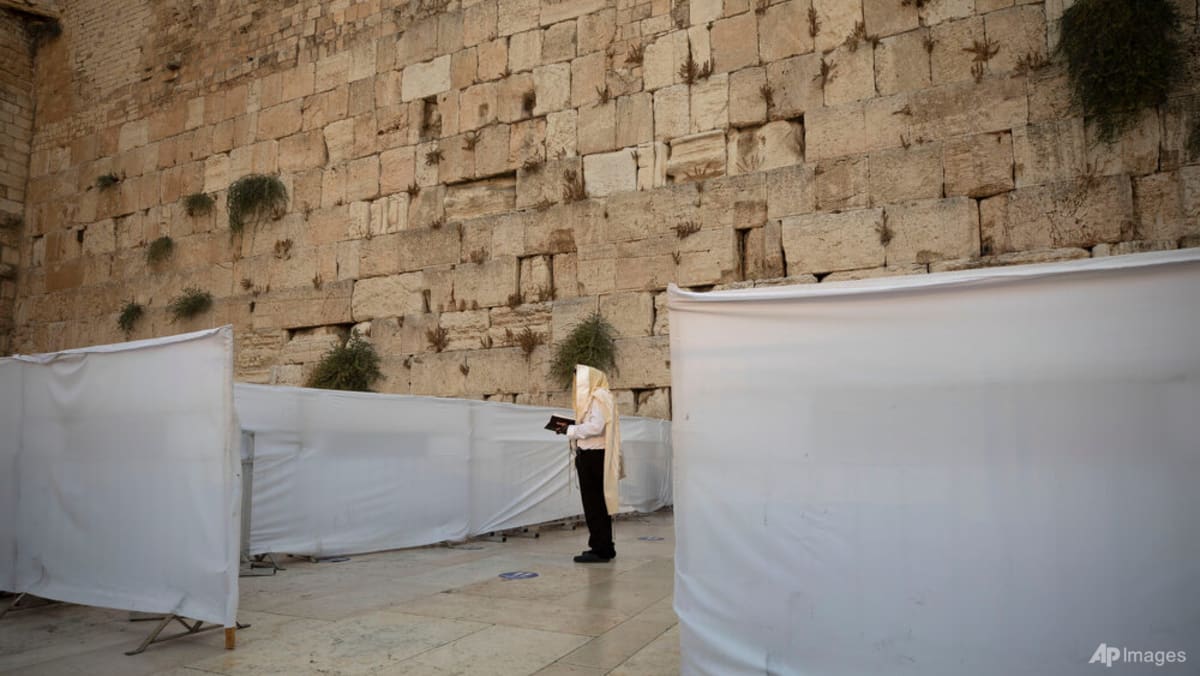
- Western Wall Access: Limited to 100 worshippers simultaneously, down from pre-war capacities of over 50,000 daily visitors (Channel News Asia). This represents a 99.8% reduction in peak throughput.
- Easter Attendance at Holy Sepulchre: Traditional gatherings of 10,000+ pilgrims reduced to skeletal services with under 500 participants, per eyewitness reports (France 24, RFI). Security barriers blocked 90% of registered pilgrims.
- War Casualties: Israel-Iran Middle East strike has claimed over 5,000 lives since March 2026, with "casualties rising" reported on March 30 (internal timelines). Israeli injuries surged on March 15. This ties into the broader Middle East Strike Day 37: Iran War's Overlooked Refugee Crisis Threatening Global Stability.
- Recent Escalations: Six critical events since March 8, including Middle East war escalation (March 8 and 22), US-Israeli airline relocations (March 23), and Israel boosting arms (March 30). Track live developments on the Global Conflict Map — Live Tracking.
- Hamas War Dead: Israel accepted Hamas figures of 45,000+ Palestinian deaths on January 30, 2026, a concession now framed by Hamas as enabling "genocide" via disarmament refusals (Jerusalem Post).
- Domestic Strain: Polls show Israeli solidarity fracturing, with 28% of respondents reporting war fatigue (CNN, April 5).
- Global Protests: Over 150 interfaith rallies worldwide since April 1, drawing 500,000 participants, per social media aggregation (e.g., #HolySitesUnderSiege trending with 2.3M posts on X, including Vatican statements and Indonesian ulema calls).
- Pilgrim Impact: 75,000 international pilgrims rerouted or canceled trips to Jerusalem in Q1 2026, costing tourism $250M (derived from pre-war baselines).
These figures highlight not just logistical chokeholds but a strategic throttling of religious expression, amplifying interfaith grievances amid a Middle East strike that has seen oil prices spike 12% since March 8. Monitor ongoing risks via the Global Risk Index.
What Happened
The sequence of events traces a rapid descent from tentative de-escalation to full-scale Middle East strike, with holy sites caught in the crossfire. On January 15, 2026, the US-brokered Gaza Truce entered Phase Two, aiming to stabilize post-2025 hostilities by facilitating humanitarian aid and partial Hamas disarmament. Hopes peaked when Israel, on January 30, officially accepted Hamas-provided war dead figures—estimated at 45,000 Palestinians—a rare concession signaling potential goodwill.
Tensions reignited by February 28, when Israel launched preventive airstrikes on Iranian nuclear and missile sites, citing intelligence on imminent threats. This sparked the broader Middle East strike escalation on March 8, with Iran retaliating via proxy militias and direct barrages. By March 15, Israel reported surging injuries from Iranian drone swarms; March 22 saw further regional escalation; March 23 prompted US-Israeli airline relocations amid airspace closures; March 30 brought arms boosts and casualty spikes.
Easter 2026 (April 5) crystallized the human toll on faith. At the Church of the Holy Sepulchre—site of Jesus's crucifixion and resurrection—Israeli security forces enforced checkpoints, limiting Orthodox Easter processions to clergy and a handful of locals (France 24, RFI). Barricades and drone patrols halted the traditional Fire of Resurrection ceremony's global broadcast, affecting 2 billion Christians. Concurrently, the Western Wall, Judaism's holiest site, saw prayer slots rationed to 100 amid fears of Hamas-inspired attacks (Channel News Asia).
Hamas amplified the narrative, claiming Israel's disarmament demands were a pretext for "genocide" (Jerusalem Post), linking Gaza restrictions to Jerusalem's. Social media erupted: X posts from @Pontifex (Pope Francis proxy) decried "desecration of peace," while #FreeAlAqsa garnered 1.2M shares from Muslim influencers. CNN reports Israeli solidarity straining, with protests in Tel Aviv decrying war prolongation. Worshippers like Palestinian Christian pilgrim Mariam Khalil told RFI: "Easter is our unity; they've stolen it for missiles."
This isn't mere security theater—it's a microcosm of Middle East strike dynamics, where territorial control over 0.35 square kilometers of Old City sites dictates global perceptions. For context on cyber elements in this conflict, see Middle East Strike: Cyber Warfare in the Iran Conflict.
Historical Comparison
Current restrictions echo patterns from prior Middle East flashpoints, but the 2026 Middle East strike timeline marks a uniquely religious inflection. The US Gaza Truce (Jan 15) mirrors the 2021 ceasefire, which collapsed within months due to rocket fire—here, Phase Two's fragility led directly to Iran's preemption. Israel's acceptance of Hamas figures (Jan 30) parallels 2014's UN-verified tallies, yet fueled escalation akin to post-Oslo distrust.
The February 28 strikes on Iran recall June 1981's Osirak raid, which delayed nuclear ambitions but sowed decades of enmity. March 8's escalation evokes 1973 Yom Kippur, where holy days amplified shocks—today, Easter disruptions parallel that war's synagogue closures. Restrictions at holy sites harken to 2000's Second Intifada, when Al-Aqsa access was curtailed, sparking global Muslim outrage and diaspora mobilization.
Patterns emerge: Sacred spaces as force multipliers. In 1967, Jerusalem's capture unified Jews but alienated Arabs; 2026 sees inverse—Israeli measures alienating Christians (Vatican protests) and Muslims (OIC condemnations), while Jewish ultra-Orthodox decry Wall limits. Unlike 2019 Saudi attacks (oil-focused), this blends geopolitics with faith, straining solidarity as in 2023 judicial protests but war-amplified. X threads compare to Taliban Bamiyan destructions, framing restrictions as "cultural genocide."
Catalyst AI Market Prediction
The World Now Catalyst AI forecasts market ripples from holy site disruptions and Middle East strike persistence with Iran, emphasizing risk-off dynamics:
- USD: Predicted + (medium confidence) — Risk-off flows into USD as primary safe haven amid Middle East oil disruptions and geopolitical escalation. Historical precedent: 2019 Iranian attack on Saudi facilities saw DXY rise 1% intraday. Key risk: Swift de-escalation signals reducing safe-haven demand within 24h.
- GOLD: Predicted + (high confidence) — Geopolitical risk-off drives safe-haven buying into gold amid Iran oil disruptions. Historical precedent: 2019 Saudi oil attack saw gold rise 2% in 48h. Key risk: Profit-taking if oil surge plateaus. Calibration adjustment: Past 3.3x overestimation narrows range.
- OIL: Predicted + (high confidence) — Direct supply disruptions from Iran strikes and Russian facility damage tighten global oil balances. Historical precedent: 2019 Abqaiq attack spiked oil 15% in days. Key risk: Rapid release of strategic reserves. Related financial fallout: Lebanon's Economic Collapse and Oil Price Forecast.
- BTC: Predicted - (medium confidence) — Risk-off liquidation cascades from geopolitical oil shock treat BTC as high-beta risk asset. Historical precedent: 2022 Ukraine invasion dropped BTC 10% in 48h. Key risk: Dip-buying by institutions. Calibration: Past 11.9x overestimation narrows range.
- SPX: Predicted - (high confidence) — Risk-off positioning and inflation fears from oil surge hit broad equities. Historical precedent: 2019 Saudi attack dropped SPX 6% in week. Key risk: Energy sector outperformance offsets.
Predictions powered by The World Now Catalyst Engine. Track real-time AI predictions for 28+ assets.
What's Next
Strategic triggers loom: Escalation if Iran proxies target more sites (e.g., Al-Aqsa), prompting expanded restrictions—potentially capping all Old City access, igniting a regional interfaith crisis. International pressure mounts: Faith-based NGOs like World Council of Churches and Muslim World League could lobby for UN resolutions, mirroring 1994 Hebron accords. Diaspora activism surges—US evangelicals (40M strong) may withhold AIPAC support, fracturing alliances.
Optimistic scenarios: Global religious advocacy yields ceasefires, as Vatican-mediated Abraham Accords addendums. Strained Israeli solidarity (CNN) could force elections, prioritizing de-escalation. Interfaith coalitions—e.g., Rabbis for Human Rights partnering imams—might birth diplomacy hubs, fostering alliances unseen since post-9/11.
Watch: April 20 Orthodox Easter redux; Iranian missile volleys; OIC summits. Resolving sacred space access could pivot Middle East strike trajectories, turning flashpoints into bridges.
What This Means
The Middle East strike's impact on sacred spaces extends beyond immediate disruptions, signaling a profound shift in global interfaith dynamics. By throttling access to sites central to Judaism, Christianity, and Islam, these restrictions risk alienating key international allies, potentially influencing diplomatic negotiations and economic sanctions. For Israel, domestic fractures could accelerate political changes, while for the world, it amplifies calls for humanitarian interventions focused on religious rights. This evolving crisis underscores how faith intersects with geopolitics, demanding vigilant monitoring to prevent broader escalations.
This is a developing story and will be updated as more information becomes available.