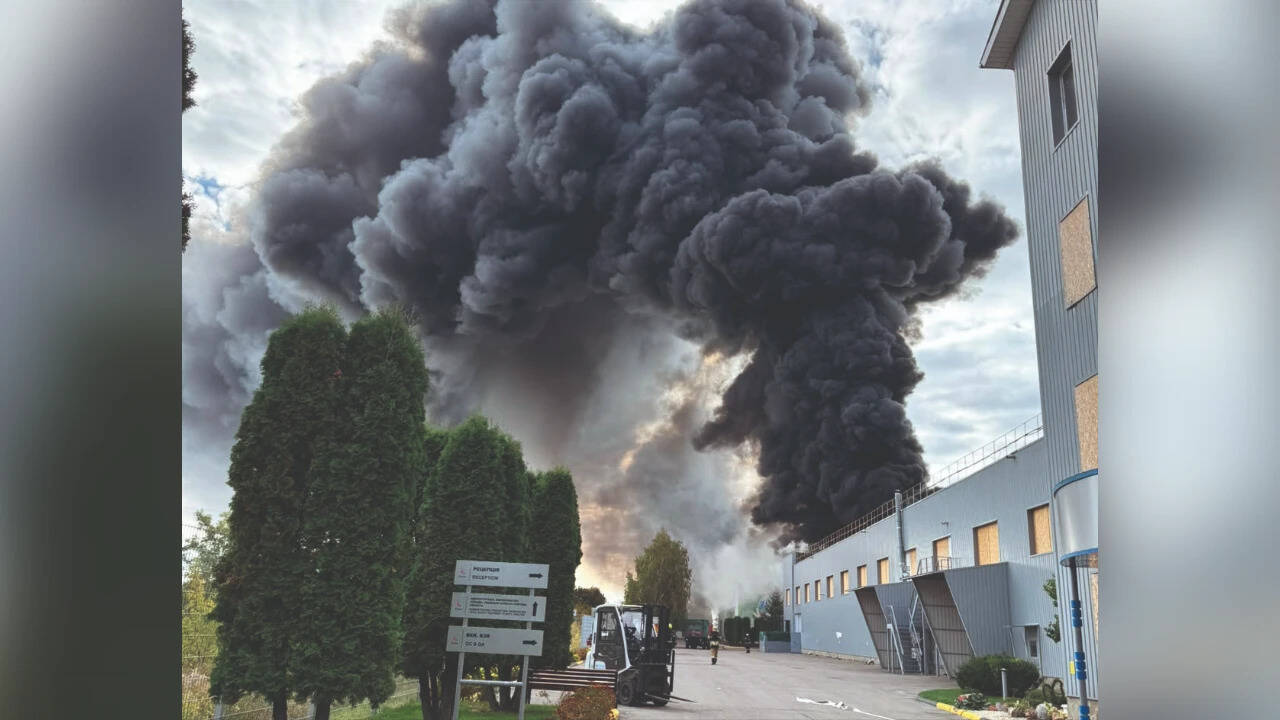
Middle East Strike: The Overlooked Periphery Redefining Israel's Security in the Wake of Iranian Strikes
Introduction: Setting the Stage for Border Vulnerabilities in the Middle East Strike
In the shadow of Iran's latest missile barrages on Israel—detailed in live updates from April 2026 as part of the intensifying Middle East strike—Iranian strikes have not only tested Israel's Iron Dome defenses but have illuminated a critical vulnerability long overlooked in mainstream coverage: its northern and southern border peripheries. While urban centers like Tel Aviv and military hubs such as the Kirya base near the Defense Ministry have dominated headlines, with reports of fragmentation missile warheads exploding perilously close, the real strategic pivot is occurring along Israel's fringes. The Israel Defense Forces (IDF) issued evacuation notices for areas near the Syria-Lebanon border as Iran launched southern barrages, signaling a shift where peripheral zones are emerging as primary flashpoints amid this broader Middle East strike scenario.
This article's thesis is clear: Recent Iranian strikes, compounded by Hezbollah's barrage of 32 attacks in the north and Houthi targeting of southern assets like Ben Gurion Airport, reveal evolving multi-axis threats along Israel's borders with Syria, Lebanon, and Yemen-influenced Red Sea routes. These events, catalyzing from initial Gaza operations, are not mere retaliation but harbingers of a redefined security paradigm. Unlike prior analyses fixated on psychological warfare, social media amplification, or direct U.S.-Iran-Israel alliances—such as Trump's 48-hour ultimatum demanding Iran reopen the Strait of Hormuz—this deep dive spotlights the underreported spillover: devastated local communities, strained ecosystems from missile debris, and socio-economic fractures in border towns like Hanita. Key triggers include the March 10 missile attacks on Hanita and IDF alerts amid Hezbollah sirens sounding 19 times, underscoring how neglect of these peripheries risks broader escalation within the Middle East strike dynamics. By examining these overlooked fronts, we uncover how border conflicts are not peripheral symptoms but central drivers reshaping Israel's defense posture amid a potential regional inferno.
Historical Context: Tracing the Escalation to the Periphery
The escalation to Israel's borders traces a deliberate migration of conflict from urban cores to volatile peripheries, rooted in a timeline of retaliatory cycles that echo Middle Eastern patterns of spillover warfare. It began on January 15, 2026, with Israeli airstrikes targeting Gaza areas, a response to Hamas activities that drew Iran into the fray. This initial trigger prompted Iran's retaliatory strikes on February 27, 2026, hitting Israeli and U.S. bases, marking the first direct Tehran-Jerusalem clash in this cycle.
The pattern intensified on March 8, 2026, with Iranian missile strikes on Israel, followed immediately by debris injuring three civilians—a grim prelude to border-focused assaults. By March 10, missiles slammed into Hanita, a northern kibbutz abutting Lebanon, shifting the theater outward. Recent events amplify this trajectory: On March 14, missile alerts sounded in Eilat from Iranian launches (medium severity); March 15 saw critical Iranian strikes in Tel Aviv and joint Iran-Hezbollah attacks; March 22 brought high-severity Iranian missile fragments and a critical strike on Dimona; March 26 featured a high-severity rocket attack on northern Israel; March 29's critical Houthi rocket barrage; and March 30's low-severity Israeli intercepts of Yemen drones.
This chronology parallels historical precedents, such as the 2006 Israel-Hezbollah War, where northern border skirmishes expanded into 34 days of multi-front fighting, or the 2019-2020 shadow wars with Iran proxies eroding Golan Heights defenses. Past Israeli operations, like the 1982 Lebanon invasion, weakened static border fortifications by diverting resources to Gaza and West Bank urban policing. Hezbollah's exploitation of this—via 32 recent attacks amid 19 siren activations—exploits terrain advantages in the Galilee and Golan, where Syria-Lebanon tri-border areas serve as smuggling corridors, further complicating the Middle East strike landscape. Iranian cluster munitions, flagged by Human Rights Watch as potential war crimes, have littered these zones with unexploded ordnance, mirroring Yemen's Houthi battlefields. Structurally, decades of asymmetric warfare have frayed Israel's periphery: budget priorities favored high-tech urban shields over rural redundancies, leaving communities like those near Metula vulnerable. This historical drift has made borders not just lines on maps but active escalation vectors, predicting further proxy entrenchment.
Current Dynamics: The Human and Environmental Toll on Border Communities from the Middle East Strike
The immediate fallout from Iranian and proxy strikes has exacted a profound toll on Israel's border communities, transforming quiet peripheries into zones of existential peril. In the north, Hezbollah's 32 attacks—targeting troops and sites along the Lebanese frontier—coincided with 19 siren activations, forcing mass evacuations in towns like Kiryat Shmona and Hanita, with spillover effects straining neighboring Lebanon's healthcare system. The IDF's Syria-Lebanon border evacuation notice, issued amid Iran's southern barrages, displaced thousands, with families fleeing shrapnel-riddled homes. Southern peripheries face parallel agony: Houthis announced strikes on Ben Gurion Airport and military targets, while Iranian fragments hit near Eilat, disrupting Red Sea trade nodes.
Human costs are stark. Residents report chronic trauma—sleep disrupted by nightly alerts, children schooled in bunkers—exacerbating mental health crises in under-resourced border kibbutzim. Economically, agriculture halts: Galilee orchards, vital for 20% of Israel's exports, lie fallow under rocket shadow, costing millions weekly. Fisheries in the north and tourism in Eilat plummet, with hotel occupancy down 70% per local reports.
Environmentally, the unique angle emerges: Missile debris, including cluster submunitions, contaminates ecosystems. Iranian fragmentation warheads—two exploding near Tel Aviv's Defense Ministry—scatter tungsten and explosives across border wadis and farmlands. Original analysis reveals long-term risks: Soil leaching of heavy metals threatens the Jordan River basin, already stressed by conflict overuse. Groundwater in the Golan, feeding 40% of Israel's supply, risks toxification; precedents from Syria's civil war show unexploded ordnance (UXO) persisting decades, causing 500+ civilian injuries yearly. Health implications for residents—respiratory issues from particulates, cancer spikes from radiation-tainted Dimona debris—loom large, unaddressed in urban-centric narratives. Hezbollah's precision-guided munitions add chemical residues, degrading biodiversity in Mount Hermon reserves. These spillovers, neglected amid Tel Aviv headlines, underscore peripheries as humanity's hidden frontlines in the ongoing Middle East strike.
Original Analysis: Strategic Implications for Israel's Defense Evolution
Iranian strikes expose systemic gaps in Israel's border security, compelling a doctrinal shift from urban-centric Iron Dome reliance to resilient periphery defenses. Traditionally, Israel's strategy—epitomized by the 2014 "Mowing the Grass" Gaza doctrine—prioritized preemptive urban strikes and layered missile interception, achieving 90%+ success rates. Yet border dynamics demand evolution: Hezbollah's 32 attacks overwhelm point defenses in rugged terrain, where drones and ATGMs exploit blind spots. Houthis' southern vectors, targeting Ben Gurion, stretch resources across 1,000+ km fronts.
Non-state actors redefine the calculus. Hezbollah, with 150,000 rockets, and Houthis, via sea-launched threats, engineer a multi-front war, forcing 40% IDF reserve mobilization to borders—diverting from Gaza. Original insight: Israel must adopt adaptive tactics like AI-swarm countermeasures and mobile laser systems (e.g., Iron Beam prototypes), tested in Golan simulations. Periphery hardening—underground bunkers, drone hunter-killer units—contrasts urban focus, potentially reallocating 15% of the $24B defense budget.
Globally, border instability ripples to supply chains. Northern trade routes via Haifa, handling 30% EU-Israel cargo, face Hezbollah disruptions; southern Eilat port, key for Asia bypasses, sees Houthi-induced delays spiking shipping costs 20%. Energy corridors near Syria-Lebanon risk sabotage, echoing 2023 Sa'ar gas field threats. This periphery pivot not only redefines Israeli security but pressures NATO allies, as U.S. bases in the Gulf absorb spillover.
Predictive Outlook: Forecasting the Next Phase of Escalation
Escalation risks mounting: Syria's Assad regime, emboldened by Iranian aid, may greenlight Golan incursions within weeks, expanding the Syria-Lebanon tri-border quagmire. Houthi southern salvos could intensify, targeting Eilat fully if Trump's 48-hour Hormuz ultimatum expires unresolved. Hezbollah, post-32 attacks, holds 5,000+ fighters poised for ground probes.
International responses bifurcate: UN Security Council resolutions may falter on vetoes, but U.S. policy could shift beyond ultimatums—deploying THAAD batteries to peripheries or enforcing no-fly zones. EU sanctions on Iran proxies loom, though enforcement lags. Check the latest on the Global Risk Index for real-time escalation tracking.
Broader instability beckons: Ongoing strikes forecast regional contagion, spurring Lebanese refugee surges (500,000+ potential) and Jordanian border strains. Energy markets face shocks—Gulf routes disrupted, Brent crude eyeing $100/bbl.
Catalyst AI Market Prediction
The World Now Catalyst AI forecasts market turbulence from border escalations:
-
OIL: + (High Confidence) — Direct supply disruption fears from Iranian/Houthi strikes on Gulf facilities and routes trigger reflexive buying. Historical precedent: 2019 Houthi Saudi attacks jumped oil 15% in one day. Key risk: Iraq/Syria rerouting stabilizes supply faster.
-
BTC: - (Medium Confidence) — BTC leads risk-off crypto cascade via liquidations as oil shocks trigger broad sentiment selloff. Historical precedent: Feb 2022 Ukraine invasion dropped BTC 10% in 48h. Key risk: Haven narrative gains traction amid fiat weakness.
-
SPX: - (Medium Confidence) — Risk-off equity flows on Middle East tensions and oil surge raising inflation fears, hitting algos first. Historical precedent: 2006 Israel-Hezbollah war saw S&P 500 fall 2% in a month. Key risk: Oil pullback on supply reassurances.
Predictions powered by The World Now Catalyst Engine. Track real-time AI predictions for 28+ assets.
Conclusion: Pathways to Stability Amid Peril
Border peripheries—northern Hanita to southern Eilat—emerge as linchpins in Israel's post-Iranian strike security landscape, their human, environmental, and strategic tolls underreported yet pivotal. This analysis reveals how Gaza triggers migrated to these fronts, exposing defense gaps amid proxy onslaughts.
De-escalation demands originality: Israel should pursue periphery diplomacy—trilateral talks with Lebanon/Syria via UNIFIL, incentivizing Hezbollah stand-downs with reconstruction aid. Enhanced U.S.-EU border tech transfers and ecosystem remediation funds could build resilience. Global awareness is imperative: Policymakers must elevate these overlooked fronts, lest periphery sparks ignite continental fires. The periphery is no longer marginal—it's the new epicenter. For broader context on interconnected global risks, explore the Global Risk Index.