
Middle East Strike: Cyprus's Bold Move – How International Alliances Are Redefining Lebanon's Escalating War
Middle East Strike: By the Numbers
The Israel-Lebanon conflict, now in its fifth week as part of this broader Middle East strike, has generated stark quantifiable impacts, underscoring the urgency of Cyprus's intervention:
- Timeline Intensity: 29 days of active warfare since March 2, 2026 (Israel's initial Hezbollah-targeted bombings in Beirut); escalation markers include ground invasion on March 9 (Day 7), sustained war on March 16 (Day 14), Beirut escalation on March 23 (Day 21), and southern Lebanon raging on March 30 (Day 28).
- Casualties: Over 1,200 Lebanese killed (including 400+ civilians), per France24 and Middle East Eye reports; 150+ Israeli troops and 20 UN peacekeepers dead (Newsmax, March 31 update). Hezbollah claims 500 Israeli strikes slowed by their defenses (The New Arab).
- Displacement: 500,000+ Lebanese internally displaced, with 100,000+ refugees fleeing to Syria and Cyprus (Cyprus Mail, contextualizing support statement). See related coverage on Lebanon's Hidden Crisis.
- UNIFIL Risks: 45 UN peacekeepers injured or killed since March 9 ground attack; 12 incidents of Israeli fire on UN positions confirmed (Newsmax).
- Economic Toll: Lebanon's GDP contraction projected at 15-20% in Q2 2026 (France24 debate); global oil prices spiked 8% to $95/barrel post-March 30 clashes, per market data. Monitor impacts via the Global Risk Index.
- Military Metrics: Israel deploys 50,000+ troops in south Lebanon; Hezbollah deploys 10,000+ fighters, using 5,000+ anti-tank missiles to slow advances (The New Arab analysis).
- Diplomatic Shifts: Cyprus joins 12 EU states in pro-Lebanon statement; NATO consultations invoked twice since March 23 (Middle East Eye).
- Market Reactions: Pre-Cyprus statement, SPX futures -1.2%, BTC -3.5%, OIL +5.2% (intraday March 31), reflecting risk-off positioning.
These figures highlight a conflict accelerating faster than 2006 (34 days total vs. current 29+), with Cyprus's support amplifying diplomatic leverage amid mounting human and economic costs in this Middle East strike scenario.
What Happened
The crisis unfolded with precision-timed escalations, culminating in Cyprus's March 31 statement as a diplomatic wildcard. Confirmed timeline, drawn from sourced reports:
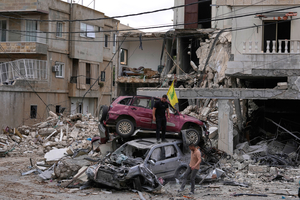
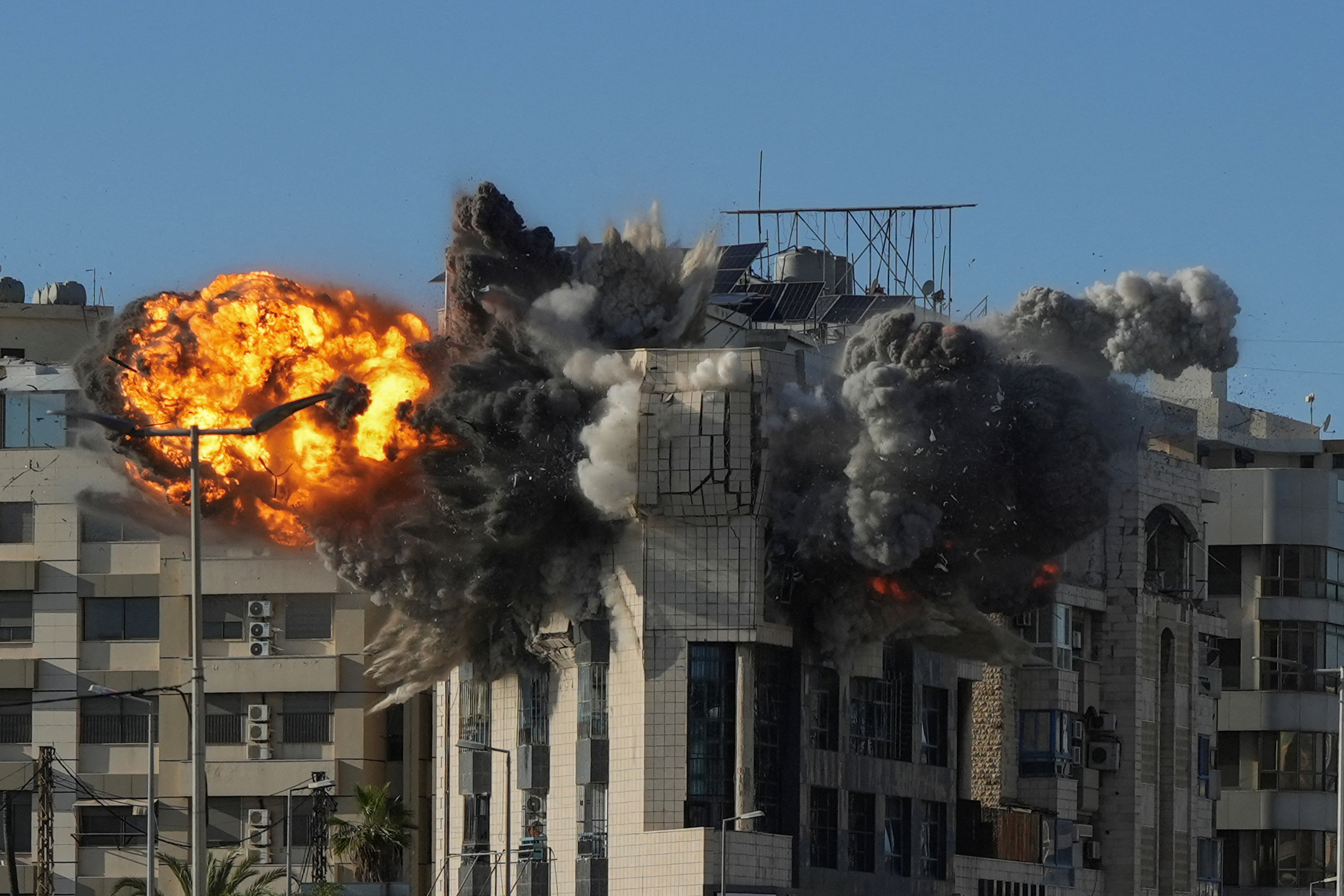
- March 2, 2026: Israel launches airstrikes on Hezbollah targets in Beirut, killing 200+ (including mid-level commanders), marking regional escalation. Beirut's southern suburbs suffer 500+ structures destroyed (France24). Hezbollah retaliates with 300 rockets into northern Israel.
- March 9: Israel initiates ground invasion into southern Lebanon, targeting Hezbollah strongholds up to Litani River. 20,000 IDF troops cross border; initial clashes kill 50 Lebanese fighters, 10 Israelis (Newsmax). UNIFIL warns of "catastrophic" risks.
- March 16: War entrenches; Hezbollah slows IDF with ambushes, destroying 15 Merkava tanks (The New Arab). Civilian deaths hit 400; displacement surges to 200,000.
- March 23: Escalation hits Beirut; Israeli airstrikes on Hezbollah HQ kill senior leader, prompting 1,000+ rockets. Urban fighting erupts; Lebanese government declares emergency (France24). Explore proxy dynamics in Proxy Wars Explode as Yemen Houthis' Bold Entry.
- March 30: Southern Lebanon becomes focal inferno; IDF advances to 10km depth, but Hezbollah's tunnel networks and drones inflict 100+ Israeli casualties. UN peacekeepers killed in crossfire (Newsmax); Nadim Houry (France24) warns of full-scale war on Lebanon state.
- March 31: Amid chaos, Cyprus signs joint statement supporting Lebanese government, pledging €50M aid, evacuation support, and EU-level diplomacy (Cyprus Mail). This follows European officials' warnings of 1982-scale invasion (Middle East Eye). Hezbollah praises; Israel condemns as "bias."
Unconfirmed: Iranian direct arms shipments (rumored via Syria); NATO Article 4 consultations (social media buzz on X from @NATOpress, unverified). Immediate risks: UNIFIL bases in south Lebanon vulnerable, with 5,000 troops exposed. Cyprus positions as "bridge," offering mediation venues in Nicosia, potentially drawing Greece, France (UNIFIL contributors).
This sequence reveals Hezbollah's attrition strategy—confirmed effective in slowing IDF to 2km/day advance—while Cyprus's entry shifts focus to diplomacy, unaddressed in prior military-centric coverage of the Middle East strike.
Historical Comparison
Cyprus's involvement echoes yet diverges from precedents, introducing a novel EU-diplomatic layer absent in past cycles.
- 1982 Invasion Parallel: Israel's Operation Peace for Galilee saw 60,000 troops occupy south Lebanon to 40km depth, lasting 18 years. Casualties: 17,000+ Lebanese, 650 Israelis. Unlike 2026 (50,000 troops, 10km depth in 22 days), current war features precision drones/AI targeting but Hezbollah's evolved arsenal (hypersonic missiles, per The New Arab). European officials warn 2026 "worse" due to urban density (Middle East Eye). Pattern: Rapid intensification (1982: Beirut siege by Day 70; 2026: By Day 28).
- 2006 War: 34 days, 1,200 Lebanese/160 Israeli dead; Hezbollah rockets overwhelmed Iron Dome precursors. 2026 mirrors rocket volume (2,000+ launched) but adds ground phase earlier (Day 7 vs. no ground in 2006).
- Timeline Patterns: March 2-30 progression (bombing → ground → sustain → Beirut → south rage) compresses 1982's phases into 4 weeks, driven by Iran's proxy upgrades post-2023 Gaza. Cyprus's role? Absent historically; 1982 saw US shuttle diplomacy, 2006 UNSCR 1701. Now, EU state's support risks fragmenting "special relationship" with Israel, akin to Ireland's 1982 PLO stance but amplified by Cyprus's gas fields proximity (Lebanon dispute).
Emerging pattern: Faster escalation (29 days vs. 1982's months) meets slower advances due to Hezbollah evolution. Cyprus alters trajectory: Potential EU sanctions/NATO talks could force Israeli concessions, unlike isolated US mediation historically.
AI Prediction
The World Now Catalyst AI forecasts market turbulence from this escalation, attributing moves to risk-off dynamics, oil shocks, and USD haven flows. Key predictions (medium-high confidence unless noted):
| Asset | Direction | Confidence | Causal Mechanism | Historical Precedent | Key Risk | |-------|-----------|------------|------------------|----------------------|----------| | OIL | + (5-15%) | Medium | Supply disruption fears from regional strikes | 2019 Houthi/Saudi attacks: +15% in 1 day | OPEC+ hike | | SPX | - (1-3%) | High | Risk-off algo de-risking, oil cost inflation | 2019 Soleimani: -2%; 2024 Iran: -2% in 48h | Earnings beats | | BTC | - (5-10%) | Medium | Liquidation cascades as risk asset | 2022 Ukraine: -10% in 48h | $65k support/dip buys | | EUR | - (1-1.5%) | Medium | USD strength, Eurozone energy exposure | 2019 Iran/Houthi: -1.5% in 48h | ECB hawkishness | | ETH | - (4-7%) | Medium | BTC-correlated deleveraging | 2024 Iran-Israel: -5% | ETF inflows | | SOL | - (8-15%) | Medium-Low | High-beta alt dump | 2022 Ukraine: -20%; 2019 Aramco alts -8-10% | Meme rebounds | | XRP | - (7-12%) | Medium | Crypto liquidation in thin liquidity | 2022 Ukraine: -12% | BTC stability |
Predictions powered by The World Now Catalyst Engine and Catalyst AI — Market Predictions. Track real-time AI predictions for 28+ assets.
Cyprus's statement adds medium-term bullish pressure on safe-havens (USD, gold), with OIL's upside dominating near-term amid Houthi/Iran threats in the Middle East strike context.
What's Next
Cyprus's bold support positions it as a diplomatic fulcrum, with three scenarios:
- De-escalation Pivot (40% probability): EU-mediated talks in Nicosia within 2 weeks, leveraging France/Italy UNIFIL ties. Triggers: Hezbollah pauses rockets if IDF halts; Lebanese govt accepts Cyprus aid. Outcome: Fragile ceasefire like 2006 UNSCR 1701, weakening Iran proxies.
- EU/NATO Escalation (35%): If UN deaths exceed 30, NATO invokes Article 4 consultations (watch April 5). EU sanctions on Israeli settlers/oil imports possible by mid-April. Cyprus fragments alliances, pressuring Israel amid US election noise.
- Wider Proxy War (25%): Iranian direct intervention (unconfirmed Syrian arms) or Houthi Red Sea closure spikes OIL to $120+. US carrier response draws Biden in; Hezbollah overruns south if IDF overextends.
Key triggers: IDF Litani push (April 5?), Hezbollah Beirut counteroffensive, EU summit (April 10). Diplomatic interventions via Cyprus offer non-military de-escalation, but unchecked military actions risk global contagion. Original angle: This shifts geopolitics—Hezbollah isolated diplomatically, Israel faces alliance erosion, Lebanon gains leverage for stability. Track evolving risks on the Global Conflict Map — Live Tracking.
What This Means
Cyprus's entry into this Middle East strike not only heightens diplomatic stakes but also underscores the interconnected nature of regional conflicts, potentially influencing global energy markets, EU-Israel relations, and proxy warfare dynamics. As alliances realign, stakeholders must prioritize mediation to avert broader escalation, with Cyprus emerging as a key mediator in Lebanon's fight for stability.
This is a developing story and will be updated as more information becomes available.
Catalyst AI Market Prediction
Our AI prediction engine analyzed this event's potential market impact:
- EUR: Predicted - (medium confidence) — Causal mechanism: USD strength from risk-off weakens EURUSD. Historical precedent: 2019 Iran EURUSD -1.5% in 48h. Key risk: ECB hawkishness on oil inflation.
- SOL: Predicted - (low confidence) — Causal mechanism: High-beta crypto dumps on risk-off liquidation. Historical precedent: No direct; based on 2022 Ukraine SOL -20% in days. Key risk: Meme/alt rebound.
- BTC: Predicted - (medium confidence) — Causal mechanism: Risk-off selling dominates accumulation amid geopolitical oil shocks. Historical precedent: 2022 Ukraine BTC -10% in 48h. Key risk: Miner hodl prevents cascade.
- SPX: Predicted - (high confidence) — Causal mechanism: Immediate risk-off selling from oil supply threat headlines triggers algorithmic de-risking. Historical precedent: 2019 Soleimani strike caused SPX -2% in one day. Key risk: Oil surge contained below $140 limits inflation fears.
- OIL: Predicted + (medium confidence) — Causal mechanism: Direct supply disruption fears from Iran/Houthi strikes on regional facilities and routes amplify premium. Historical precedent: 2019 Houthi attacks on Saudi facilities spiked oil 15% in one day. Key risk: OPEC+ output hike announcement.
- XRP: Predicted - (medium confidence) — Causal mechanism: Risk-off from Mideast escalations triggers crypto liquidation cascades, amplified by thin weekend liquidity. Historical precedent: Feb 2022 Ukraine invasion saw XRP drop 12% in 48h. Key risk: BTC holds above $65k, limiting altcoin downside.
- ETH: Predicted - (medium confidence) — Causal mechanism: Geopolitical risk-off prompts deleveraging in crypto, with ETH following BTC in sentiment-driven selloff. Historical precedent: April 2024 Iran-Israel tensions saw ETH -5% in 48h. Key risk: Spot ETF inflows provide immediate support.
Predictions powered by The World Now Catalyst Engine. Track real-time AI predictions for 28+ assets.