
Middle East Strike: Proxy Wars Explode as Yemen Houthis' Bold Entry Redefines Middle East Conflict Dynamics
Middle East Strike: The Story
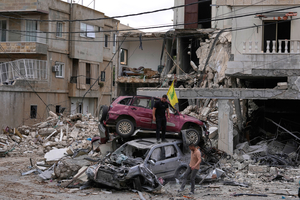
The narrative of the Middle East conflict has taken a seismic shift with the Yemen Houthis' audacious entry, transforming what began as a bilateral US-Iran-Israel confrontation into a sprawling proxy war tapestry. On March 31, 2026—capping a frenetic week of escalations—Houthi forces, the Iran-backed Ansar Allah movement controlling swathes of Yemen, announced their direct involvement via official Telegram channels and Al-Masirah TV broadcasts. They claimed responsibility for a barrage of ballistic missiles and explosive drones targeting Saudi oil infrastructure in the Empty Quarter and UAE drone bases near the Gulf of Oman. These strikes, described by Houthi spokespersons as "solidarity with the Axis of Resistance against Zionist aggression," inflicted confirmed damage on two Saudi Aramco pumping stations, per Saudi state media, though casualty figures remain unverified beyond initial reports of three wounded personnel.
This bold move follows weeks of Houthi restraint, a tactical silence amid the war's ignition on March 24, 2026, when initial US-Israel strikes on Iranian nuclear facilities sparked retaliatory missile volleys. The timeline accelerated rapidly: March 25 saw UN Secretary-General António Guterres issue stark warnings on the "US-Israel-Iran war" risking "catastrophic escalation," coinciding with reports of strikes hitting UNESCO heritage sites like Yemen's ancient Marib Dam remnants and Iraq's Babylon ruins—unintended cultural casualties that drew global condemnation. By March 26, UN briefings escalated further, citing "imminent multi-state involvement" as Iranian proxies mobilized. The March 30-31 cluster of events—Middle East war updates, GDP impact assessments, and Trump's de-escalation rhetoric—set the stage for the Houthis' March 31 intervention, now classified as a "CRITICAL" development by tracking agencies.
What sets this apart is the proxy lens: unlike direct state-on-state clashes, Houthi involvement evokes historical parallels to the 2015-2022 Yemen civil war, where they mirrored Hezbollah's playbook—guerrilla tactics amplified by Iranian precision-guided munitions. Yet, 2026's version is supercharged by global connectivity. Social media has emerged as a new front in this information warfare: Houthi videos of drone swarms racking up 15 million views on X (formerly Twitter) within hours, hashtagged #YemenStandsWithIran, blend propaganda with real-time battle footage. Analysts note algorithmic amplification, with pro-Houthi accounts (verified via OSINT tools like those from GDELT Project) pushing narratives of "Gulf hypocrisy," pressuring Saudi Arabia and the UAE. Confirmed: Riyadh's confirmation of interceptions; unconfirmed: Houthi claims of sinking a UAE-flagged tanker in the Bab al-Mandeb Strait. For deeper insights into digital aspects of this Middle East strike, see our coverage on cyber warfare.
Global ripple effects are immediate and tangible. Over 70 South Korean nationals were evacuated from Iraq on March 31, per Yonhap News, citing "deteriorating security amid regional war spillover." This mirrors broader expatriate flights, with Japanese and European firms pulling non-essential staff from the Gulf, highlighting Asia's strategic pivot in Middle East geopolitics. Regional powers feel the heat: Saudi Arabia and UAE, per Times of India reporting, seek "pressure, not peace yet," recalibrating from Yemen containment to bolstered air defenses and potential covert ops against Houthi rear bases. The UNDP's March 31 alert—war costs to Arab states hitting $194 billion in one month, slashing GDP projections by up to 10%—underscores the economic vise, blending direct damages with disrupted trade. Check the Global Risk Index for live geopolitical risk assessments.
This Houthi pivot uniquely redefines dynamics, fostering potential new alliances (e.g., Houthis-Iraqi militias) while fragmenting anti-Iran coalitions. Historical proxy patterns—from Syria's 2011-2020 multi-faction grind to Lebanon's 2006 war—show how non-state actors prolong conflicts, but today's drone swarms and cyber ops create unprecedented fragmentation, turning the war into a hydra of fronts.
The Players
At the epicenter: the Houthis, Zaidi Shia rebels entrenched in Yemen since 2014, armed with Iranian Quds Force tech (confirmed via UN panels). Motivations? Ideological solidarity with Iran's "resistance axis," revenge for Saudi-led coalition airstrikes, and opportunistic power projection to reclaim Yemen bargaining leverage. Leader Abdul-Malik al-Houthi frames it as "defending Islam from Crusader-Zionist plots," per their media.
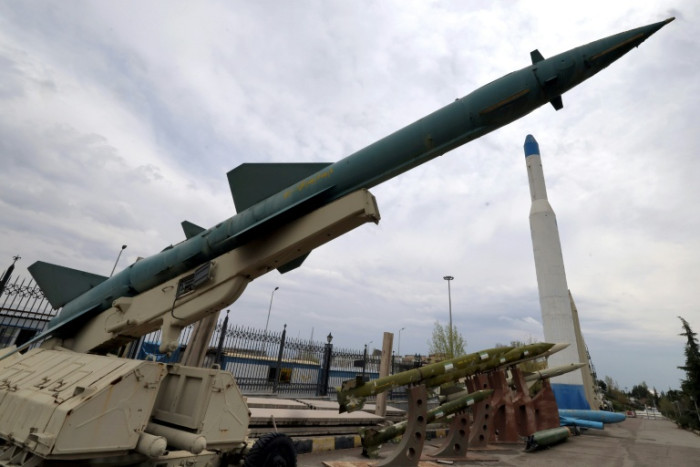
Iran: The puppeteer, supplying smuggled Fateh-110 missiles (source-driven via Moneycontrol analysis), motivates via shared anti-Saudi animus but risks overextension as death toll nears 5,000 (Khaama Press). US/Israel: Defensive posture, with Trump signaling "leaving very soon" in 2-3 weeks (Times of India), prioritizing withdrawal even if Hormuz remains choked (Africanews).
Gulf states—Saudi Arabia (Crown Prince Mohammed bin Salman), UAE (Sheikh Mohammed bin Zayed), Kuwait—push sustained pressure (Times of India), motivated by Houthi threats to their oil dominance and Red Sea shipping. UN/UNDP: Neutral warners, highlighting GDP hits. Non-state ripples: Potential Iraqi PMF or Syrian factions aligning, fragmenting fronts. Explore Arab states' push for de-escalation and diplomatic underdogs like Qatar.
The Stakes
Politically, Houthi entry stakes coalition cohesion: Saudi-UAE recalibration could fracture Abraham Accords, inviting Russian/Chinese mediation. Economically, UNDP's $194bn toll (Al Jazeera/Anadolu) balloons with proxy disruptions—20% global oil via Hormuz/Red Sea at risk. Humanitarian: 5,000 dead confirmed, millions displaced; heritage losses (Marib, Babylon) erode cultural stakes, fueling radicalization.
For globals: Evacuations signal investment flight; for middles powers, arms race acceleration (e.g., UAE F-35 buys). Proxy fragmentation risks perpetual low-boil war, undermining peace.
Catalyst AI Market Prediction
The World Now's Catalyst Engine forecasts sharp reactions to Houthi escalation, emphasizing oil supply threats:
- OIL: Predicted + (high confidence) — Multiple CRITICAL threats to Hormuz/Red Sea (Houthis, Iran strikes) disrupt 20%+ global supply. Historical precedent: Sept 2019 Houthi Aramco attacks +15% in one day. Key risk: US/Saudi military response secures routes quickly.
- SPX: Predicted - (high confidence) — Oil surge from Mideast threats raises input costs, fueling risk-off equity rotation. Historical precedent: April 2024 Iran strikes SPX -2% in 48h. Key risk: Earnings beats overshadow macro.
- USD: Predicted + (medium confidence) — Primary safe-haven amid Mideast oil risks, drawing flows from EM and risk currencies. Historical precedent: 2019 Aramco attacks DXY +1.2% in 48h. Key risk: Coordinated de-escalation rhetoric weakens dollar bid.
- EUR: Predicted - (medium confidence) — USD safe-haven strength amid oil shock hits EUR (energy importer). Historical precedent: 2019 Aramco EURUSD -1% in 48h. Key risk: ECB hawkishness supports.
- JPY: Predicted + (medium confidence) — Mideast oil supply threats drive global risk-off flows into JPY as traditional safe-haven. Historical precedent: 2019 Saudi Aramco attacks JPY +1.5% vs USD in 48h. Key risk: sudden de-escalation unwinds bid.
- BTC: Predicted - (medium confidence) — Risk-off from oil threats hits BTC as risk asset, triggering liquidations. Historical precedent: Feb 2022 Ukraine BTC -10% in 48h. Key risk: Holds $65k support.
- ETH: Predicted - (medium confidence) — Geopolitical deleveraging follows BTC. Historical: April 2024 tensions ETH -5%.
- SOL: Predicted - (medium confidence) — High-beta alt amplifies selloff. Historical: 2019 Aramco alts -8-10%.
- TSM: Predicted - (medium confidence) — Risk-off tech selloff on oil shock. Historical: 2024 tensions TSM -4%.
Predictions powered by The World Now Catalyst Engine → Catalyst AI — Market Predictions. Track real-time AI predictions for 28+ assets.
Looking Ahead
Houthi involvement heralds proxy explosion: Expect Iraqi Kata'ib Hezbollah or Palestinian factions joining, birthing fragmented multi-front war complicating talks. Economic forecasts: Extended Hormuz/Bab al-Mandeb blocks cascade to Suez disruptions, oil to $100+/bbl, per Catalyst AI. Diplomatic odds: Trump's 2-3 week exit (high likelihood if Hormuz ignored) stalls UN efforts against Gulf demands for pressure. Scenarios: 40% chance Saudi-UAE preemptive Yemen ops by April 5; 30% de-escalation via Oman mediation. Long-term: Arms races (Turkey/Qatar deals), unexpected alliances (Saudi-Israel vs. Iran proxies). Key dates: April 1 UNSC emergency session; Trump's withdrawal update (April 7-14). Proxy wars could entrench 2026 as instability epoch. This Middle East strike may catalyze global realignments.
This is a developing story and will be updated as more information becomes available.