
Iran Vows Faster and More Painful Retaliation After Strait of Hormuz Naval Clash
Iran has vowed a faster, heavier and more painful response to US attacks after a weekend naval clash in the Strait of Hormuz, as the six-month-old conflict shows signs of escalation with renewed strikes, Iranian cyberattacks on US infrastructure and domestic crackdowns on alleged internal threats.
Renewed Naval Clashes in the Strait of Hormuz
Iran’s Parliament Speaker Mohammad Bagher Ghalibaf stated on Sunday that any new US violations will receive a faster, heavier and more painful response and that retaliation will no longer be proportionate. [3] Ghalibaf said Americans must understand before it is too late that the rules of the game have changed. [5] The Islamic Revolutionary Guard Corps claimed it targeted a US unmanned vessel attempting to enter the Strait of Hormuz and attacked three American military ships and three oil tankers. [3] The US dismissed the vessel claim as a total lie and had struck three Iranian oil tankers in response. [3] The US military said the report of an Iranian strike on an unmanned vessel came from Iranian state media and is a total lie, according to Captain Tim Hawkins of US Central Command. [5] US Defense Secretary Pete Hegseth wrote on social media that if Iran shoots at US ships, the United States will destroy and sink their oil tankers. [5] The IRGC said its naval units detected and engaged the unmanned vessel while monitoring US military activity around the waterway and warned it would respond to any attempt to enter Iranian-controlled security zones. [4]
Iran's Growing Confidence After Six Months of War
US intelligence reports indicate Iran feels more confident after six months of war, better understands its military capabilities and US limits, and intends to prolong the conflict to complicate US politics ahead of midterms. [2] New data from US intelligence show that Tehran now much better assesses its own capabilities and the limits of American power. [2] According to reports prepared in recent weeks, Iran demonstrates confidence in its ability to strike targets in the Middle East and apparently intends to continue the conflict for several more months to complicate the position of the United States. [2] Over the months of the war that has alternately subsided and resumed, Iran has studied the strengths of its armed forces much better and now more confidently assesses its own capabilities. [2] Officials familiar with the intelligence assessments say that achieving an agreement on a complete end to the war will not be easy and that almost nothing indicates Iran’s readiness to conclude any deal with the United States. [2] Some officials believe Tehran is quite satisfied with the possibility of aggravating President Donald Trump’s political problems ahead of the US midterm elections. [2]

Iranian Parliament Speaker Mohammad Bagher Ghalibaf speaks after Strait of Hormuz naval clash with US forces. — Source: gdelt
Cyber Operations Targeting US Infrastructure
Iran-linked hackers carried out cyberattacks on over 100 US water systems in July and showed interest in energy infrastructure, aiming to erode public support for the war. [2] US officials believe that cyberattacks on more than 100 water supply systems across the United States at the end of July were most likely carried out by hackers linked to Iran. [2] There were no signs that the operation of any of the systems was disrupted to the point that water became unfit for drinking, although in some cases the attacks led to failures that required switching to manual control and recommending that the population boil water as a precaution. [2] Hackers also showed interest in attacks on American oil and gas infrastructure, although such systems are usually considered better protected against hacking. [2] Even if cyberattacks do not lead to serious disruptions of critical infrastructure, they are likely to remain an attractive way for Iran to weaken public support in the United States for an already unpopular war. [2]
Domestic Security Crackdowns and Armed Threats
Iranian authorities arrested members of alleged pro-monarchy and anti-revolutionary cells linked to January protests, executed dozens since the war began, and view the unrest as a US-Israeli orchestrated coup, while Kurdish and Baloch armed groups remain the main non-state threats. [1] State media said on Sunday that members of an eight-member network allegedly affiliated with anti-revolutionary and pro-monarchy groups were arrested. [1] The Islamic Revolutionary Guard Corps in the southern province of Fars accused those arrested of using Molotov cocktails and burning tires during nationwide protests in January. [1] Iranian authorities consider the January protests a coup orchestrated by armed agents of the US and Israel, including pro-monarchists. [1] The judiciary has executed dozens of prisoners since the start of the war, including some of those who protested in January. [1] Kurdish fighters active close to Iran’s western borders with Iraq are the country’s largest non-state armed threat. [1] In late August, security forces said they had broken up a cell belonging to Jaish al-Adl, the most prominent of the Baloch armed groups. [1]

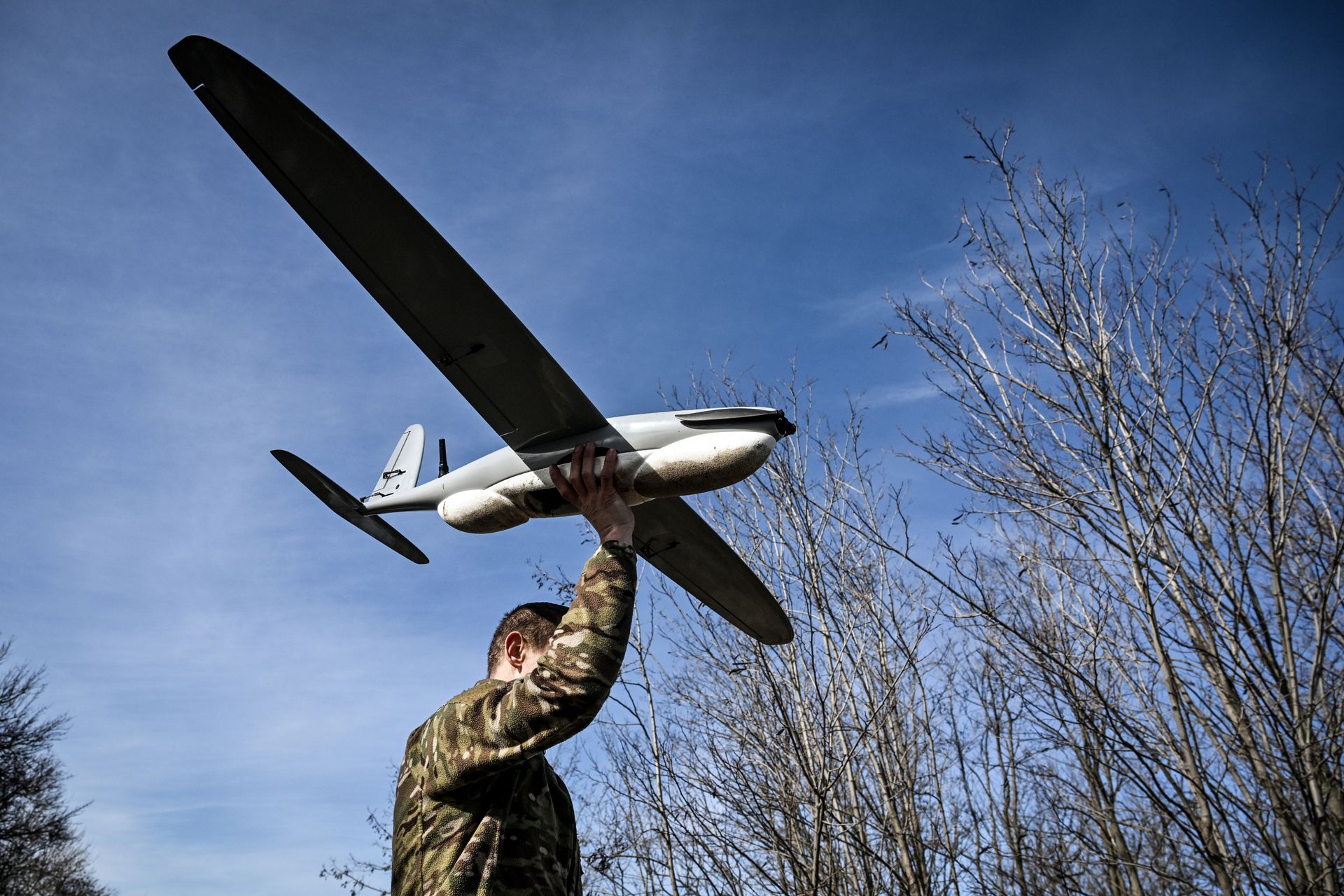
Iran’s Revolutionary Guards targeted a US unmanned vessel in the Strait of Hormuz. — Source: khaamapress
Economic Pressures and the Battle for Oil Flows
Ghalibaf acknowledged severe inflation, unemployment and livelihood pressures. [3] He said severe fluctuations in the exchange rate, inflation, unemployment, and market management are fundamental challenges that have put serious pressure on people’s livelihoods. [3] US Energy Secretary Chris Wright says on average nine million barrels of oil a day are getting through the Strait of Hormuz. [3] Wright told CNN that with oil also moving through pipelines in the region, the United States is probably at two-thirds or more of pre-conflict flows. [5] Those flows depend on the presence of the US Navy to help escort tankers and provide some protection against possible Iranian attacks. [3] The average price for one gallon of diesel in the US hit $5.85 on Friday, compared to an average of $3.71 a year ago. [5]
Prospects for De-escalation
Trump and officials have indicated no immediate negotiations, with expectations of continued limited clashes. [2] Trump states that he is able to exert economic pressure on Iran that will force Tehran to make concessions on control over the strait. [2] In the short term, US economic sanctions are likely to continue to provoke escalation. [2] Analyst Sina Azodi has explained that there are going to be more clashes between the Iranians and the Americans, that there can be miscalculations, and that there can be more civilian casualties especially on the Iranian side. [3] The secretary of defense can send more troops to the region, but analysts do not think the Iranians are going to back down. [3] They are going to resist that blockade and impose further costs on the United States. [3] Iranian authorities have said they will continue to bolster border control in order to limit exposure to armed groups amid the war. [1] Tehran has insisted it will not give up some measure of control over the waterway. [5]
What to watch next: Renewed limited exchanges of strikes are expected to continue in the coming weeks, with Iran potentially repeating actions similar to those in July while the United States maintains naval escorts to sustain oil flows at roughly two-thirds of pre-conflict levels.