
ISW: Russian Forces on Current Pace Would Capture Rest of Donetsk Oblast Only in 2032
ISW Assessment of Putin's 2026 Donbas Deadline
ISW assesses that at current Russian rates of advance, Moscow will not capture the rest of Donetsk Oblast until autumn 2032, missing Vladimir Putin's latest deadline to seize all of Donbas by the end of 2026. [1] Russian dictator Vladimir Putin ordered his troops to capture the entire Donbas by the end of 2026, yet his combat fantasies remain detached from Ukraine's real defensive capabilities. [1] At present rates of advance, Russian forces could seize the remaining territory of Donetsk Oblast only in autumn 2032, according to the Institute for the Study of War. [1] Analysts note that Russian troops would need until 2 October 2032 to take the remaining 19 percent of Donetsk Oblast territory under these conditions. [1] This projected date falls more than a year after the next expected elections to the State Duma, which are likely to occur in September 2031. [1]
History of Missed Russian Deadlines
Putin has set at least 15 deadlines for capturing Donbas since February 2022, none of which Russian forces have met. [1] Russian troops have fought for Kostyantynivka since October 2025 without capturing it after 11 months and have not entered Sloviansk, Kramatorsk or Druzhkivka. [1] Russian forces have conducted battles for Kostyantynivka since October 2025 but have failed to seize the city even after nearly a year of fighting. [1] The troops have neither reached nor entered the other fortress-belt cities of Sloviansk, Kramatorsk and Druzhkivka. [1] Analysts conclude that Russian forces will be unable to capture all three cities in the remaining four months of 2026, given that they have not fully taken even one of them in almost a year. [1] Numerous deadlines set by Putin for seizing the whole of Donbas partly reflect his need to deliver a major information victory to the Russian people. [1] Putin promised Russians victory in exchange for enduring the burden of war without shifting Russian society onto a full wartime footing. [1]
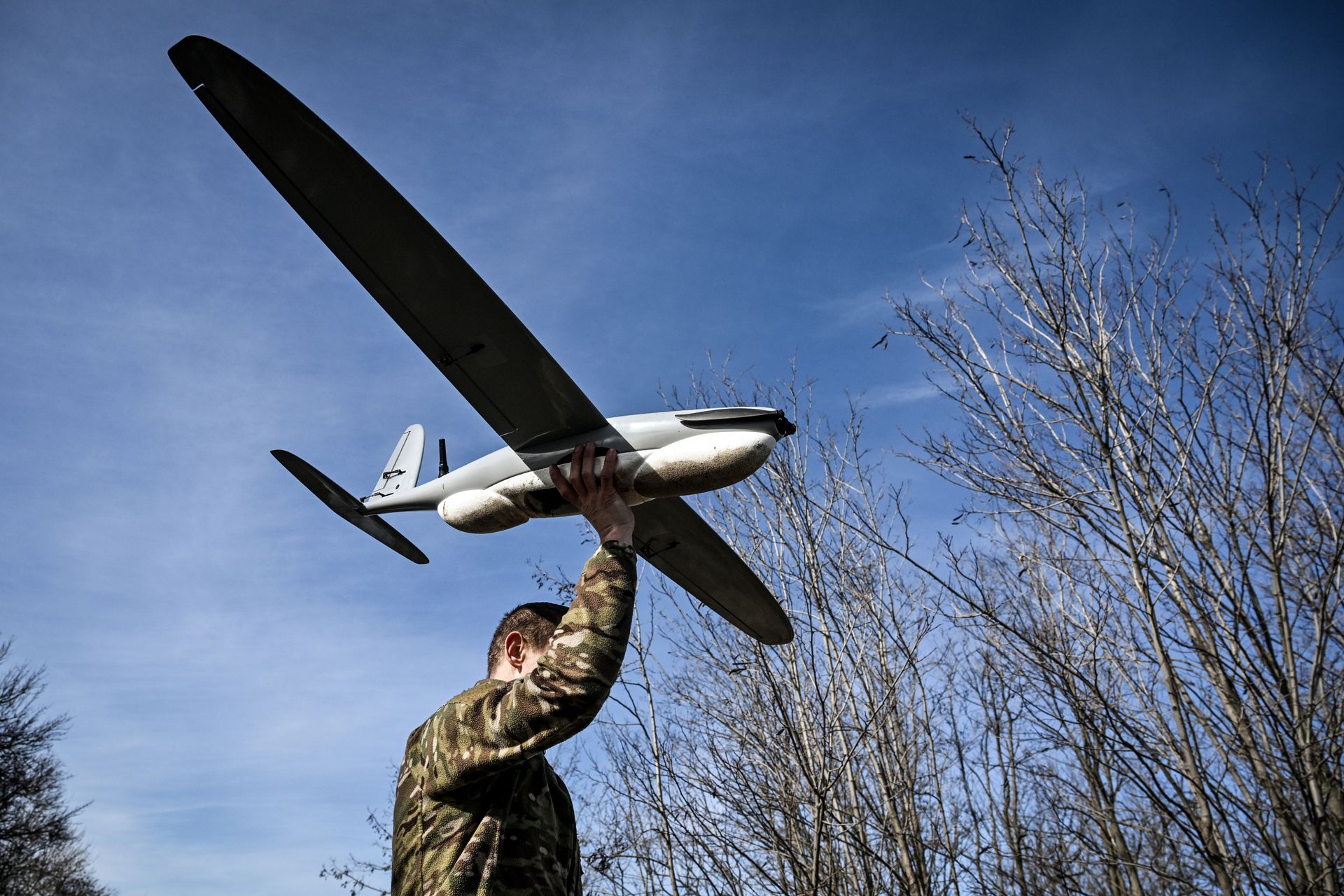
Ukrainian forces develop technology to intercept Russian Banderol missile drones. — Source: ukrainskapravda
Current Russian Advance Rates
In August 2026 Russian forces advanced at an average rate of 2.91 square kilometres per day across the front and 2.36 square kilometres per day in Donetsk Oblast. [1] In August 2026 the pace of Russian advances along the entire front line stood at 2.91 square kilometres per day, only slightly higher than in previous months. [1] Average rates of advance inside Donetsk Oblast were lower still, reaching just 2.36 square kilometres per day. [1] At this tempo, Russian forces would require time until 2 October 2032 to capture the remaining 19 percent of Donetsk Oblast territory. [1] ISW analysts state that Russian troops will not seize the whole of Donetsk Oblast by 2032 at current rates, if they manage to capture it at all. [1] Russian forces would first have to conduct exhausting urban battles in the fortress-belt cities before they could attempt advances across open terrain, where Russian troops have historically struggled to make progress. [1]
Ukrainian Defensive Capabilities and Tactical Initiative
Ukrainian forces maintain tactical initiative on several sectors, complicate Russian rear-area logistics, and have slowed Russian advances since 2025 while Western support remains at current levels. [1] Rates of Russian advance across the entire theatre of operations have slowed significantly since 2025. [1] In 2026 Ukraine has demonstrated the ability to hold tactical initiative on several sectors of the front and to disrupt Russian rear-area logistics, while Russian troops have found it difficult to counter these efforts. [1] Neither the course of events nor the likely dynamics of the current conflict indicate that Russian forces will be able to sharply accelerate their offensive tempo in the near term as long as Western support for Ukraine remains at approximately its present level. [1]
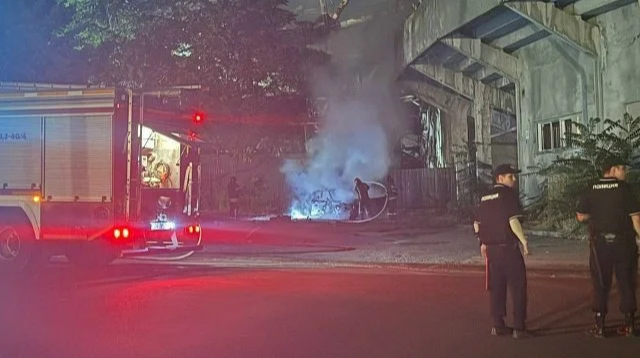
Militant involved in murders of intelligence officers killed in Donetsk. — Source: ukrainskapravda
Russian Disinformation and Putin's Distorted Battlefield View
Russian commanders systematically overstate battlefield successes in a culture of lying, feeding Putin a distorted picture that he treats as reality for peace negotiations. [1] Russian military commanders regularly exaggerate the successes of Russian troops as part of an information war, creating an impression of a rapid offensive and the collapse of Ukrainian defences. [1] This disinformation likely strengthens Putin's conviction that Russia can achieve its objectives in Donetsk Oblast by the end of 2026 and therefore does not need to make compromises. [1] Putin has become increasingly fixated on a distorted picture of the battlefield situation that he accepts as reality and insists must serve as the basis for any peace negotiations regarding Ukraine. [1] On 6 September, Russian presidential aide Yuri Ushakov stated that Putin had provided American envoys Steve Witkoff and Jared Kushner with a comprehensive assessment of Russia's "significant successes" at the front, a claim that analysts assess does not correspond to the actual situation on the ground. [1]
Developments in the Drone War
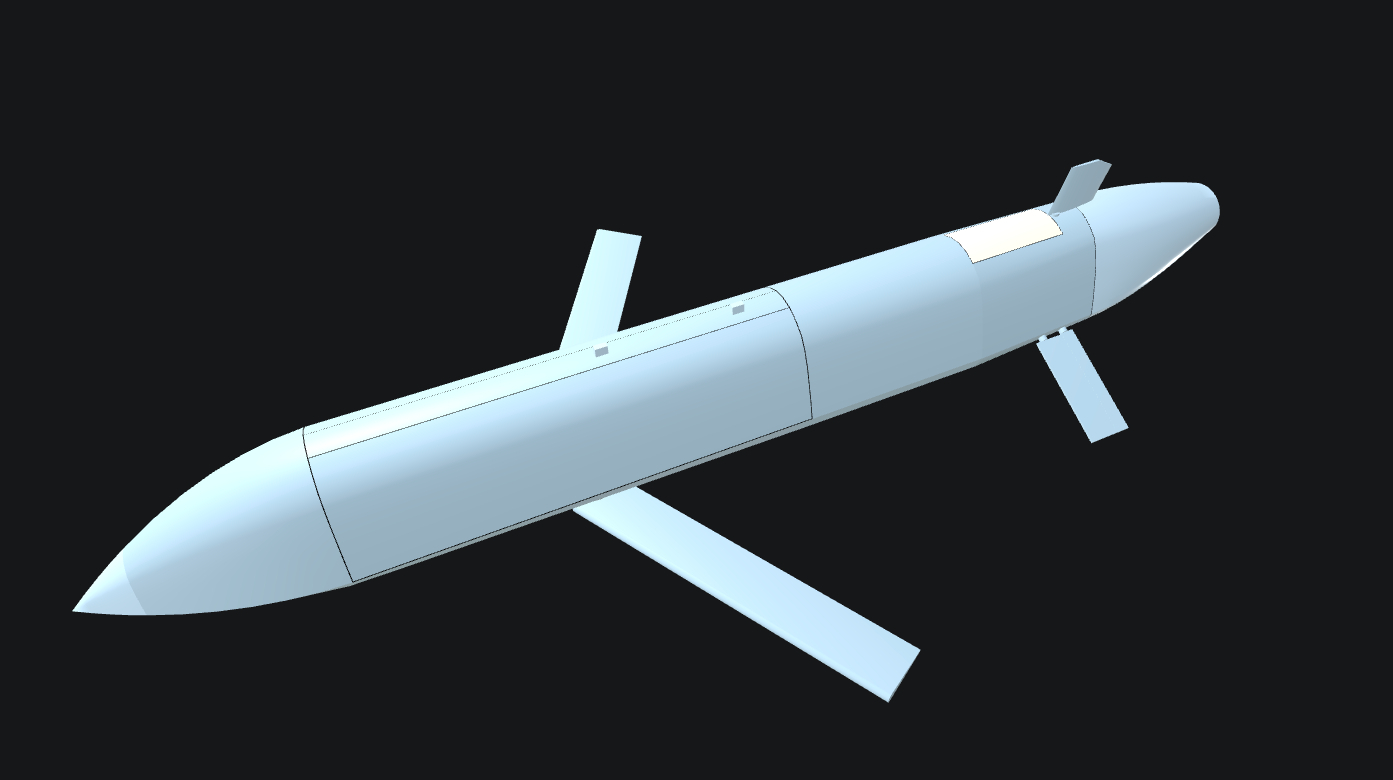
Ukraine has developed and is using systems that destroy Russian S8000 Banderol low-cost missile drones at lower cost than the missiles themselves. [3] Ukraine has developed a system to strike Russian Banderol low-cost missile drones, and the technology is already being used to shoot down the assets. [3] The system was developed by a participant in the Brave1 defence-tech cluster. [3] Brave1 is not disclosing the technology's operating principle or technical specifications. [3] The cost of shooting down the missiles is significantly lower than the cost of the missiles themselves, according to Brave1. [3] A video provided by the cluster shows the destruction of at least four Banderol missile drones. [3] There are now several products capable of countering Russia's low-cost missiles. [3] The S8000 Banderol missile drone is developed and manufactured by Kronstadt JSC. [3] The Banderol has a maximum speed of 620-650 km/h and a cruising speed of 520-560 km/h. [3] It is equipped with a 114.3-kg high-explosive fragmentation warhead, of which 49.5 kg is explosive material. [3] Russia is capable of producing up to 80 S8000 Banderol missiles per month. [3] The drone war is becoming a race to adapt, rather than perfect. [2] Every drone innovation on one side of the conflict has prompted innovation on the other. [2] Ukrainian recon drones led Russia to pursue jamming and short-range air defence innovation. [2] Russian improvements in electronic warfare and air cover led to the use of expendable quadcopters by Ukraine. [2] Drones are now mass-produced, often by 3D printers for expediency, and long-range drones routinely fly deep into enemy territory to target oil refineries, logistics hubs and ostensibly civilian businesses seen to be supporting the Russian war effort. [2] Russia is responding with increasingly advanced air defence systems and spoofing technology. [2] New and increasingly sophisticated forms of technology, including chaff, are being used to protect enough long-range drones that some are able to penetrate Russian defences. [2] Chaff, a radar countermeasure typically made of tiny aluminium-coated glass fibres, forms a large reflective cloud that confuses enemy radar and tricks radar-guided missiles into going for the wrong target. [2] The decisive factor is the ability to innovate at speed. [2] Warfare has become a competition to learn and apply what you learn fastest. [2] Ukraine builds a new drone, Russia replies with drone countermeasures, Ukraine tweaks the drone to overcome those countermeasures, and Russia tweaks its counter-countermeasures. [2] A system that takes ten years to develop risks becoming useless before it is even out in the field. [2] The use of 3D printers in Ukraine points to what matters: pragmatism, flexibility, mobility, modularity, cost-efficiency and efficacy. [2] Technology is designed, built, sent into the field and used, with operators feeding back to manufacturers who redesign and rebuild it. [2] It is a cycle of continuous iteration where "good enough for now" is the aim. [2]
What to watch next: Ukrainian forces continue to demonstrate the capacity to hold tactical initiative and disrupt Russian logistics while developing low-cost intercept systems against Russian missile drones, even as Russian advance rates remain insufficient to meet the end-2026 deadline for full control of Donetsk Oblast.