Most Dangerous Countries Face Rising Internal Armed Threats and Proxy Conflicts
Multiple ongoing global conflicts, including the US-Israel war with Iran, the Israel-Hamas war in Gaza and the West Bank, and Russia's invasion of Ukraine, continue to evolve with internal armed threats, stalled political solutions, slow battlefield advances, and rapid military innovation in the most dangerous countries. Iranian authorities have arrested members of alleged pro-monarchy networks and face armed threats from Kurdish and Baloch groups along borders, which could intensify with external support amid the war with the US and Israel [1]. A US-backed Board of Peace official stated that ongoing escalation in Gaza and settler violence in the West Bank are making a two-state solution practically impossible without transitional governance, weapons decommissioning, and Israeli withdrawal [2]. Russian forces are unlikely to capture the rest of Donetsk Oblast by the end of 2026 as ordered by Putin, with current advance rates projecting completion only by October 2032 due to slow progress and Ukrainian defenses [3]. After six months of war with the US, Iran feels more confident in its capabilities, is conducting cyberattacks on US infrastructure, and aims to prolong the conflict to influence US midterm elections [4]. In the Ukraine war, drone technology has become a rapid adaptation race where innovations prompt immediate countermeasures, favoring fast iteration by smaller adaptable producers over slow development of complex systems [5].
Internal Armed Threats in Iran
Iranian authorities have repeatedly publicised arrests and clashes with small armed cells inside the country, or skirmishes with armed groups along land borders, particularly in the lead-up to and during the war with Israel and the United States [1]. They have endeavoured to frame the war as a national security struggle while sending a message of control and deterrence to audiences inside the country and abroad [1]. In one of the latest instances, state media said on Sunday that members of an eight-member network allegedly affiliated with “anti-revolutionary” and “pro-monarchy” groups were arrested [1]. The Islamic Revolutionary Guard Corps (IRGC) in the southern province of Fars accused those arrested of using Molotov cocktails and burning tyres during nationwide protests in January [1]. The leaders of Iran’s Islamic Republic have in recent weeks also expressed concern about more potential protests as public discontent rises amid deteriorating economic conditions [1]. During Iran’s January protests and on social media, a number of Iranians have expressed support for the return of the country’s monarchy, which was overthrown in the 1979 Islamic revolution [1]. Reza Pahlavi, the foreign-based son of Iran’s last shah, Mohammad Reza Pahlavi, has been a leading opponent of the country’s government, and in January called on Iranians to join nationwide strikes and protests [1]. But even though there are instances of chanting in support of Pahlavi in Iran, there are currently no major organised pro-monarchy armed groups operating inside the country [1]. The Iranian government has since then announced a large number of arrests of people it says are supporters of the monarchy [1]. That has included 111 so-called “monarchist cells” arrested across 26 provinces, as announced on March 18 by the Intelligence Ministry [1]. Iranian authorities consider the January protests a “coup” orchestrated by armed agents of the US and Israel, including pro-monarchists [1]. The United Nations and international rights groups have condemned state forces for the “brutality” shown during the crackdown on protesters [1]. The judiciary has executed dozens of prisoners since the start of the war, including some of those who protested in January [1]. Numerous students, artists, businesspeople, journalists, healthcare workers and others have also been arrested over recent months for acts perceived by the authorities to be against national security [1]. Kurdish fighters active close to Iran’s western borders with Iraq are the country’s largest non-state armed threat [1]. Multiple groups, designated as “terrorist” outfits by Iranian authorities, have been based in the semiautonomous Kurdish region of northern Iraq for years [1]. Iran’s military forces have attacked bases operated by these groups in Iraq in recent years, while also pursuing security deals with the Iraqi government to contain them [1]. At the start of this year’s war, the Kurdish armed groups were considered by the Trump administration to lead a limited ground operation in western Iran to complement extensive air strikes by US and Israeli fighter jets and warships [1]. The Reuters news agency reported in early March that roughly 5,000-8,000 Iranian Kurdish fighters from groups including the Kurdistan Free Life Party (PJAK), Democratic Party of Iranian Kurdistan (PDKI), and Kurdistan Freedom Party (PAK) were preparing for a potential cross-border operation and had held discussions with US and Israeli representatives [1]. But the groups said they lacked sufficient weaponry and did not receive a clear signal from Washington to initiate the operation [1]. The plan was not set into motion, and by April the IRGC had sent more troops to the border provinces [1]. Trump later repeatedly claimed that he had supplied arms to Kurdish forces, but that they had kept the weapons for themselves [1]. Aside from the Kurdish forces, Iran’s disenfranchised and restive southeastern border areas are also home to separatist Baloch fighters [1]. In late August, security forces said they had broken up a cell belonging to Jaish al-Adl, the most prominent of the Baloch armed groups [1]. One rebel fighter was reported to have been killed, six arrested, and rifles, grenade launchers and explosives seized [1]. But sporadic attacks from the group have been ongoing, at times killing police officers and IRGC figures [1]. Iranian authorities have said they will continue to bolster border control in order to limit exposure to armed groups amid the war [1]. Alex Vatanka, a senior fellow at the Washington-based Middle East Institute, said that external support for the Kurdish and Baloch rebel groups could increase the security challenge facing the authorities [1]. “The Iranian state might see any signs of increased external support for ethnic militants to be of an existential kind this time around due to the war situation,” he told Al Jazeera [1]. “I only see ethnic militant groups as possibly decisive [in the war] if they are part of a broader externally-funded push to pressure the regime in Tehran, which the Islamic Republic is already anticipating and calls a foreign-led hybrid-war campaign,” Vatanka added [1]. For his part, Trita Parsi, the Quincy Institute’s co-founder, said that while separatist militias don’t pose an existential threat to the government, they “may prove tremendously problematic for Tehran if the war with the US escalates after the mid-terms and the US decides, for instance, to deploy ground troops” [1]. “If Trump decides to accept military risks after the midterms that he earlier eschewed, such as deploying ground troops, then it is highly conceivable that the US will seek to use armed militias inside the country,” Parsi added [1]. During the January protests, Trump and other US officials backed Iranian protesters and said they should continue to act with the goal of overthrowing the Islamic Republic [1]. Similar rhetoric from Washington has been heard since the start of the war [1]. Last week, Trump discussed the possibility that the pressure from war, sanctions and a naval blockade of Iran’s southern ports could ultimately lead to an internal uprising, or even the fall of the establishment [1]. US Treasury Secretary Scott Bessent said the pressure could prompt Iranians to take to the streets again, or even create divisions within the IRGC [1]. “Maybe the people will rise up,” he said [1]. “There is 100 percent inflation, queues, the military isn’t getting paid, [and] the central bank governor was in a panic last week” [1].
Stalled Two-State Solution in Israel-Palestine Conflict
A top official within the US-backed Board of Peace on Monday said a failure to move forward in Gaza paired with rising Israeli settler violence in the occupied West Bank were making a two-state solution "impossible" [2]. Nickolay Mladenov, the high representative for Gaza under the US-backed "Board of Peace" tasked with implementing an October ceasefire plan, was speaking at the Hili Forum in Abu Dhabi [2]. "I would say that if Gaza continues the way it is now, or does not move into implementing... the plan that we have under the comprehensive plan, the two-state solution will become practically impossible," he said [2]. "Because, with everything that is happening in the West Bank, and with more than 50 percent of Gaza now under the control of the Israeli army and less than 50 percent under the control of Hamas, there is no credible pathway forward to a political resolution of the conflict," he added [2]. "The only way that we can build back to that is if we have transitional governance, if we have decommissioning of weapons, if we have withdrawal in Gaza," he said [2]. A roadmap agreed by Hamas on 30 July said that the decommissioning of weapons would be supervised by the International Stabilization Force, a nascent unit set to deploy to Gaza if the situation calms [2]. It is led by US Major General Jasper Jeffers [2]. Hamas had pledged to hand over its weapons to a new Palestinian governing body, an arrangement that was met with rejection from Israeli Prime Minister Benjamin Netanyahu but which US President Donald Trump hailed as a breakthrough [2]. The occupied West Bank has also seen a surge in Israeli settler violence since the outbreak of war on Gaza [2]. More than 500,000 Israelis live in illegal settlements in the Palestinian territory, home to some three million Palestinians [2]. In response to Mladenov's remarks, Hamas urged the envoy to push forward with reconstruction efforts [2]. "We call on Mladenov to fulfil his role by pressing Israel to abide by what was agreed," Hamas spokesman Hazem Qassem said [2]. On Sunday Jared Kushner, US President Donald Trump's son-in-law and a US envoy, told a press briefing in Kyiv that the upcoming Israeli elections were making Israeli leaders "a little irrational" on Gaza [2]. "We agree with them on the end state," Kushner said, referring to Israel [2]. "They just have a crazy election and that makes them a little irrational in certain regards but we're very determined and we're working through these things" [2]. "You can't go in if there's guns," he said, adding: "we're now starting to understand the scope of the militarisation of Gaza. It is beyond your comprehension. And so demilitarising it is not going to be easy" [2].
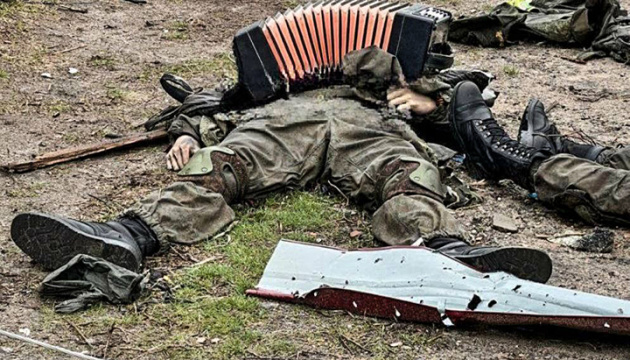
Russian forces advance slowly in Donetsk Oblast as ISW projects full capture only by 2032. — Source: gdelt
Russia's Unrealistic Donbas Deadline
Russian dictator Vladimir Putin ordered his troops to seize all of Donbas by the end of 2026, however his “combat fantasies” remain detached from Ukraine’s real defensive capabilities [3]. At the current rates of advance, the Russian army could capture the rest of Donetsk Oblast only in the autumn of 2032 [3]. Since February 2022, Putin has set at least 15 deadlines for the capture of Donbas, but Russian troops have not met any of them [3]. Russian troops have been fighting for Kostiantynivka since October 2025, but in 11 months they have not been able to capture it [3]. The Russians have not reached, let alone entered, other cities of the “fortress belt” — Sloviansk, Kramatorsk and Druzhkivka [3]. According to analysts, Russian troops will not be able to capture all three cities during the remaining four months of 2026, given that in almost a year they have not been able to fully capture even one of them [3]. “Numerous deadlines that Putin sets for the capture of the entire Donbas partly reflect his need to provide the Russian people with a significant information victory,” the report states [3]. Putin promised Russians victory in exchange for patience with the burden of war, without transferring Russian society to a full military regime [3]. According to analysts, at the current rate of advance, Russian troops will not capture the entire Donetsk Oblast until 2032 — if they can capture it at all [3]. In August 2026, the rate of Russian advance along the entire front line was 2.91 square kilometres per day, which is only slightly more than in previous months [3]. The average rate of Russian advance in Donetsk Oblast was even lower — only 2.36 square kilometres per day [3]. At this rate, analysts estimate that it will take the Russians until 2 October 2032 to capture the remaining 19% of Donetsk Oblast [3]. This will be more than a year after the next elections to the State Duma, which are likely to take place in September 2031 [3]. At the same time, ISW is not ready to claim that Russian troops will be able to capture the rest of Donetsk Oblast at any time, since they will have to conduct exhausting urban battles in the cities of Ukraine’s “fortress belt” before they can try to advance in open terrain — fields where Russian troops have historically had difficulty advancing [3]. “The pace of advance of Russian troops throughout the theatre of military operations has slowed significantly since 2025,” analysts write [3]. In 2026, Ukraine has proven that it is capable of maintaining tactical initiative in several sectors of the front and complicating Russian rear support, while the Russians find it difficult to counter these efforts [3]. Neither the course of events nor the likely dynamics of the current conflict indicate that Russian troops will be able to sharply accelerate the pace of their offensive in the near future, as long as Western support for Ukraine remains approximately at the current level [3]. Analysts explain Putin’s fantasies about capturing Donbas by the fact that Russian military leaders systematically disinform him about the situation on the front, in particular through the widespread “culture of lies” in the army [3]. High-ranking commanders regularly exaggerate the successes of Russian troops as part of an information war, creating the impression of a supposedly rapid offensive and the collapse of Ukrainian defences [3]. Such disinformation probably strengthens Putin’s conviction that Russia will be able to achieve its goals in Donetsk Oblast by the end of 2026, and therefore he does not need to make compromises [3]. Analysts add that Putin is increasingly fixated on a distorted perception of the situation on the battlefield, which he perceives as reality, and insists that it should become the basis for any peace negotiations regarding Ukraine [3]. In particular, on 6 September, Russian presidential aide Yuri Ushakov stated that Putin provided US envoys Steve Witkoff and Jared Kushner with a comprehensive assessment of Russia’s “significant successes” on the front — a claim that, according to analysts, does not correspond to the real situation on the ground [3].
Iran's Growing Confidence and Cyber Campaign
New US intelligence data show that Tehran now assesses its capabilities and the limits of American power much better [4]. According to US intelligence reports prepared in recent weeks, Iran is demonstrating confidence in its ability to strike targets in the Middle East and appears intent on continuing the conflict for several more months to complicate the US position [4]. Over the months of war, which has alternately subsided and resumed, Iran has gained a much better understanding of the strengths of its armed forces and now more confidently assesses its own capabilities [4]. These reports indicate that reaching an agreement for a complete end to the war will not be easy [4]. Almost nothing suggests that Iran is ready to conclude any deal with the US [4]. Some officials believe that Tehran is quite satisfied with the opportunity to exacerbate President Donald Trump’s political problems ahead of the US midterm elections [4]. Trump is not currently seeking negotiations [4]. He states that he is capable of exerting economic pressure on Iran that will force Tehran to make concessions on control of the strait, and over time, possibly on the nuclear program [4]. However, in the short term, US economic sanctions are likely to continue to provoke escalation, officials believe [4]. In the coming weeks, Iran may take actions similar to those it took in July [4]. Then Tehran attacked US military bases in the Middle East, resulting in the deaths of three Americans in Jordan, struck ships in the Strait of Hormuz, and struck infrastructure facilities in Kuwait and other places [4]. US officials also believe that cyberattacks on more than 100 water supply systems across the US at the end of July were most likely carried out by hackers linked to Iran [4]. There were no signs that the operation of any of the systems was disrupted to the point that the water became unfit for drinking [4]. However, in some cases, the attacks led to failures that required switching to manual control and, as a precautionary measure, recommending that the population boil water [4]. Acting and former officials reported that hackers also showed interest in attacking US oil and gas infrastructure, although such systems are usually considered better protected from hacking [4]. It is unclear whether they managed to penetrate any energy systems [4]. There are signs that hackers linked to Iran have been able to regroup in recent months after losses suffered at the beginning of the war [4]. Even if cyberattacks do not lead to serious disruptions of critical infrastructure, they are likely to remain an attractive way for Iran to weaken public support in the US for an already unpopular war, according to former intelligence officials and security experts [4]. Alex Orleans, a former US government contractor in the field of cybersecurity specializing in tracking Iranian hacker groups, believes that Iranian specialists now feel more confident [4]. “Even if such attacks cannot seriously alarm American society, they can still become part of a broader campaign aimed at making Americans tired of how the current administration is conducting this conflict,” he said [4]. At a press conference on Thursday, Vice President JD Vance apparently acknowledged that such attacks could further weaken support for a conflict that shows no end in sight [4]. He tried to allay concerns about the threat to Americans but stated that the Trump administration expects Tehran to continue to “make many attempts” directed against the United States [4]. “If we talk about Iran’s ability to disrupt the usual life of Americans, then in my opinion it is very limited,” JD Vance said in response to a journalist’s question about cyberattacks [4]. “It cannot be said that such an opportunity does not exist at all, but it is quite limited. I would be much more worried about cyberattacks from other players” [4]. When US and Israeli forces began the war with Iran on 28 February, Donald Trump predicted a quick and decisive victory [4]. After numerous powerful strikes, critics of the president say that it has now become completely obvious that the Trump administration underestimated Iran’s resilience [4]. “The Iranians are quite optimistic,” said Colorado Congressman Jason Crow, a Democrat on the intelligence committee [4]. “They have suffered significant damage, but their system has always been designed for this. They understand that they can withstand strikes, and they are playing a much longer game here” [4]. Crow declined to comment on classified assessments but said that Iranian authorities consider their position stronger for several reasons [4]. According to him, Iran’s previously fragmented leadership has now become more cohesive, internal opposition has been suppressed, and Iran still has stocks of missiles and drones [4]. Iran’s leadership also appears to have gained a better understanding of how to control the Strait of Hormuz, through which a fifth of world oil trade passed before the start of the war with Iran [4]. “They always knew that the strait was an important bargaining chip, but now they have an even better understanding of what levers of influence it gives them,” Crow said [4]. Other interlocutors familiar with the reports believe that Iran probably proceeds from the assumption that it will be difficult for US armed forces to launch new large-scale strikes as ammunition stocks are depleted [4]. Government officials also point to signs that Iran intends to drag out the conflict at least until the US midterm elections [4]. According to sources, in Tehran they understand that the war with Iran, as well as high gasoline prices caused by the closure of the strait, are causing political damage to Trump and the Republican Party [4]. “The Iranians believe that they now have maximum leverage,” said New Jersey Congressman Josh Gottheimer, a Democrat [4]. “So why, from their point of view, should they stop creating problems for the president?” [4]. There are signs that Iran is trying to spread propaganda that could weaken Trump’s position in the elections, as happened during the 2020 and 2024 presidential campaigns [4].
Drone Innovation Race in Ukraine
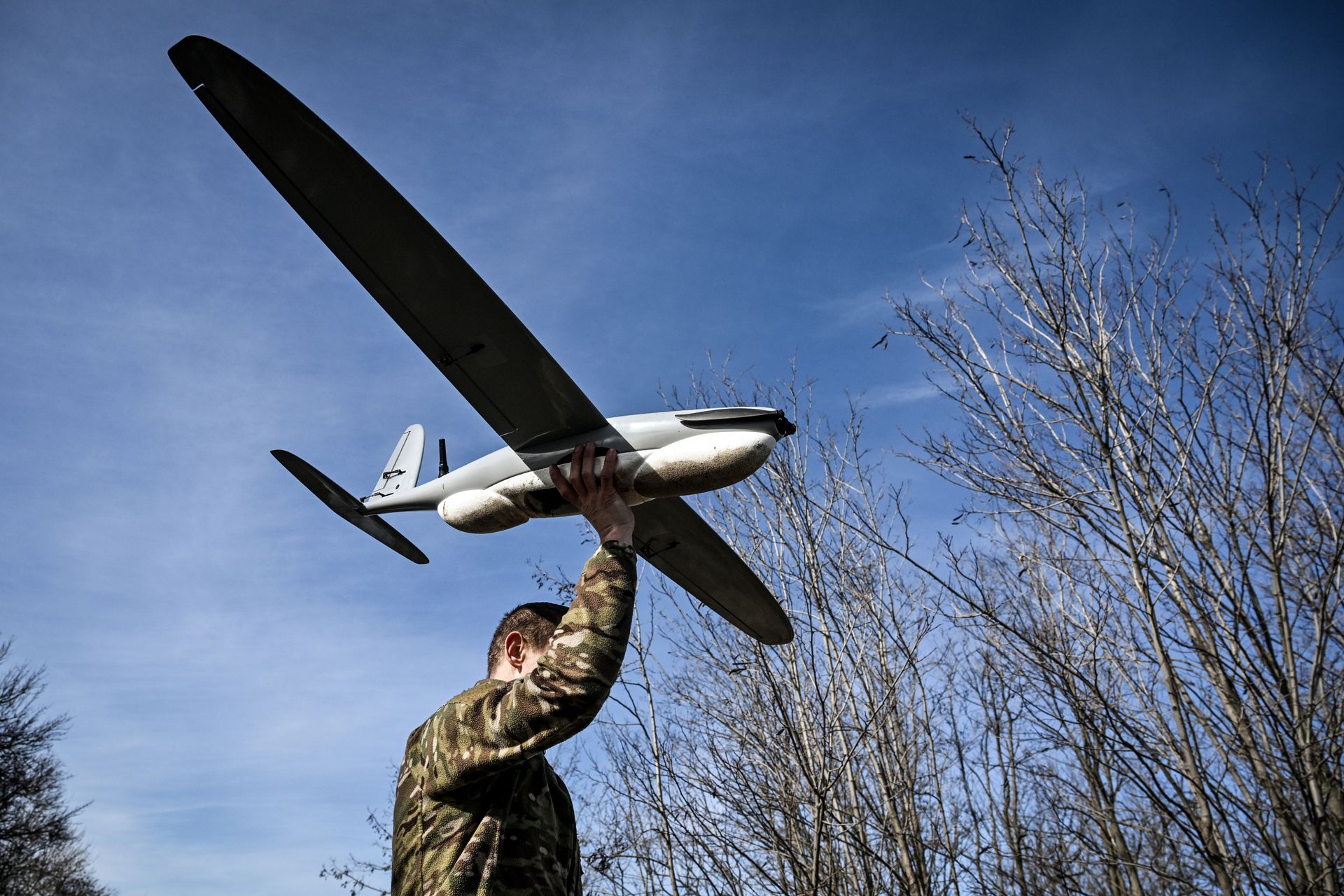
You don’t need to have followed the Ukraine war closely to recognize the central role that drones have played in the conflict [5]. As of summer 2026, drones shape almost every act as part of wider systems [5]. What relatively few onlookers outside of Ukraine recognize is the way in which every drone innovation on one side of the conflict has prompted innovation on the other [5]. Ukrainian recon drones led Russia to pursue jamming and short-range air defense innovation; Russian improvements in electronic warfare and air cover led to the use of expendable quadcopters by Ukraine [5]. On and on in this vein the war has proceeded, all the way to where we are now, where drones are mass-produced, often by 3D printers for expediency, and long-range drones are routinely flying deep into enemy territory to target oil refineries, logistics hubs, and ostensibly civilian businesses seen to be supporting the Russian war effort [5]. Now Russia is responding with increasingly advanced air defense systems and spoofing technology [5]. And that has brought into focus new and increasingly sophisticated forms of technology that can protect enough long-range drones (protecting all of them is next to impossible) that some are able to penetrate those Russian defenses and carry out their missions [5]. Chief among these, perhaps, is chaff, a relatively old technology that has recently been brought into the 21st century [5]. Used on military aircraft and warships