
Doomsday Clock Tensions Rise as Pahlavi Reports Iran Regime Defections
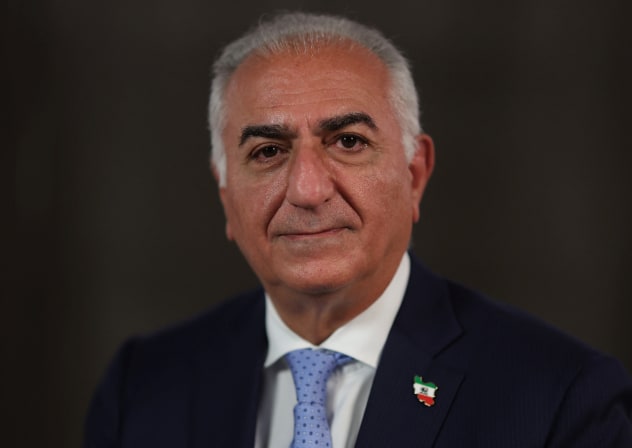
As global tensions mount across multiple flashpoints, raising concerns akin to the doomsday clock advancing, Iranian exiled Crown Prince Reza Pahlavi stated that the Islamic Republic has entered an "active defection" phase with military and civilian officials quietly breaking from the regime.
Pahlavi Declares Active Defection Phase Inside Iran
Iran’s exiled Crown Prince Reza Pahlavi said Saturday that members of the Islamic Republic’s military and civilian establishment were already quietly breaking with the regime, describing Iran as having entered an “active defection” phase in the struggle to overthrow the country’s rulers. [1] Addressing thousands of supporters at the "Cyrus the Great II" gathering in Toronto over the weekend, Pahlavi outlined how in the months since the bloody January uprising, when over 40,000 Iranians were killed on the streets, the opposition had regrouped, adapted its tactics and expanded networks inside Iran, even as the regime sought to convince Iranians that the protest movement had been defeated. [1] “We are more experienced, more cohesive and more determined today than ever before,” he told the gathering. [1] “Our objective is clear: the overthrow of the Islamic Republic and achieving a free and prosperous Iran.” [1] Central to his speech was the claim that erosion within the regime itself is continuing. [1] For months, Pahlavi has said that officials from within the Islamic Republic’s apparatus have been quietly reaching out to him to signal their clandestine opposition to the regime. [1] These members of Iran’s civilian and military structures have used secure channels to distance themselves from the Islamic Republic and side with the opposition. [1] For now, Pahlavi argued, many remain outwardly within the system, retaining their positions while gradually ceasing to perform the functions expected of them. [1] “They remain within the structure outwardly, but they no longer perform their former functions for the regime,” he said. [1] “Quietly, but decisively, they are eroding the pillars of repression from within.” [1] Open defections, including soldiers publicly laying down their weapons, would represent a later stage reached once the balance of power had shifted decisively toward the opposition. [1] Pahlavi placed January's anti-regime protests within cycle of longer period of Iran unrest. During his Toronto address, Pahlavi also placed January’s uprising within a much longer period of unrest in Iran, dating back through several protest cycles. [1] Rather than portraying December-January’s demonstrations as an isolated explosion of anger, he traced their origins through a decade of growing opposition, from the large Cyrus Day gatherings of 2016, through the protests of 2017-18 and November 2019, to the nationwide uprising that followed Mahsa Amini's death in 2022. [1] Saturday also saw global marches across the Iranian diaspora to mark four years since Amini’s death in the custody of the Iranian regime. [1] “The great uprising of Dey was not the product of a fleeting burst of emotion,” he said. [1] “Behind it lay a long, difficult and costly road.” [1] The events of January 8 and 9, when the Islamic Republic launched a massive crackdown as demonstrations spread across the country, had nevertheless changed the circumstances confronting the opposition. [1] The scale of the killing, Pahlavi said, required changes in how the opposition operated, although not in what it ultimately sought to achieve. [1] “A change in tactics does not mean a change in objectives. It means adapting our methods to new circumstances.” [1] Saturday’s gathering was held at Meridian Hall as part of "Cyrus the Great II: From a Great Civilization to a Greater Future," organized by the Cyrus the Great Cultural & Humanity Organization. [1] Organizers had said ahead of the event that more than 3,000 Iranian Canadians and supporters were expected. [1] The event brought Pahlavi together with Canadian political and civic figures, most prominently Conservative Party leader Pierre Poilievre, who used his appearance to call for stronger Canadian action against individuals linked to the Islamic Republic. [1] Poilievre called for greater scrutiny of those connected to the Islamic Revolutionary Guard Corps entering Canada, continued targeted sanctions, and measures to prevent regime-linked assets from being moved into the country. [1] Canada severed diplomatic relations with Tehran in 2012 and designated the IRGC as a terrorist entity in 2024. [1] Poilievre also spoke of Iran beyond the Islamic Republic, invoking Cyrus the Great and the country’s pre-Islamic history while expressing hope that Iranians would one day be able to return freely to their country and see the Lion and Sun flag raised there again. [1] For Pahlavi, much of Saturday’s address focused on another battle between the opposition and Tehran: the competing picture each presents of the state of resistance inside Iran. [1] He accused the regime of promoting two central claims – that Iran’s opposition remains hopelessly divided and that no meaningful organization exists inside the country. [1] On the first, Pahlavi argued that agreement over Iran’s eventual form of government was not a prerequisite for cooperation against the Islamic Republic. [1] Republicans and monarchists, as well as those on the political left and right, could work together around four principles: Iran’s territorial integrity; separation of religion and government; individual freedoms and equality before the law; and Iranians' right to determine their future system of government through free and fair elections. [1] “The embrace of Iran’s Lion and Sun Revolution is open to every Iranian who accepts these four principles,” he said. [1] The second claim – that the opposition lacks organization – brought Pahlavi back to the networks he says now operate beneath the surface inside Iran. [1] If no organization existed, he asked, how could millions of Iranians inside and outside the country act together at critical moments? [1] According to Pahlavi, the answer lies in decentralized networks embedded in Iranian society, beyond the regime’s ability to easily dismantle. [1] He claimed Tehran’s intelligence and security apparatus was itself increasingly concerned by their development. [1] The Iranian opposition leader nevertheless cautioned his supporters against assuming the Islamic Republic’s collapse was inevitable or imminent. [1] “We must be realistic. The work is not yet finished,” he said. [1] “Overthrowing this criminal sect that has occupied our country is a complex, multi-stage process.” [1] But the central message of the Toronto speech was that Pahlavi believes that process has moved into a different stage – one increasingly focused on weakening the machinery of the Islamic Republic from within. [1] “The enemy is decaying from within and is hollow,” he told the crowd. [1] “We are more determined and more organized than ever. Believe that the dawn of freedom is near.” [1]
North Korea-China Border Bridge Activity Intensifies
A heavy truck was spotted Sunday crossing the New Yalu River Bridge, the yet-to-open road connecting North Korea's Sinuiju and China's Dandong, a source said. [2] The truck, with its cargo bed shrouded in a dark cover, rolled toward the North Korean side of the four-lane bridge, according to the source. [2] The construction of the bridge began in October 2011 and wrapped up in October 2014, but it has sat unopened ever since, as North Korea has yet to finish the buildings and infrastructure on its end. [2] According to the source, it was the first time a heavy truck had been seen on the 3,024-meter bridge, raising the possibility for a test run ahead of a long-rumored opening ceremony early next month. [2] Chinese residents nearby have also reported recent vehicle traffic on the bridge, feeding speculation that the opening is imminent. [2] Some have suggested Oct. 5 or 6 as a potential opening date, in time for the 77th anniversary of the establishment of North Korea-China diplomatic ties on Oct. 6. [2] Yonhap News Agency also observed a work vehicle and a small truck crossing into North Korea and returning on Sept. 8. [2] On the North Korean side, a building believed to be a customs office and its surrounding roads appear nearly complete. [2] The source said electric vehicles without license plates, along with an excavator, have recently been seen waiting on the Chinese side to cross. [2]
North Korea Launches Projectile Into East Sea
North Korea fired at least one identified projectile toward the East Sea on Sunday, South Korea's military said. [4] The Joint Chiefs of Staff said it detected the launch in a message to media, without providing further details. [4] Sunday's launch came about a week after the North fired multiple short-range ballistic missiles from the Wonsan area toward the East Sea on Sept. 12, in a move seen as protesting against a trilateral military exercise between Seoul, Washington and Tokyo. [4]
Houthi Missile Strike on Saudi Arabia Triggers U.S. Alerts
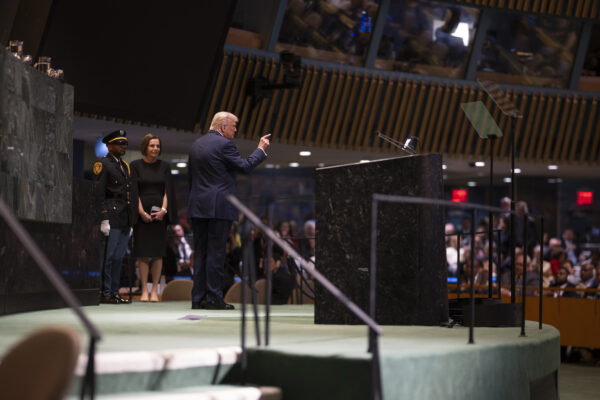
US President Donald Trump cut short a weekend at Camp David to return unexpectedly to the White House on Saturday, as tensions rose in the Middle East. [3] There was no explanation from the administration why Trump was no longer returning on Sunday from Camp David, a secluded presidential complex in rural Maryland, as had been previously announced. [3] However, it is not uncommon for White House travel to change on weekends, including for weather reasons. [3] Forecasts showed rain and thunderstorms in the hilly Camp David area on Sunday. [3] The change in plan came as the Saudi-led coalition fighting Yemen’s Houthis said on Saturday that the Iran-backed group fired a ballistic missile at Riyadh at dawn, after a fire broke out near the Saudi capital’s international airport. [3] The State Department and a string of US embassies issued security alerts to Americans. [3] The alerts cited “the potential for unforeseen escalation” and noted that “Iranian-supported Houthis have engaged in hostilities against Saudi Arabia, including civilian airports.” [3] “This military conflict has the potential to escalate rapidly,” the State Department warning said. [3] “Americans outside the Middle East should seriously reconsider travel to and through the region.” [3]
NATO Prepares Multiple Eastern Flank Defense Plans
NATO dispune de planuri de 4.000 de pagini pentru apărarea flancului estic, în cazul unei eventuale escaladări a conflictului cu Rusia, a declarat amiralul Giuseppe Cavo Dragone, președintele Comitetului Militar al Alianței. [5] În cadrul unei conferințe de presă organizate sâmbătă la Copenhaga, întrebat despre desfășurarea de personal și capacități suplimentare pe flancul estic al NATO, în vederea unei posibile provocări rusești, Dragone a afirmat că acesta este unul dintre numeroasele planuri ale Alianței. [5] „Avem planuri pentru flancul estic - mai exact, trei planuri - pentru a fi pregătiți în cazul în care ar avea loc o escaladare în acea zonă”, a declarat el, subliniind că NATO a stabilit acțiunile, deplasările și răspunsurile pentru un astfel de scenariu. [5] Dragone a explicat că procesul decizional a fost standardizat pentru a fi cât mai rapid posibil. [5] În acest sens, NATO dispune de planuri care acoperă toate situațiile, de la o criză minoră sau o intervenție pe teritoriul Alianței până la declanșarea Articolului 5 și nu numai. [5] „Planurile sunt gata, structura este gata, iar soldații, sistemele și armamentul sunt gata. În cazul unui atac, știm ce avem de făcut”, a spus Dragone, adăugând că riscul de pierderi pentru Rusia, în cazul unui atac, ar depăși cu mult potențialul câștig. [5] Articolul 5, invocat imediat doar în cazul unui atac direct. În ce privește un posibil atac asupra punctelor de trecere a frontierei dintre Polonia și Ucraina, Dragone a afirmat că NATO este deja destul de obișnuită cu atacurile hibride și, în opinia sa, le gestionează cu succes. [5] El a reamintit că NATO este o alianță defensivă, iar strategia sa are în vedere posibilitatea unei escaladări. [5] În același timp, Dragone a subliniat că un atac direct asupra zonei de frontieră polono-ucrainene nu a fost luat în discuție ca scenariu realist. [5] „Trebuie să dăm dovadă de forță și să transmitem un semnal clar că nicio parte a teritoriului nostru, nici măcar un centimetru din acesta, nu trebuie să fie supusă unui atac”, a afirmat el. [5] Dragone a explicat că acțiunile hibride nu declanșează automat Articolul 5 din Tratatul NATO, întrucât, de obicei, acestea rămân sub acest prag de amenințare. [5] „Un atac direct nu se află pe agenda noastră în sensul în care ne-am pregăti pentru asta, dar, în cazul unui atac direct, Articolul 5 ar fi invocat imediat”, a spus el. [5] Stocurile de muniție, o problemă pentru NATO. În ceea ce privește stocurile de muniție în cazul unui eventual conflict prelungit cu Rusia, Dragone a recunoscut că NATO este pe deplin conștientă de această problemă, mai ales având în vedere războiul din Ucraina și numărul mare de proiectile pe care ambele părți le folosesc zilnic. [5] El a subliniat că tocmai de aceea NATO investește și încurajează schimbarea industriei de apărare - să renunțe la mentalitatea de timp de pace de acum patru ani și să-și mărească capacitatea de producție, astfel încât să fie pregătită pentru un război prelungit și capabilă să furnizeze ceea ce este necesar. [5] Dragone a afirmat că fondurile sunt disponibile deoarece aliații au decis să investească semnificativ mai mult în apărare