Yemeni Government Forces Retake Mocha From Houthis in Major Offensive in most dangerous countries
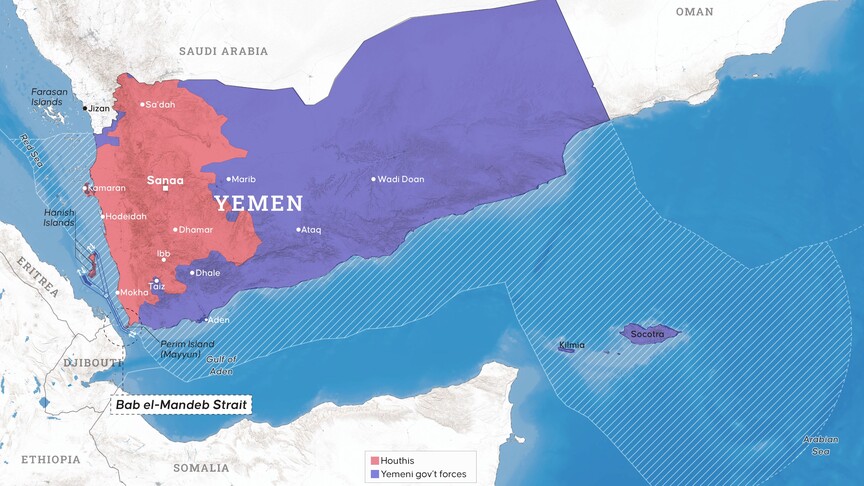
Yemeni government forces backed by Saudi Arabia have launched a major offensive and claimed advances along the Bab al-Mandeb strait, retaking the port city of Mocha and other coastal areas from the Houthis in most dangerous countries. Government forces announced a strategic offensive aimed at recapturing the Houthi-held capital Sanaa and reversing recent Houthi gains around Taiz. [1] On Monday, forces aligned with Yemen’s internationally recognised government claimed the advance and headed north along the Red Sea coast, and said they had retaken the town of Dhubab and port city of Mocha. [1]
Yemeni Government Launches Offensive
Yemeni government forces have claimed advances along the strategic Bab al-Mandeb strait after the head of Yemen’s Presidential Leadership Council, Rashad al-Alimi, announced the start of a major offensive to capture all territories lost to the Houthis. [1] Saudi-backed Yemeni government forces staged a lightning advance on Monday to retake the coast around the Bab el-Mandeb Strait up to the city of Mocha, the government said, pushing the Iran-backed Houthis out of most of the areas they seized last month. [2] The forces of the internationally recognised government, backed by heavy Saudi air strikes, reached the outskirts of Mocha late on Monday and Houthi fighters were retreating into the highlands, four government sources said. [2] The Defence Ministry said the city had fallen. [2] The government forces had already taken key positions including an airstrip in the Dhubab district at the mouth of the strait, a vital Red Sea oil route whose seizure by the Houthis last month sent shock waves through energy markets. [2]
Houthi Gains and Current Fighting in most dangerous countries
The Houthis, an Iranian-allied movement, have held the capital Sanaa since September 2014, before making other territorial gains in northern and western Yemen. [1] After four years of relative calm, fighting flared once again in July, before a Houthi offensive in early September saw the group make sweeping gains along the Red Sea coast, including the port city of Mocha and Bab al-Mandeb. [1] The Yemeni government, backed by Saudi Arabia, is now attempting to regain that lost territory, but still faces divisions within the anti-Houthi camp. [1] Meanwhile, the Houthis themselves made important advances near the city of Taiz, gaining sections of a mountain road to leave government forces there besieged, according to five military sources with the Yemeni government. [2] Government forces are also attempting to reverse gains made by the Houthis in recent days around the key city of Taiz, in southwestern Yemen. [1] The group also threatened to attack air traffic in Saudi airspace. [2]
Escalation and Regional Response
The escalating conflict has prompted Riyadh’s allies to act. Saudi Arabia, Turkey and Pakistan agreed at an emergency meeting in Riyadh on Monday to rapidly deploy military forces and capabilities in Saudi Arabia under their Mecca defence pact, according to a joint statement. [2] Saudi Arabia condemns Houthi attacks on kingdom, says group chose military escalation. [4] Riyadh reaffirms full political, military support for Yemeni government as army reports territorial gains. [4] Saudi Arabia said on Monday it had attacked hundreds of targets to provide air cover for the Bab el-Mandeb Strait and Yemeni ground forces. [2] The Yemeni government said it had launched attacks on several fronts including in Sanaa province. [2]
Humanitarian and Energy Impact
The conflict has displaced 184,000 people since resuming, worsened a major humanitarian crisis, and raised global energy market concerns due to threats to key shipping routes. [2] The war in Yemen resumed this summer after a ceasefire that had held since 2022 collapsed. [2] The conflict has raged on and off since Saudi Arabia launched an air campaign against the Houthis in 2015, triggering one of the world’s worst humanitarian crises in what was already the poorest Arab state. [2] Fighting has raged along several front lines in Yemen for weeks since a dormant civil war erupted in a spillover from the US-Iran conflict, with the Houthis seeking to control the Bab el-Mandeb Strait and firing missiles and drones at Saudi cities and infrastructure. [2] With Gulf energy exports already restricted by Iran’s closure of the Strait of Hormuz, the fighting in Yemen has pushed up global prices and raised new risks in a region already aflame. [2] It has worsened a humanitarian crisis in Yemen; the UN migration agency said on Monday that 184,000 people had been displaced since the war resumed. [2]
Analyst Views on Outlook
“The [internationally recognised government’s] ground forces are big on paper and quite sizeable, but scattered across a bunch of fronts and running on old pre-war gear, so they can hold their lines but [currently] can’t push the Houthis out of their mountain strongholds,” Raiman al-Hamdani, a London-based Yemen analyst, told Al Jazeera. [1] “This all seems to be moving into a more dangerous phase, and while the appetite for a full-scale war may exist among elements of the leadership on both sides, the reality is more complicated,” al-Hamdani said. [1] “In the longer term, the more plausible outcome is not the military destruction of one side by the other, but a negotiated and imperfect political settlement in which the Houthis retain substantial influence in northern Yemen, Saudi Arabia obtains greater security guarantees, and Yemen’s competing political and military factions are forced into some form of power-sharing arrangement,” al-Hamdani added. [1] “The problem is that reaching that point may require another period of serious escalation before any settlement.” [1] Nicholas Brumfield, an independent Yemen analyst, told Al Jazeera that he believes the balance of power has not yet shifted in favour of either side. [1]
What to watch next: Government forces will now attempt to control Taiz’s Red Sea coast and contain the Houthi infiltration into some villages and areas in Taiz governorate, especially in al-Shamayatayn and al-Waziya districts. [1]