
Yemeni Government Forces Launch Red Sea Counter-Offensive Against Houthis Amid Current Wars in the World
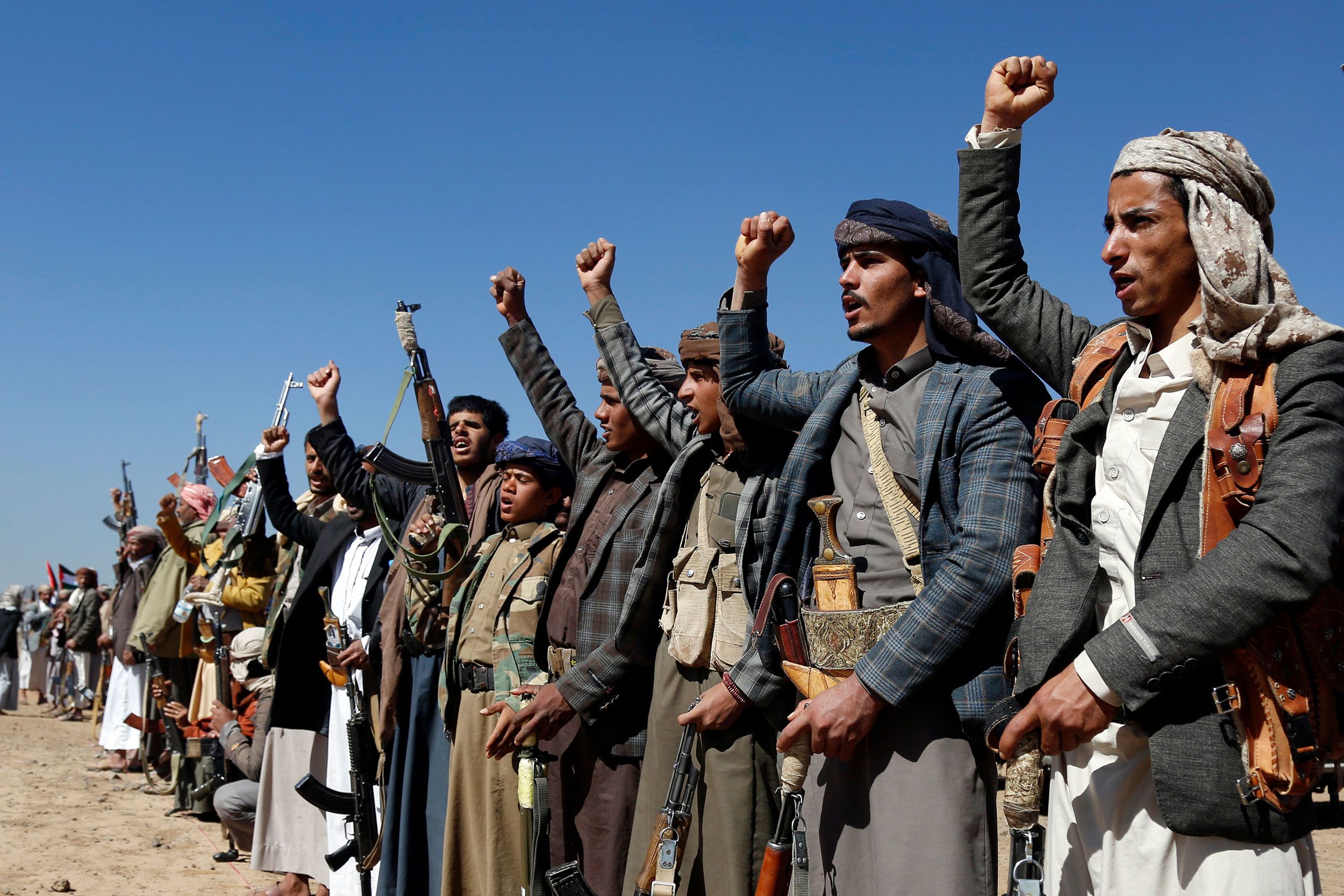
Renewed fighting in Yemen has seen Iran-backed Houthis seize control of key Red Sea coastal areas including the port city of Mocha and the strategically vital island of Mayyun near Bab al-Mandeb, prompting a counter-offensive by Saudi-backed Yemeni government forces and allied militias amid current wars in the world. A kaleidoscope of factions including the Yemeni armed forces, Giants Brigades, Nation's Shield Forces, National Resistance Forces and Tihama Resistance Forces are fighting alongside the internationally recognised government to halt the Houthi advance and recapture the Red Sea coast and Bab al-Mandeb. [2]
Houthi Advances Along the Red Sea Coast
Within less than a week, the Houthis have reached Yemen’s southern Red Sea coast at Bab al-Mandab, taking the strategically positioned island of Mayyun. [3] From there, they are within reach of one of the world’s most consequential maritime crossings, through which roughly 12 percent of global trade passes. [3] The advance has given renewed urgency to understanding who the Houthis are and how they have acquired the ability to project power beyond Yemen. [3] The Houthi advance to Bab al-Mandeb has prompted Oman-mediated understandings with the US in which the Houthis agreed not to disrupt international navigation while singling out Saudi Arabia as an exception. [3]
Saudi-Backed Forces and Key Factions
A kaleidoscope of different factions is fighting alongside Yemen's army to halt the Houthi advance and recapture the Red Sea. [2] The resumption of fierce fighting in Yemen has pitted the Iran-backed Houthi group against a kaleidoscope of different factions aligned with internationally recognised government and the Saudi-led coalition. [2] Non-state militias are playing a key role in pushing back against the Houthi advance in Taiz and are leading the counter-offensive to retake the Red Sea coast and the Bab al-Mandeb. [2] Commanded by Chief of Staff Saghir Hamud Aziz, the Yemeni armed forces are active mostly in the country's northern governorates, as well as the strategic Marib and Taiz provinces. [2] The size of the army is highly uncertain, with estimates varying wildly. [2] Conflict data monitor ACLED estimates a troop count of 300,000-400,000 while others put the figure in the tens of thousands. [2] The government is trying to add thousands more to the army's ranks, with Rashad al-Alimi, the head of Yemen's Presidential Council, calling for a general mobilisation ahead of this week's counter-offensive. [2] The Giants Brigades are among the largest armed factions fighting with the Saudi-led coalition against the Houthis, with up to 30,000 fighters thought to be inside its ranks. [2] The militia is composed of tribal and Salafi elements and is commanded by Abdulrahman al-Mahrami, known by his kunya Abu Zaraa, who sits on the Presidential Leadership Council. [2] The brigades were formerly backed by the UAE but have aligned with the Saudis after Emirati forces withdrew from the country earlier this year and have assumed responsibility for security in Aden. [2] The brigades are deployed throughout Yemen but are concentrated particularly in the Taiz, Lahej, and al-Dhale governorates. [2] They are playing a leading role in the government's ongoing offensive to recapture the Red Sea from the Houthis and have been involved in fighting around the Bab al-Mandeb and the coastal town of Dhubab. [2] The Nation's Shield Forces were established by al-Alimi in early 2023 and are Saudi Arabia's principal proxy force on the ground. [2] The group is thought to have between 30,000 and 45,000 tribal and Salafist fighters in its ranks, mainly from the eastern regions of Hadramawt and Al-Mahra. [2] It was assembled by Saudi Arabia partly as a counter to the UAE-backed secessionist forces in the south. [2] Since Emirati forces withdrew from the country, they have been deployed across the south, and recently to the northern Al-Jawf region. [2] The forces are commanded by Brigadier-General Bassam Mahdhar al-Sanabi. [2]
{IMAGE_2}
Setbacks for National Resistance and Tihama Forces
The National Resistance Forces (NRF) were first formed in 2017 and are led by Tareq Saleh, a member of the Presidential Leadership Council and nephew of the late former president Ali Abdullah Saleh. [2] The NRF suffered major setbacks during the Houthis' recent Red Sea offensive. [2] Saleh reported that more than 500 of its fighters were killed and another 1,500 wounded as the Iran-backed group seized its stronghold in the port city of Mocha. [2] The group was originally backed by Abu Dhabi but is now fully aligned with the Saudi-backed government. [2] It supports a unified Yemen but has avoided major clashes with southern secessionist forces also sponsored by the UAE. [2] The Tihama Resistance Forces originate from the eponymous coastal region, which stretches the length of Yemen's Red Sea coast from the Saudi border in the north to the Bab al-Mandeb in the south. [2] It encompasses several key cities, including Hodeidah, which was seized by the Houthis in 2021, and Mocha. [2] The militia was first founded in 2014 to fight against Houthi control of Yemen's western region but was restructured as an affiliate of the NRF following the Iran-backed group's capture of Mocha. [2] Announcing the reorganisation of the unit, Tareq Saleh said Tihama Resistance would be composed of fighters from the NRF's first and second battalions and would report directly to the Saudi-led coalition. [2] It is commanded by Major-General Zayed Mansir, a veteran Tihami military leader. [2] The number of fighters in the group is unknown. [2]
Diplomatic Understandings and US-Yemen Contacts
In 2025, Washington and the Houthis reached an Oman-mediated understanding under which the Houthis agreed not to attack US vessels in exchange for an end to American strikes. [3] The latest escalation has led to similar understandings and commitments, while Oman again served as a mediation channel. [3] The Houthis reaffirmed their commitment not to disrupt international navigation, implicitly including Israeli vessels, while singling out Saudi Arabia as an exception. [3] It is clear that the Houthis, now that they made strategic military advances, will have specific demands before extending the same commitment to Saudi ships and interests. [3] President Trump’s announcement of talks with the Houthis naturally alarmed the Yemeni government. [3] A subsequent call between Trump and Yemen’s President Rashad Al-Alimi on September 20 was intended to reassure the Yemeni leadership that the talks did not represent a change in the U.S. position toward Yemen’s internationally recognized government. [3] Al-Alimi sought U.S. support against the Houthi advance, but Trump made no direct pledge of military support during the call. [3] Beyond these points, few details of the conversation have been publicly disclosed by either the Yemeni or American side. [3]
{IMAGE_3}
Regional Migration and Displacement Risks
Renewed hostilities in northern Ethiopia occur against the backdrop of Red Sea turmoil, collapsed aid budgets and drought, raising concerns for mixed migration, displacement and the more than one million refugees Ethiopia hosts. [1] Five years after MMC assessed the mixed migration consequences of the Tigray war, northern Ethiopia is seeing a resurgence of active hostilities. [1] This time the regional alignments are different, the Red Sea is in turmoil, aid budgets have collapsed and drought is setting in. [1] What could this mean for mixed migration and displacement, for the more than one million refugees Ethiopia already hosts and for Ethiopians on the move? [1] Only 26 km separate Yemen from the Horn of Africa at Bab al-Mandab, and the Gulf of Aden forms part of the Eastern Route, which the International Organization for Migration describes as one of the busiest and most dangerous migration corridors in the world, where migrants face human trafficking and exploitation, detention, violence and death. [3] Ethiopians and Somalis cross into Yemen, often intending to reach Saudi Arabia and the Gulf. [3] In addition to being a country of transit, Yemen is also a country of origin: Yemeni refugees and asylum seekers also make their way westward and farther north, including to Egypt. [3]
Yemen's Fragmented Power Structure in Current Wars in the World
Yemen remains one sovereign country under international law, with a recognised government and national armed forces, but effective control over its territory is shared with the Houthis, southern forces, tribal networks and other local actors. [3] Sana’a remains Yemen’s formal capital, but the internationally recognised government is based in Aden, while neither city alone represents the full distribution of political and military power across the country. [3] Authority in Yemen has repeatedly depended on dynamics among tribes, regional elites, military commanders and local power brokers rather than on one institution exercising uncontested control. [3] Yemen’s historical and political relationship with Saudi Arabia is central to understanding the dynamics of the conflict. [3] Modern borders did not erase older connections between Yemen, particularly the north, and Asir, Jizan and Najran, three areas historically connected to Yemen that were incorporated into Saudi Arabia and whose status was formalised by the 1934 Treaty of Taif. [3] Although the border was formally settled in 2000, the older territorial question continues to resonate in Yemeni politics, including among the Houthis. [3] Saudi Arabia regards the security of its southern border and Yemen’s political stability as major concerns. [3] Riyadh has cultivated Yemeni politicians, tribes and local power brokers through financial and political patronage, while the UAE has built relationships with southern political and military forces and invested in Aden, coastal ports and Socotra, whose position between the Arabian Sea, Gulf of Aden and Red Sea gives it strategic importance. [3] Emirati influence has also extended into Hadramawt and along the southern coast, where ports, maritime access and energy infrastructure intersect. [3] Saudi Arabia has focused particularly on its border region, Yemen’s territorial stability and areas such as Hadramawt and al-Mahra. [3] Money, weapons and political support have repeatedly shaped Yemen’s local balances of power without guaranteeing permanent allegiance. [3] The Houthis altered this equation after taking Sana’a, expanding towards the Saudi border and developing closer ties with Iran. [3] Saudi Arabia responded by leading the 2015 coalition intervention against them, but the war did not produce the straightforward outcome initially sought. [3] The Houthis survived prolonged military pressure, retained large parts of northern and western Yemen, and acquired and developed increasingly sophisticated missile and drone capabilities, leaving Saudi Arabia facing a movement with both territorial depth and the means to affect its security from across the border. [3] Despite their shared opposition to the Houthis, Saudi Arabia and the UAE have not pursued identical interests in Yemen. [3]
What to watch next: Renewed hostilities in northern Ethiopia could affect mixed migration and displacement amid Red Sea turmoil, collapsed aid budgets and drought, with consequences for the more than one million refugees Ethiopia hosts.