
Yemen Strikes Kill Three Pakistani Sailors on Saudi Cargo Ship
The Yemen strikes claimed the lives of three Pakistani sailors aboard the Saudi cargo ship Tihamah in the Bab el-Mandeb strait off Yemen, marking the first known fatalities from Houthi attacks on shipping since the Iran war began. The strike also killed one Indonesian crew member, bringing the total deaths to four according to Yemen's transport ministry.
Houthi Strike Kills Four Crew on Saudi Cargo Ship
The attack targeted the Egyptian-owned Tihamah, which sustained multiple hits that left a large hole in the control tower still burning after the strike. Yemen's transport ministry confirmed the four fatalities, including three Pakistani nationals and one Indonesian. The Houthis claimed the vessel was carrying Saudi military equipment. The incident occurred in the Bab el-Mandeb strait, with no immediate comment from Saudi authorities. These details align with reports that the Yemen strikes produced the first deaths in a Houthi strike on shipping since the Iran war began on February 28. [5] [4]
Context of Houthi Naval Blockade
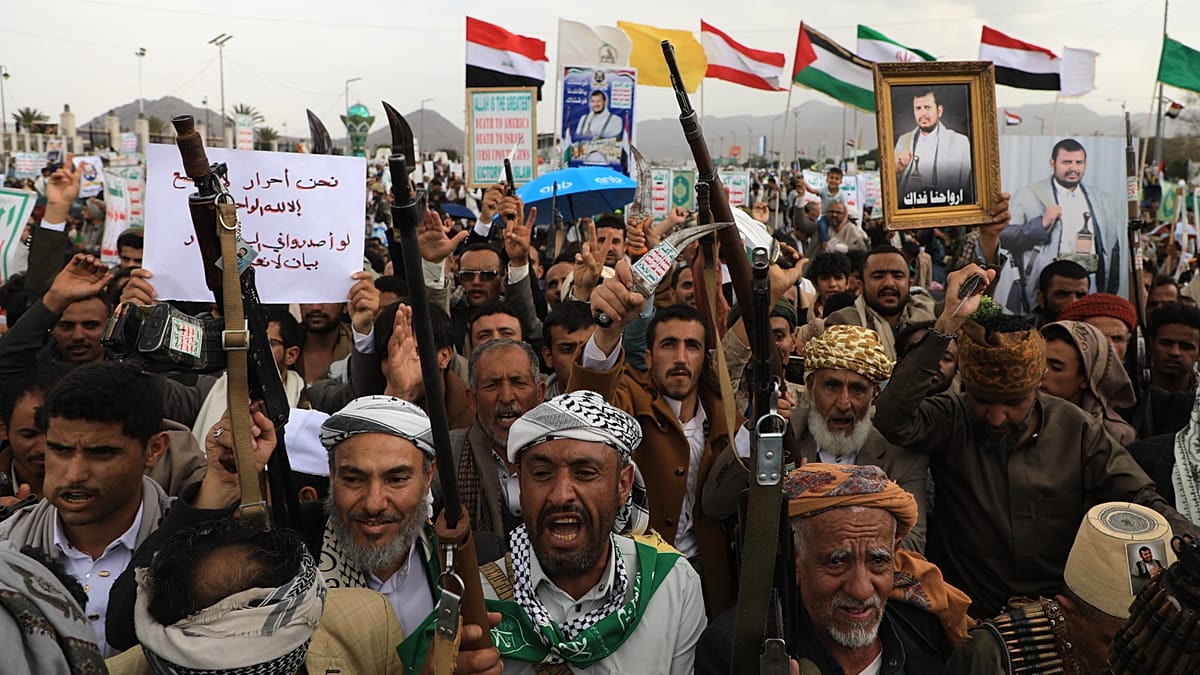
The Houthis declared on July 20 that they would impose a naval blockade against Saudi Arabia in the Red Sea in response to what they described as a Saudi siege on Yemen. Since that announcement the group has launched attacks against Saudi Arabia and locations including Yemen's Mocha and Marib, which are controlled by the Saudi-backed, internationally recognized government based in Aden. The Yemen strikes on the Tihamah fit into this pattern, with the Saba news agency reporting that the group targeted a Saudi ship carrying military equipment. The attack on the Tihamah represented the first time crew members died in such operations since the Iran war began. [5] [4]
Damaged Saudi cargo ship Tihamah shows burning hole in control tower after Houthi strike in Bab el-Mandeb strait. — Source: newsmax
Pakistan's Response and Coalition Commitment
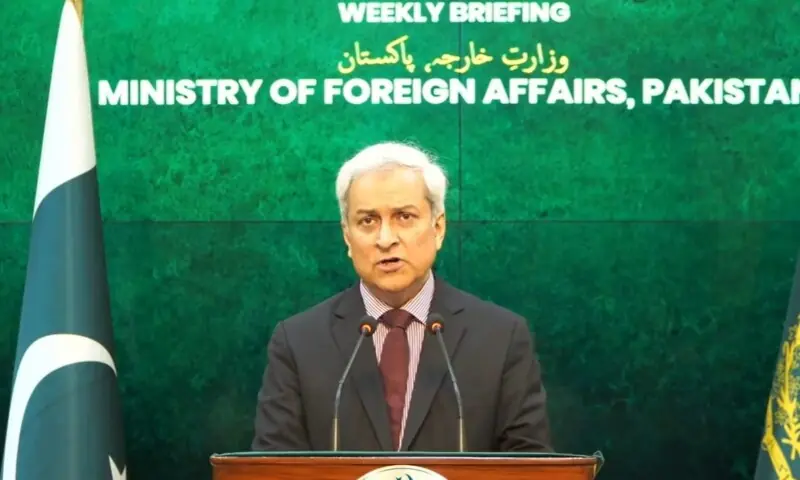
Pakistan's Foreign Office stated that Islamabad will implement its commitments to the Saudi-led multinational maritime defence coalition in full earnest following the deaths. The coalition, backed by 14 countries including Pakistan, Turkiye and Egypt, aims to protect shipping and energy supply routes in the Red Sea. Foreign Office spokesperson Tahir Andrabi said Pakistan is a signatory to the maritime coalition communique and will implement it with full earnest, adding that the country was engaged with Saudi authorities in this regard. On the directions of Deputy Prime Minister and Foreign Minister Ishaq Dar, Pakistan was ascertaining the details of the agreement. [1] [3]
Broader Regional Diplomacy
Interior Minister Mohsin Naqvi arrived in Tehran on Tuesday to discuss bilateral relations, security-related matters and regional developments, particularly peace and stability in the region. Naqvi held meetings with senior Iranian officials including his counterpart Eskandar Momeni, Iranian Foreign Minister Abbas Araghchi and Iranian President Masoud Pezeshkian. A diplomatic source indicated the principal objective was to follow up on the Islamabad Memorandum of Understanding and Pakistan’s mediation between Iran and the US. Foreign Office spokesperson Tahir Andrabi reiterated that Pakistan remained engaged alongside brotherly states in sincere efforts to work towards a resolution to the crisis. [1] [3]
Houthi strike leaves burning hole in control tower of Saudi cargo ship Tihamah in Bab el-Mandeb strait. — Source: gdelt
Market and Conflict Impact
Oil prices rose following the incident, with Brent crude up 1.4 percent to close at $88.91 per barrel amid renewed pessimism about ending the conflict. The American crude price rose 1.3 percent to $83.20 per barrel. The United States military reported that an MH-60 helicopter fired two Hellfire missiles to disable the steering of a Panamanian-flagged cargo ship that ignored repeated warnings to stop violating the naval blockade of Iranian ports. Maritime sources told Reuters the vessel was struck near Pakistan while heading into the Gulf of Oman. [4]
Makkah Defence Pact and Collective Security
The Foreign Office also highlighted the defence pact signed last week between Pakistan, Saudi Arabia and Turkiye in Makkah on Friday. The joint defence agreement aims to strengthen collective deterrence and empowers signatory states to treat an attack against one as an attack against all. Spokesperson Tahir Andrabi said the agreement reflected the three nations’ commitment to further strengthen their collective security, promoting peace and stability in the region and beyond. He described it as purely defensive in nature and open to other countries, while noting that channels of communication with both the United States and China remained open. [1] [3]
What to watch next: The current 60-day period for US-Iran negotiations under the Islamabad MoU runs until Aug 17, though the deadline can always be extended if there is the intention to hold dialogue, with Pakistan continuing to offset spoilers using direct and indirect channels.