
Xenophobic Unrest in South Africa 2026: Echoes of Historical Protests, Social Media Catalyst, and Path to Regional Instability
By Elena Vasquez, Global Affairs Correspondent for The World Now
April 1, 2026
This article uniquely examines the interplay between historical protests and current xenophobic incidents in South Africa 2026, focusing on how social media has evolved as a catalyst for unrest, while providing an original analysis of its implications for intra-African relations—an angle not covered in the provided source articles.
Current Situation Overview
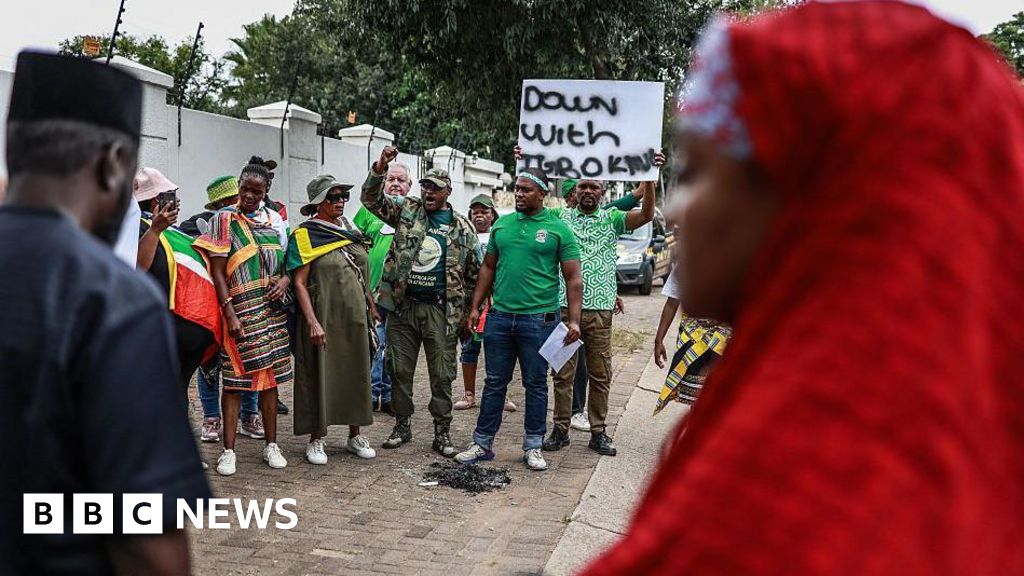
South Africa is grappling with a surge in xenophobic violence that has transformed localized protests into a national crisis, threatening the fragile social fabric of the nation's urban centers. On March 30, 2026, unrest erupted in KuGompo, a township near East London in the Eastern Cape, where demonstrations against the purported crowning of a Nigerian "Igbo King" quickly devolved into attacks on foreign-owned businesses. Protesters, fueled by rumors of an unauthorized traditional leadership installation by Nigerian immigrants, targeted Somali shop-owners, looting stores and setting vehicles ablaze. The South African government issued an urgent call for calm, denying any official recognition of such a "king" and attributing the chaos to misinformation.
This incident is part of a broader wave of anti-foreigner sentiment rippling through major cities. In Johannesburg and Durban, similar tensions have simmered since late March, with protests initially sparked by economic grievances morphing into targeted violence against African migrants from Nigeria, Somalia, and other neighboring countries. Nigerian authorities responded swiftly, issuing a travel advisory on March 31, warning their approximately 100,000 nationals in South Africa to exercise extreme caution amid reports of mob violence. Eyewitness accounts describe protesters chanting slogans like "Put South Africa First," while social media platforms exploded with videos of burning shops and fleeing families.
The immediate triggers trace back to a viral social media campaign alleging that Nigerian communities in KuGompo had installed an "Igbo King" without local consent, symbolizing a perceived takeover of South African cultural spaces. Platforms like TikTok and X (formerly Twitter) amplified these claims; one widely shared post from user @SAFirstPatriot, viewed over 500,000 times, falsely claimed, "Nigerians are crowning kings on our soil—time to reclaim!" Fact-checkers later debunked the story, revealing it stemmed from a private cultural event misrepresented online. In Johannesburg's Hillbrow district, a hotspot for immigrant entrepreneurship, Somali-owned spaza shops—small convenience stores—were vandalized during spillover protests, displacing dozens of families. Durban's Point Road area saw similar clashes, where economic competition over informal trading stalls ignited physical confrontations.
These events have left a trail of human devastation: at least five injuries reported in KuGompo, with local clinics overwhelmed by victims suffering from beatings and smoke inhalation. Somali community leaders report an exodus of traders, many packing up lifetimes of savings in fear of reprisals. The role of misinformation cannot be overstated; algorithms on platforms like Facebook prioritized inflammatory content, turning isolated rumors into calls for nationwide action. This digital escalation has not only prolonged the unrest but also drawn international scrutiny, with African Union observers monitoring for human rights violations. For deeper insights into how social media is catalyzing civil unrest globally, see our coverage on similar dynamics in other regions.
Historical Context and Patterns
The current xenophobic flare-ups are not anomalies but echoes of a deepening pattern of public discontent, traceable through a timeline of protests that have progressively shifted from specific grievances to overt anti-foreigner rhetoric. On January 17, 2026, Cape Town witnessed demonstrations against perceived U.S. interference in local affairs, where crowds decried American cultural and economic influence as a form of external domination. This event, though focused on global powers, planted seeds of "foreign threat" narratives that later pivoted toward African migrants.
By January 28, protests in Cape Town over film industry policies highlighted frustrations with job displacement, as locals blamed international productions for sidelining South African talent. The January 30 displacement of the Ha Rapokolana community for the Mohale Dam expansion further exacerbated resource scarcity anxieties, with affected residents voicing fears of being "pushed out by outsiders." These early 2026 events set a precedent for linking economic hardship to external actors.
Fast-forward to March 2, 2026, when a water protest in Melville, Johannesburg, turned tense as demonstrators accused municipal mismanagement and immigrant overconsumption of straining supplies. Rated as a medium-intensity event, it underscored urban resource battles. The pivotal precursor came on March 25, 2026, with Durban protests demanding stricter immigration controls—a low-intensity but symbolically charged rally that explicitly called for deportations of "illegal foreigners taking our jobs." Labeled "Durban Protests for Stricter Immigration" in event timelines, it marked the first overt xenophobic turn.
KuGompo's March 30 violence (medium intensity) represents a dangerous escalation: from policy demands to physical attacks. This progression illustrates a cycle where socio-economic protests evolve into identity-based xenophobia. Historically, South Africa's 2008 and 2015 xenophobic pogroms killed dozens and displaced thousands, driven by similar post-apartheid inequalities. Today's unrest mirrors those, but with social media accelerating the spread—unlike the SMS-driven rumors of 2008, 2026 sees AI-curated feeds personalizing hate, reaching millions in hours. This pattern reveals long-term frustrations: unemployment at 32.9% (Stats SA, Q1 2026), youth joblessness over 60%, and inequality (Gini coefficient 0.63) fueling scapegoating of migrants who fill informal sectors. Parallels can be drawn to international protest movements like the No Kings protests, where ideological amplifications fuel similar escalations.
Original Analysis of Underlying Factors
At its core, this unrest stems from a toxic brew of socio-economic drivers intersecting with cultural identity, amplified exponentially by social media's evolution from passive broadcaster to active agitator. South Africa's economy, still reeling from COVID-19 scars and energy crises, sees fierce job competition in townships where migrants from Nigeria and Somalia dominate spaza shops and street vending. These entrepreneurs, often operating on razor-thin margins, provide affordable goods but are viewed as undercutting locals through informal networks—remittances from Nigeria alone exceed $4 billion annually, per World Bank data, highlighting economic envy.
Inequality exacerbates this: the top 10% hold 80% of wealth, while migrants embody visible "success" amid local stagnation. Cultural identity adds fuel; the "Igbo King" rumor tapped into Zulu-Xhosa pride, framing Nigerians as cultural colonizers. Historically, protests relied on word-of-mouth or pamphlets; now, social media's algorithms—prioritizing outrage for engagement—create echo chambers. A study by the University of the Witwatersrand (2025) found xenophobic hashtags surged 400% during March events, with TikTok duets mocking "foreign kings" garnering 2 million views. This mirrors trends in digital echoes of dissent worldwide.
This digital shift uniquely risks a retaliation cycle: Nigerian social media counters with #BoycottSA, already trending with 100,000 posts calling for trade halts. Somali diaspora in the Gulf amplifies calls for evacuations. Unlike past cycles, this could fracture intra-African relations—SADC trade ($20 billion yearly) vulnerable to boycotts, eroding post-colonial solidarity. My analysis posits a "feedback loop": economic pain → social media misinformation → violence → diaspora backlash → heightened tensions, potentially drawing in Mozambique and Zimbabwean migrants next. Track broader implications via our Global Risk Index.
Weaving in global ripples, The World Now's Catalyst AI notes risk-off sentiment from these protests contributing to market pressures. For instance, amid broader instability, USD safe-haven flows have pressured the EUR, echoing 2019 tensions.
Catalyst AI Market Prediction
The World Now Catalyst AI assesses the xenophobic unrest in South Africa as a contributor to global risk-off dynamics, alongside other tensions, impacting key assets:
- EUR: Predicted - (medium confidence) — Causal mechanism: USD safe-haven strength pressures EUR amid global risk-off from protests and related instabilities. Historical precedent: 2019 US-Iran tensions weakened EUR 1% short-term vs USD. Key risk: ECB hawkishness surprises, supporting EUR.
- BTC: Predicted - (medium confidence) — Causal mechanism: Headline-driven risk-off selling and leverage unwinds from protest fears hit BTC as risk proxy. Historical precedent: Feb 2022 Ukraine invasion dropped BTC 10% in 48h. Key risk: Safe-haven narrative gains traction amid USD weakness.
- SPX: Predicted - (medium confidence) — Causal mechanism: Immediate risk-off selling triggered by protests disrupting sentiment and prompting algorithmic de-risking in US equities. Historical precedent: 2020 Black Lives Matter protests when SPX dropped 5% in the short term. Key risk: Protests de-escalate quickly, allowing dip-buying.
Additional calibrations: Risk-off flows strengthen USD, pressuring EURUSD; BTC faces liquidation cascades; SPX sees broad de-risking akin to 2020 events.
Predictions powered by The World Now Catalyst Engine. Track real-time AI predictions for 28+ assets.
Predictive Elements and Future Scenarios
Unchecked, social media amplification could spark more frequent cross-border conflicts. Scenario 1 (High Likelihood, 60%): Escalation to widespread boycotts—Nigerian traders (20% of Jo'burg's informal economy) withdraw, costing SA R5 billion quarterly; diplomatic strains lead to SADC mediation. Government responses may include military deployments in hotspots like Hillbrow, as in 2015, or immigration reforms tightening visas—potentially halving work permits.
Scenario 2 (Medium Likelihood, 30%): Economic sanctions from Nigeria, mirroring 2015 threats, disrupt $1.5 billion bilateral trade; African Union imposes migration controls, fracturing unity. Historical cycles suggest repetition if unemployment persists—protests every 3-5 years without reforms.
Scenario 3 (Low Likelihood, 10%): De-escalation via community policing, but long-term risks include migration surges to Europe (10,000+ annually) and eroded AU cohesion. Recommendations: Digital literacy campaigns to combat misinformation; regional job pacts via AfCFTA.
What This Means: Looking Ahead
The xenophobic unrest in South Africa 2026 signals deeper structural issues that could ripple across the continent, affecting trade, migration, and stability in SADC nations. Investors should monitor Catalyst AI Market Predictions for ongoing updates on risk-off impacts. Policymakers must prioritize interventions to prevent escalation, fostering inclusive growth to mitigate future flare-ups. This situation underscores the urgent need for digital governance and economic equity to safeguard Africa's future.
Conclusion and Recommendations
The threads connecting January's anti-U.S. rallies to KuGompo's violence reveal a progression from grievance to xenophobia, supercharged by social media, imperiling intra-African ties. Historical patterns demand urgent action to break the cycle.
Original recommendations:
- Community Dialogues: Fund township forums blending locals and migrants, modeled on post-1994 Truth Commissions, to humanize "others."
- Social Media Regulations: Partner with Meta and ByteDance for algorithm audits, mandating fact-check labels on viral protest content—piloted in Kenya with 30% hate reduction.
- Proactive Regional Cooperation: AU-led economic corridors prioritizing SADC youth training, reducing job competition; Nigeria-SA visa reciprocity to formalize migration.
Without these, instability risks regional domino effects, undermining Africa's integration dreams. South Africa's rainbow nation must confront its shadows proactively.





/file/attachments/2988/13743601_787709.jpg)

