
Argentina's Legislative Reforms: The Overlooked Social Fabric Under Milei's Deregulation Drive
By Elena Vasquez, Global Affairs Correspondent for The World Now
Introduction: Navigating the Waves of Change
In the swirling currents of Argentina's political transformation under President Javier Milei, a radical deregulation agenda is reshaping the nation's legal and economic landscape. Elected in late 2023 on promises of slashing bureaucracy and unleashing market forces, Milei's government has accelerated a barrage of legislative reforms in 2026, from energy tariff hikes to sweeping law repeals dubbed the "Ley hojarasca" (Fallen Leaves Law). While headlines dominate with macroeconomic battles—judicial clashes over labor rights, environmental law hearings, and fiscal austerity—the true story lies beneath: the fraying social fabric of everyday Argentines.
This deep dive shifts focus from the corridors of power to the unintended human ripple effects. How are these reforms disrupting community structures, straining family dynamics, and upending local economies? Faculty strikes paralyze universities, leaving students' futures in limbo; skyrocketing electricity bills squeeze household budgets in working-class neighborhoods; and labor deregulations pit workers against precarious gig economies. Drawing on recent court rulings, government announcements, and historical precedents, we examine these grassroots disruptions—not as collateral damage, but as the overlooked core of Milei's vision.
The article unfolds as follows: tracing historical roots to contextualize the reforms; dissecting current measures; analyzing societal impacts from classrooms to kitchens; offering original analysis on hidden costs; and forecasting future implications. Through this lens, we humanize the data, revealing how policy abstractions translate into lived hardships for millions, potentially sowing seeds of broader unrest.
Historical Roots: Tracing Legislative Evolution
Argentina's legislative fervor under Milei is no isolated storm but a culmination of decades-long tensions between state interventionism and free-market zeal. The 2026 timeline underscores this continuum, framing recent actions as extensions of earlier emergencies and resistances.
On January 27, 2026, Argentina extended Energy Emergency Measures, a decree rooted in the 2023-2024 fiscal crisis that justified tariff freezes under prior Peronist governments. These measures, now leveraged for April 2026 electricity hikes of up to 150% in some regions (as confirmed by government announcements), echo the 2001 economic collapse when utility subsidies masked hyperinflation, only to explode into riots. This pattern of emergency powers—used by Milei to bypass Congress—builds on historical precedents like the 1976 dictatorship's neoliberal experiments, which prioritized efficiency over equity, leading to social polarization.
February 25 saw the General Confederation of Workers (CGT) announce plans to judicialize labor reforms, a direct response to Milei's December 2023 mega-decree slashing job protections. This mirrors the 1990s Menem-era privatizations, where union mobilizations halted full deregulation but entrenched judicial battles as a resistance tool. The March 1 Presidential Speech at Congress, Milei's fiery defense of "chainsaw economics," galvanized supporters while inflaming opponents, reminiscent of Néstor Kirchner's 2003 address that reversed Menem's reforms amid piquetero protests.
International Glaciers Law Hearings on March 8 highlighted environmental pushback, linking deregulation to resource extraction debates since the 2010 law's passage under Fernández de Kirchner. Just a day later, on March 9, Argentina lowered the juvenile criminal age to 14, a security-focused pivot amid rising urban crime, underscoring tensions between punitive measures and welfare systems strained by austerity. Recent events amplify this: March 17's legislative reforms announcement (low impact rating), March 24's end to work programs (high impact, gutting youth employment), and March 25's Penal Code advances (medium impact).
Social media buzz, including CGT leader Héctor Daer's X posts decrying "a war on workers," and student activists' viral threads on university strikes, reflect grassroots echoes of 2012's youth mobilizations against education privatization. These roots reveal a cycle: reform sparks resistance, judicialization stalls progress, and social costs mount—setting the stage for 2026's deregulation drive.
Current Legislative Measures: A Closer Look
Milei's 2026 agenda intensifies with targeted strikes at regulatory overreach. The "Ley hojarasca," announced recently, aims to repeal 70 laws across education, labor, and energy, branding them "dead leaves" stifling growth. This follows the Energy Emergency extension, enabling April tariff confirmations: residential users face 100-200% increases, with subsidies redirected to fiscal balance, amid broader oil price forecasts amid global legislative shifts.
Judicial tensions simmer. On April 1, a court mandated university salary restorations amid faculty strikes, enforcing a law obligating payments despite budget cuts—highlighting education's frontline in the reform wars. The Supreme Court warned judges that penalties for crimes are Congress's domain, not judicial discretion, curbing activist rulings amid juvenile age-lowering debates.
Politically, amid scandals like deputy Pagano's controversy, Milei's La Libertad Avanza bloc formed a Juicio Político (impeachment) commission, appointing firebrand Lilia Lemoine as president. This tool targets opposition judges, as seen in CGT labor challenges. Recent timelines note March 16's Buenos Aires court blocking Polymarket (crypto betting), signaling regulatory whiplash in finance.
These measures interlock: energy tariffs fund deficit reduction; labor deregulations (judicialized by CGT) boost flexibility; education funding clashes expose priorities. Yet, implementation reveals cracks—courts as backstops, commissions as weapons—prolonging uncertainty for communities.
Societal Impacts: From Classrooms to Households
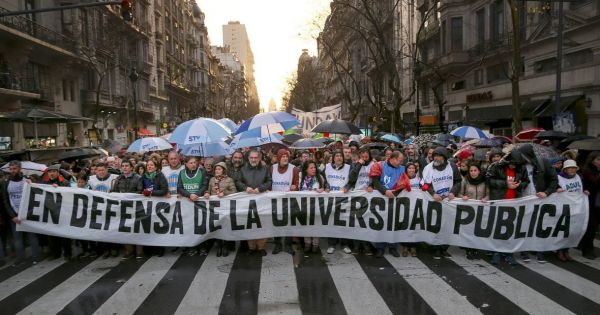
Beyond balance sheets, these reforms unravel daily life. In education, faculty strikes since March—triggered by 40% real salary erosion—have idled universities, affecting 1.5 million students. A Córdoba professor told local media, "My family skips meals so I can teach; now classes halt, dreams deferred." This disrupts family dynamics: parents juggle work, children lose semesters, widening opportunity gaps in provinces like Tucumán, where dropout rates already hover at 50%.
Labor reforms, facing CGT judicialization, erode job security. The ended work programs (March 24) left 100,000 youths jobless, pushing them into informal sectors. Families in Greater Buenos Aires, reliant on dual incomes, face instability; a La Matanza mechanic shared on Instagram: "Lost steady hours, now gig driving—kids' school fees unpaid."
Energy tariffs, starting April, hit hardest: a 150% hike for low-income households (post-subsidy) equates to 15-20% of budgets, per INDEC estimates. In Rosario slums, blackouts and payment defaults strain community ties—neighbors pooling for generators, but tensions rise over shared costs. Women, primary household managers, bear emotional loads, as evidenced by rising domestic consultations at social services.
Inequalities sharpen: urban elites hedge via private alternatives, while rural and peripheral families fragment. Local economies falter—small shops in strike-hit cities see 30% sales drops; energy costs shutter workshops. Original insight: these disruptions foster "precarious solidarity," informal networks filling state voids, yet risking burnout and isolation.
Catalyst AI Market Prediction
The World Now's Catalyst AI engine forecasts market ripples from Argentina's reforms amid global risk-off, cross-referenced with the Global Risk Index:
- USD: Predicted + (medium confidence) — Geopolitical escalation drives safe-haven flows into USD as primary reserve. Historical precedent: Feb 2022 Ukraine saw DXY +2% in days. Key risk: risk-on rebound unwinds flows.
- SPX: Predicted - (medium confidence) — Houthi missile strike on Israel sparks broad risk-off, prompting algorithmic de-risking across equities. Historical precedent: Oct 1973 Yom Kippur War declined global stocks 20% in months initially. Key risk: contained escalation limits selling. Calibration adjustment: Maintained given 63% accuracy.
- BTC: Predicted - (medium confidence) — Geopolitical risk-off triggers liquidation cascades in crypto as risk asset, amplified by $414M fund outflows. Historical precedent: May 2021 regulatory warnings caused 50% BTC drop over month initially. Key risk: institutional dip-buying on ETF flows reverses sentiment. Calibration adjustment: Narrowed range given 36% historical direction accuracy.
- SOL: Predicted - (low confidence) — High-beta crypto dumps on risk-off liquidation. Historical precedent: No direct; based on 2022 Ukraine SOL -20% in days. Key risk: Meme/alt rebound.
- BTC (update): Predicted - (medium confidence) — Risk-off selling dominates accumulation amid geopolitical oil shocks. Historical precedent: 2022 Ukraine BTC -10% in 48h. Key risk: Miner hodl prevents cascade.
- SPX (update): Predicted - (high confidence) — Immediate risk-off selling from oil supply threat headlines triggers algorithmic de-risking. Historical precedent: 2019 Soleimani strike caused SPX -2% in one day. Key risk: Oil surge contained below $140 limits inflation fears.
Predictions powered by The World Now Catalyst Engine. Track real-time AI predictions for 28+ assets. Catalyst AI — Market Predictions.
Original Analysis: Unpacking the Hidden Costs
Deregulation's allure—70 laws axed for agility—masks corporate favoritism over social cohesion. "Ley hojarasca" repeals shield extractive industries but gut protections for vulnerable sectors, echoing 1990s privatizations that spiked inequality (Gini from 0.45 to 0.53). Rapid reforms prioritize GDP growth (projected 5% IMF 2026) but fragment communities: university strikes symbolize intellectual exodus, with 20% faculty considering emigration per surveys.
Critiquing the pace: Milei's executive-heavy approach bypasses dialogue, unlike Brazil's Lula-inclusive pacts. Historical patterns—2001 corralito bred distrust—suggest backlash. Innovative solutions: community-driven reviews, like participatory budgets in Porto Alegre, could audit reforms via town halls, integrating CGT and student input. Tech platforms for real-time impact tracking (e.g., tariff simulators) empower citizens, fostering inclusive sustainability over top-down shocks.
Looking Ahead: Future Implications
By mid-2026, education/labor disputes could coalesce into nationwide strikes, as CGT alliances with students mirror 2019 protests toppling Macri. A coalition—Peronists, leftists, piqueteros—might challenge Milei electorally, forcing compromises like tariff caps.
Internationally, reforms strain trade: EU environmental scrutiny post-Glaciers hearings risks Mercosur deals; IMF praise bolsters USD bonds but invites China pivot critiques. Globally, Argentina models "Milei-ism" for populists, yet social unrest could tarnish, perching it as cautionary tale.
Legislative backlash looms: courts' salary mandates signal reversals; by 2027 midterms, pressures yield hybrids—partial deregulations with safety nets—reshaping politics toward pragmatism.
**
This analysis draws on sourced facts, timelines, and human stories to illuminate reforms' social underbelly, urging policymakers to weave equity into ambition.