
WW3 Map Updates Show Persistent Desperation in Gaza and West Bank One Year After Ceasefire
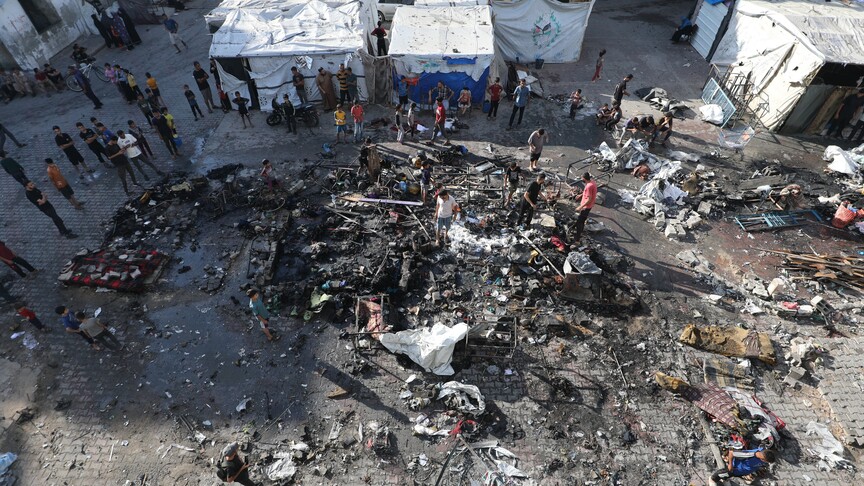
One year after a ceasefire, a UN official has warned of palpable desperation in Gaza and alarming conditions in the West Bank, while displaced Palestinians in Jabalia refugee camp continue to live amid rubble and people with chronic illnesses face life-threatening shortages of medicine, testing and treatment. ww3 map updates reflect these ongoing conditions across the region.
UN Alarm One Year After Ceasefire
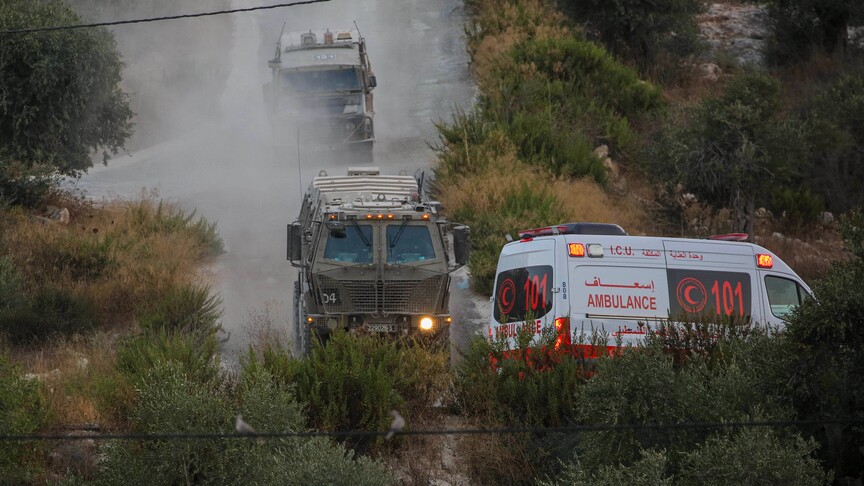
UN official Ramiz Alakbarov stated he felt obliged to sound the alarm, describing desperation as palpable in Gaza one year after a ceasefire [1]. The warning covers both Gaza and the West Bank, where conditions remain alarming according to the same statement [1]. Alakbarov emphasized the need to highlight the situation publicly based on direct observations [1].
Daily Life Amid Rubble in Jabalia
In Jabalia refugee camp in northern Gaza, displaced Palestinians including children navigate daily life amid extensive rubble, with scenes of bicycle riding, playing football and gathering in damaged areas documented on 14 October 2026 [2]. Photographs from that date show displaced Palestinians riding bicycles past rubble, children playing football, and groups gathering in areas surrounded by destruction [2]. Additional images capture individuals and families moving through the camp on the same day, illustrating continued displacement three years into the conflict [2].
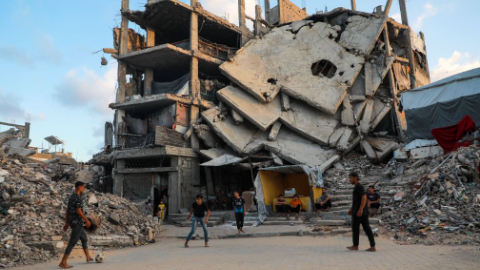
Displaced Palestinians navigate daily life amid rubble in Jabalia refugee camp, northern Gaza Strip. — Source: xinhua
Diabetes Management Becomes Impossible
Three years into the conflict, patients with diabetes struggle to access essential medicines, monitoring equipment and follow-up care, leading to uncontrolled conditions and life-threatening complications [3]. A specific case involves a diabetic man unable to test blood sugar or refrigerate insulin, developing a severe foot infection after a small wound went untreated [3]. Khalil al-Turk, 59, described diabetes as "a ghost I cannot see" due to the absence of glucose testing strips and insulin that either runs out or spoils without refrigeration [3]. He reported feeling extremely dizzy without knowing whether his blood sugar was too high or too low, sometimes eating a date and risking higher sugar or avoiding food out of fear [3]. The World Health Organisation notes that noncommunicable diseases are underdiagnosed and undertreated due to limited diagnostic tests and services [3].
Heart Disease and Unmonitored Crises
Patients with heart disease face inconsistent medication, lack of monitoring equipment and untreated events [3]. Aisha Juha, 62, from Deir al-Balah, has not stood in front of a single blood-pressure monitor for a year and a half, with medication changing weekly depending on available aid [3]. She experienced heavy pressure in her chest and numbness in her left arm but could not reach an ambulance or hospital with an ECG machine, later stating she does not know how many attacks or small heart events her heart endured without medical recording [3]. High blood pressure and heart disease require long-term monitoring that remains constrained by shortages and access difficulties [3].
{IMAGE_3}
Dialysis Under Severe Pressure
Dialysis patients receive shortened, less frequent sessions because of fuel and water shortages [3]. Yousef Hammad, 41, from Khan Younis, described sessions reduced from four hours three times a week to two hours twice a week or sometimes once, when diesel and treated water allow [3]. He reaches the machine competing with hundreds of other patients whose bodies are full of toxins and fluid [3]. The World Health Organisation reports dialysis services remain under intense pressure with shortages of machines and essential medicines, while Gaza’s Ministry of Health estimates as many as 1,100 patients require regular dialysis [3]. A delay of just one day means he cannot sleep lying down because his lungs fill with fluid [3].
Cancer, Epilepsy and Broader Health Crisis
An epileptic child suffers repeated seizures after medication ran out, while a breast cancer patient is unable to obtain tumour-marker tests to check if her disease has returned [3]. The mother of eight-year-old Karim reported that when supplies disappeared, her son suffered repeated prolonged convulsions after three days without medication, with seizures worsening after an alternative drug was tried [3]. Khadija Ahmed, 52, a breast cancer patient displaced twice, can no longer undergo tests to monitor her condition and does not know whether the cancer has returned or is spreading [3]. The World Health Organisation states noncommunicable diseases are underdiagnosed and undertreated due to limited diagnostic tests and services, with more than 18,500 people with injuries or chronic illnesses awaiting medical evacuation unavailable inside Gaza as of 2026 [3].
What to watch next: The backlog of more than 18,500 patients needing evacuation unavailable inside Gaza continues alongside shortages that leave noncommunicable diseases underdiagnosed and undertreated according to the World Health Organisation.