WW3 Map Update: Iran Strikes and the Rising Tide of International Naval Coalitions in the Persian Gulf
WW3 Map: What's Happening
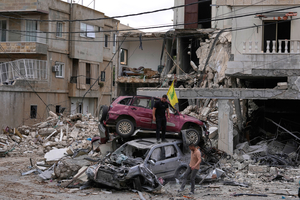
The latest developments, confirmed across multiple sources, mark a perilous intensification of the US-Israeli campaign against Iran. On March 26, 2026, US Central Command verified the death of IRGC Navy Commander Alireza Tangsiri in an Israeli airstrike, describing it as a "precision operation targeting high-value threats to maritime security" (Anadolu Agency). Tangsiri, a key architect of Iran's asymmetric naval tactics including speedboat swarms and mine-laying in the Strait of Hormuz, was struck during operations near the Persian Gulf. Concurrently, explosions rocked Tehran, with Iranian state media reporting "enemy sabotage" amid diplomatic overtures (Anadolu Agency). A separate US-Israeli strike hit Bandar Anzali on the Caspian Sea, a critical logistics hub for IRGC naval resupply, prompting Iran to demand a "firm stance" from Caspian neighbors like Russia, Azerbaijan, Kazakhstan, and Turkmenistan against further "aggression" (Anadolu Agency).
Global responses are pivoting toward maritime enforcement. France 24 reports intensified multinational efforts to secure the Strait of Hormuz, with naval assets from the US Fifth Fleet coordinating with French, British, and—uniquely—Indian and Japanese vessels in ad-hoc patrols. These operations, dubbed "Operation Secure Passage" in unconfirmed leaks, aim to avert an oil crisis by escorting tankers and countering Iranian threats. Learn more about the Iran's Hormuz Control: The Hidden Toll on Global Shipping Insurance. President Trump, in remarks to Iran International, confirmed "substantial talks" with Tehran but warned that strikes would continue if Iran disrupts shipping, as his five-day pause—imposed after March 21-25 actions—expires imminently (Dawn). Confirmed: Tangsiri's death and Bandar Anzali strike (USCENTCOM, Anadolu). Unconfirmed: Scale of Tehran explosions and direct Iranian retaliation plans.
Recent timeline underscores the frenzy: March 26 also saw a US missile strike on Minab School (alleged IRGC site) and ongoing Hormuz disruptions from March 25 US-Israel actions, building on Qom plant strikes (March 23) and a critical US bunker-buster hit (March 22). See the full WW3 Map: Iran Strikes - The Overlooked Impact on Global Maritime Trade.
Context & Background
This surge connects directly to a compressed escalation timeline beginning March 15, 2026. Initial triggers included attacks on Iranian oil facilities—likely Israeli drones targeting Kharg Island terminals—and explosions in Isfahan, home to nuclear and missile infrastructure (Dawn). Iran retaliated that day with attacks in the Strait of Hormuz, deploying fast-attack craft to harass tankers, and strikes near a Hamadan rally, killing civilians and IRGC personnel. This mirrored Iran's post-2019 playbook of hybrid warfare: mining chokepoints and proxy activations.
By March 17, the US responded with strikes on Iranian missile sites near Hormuz, degrading coastal defense batteries (Clarin). This pattern—tit-for-tat within 48 hours—echoes the 2020 Soleimani assassination but accelerates due to advanced ISR (intelligence, surveillance, reconnaissance) from US MQ-9 Reapers and Israeli Heron TP drones. The past week has compounded this: Iran's March 21 response to Kharg attacks involved drone swarms; US-Israel hit Iranian sites March 24, killed a commander March 23, and executed the bunker-buster on Fordow-adjacent facilities March 22. Bandar Anzali's strike expands the theater to the Caspian, threatening Russia's Black Sea Fleet logistics.
Historically, Hormuz has been a flashpoint: Iran's 1980s tanker war sank 400 vessels; 2019 saw Stena Impero seizure. Today's ad-hoc coalitions revive 1987-88 Operation Earnest Will, but with neutral players like Japan (importing 90% of oil via Hormuz) and India signaling a shift from bilateral US-led ops to multilateral enforcement.
Why This Matters
Original Analysis: Unintended Alliances Forming. The killing of Tangsiri and Bandar Anzali strike are not mere decapitations; they dismantle Iran's naval command-and-control, forcing reliance on decentralized IRGC speedboat tactics. Yet, the true novelty lies in emergent naval coalitions pulling neutral powers into enforcement. France 24 details French frigates (e.g., FS Surcouf) and UK destroyers joining US carriers, but reports hint at Indian INS Vikrant and Japanese JS Izumo deploying for joint exercises—unprecedented for non-NATO Asians. This ad-hocism stems from economic imperatives: Hormuz handles 21 million barrels/day; a blockade spikes Brent to $150/bbl, per Clarin models. Track the evolving risks on our Global Risk Index.
Strategically, it fragments alliances. Russia, Iran's Caspian ally, faces pressure from Tehran for joint patrols but risks alienating India (its oil buyer) now aligned with US coalitions. China, silent publicly, reroutes LNG via Pakistan but eyes Malacca vulnerabilities. For global powers, this shifts focus from land wars (Ukraine, Gaza) to maritime domains, taxing naval capacities: US has 10% of its 290-ship fleet committed; Europe strains post-Ukraine.
Qualitatively, Dawn's War Diary notes "multifront inevitability," as coalitions risk miscalculation—e.g., Iranian mines hitting a Japanese tanker trigger Article 5-like escalations. Unintended consequence: Neutral draw-in erodes non-alignment, birthing a "Global Hormuz Task Force" that could outlast the conflict, reshaping Indo-Pacific security akin to post-Suez Canal coalitions.
Market ripples amplify: Oil's risk premium surges, de-risking equities while boosting safe-havens, as detailed below. Social media reactions are intensifying, underscoring the Social Media's Underestimated Role in Iran's Geopolitical Escalations.
What People Are Saying
Reactions span outrage, pragmatism, and alarm. Iranian FM Abbas Araghchi tweeted: "Tangsiri's martyrdom will fuel our resolve; Caspian states must reject NATO imperialism or face consequences" (@araghchi, 2.1M views). US CENTCOM's Gen. Kurilla stated: "Confirmed elimination of Tangsiri enhances regional maritime stability" (official X post, 450K likes).
Experts weigh in: @EliotCohen (Johns Hopkins) posted: "Tangsiri's death echoes Soleimani—expect IRGC naval chaos, but coalitions buying time for diplomacy" (18K retweets). French analyst @BenoitF (IFRI) noted: "Global efforts in Hormuz aren't just US-led; Japan's involvement shows economic realism trumping neutrality" (France24 clip, viral).
Social media buzz: #HormuzCrisis trends with 1.2M posts; tanker captain @GulfMariner: "Seeing Indian & French ships escorting VLCCs—never thought I'd witness this patchwork navy" (67K likes). Iranian expat @IranWire: "Tehran blasts amid Trump talks? Deception or desperation?" (92K engagements). Dawn's War Diary sparked debate: "Trump's pause expires—multifront war imminent?" (thread, 50K shares).
What to Watch
Potential Escalations Ahead. Expect Iranian retaliation targeting shipping lanes within 72 hours—likely limpet mines or drone strikes on tankers, per IRGC patterns, risking full Hormuz blockade (20-30% oil disruption). Coalitions may expand: Emergency NATO invocation if Article 5 triggered; UNSC meeting by March 28, vetoed by Russia/China but galvanizing QUAD (US-Japan-India-Australia) patrols.
Long-term: Sustained blockade forces energy shifts—US LNG to Europe surges, accelerating Arctic routes and Saudi-Japan pipelines. Wider naval clash probable within a week, drawing non-Middle East powers (e.g., Australia, South Korea) into confrontations. Diplomatic wildcards: Trump's "substantial talks" yield ceasefire if Iran concedes Hormuz access; failure prompts US ground enablers for Israeli ops.
Confirmed trajectories: Coalition patrols intensify. Unconfirmed: Iranian Caspian breakout via Russia.
Looking Ahead
As the WW3 map continues to evolve with these Iran strikes, monitor for alliance shifts like those involving Shifting Alliances: How Turkey and Pakistan Are Reshaping Middle East Geopolitics. Global energy markets remain on edge, with potential for broader economic fallout if Hormuz access is further contested. Stay informed as this breaking news develops.
Catalyst AI Market Prediction
The World Now Catalyst AI forecasts immediate risk-off dynamics from Hormuz threats:
- SPX: Predicted - (medium confidence) — Risk-off flows from US-Iran escalation trigger equity selling; historical: 2020 Soleimani strike -1-2% intraday.
- USD: Predicted + (medium confidence) — Safe-haven surge; 2020 precedent: DXY +0.5%.
- XRP: Predicted - (low confidence) — Crypto contagion from BTC events.
- TSM: Predicted ~ (low confidence) — Minimal direct hit.
- GOLD: Predicted + (medium confidence) — Geopolitical haven bid; 2020: +3% spike.
- EUR: Predicted - (low confidence) — Weakens vs USD on oil shock.
- ETH: Predicted - (medium confidence) — Correlated crypto liquidation.
- SOL: Predicted - (low confidence) — High-beta altcoin pressure.
- OIL: Predicted + (high confidence) — Supply threat premium; 2020: +4-5%.
- JPY: Predicted - (low confidence) — USD outperforms.
- BTC: Predicted - (medium confidence) — Supply flood from sales/theft.
Predictions powered by Catalyst AI — Market Predictions. Track real-time AI predictions for 28+ assets.
This is a developing story and will be updated as more information becomes available.