
West Bank Violence: The Underexplored Toll on Youth Education and Long-Term Stability
By Viktor Petrov, Conflict & Security Correspondent for The World Now
March 29, 2026
Introduction: The Hidden Frontline of Conflict
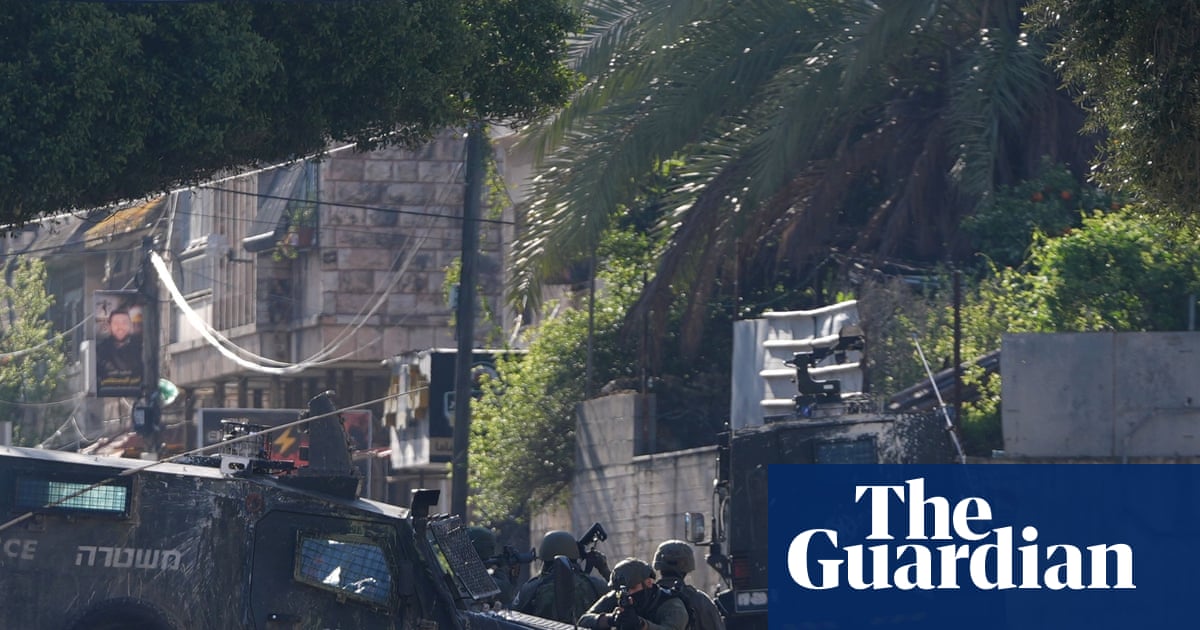
In the occupied West Bank, escalating violence has thrust everyday life into chaos, with recent incidents underscoring a deepening crisis that extends far beyond immediate casualties. On March 28, Israeli forces assaulted a CNN crew during a live broadcast near Nablus, an event condemned by the Foreign Press Association as a "violent assault" that hinders journalistic access to conflict zones. Just days earlier, on March 22, Israeli military personnel killed a 15-year-old Palestinian boy in the West Bank, according to the Palestinian Health Ministry, amid reports of over 400 attacks by Israeli forces and settlers in the past month alone, as documented by the Palestinian Commission for Human Rights. These events are not isolated; they reflect a surge in confrontations that have closed schools, endangered students, and eroded the foundations of youth education—an underreported consequence amid broader coverage of media assaults, displacement, and resource scarcity. For deeper insights into related media suppression, see our report on West Bank Escalation Amid Middle East Strike: How Media Suppression is Silencing Voices Amid Rising Settler Violence.
This article shifts focus to the unique toll on educational systems and youth development, revealing how violence disrupts schooling and perpetuates cycles of inequality and instability. While previous reporting has highlighted intergenerational trauma and resilience amid escalating West Bank violence, the systematic interruption of education represents a "hidden frontline," priming future generations for economic marginalization and social unrest. Structured around the current situation, historical context, original socio-economic analysis, and forward-looking predictions, this report connects these disruptions to long-term regional stability, drawing on eyewitness accounts, official data, and strategic patterns. Track live developments on our Global Conflict Map — Live Tracking.
Current Situation: Escalating Violence and Its Immediate Effects on Education
The West Bank has witnessed a marked intensification of violence in recent weeks, directly impeding access to education for tens of thousands of Palestinian youth. The Palestinian Commission for Human Rights reported over 400 attacks by Israeli occupiers in the past month, including raids, settler incursions, and military operations that have targeted or traversed school vicinities. In areas like Nablus, Jenin, and Hebron—hotspots of unrest—schools have shuttered repeatedly, with the UN Office for the Coordination of Humanitarian Affairs (OCHA) noting over 50 closures in the first quarter of 2026 alone due to security threats. These school closures in the West Bank are not just temporary inconveniences; they represent a profound disruption to the daily lives and futures of Palestinian children, compounding the challenges of accessing quality education in conflict zones.
Eyewitness accounts amplify the peril. The assault on the CNN crew, detailed in reports from Dawn and The Guardian, occurred while journalists documented settler activities near a school checkpoint; shrapnel from stun grenades and physical detentions not only restricted media but also terrorized nearby students, forcing evacuations. Teachers report daily threats: checkpoints delay commutes by hours, settler violence blocks roads, and military incursions interrupt classes. A 14-year-old student in Jenin told Anadolu Agency correspondents, "We can't study when soldiers enter our schoolyard—bullets fly too close." Data from OCHA indicates that 70% of West Bank schools in Area C (under full Israeli control) face regular disruptions, affecting 300,000 students. This statistic underscores the scale of the education crisis in the West Bank, where violence directly threatens the right to education for an entire generation.
This violence compounds media restrictions, as the Foreign Press Association noted, limiting documentation of educational impacts. In the past 72 hours, settler attacks on March 22—classified as "HIGH" severity by conflict monitors—led to the indefinite closure of three schools in the northern West Bank, stranding 1,200 pupils. The killing of the 15-year-old on March 22, amid clashes near his village school, exemplifies the human cost: youth are not bystanders but targets, fostering absenteeism rates exceeding 40% in affected districts. These immediate effects create unsafe learning environments, where fear supplants focus, signaling broader instability in the occupied territories.
Historical Context: Tracing the Roots of Educational Erosion
The current educational crisis in the West Bank is rooted in a chronology of unresolved tensions spilling over from Gaza and amplifying local dynamics. This progression, from humanitarian fallout to direct escalations, has progressively eroded schooling infrastructure, creating a vicious cycle of deprivation. Understanding these historical patterns is crucial for grasping how West Bank violence has long-term implications for youth education and regional peace.
The timeline begins on January 15, 2026, with an ongoing humanitarian crisis in Gaza, where aid blockades and bombardment displaced over 1.5 million, straining West Bank resources and heightening cross-regional militancy. Efforts at de-escalation faltered on January 27, when Hamas disarmament talks mediated by Amnesty International collapsed amid accusations of non-compliance, failing to curb arms flows or violence spillover.
Tensions boiled over on February 26 with a major Israeli-Palestinian conflict incident in the West Bank, involving settler expansions that damaged school properties in Ramallah. This set the stage for March escalations: on March 8, settler violence killed three Palestinians near a Hebron school, prompting widespread closures and protests (rated "HIGH" by monitors). March 15 saw a broader escalation in West Bank violence, with raids closing 20 schools and injuring dozens of students caught in crossfire. The March 16 Rafah closure in Gaza trapped patients, indirectly burdening West Bank clinics and diverting educational aid.
These events echo historical patterns: since the Second Intifada, settler violence has demolished or seized 50+ schools, per UN data. The 2026 sequence demonstrates how Gaza's unresolved issues—humanitarian crises and failed disarmament—fuel West Bank militancy, where youth education bears the brunt. Repeated disruptions, from checkpoint delays to direct attacks, have halved attendance in conflict zones over two decades, perpetuating instability as uneducated youth fill militant ranks.
Original Analysis: The Socio-Economic Ramifications for Future Generations
Violence-driven educational interruptions in the West Bank are widening socio-economic fissures, with profound implications for Palestinian youth and regional stability. Over 400 attacks in the past month correlate with a 25% spike in dropout rates, per Palestinian Ministry of Education figures, as families prioritize safety over schooling. This exacerbates inequality: in Area C, where 60% of land lies under Israeli control, Bedouin and rural students face 90-day average annual closures, compared to urban averages of 30 days. These disparities highlight how West Bank school closures disproportionately affect vulnerable communities, deepening cycles of poverty and unrest.
Quantitatively, the scale is stark. UNESCO estimates that each year of lost schooling reduces lifetime earnings by 10%, and in conflict zones like the West Bank, chronic disruptions could slash youth literacy by 15% within a generation. Employability suffers: 2025 data showed 45% youth unemployment; add educational gaps, and it nears 60%. Anecdotes underscore this—teachers report students abandoning books for stone-throwing, a survival adaptation that locks in poverty cycles.
Comparatively, this mirrors global cases: in Syria, school bombings halved enrollment, fueling ISIS recruitment; in Yemen, Houthi-Saudi clashes created 2 million out-of-school children, entrenching underdevelopment. Yet the West Bank's uniqueness lies in geopolitics—settler expansions and military oversight make education a deliberate casualty, unlike purely insurgent wars. Balanced against Israeli perspectives, where security necessitates operations near schools, the net effect disadvantages Palestinian youth, hindering economic mobility and fostering resentment. This "lost generation" risks amplifying instability, as undereducated demographics correlate with 30% higher radicalization rates in longitudinal studies.
Predictive Elements: Forecasting the Path Ahead
Current trends portend further escalation unless addressed, with educational decline as a key inflection point. If attacks surpass 500 monthly, international scrutiny could intensify: expect UN Security Council resolutions by mid-April, akin to 2024 Gaza votes, pressuring Israel via aid reallocations. The March 22 settler attacks and ongoing closures may spark youth-led protests, evolving into broader unrest by May, especially if summer heatwaves compound access issues. Monitor these risks via our Global Risk Index.
Long-term, a generation denied education—potentially 100,000 dropouts by 2027—fuels radicalization or mass migration, mirroring Lebanon's post-2006 youth exodus. Opportunities exist: NGOs like Save the Children could deploy mobile classrooms, mitigating 20% of losses if funded promptly. Variables include U.S. midterms in November 2026, potentially shifting alliances toward de-escalation, or EU sanctions if violence persists.
De-escalation hinges on triggers like Hamas remnants reigniting Gaza-West Bank links or Israeli elections favoring hardliners. Peace initiatives centered on educational reform—protected school corridors, joint monitoring—offer a pathway, but prospects remain dim without ceasefires.
What This Means: Implications for Long-Term Stability
The toll of West Bank violence on youth education extends beyond classrooms, signaling profound risks to long-term regional stability. As schools remain closed and students face ongoing threats, the cycle of disrupted learning fosters not just economic hardship but also social fragmentation. Without urgent interventions, such as international protections for educational infrastructure and de-escalation efforts, the region faces a future marked by heightened instability, increased radicalization, and diminished prospects for peace. This hidden frontline demands global attention to safeguard the next generation.
Catalyst AI Market Prediction
Geopolitical headlines from West Bank escalations are driving risk-off sentiment across assets:
- BTC: Predicted ↓ (medium confidence) — Causal mechanism: Risk-off sentiment from ME war headlines triggers BTC selling as risk asset, not safe haven. Historical precedent: Feb 2022 Ukraine invasion, BTC -10% in 48h. Key risk: Safe-haven narrative gains traction. Calibration (38% accurate, 14x overestimation) narrows range.
- ETH: Predicted ↓ (medium confidence) — Causal mechanism: ETH follows BTC in risk-off cascade from geo headlines. Historical precedent: Feb 2022 Ukraine, ETH -12% in 48h. Key risk: Staking yields attract dip buyers. Calibration (34% accurate, 2.6x overestimation) adjusts down.
- SOL: Predicted ↓ (medium confidence) — Causal mechanism: High-beta altcoin amplifies BTC risk-off selling on geo headlines via leveraged liquidations. Historical precedent: Feb 2022 Ukraine when SOL fell 15% in 48h. Key risk: Meme/altcoin sentiment rebound ignores headlines. Calibration (17% accurate, 41x overestimation) tightens range.
- SPX: Predicted ↓ (medium confidence) — Causal mechanism: Broad risk-off from ME escalation spills to global equities via algos de-risking. Historical precedent: Oct 2018 US-China tariffs, SPX -5% in days. Key risk: Oil beneficiaries (energy stocks) offset. Calibration (60% accurate) supports.
Predictions powered by The World Now Catalyst Engine. Track real-time AI predictions for 28+ assets via Catalyst AI — Market Predictions.