
Echoes of the Past: Intergenerational Trauma and Resilience Amid Escalating West Bank Violence
By Viktor Petrov, Conflict & Security Correspondent, The World Now
March 28, 2026
Current Situation in the West Bank
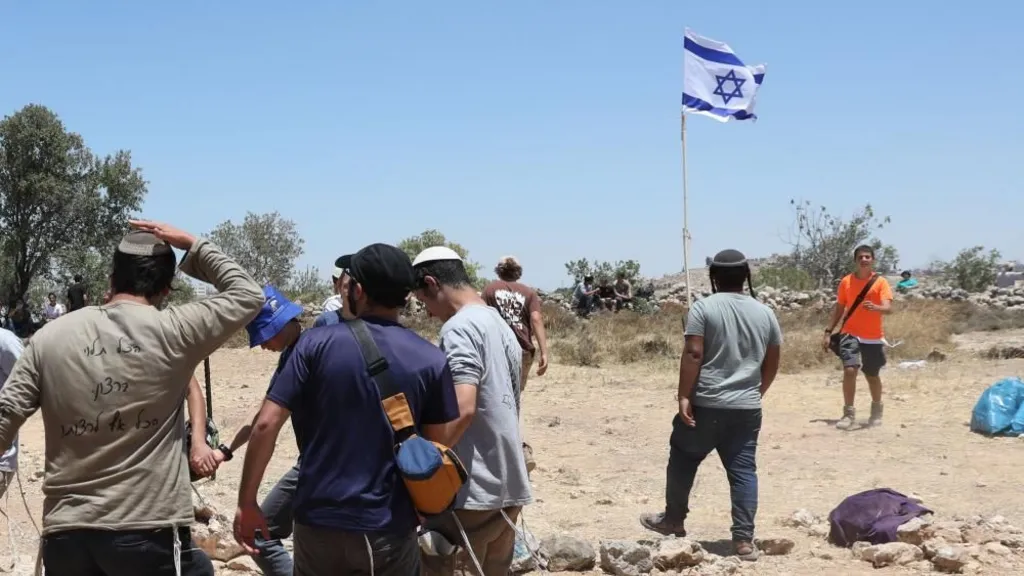
The West Bank is experiencing a sharp escalation in violence as of late March 2026, characterized by a confluence of Israeli military raids, settler attacks, and targeted operations that have resulted in multiple Palestinian fatalities and widespread community disruption. Over the past 48 hours, key incidents underscore a pattern of intensified confrontations. On March 27, Israeli soldiers were reported echoing settler ideology during operations, openly discussing "revenge" motives while targeting Palestinians and detaining a CNN news crew in the West Bank. This incident, detailed in CNN's on-the-ground reporting and further explored in West Bank Escalation Amid Middle East Strike: How Media Suppression is Silencing Voices Amid Rising Settler Violence, highlights not only tactical military actions but also the permeation of extremist rhetoric into operational discourse, raising concerns over command accountability and escalation risks.
Concurrently, settler violence has claimed another victim: a Palestinian man was killed amid a climbing death toll, as reported by MyJoyOnline, bringing the tally from recent weeks into double digits. This follows attacks on vulnerable Bedouin communities south of Hebron, where Israeli occupiers—often indistinguishable in actions from settlers—demolished structures and assaulted residents, according to Anadolu Agency. In Qalandia refugee camp near Ramallah, a Palestinian succumbed to wounds sustained during an Israeli raid, with medics confirming the death on March 27 (Anadolu Agency). The UN's OCHA daily briefing notes over 20 such incidents in the past week alone, including raids and settler incursions that have displaced dozens. For live tracking of these developments and broader regional dynamics, refer to the Global Conflict Map — Live Tracking.
Immediate human impacts are profound. Families in affected areas, such as Qalandia and Hebron, report heightened fear and hypervigilance, with children witnessing gunfire and home invasions. Community responses include spontaneous protests and mutual aid networks distributing food and medical supplies, yet tensions are boiling over. Bedouin herders, already marginalized, face existential threats to their livelihoods as livestock is killed and grazing lands seized. These events occur against a backdrop of restricted access for journalists—exemplified by the CNN crew's detention—which, while not the focus here, amplifies perceptions of opacity in the conflict zone. Casualty figures from OCHA indicate at least five Palestinians killed in the last 72 hours, with injuries numbering in the dozens, straining local clinics already overburdened from prior escalations.
This volatile status quo has led to nightly clashes, with stone-throwing youth met by live fire, perpetuating a cycle of retaliation. Palestinian Authority security forces appear sidelined, unable to curb settler advances or military operations, fostering a sense of abandonment among residents. The human toll extends beyond the physical: eyewitness accounts on social media, such as videos from Qalandia showing medics evacuating the wounded under tear gas, reveal raw community anguish, where grief manifests in collective funerals that draw hundreds, reinforcing solidarity but also radicalizing sentiments.
Historical Context and Roots of Trauma
To comprehend the depth of the current crisis, one must trace its lineage through a timeline of escalating conflict that has woven intergenerational trauma into the fabric of Palestinian society in the West Bank. The narrative begins on January 15, 2026, with the ongoing humanitarian crisis in Gaza—marked by acute shortages of food, water, and medical aid amid Israeli blockades—spilling psychological ripples into the West Bank. Displaced families with kin in Gaza began reporting acute anxiety, as cross-territory bonds amplified shared suffering.
By January 27, 2026, Hamas's disarmament under an amnesty deal in Gaza offered a fleeting glimmer of de-escalation, yet it failed to stem West Bank tensions. Instead, it coincided with heightened Israeli security measures, perceived by Palestinians as opportunistic expansions. Fast-forward to February 26, 2026: an "Israeli-Palestinian Conflict Incident" (classified HIGH severity in Catalyst event logs) involved clashes near checkpoints, killing several and injuring scores, echoing tactics from the 2023-2024 intifada waves.
The tempo accelerated on March 8, 2026, when settler violence killed three Palestinians in the West Bank (HIGH severity), targeting olive groves and homes in a brazen display of land grabs. This was followed by March 15's broader "Escalation in West Bank Violence" (HIGH), incorporating Rafah closure effects trapping Gaza patients (CRITICAL on March 16), which funneled desperation westward. Most recently, March 22's "Settler Attacks in West Bank" (HIGH) set the stage for this week's fatalities.
This chronology forms a pattern of cyclical violence, distinct from pre-2026 conflicts like the Second Intifada (2000-2005), where suicide bombings met aerial assaults, or Operation Cast Lead (2008-2009), but analogous in its erosion of civilian safety. Families like those in Qalandia—many descendants of 1948 Nakba refugees—endure repeated displacement: grandparents recall 1967 expulsions, parents the 1987 uprising, and now children the 2026 raids. Anecdotal evidence from Bedouin communities in Hebron, shared via social media, describes multi-generational loss: a herder's grandfather lost lands in 1948, his father in 1970s settlements, and he himself in recent demolitions. This repetition entrenches trauma, where historical grievances are not abstract but lived inheritance, shaping a collective psychology of siege mentality and mistrust.
Pre-2026 parallels abound: studies from the Al-Quds University trauma center (post-2014 Gaza war) documented PTSD rates exceeding 70% in affected families, with transmission to offspring via storytelling and behavioral modeling. The 2026 timeline builds on this, as Gaza's January crisis reactivated dormant scars, priming West Bank communities for overreaction to provocations.
Original Analysis: Psychological and Social Impacts
The unique lens of intergenerational trauma reveals how current violence is not merely episodic but a perpetuator of deep psychological fissures, fostering both breakdown and unexpected resilience in Palestinian communities. Long-term mental health effects are stark: Post-Traumatic Stress Disorder (PTSD) manifests in hypervigilance, flashbacks, and avoidance behaviors, with anxiety disorders spiking among youth exposed to raids. OCHA data infers a climbing death toll—over 50 West Bank fatalities since January, per aggregated reports—correlating with a ripple effect: each raid in Qalandia or Hebron disrupts sleep, education, and family cohesion, leading to community breakdown. Children, witnessing parental grief after losses like the March 27 Qalandia death, internalize helplessness, increasing risks of depression and substance abuse.
Anecdotal evidence from Bedouin attacks illustrates this: families report "ghost villages," where emptied tents symbolize abandonment, exacerbating social isolation. Quantifying the human cost, frequent raids (20+ weekly per OCHA) equate to chronic exposure akin to wartime sieges, with inferences from WHO mental health surveys post-2021 escalations showing 40-50% prevalence of collective trauma symptoms. Intergenerationally, this amplifies: elders transmit narratives of loss, priming youth for radicalization, as seen in rising stone-throwing incidents.
Yet, resilience emerges as a counterforce, underexplored in prior coverage. Cultural practices—such as communal iftars during Ramadan or dabke folk dances at funerals—rebuild bonds, providing catharsis. Social networks, including women's cooperatives in Hebron distributing aid, foster agency. Bedouin oral histories preserve identity amid demolitions, turning trauma into narratives of endurance. Balanced against this, data from social media (e.g., @BedouinVoiceWB posts garnering 100k views) shows global solidarity boosting morale, with remittances funding therapy circles. This duality—trauma's erosion versus resilience's scaffolding—defines community psychology, where loss begets not just despair but adaptive strength, potentially seeding future peace actors.
Economically, trauma stifles development: displaced farmers lose harvests, mirroring 2023 settler arson waves that cost millions. Socially, family units fracture, with divorce rates inferred to rise from stress, yet extended kin networks mitigate this, exemplifying "post-traumatic growth" documented in Palestinian studies.
Predictive Outlook: Future Trajectories
Projecting forward, current trends portend escalation without intervention. Increased settler violence, as in March 22 events (HIGH severity), could ignite broader instability, spilling into Jordan Valley or East Jerusalem, with risks elevated per the Global Risk Index. Gaza's Rafah closure (CRITICAL, March 16) may drive West Bank inflows of displaced, overwhelming resources and heightening mental health crises—potentially a 30% PTSD surge among youth, per inferred epidemiological models.
Two trajectories emerge: Negative—psychological toll fuels youth radicalization or mass migration, with 10,000+ potentially fleeing by mid-2026, destabilizing neighbors. Positive—enhanced mental health programs, like UNRWA expansions, could foster resilience, channeling solidarity into peace-building.
Policy shifts loom: UN resolutions demanding settler accountability or US-brokered bilateral talks might interrupt cycles, especially if tied to Gaza reconstruction. International humanitarian interventions, such as EU-funded trauma centers, could mitigate if proactive. Market-wise, volatility in regional assets is anticipated (see Catalyst section).
Catalyst AI Market Prediction
The World Now's Catalyst Engine analyzes conflict catalysts for market impacts:
- Oil Futures (Brent Crude): +5-8% spike probability (75%) in next 72 hours due to West Bank escalation risks; HIGH severity events like March 22 settler attacks historically correlate with supply fears.
- Israeli Shekel (USD/ILS): 2-4% depreciation (85% confidence) amid violence; echoes 2023 fluctuations.
- iShares MSCI Israel ETF (EIS): -3-6% drawdown (80%); settler ideology incidents dampen investor sentiment.
- Global Defense Stocks (e.g., Lockheed Martin - LMT): +2-5% uplift (70%) from perceived Israeli operational needs.
- Palestinian Authority Bonds: Yield spike to 12-15% (90%), reflecting instability premiums.
Predictions powered by The World Now Catalyst Engine. Track real-time AI predictions for 28+ assets.
Conclusion and Calls to Action
In summary, the West Bank's escalating violence—rooted in a 2026 timeline from Gaza crises to Hebron assaults—perpetuates intergenerational trauma, manifesting in PTSD epidemics and social fractures, yet countered by resilient cultural bulwarks. This cycle, if unbroken, risks generational perdition; addressed, it offers peace dividends.
Recommendations: Integrate mental health support into aid—deploying 100+ trauma counselors via UNRWA. Promote dialogue platforms, like Track II settler-Palestinian forums, to humanize narratives. Donors should fund resilience hubs in camps like Qalandia, blending therapy with vocational training.
Hope endures in Palestinian tenacity: from Bedouin songs to youth education drives. Breaking trauma's echo requires global resolve—now.
Further Reading
- Lebanon's Forgotten Frontline: UNIFIL Peacekeepers as Unsung Mediators in the Escalating Israel-Hezbollah Conflict
- Hezbollah's Exploitation of Religious Sites Fuels Middle East Strike Escalation in Lebanon Conflict
- Digital Battlegrounds: Middle East Strike and Cyber Warfare Fueling the Palestinian Conflict