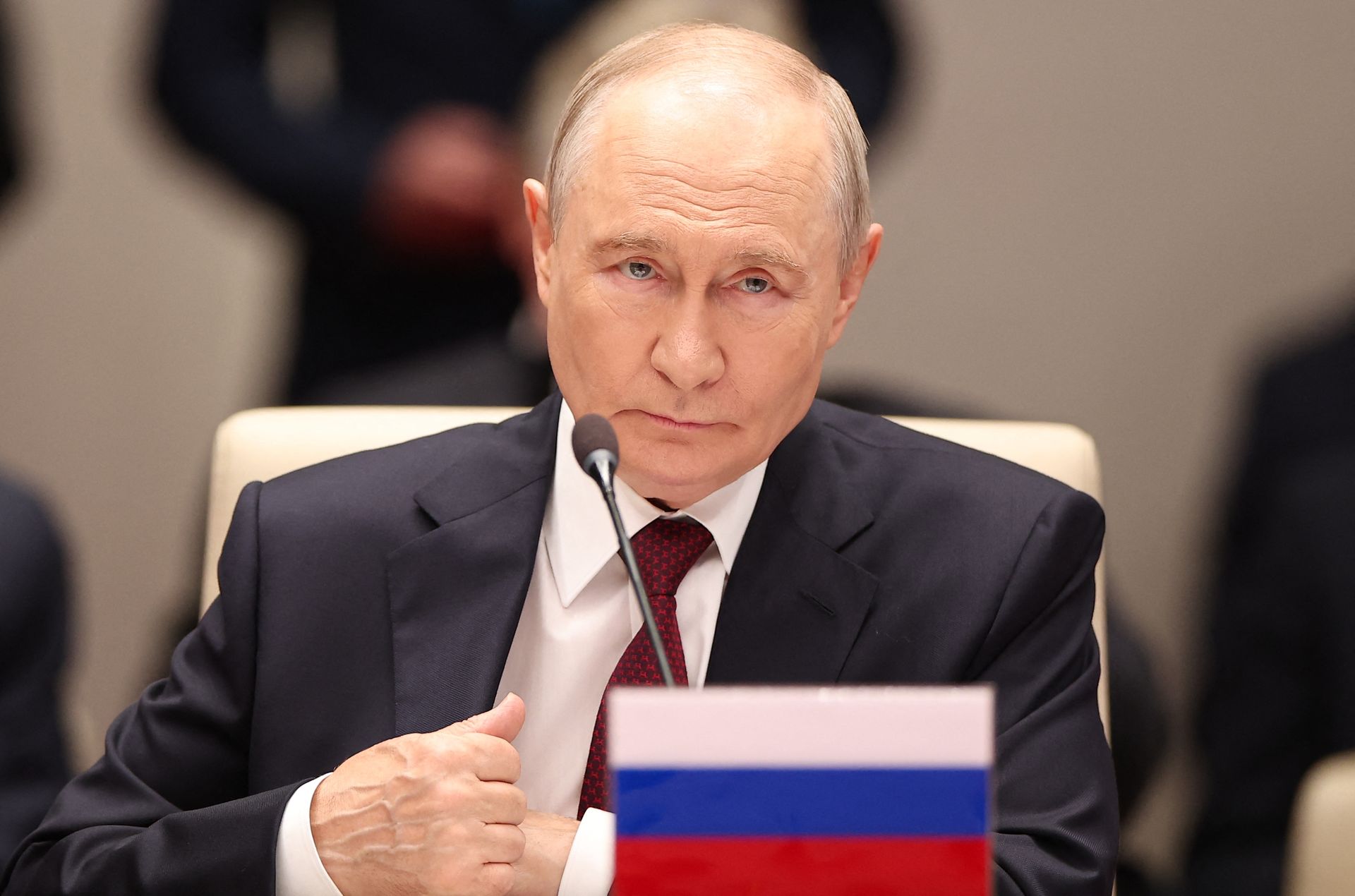
Kremlin Reaffirms Putin's View on Ukraine War Ending Soon
The Kremlin has reiterated President Putin's assertion that the war in Ukraine is nearly over, following President Zelensky's expressions of doubt.[1]
Recent Statements and Assertions
In the latest exchange of rhetoric surrounding the war in Ukraine, the Kremlin has firmly repeated President Vladimir Putin's claim that the conflict is approaching its conclusion.[1] This reaffirmation comes directly in response to Ukrainian President Volodymyr Zelensky's public casting of doubt on such assertions, highlighting a persistent divergence in perceptions between Moscow and Kyiv regarding the trajectory of the hostilities.[1] Putin's statements, as echoed by Kremlin spokespeople, suggest an optimistic timeline for resolution from the Russian perspective, though the exact mechanisms or conditions remain unspecified in these communications.[1][5]
President Putin has gone further by hinting at the possibility of ending Russia's involvement in the war in Ukraine, a development that has prompted scrutiny over the motivations and timing behind such signals.[5] Analysts observing these pronouncements note that they occur amid ongoing military engagements and diplomatic maneuvers, raising questions about whether they represent a genuine shift in policy or strategic posturing.[5] The Kremlin's repetition of these views serves to reinforce Putin's narrative, potentially aiming to shape international perceptions and domestic support within Russia.[1][5]
Zelensky's expressions of doubt have added a counterpoint, emphasizing skepticism toward Moscow's claims of an imminent end to the fighting.[1] This back-and-forth underscores the entrenched positions on both sides, where assertions about the war's status are not merely informational but instrumental in the broader information warfare domain.[1][3] Kremlin officials have not elaborated extensively on Zelensky's skepticism in their responses, focusing instead on upholding Putin's outlook.[1]
Zelensky's Ceasefire Proposal and Responses
President Zelensky has extended an offer for a deep-strike ceasefire to Moscow, positioning it as part of ongoing discussions aimed at de-escalating the war in Ukraine.[3] This proposal introduces a specific tactical element, allowing for strikes deep into enemy territory while pausing broader hostilities, which could represent a compromise in negotiations.[3] The timing of this offer aligns with heightened diplomatic activity, though details on Moscow's reception remain limited in available reports.[3]
The Kremlin's reiteration of Putin's near-end claim follows closely on this proposal, suggesting it may be framed as a response or counter-narrative.[1][3] Zelensky's initiative highlights Ukraine's willingness to explore cessation options, even as doubts persist about Russian intentions.[1][3] Such offers are contextualized within a landscape where both leaders issue statements that influence global audiences and internal constituencies.[3]
President Zelensky addresses Ukraine's war response to Moscow. — Source: kyivindependent
Background of the Conflict
The war in Ukraine traces its origins to February 2022, when an international armed conflict erupted between Russia and Ukraine.[2] This escalation marked a significant turning point, initiating a period of intense military operations that have defined regional security dynamics since.[2] The initial phases saw rapid advances and countermeasures, setting the stage for a prolonged engagement.[2]
From the outset, the conflict resulted in widespread displacement of populations, as civilians fled combat zones and sought safety elsewhere.[2] Extensive damage to critical infrastructure compounded the challenges, disrupting essential services like power, water, and transportation networks across affected areas.[2] These impacts extended beyond the battlefield, leading to loss of life and significant human suffering that necessitated an immediate and large-scale humanitarian response.[2]
The urgent humanitarian needs that emerged were particularly acute in sectors such as health, where medical facilities faced overload and shortages.[2] The international community quickly mobilized, with organizations stepping in to address the immediate crises stemming from the war's onset.[2] This background provides essential context for understanding the persistence of the conflict into subsequent years, as initial damages have evolved into chronic challenges.[2]
Initial Impacts and Humanitarian Needs
The war in Ukraine's early stages inflicted profound consequences, including massive displacement that uprooted communities and strained neighboring regions.[2] Critical infrastructure suffered extensive damage, hampering daily life and economic activities, while the loss of life underscored the human cost of the invasion.[2] These factors created urgent humanitarian needs, especially in health and shelter, prompting coordinated global aid efforts.[2]
Significant human suffering became a hallmark, with reports detailing the scale of the response required to mitigate immediate threats to vulnerable populations.[2] The conflict's initiation in February 2022 set off a chain of events that continue to reverberate, as infrastructure repairs lag and displacement persists.[2] Health services, in particular, faced overwhelming demands, highlighting the war's role in exacerbating pre-existing vulnerabilities.[2]

Emergency relief efforts in Ukraine amid the ongoing crisis. — Source: reliefweb
Humanitarian Efforts and Needs
Humanitarian organizations have been actively engaged in providing medical support throughout the war in Ukraine, addressing both immediate and ongoing requirements.[2][4] In regions like Kharkiv, efforts have included the establishment of warming centers during one of the harshest winters on record, offering respite from extreme cold to local citizens.[4] These initiatives are crucial in eastern Ukraine, where weather conditions compound the hardships of conflict.[4]
The Dynasty Medical Center in Kharkiv, a partner of the Association of Medical Doctors of Asia (AMDA), exemplifies targeted relief.[4] Known for its around-the-clock medical services, the center extended its operations during the December 2025 to March 2026 period to include warming spaces, directly responding to the crisis.[4] Such activities are part of broader emergency appeals, like those from the International Federation of Red Cross and Red Crescent Societies, which document lessons learned from the response since 2022.[2][4]
These efforts underscore the persistent humanitarian needs arising from the war, including health support and protection from environmental hazards.[2][4] Organizations continue to adapt, focusing on areas with acute suffering and infrastructure deficits.[2][4] The provision of 24/7 services in frontline cities like Kharkiv demonstrates the resilience of aid networks amid ongoing hostilities.[4]
Ceasefire and Potential Resolutions
Proposals for ending hostilities have gained renewed attention, with Zelensky's deep-strike ceasefire offer to Moscow standing as a concrete step in ongoing discussions.[3] This suggestion allows for continued strategic strikes while halting general combat, potentially serving as a bridge to fuller negotiations.[3] It reflects Kyiv's strategic calculus in seeking de-escalation without full capitulation.[3]
Putin's hints at possibly concluding the war in Ukraine introduce parallel signals from the Russian side, though the "why now" question lingers in analyses of his timing.[5] Combined with the Kremlin's assertions, these elements suggest a complex negotiation landscape where ceasefire ideas intersect with endgame rhetoric.[1][3][5] Zelensky's doubt on the war's near-end tempers optimism, emphasizing the gap between words and actions.[1]
The interplay of these statements points to potential resolutions hinging on mutual concessions, though sources indicate no breakthroughs as yet.[3][5] Humanitarian imperatives may influence these dynamics, as ongoing needs pressure leaders toward cessation.[2]
Questions on Timing and Future Prospects
Putin's recent hints about ending Russia's war in Ukraine have sparked inquiries into the strategic calculus behind their issuance.[5] The timing aligns with Zelensky's ceasefire proposal and Kremlin reaffirmations, possibly indicating coordinated messaging or responses to battlefield developments.[1][3][5] Such assertions raise broader questions about the synchronization of diplomatic signals with military realities.[5]
The Kremlin's repetition of the "nearly over" claim post-Zelensky's doubt reinforces this narrative, potentially aiming to project inevitability.[1] Zelensky's offer provides a tangible counterpoint, inviting Moscow to engage on specific terms.[3] These developments collectively frame a pivotal moment in the war in Ukraine's evolution.[1][3][5]
What to watch next: Monitor Moscow's formal response to Zelensky's deep-strike ceasefire proposal[3] and any elaboration on Putin's hints regarding the war's conclusion[5], as these could signal shifts toward resolution amid ongoing humanitarian strains.[2]