US Strikes Three Iranian Oil Tankers after Ballistic Missile Attack near Strait of Hormuz in Current Wars in the World
US and Iranian forces exchanged attacks on vessels in waters near Iran, with the US striking three Iranian oil tankers after Iran launched ballistic missiles at two US Navy ships, escalating a months-long conflict centered on control of the Strait of Hormuz in current wars in the world.
Latest Attacks on Tankers and Vessels
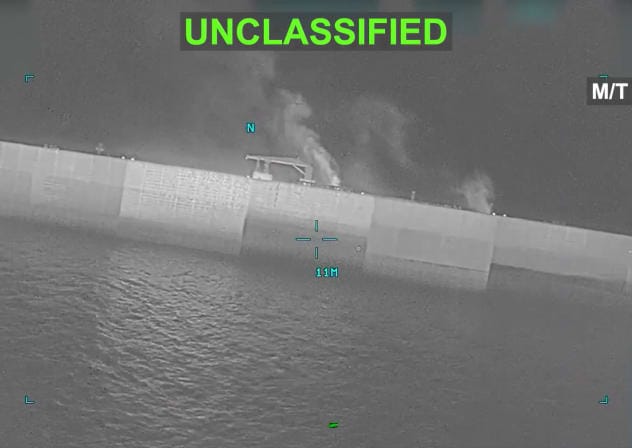
US Central Command struck three Iranian vessels including one off Kharg Island after Iranian ballistic missile launches at a US aircraft carrier and destroyer, which evaded the strikes with no US injuries [1]. CENTCOM said the attacks followed Iranian ballistic missile launches against a US aircraft carrier and navy destroyer, which it said successfully evaded the strikes [2]. “If you shoot at two of our ships, we will impose an even higher economic cost — taking out three of yours,” CENTCOM commander Admiral Brad Cooper said [1]. Iran’s IRGC targeted three oil tankers on unauthorized routes in the Strait of Hormuz and three US-linked vessels elsewhere, warning all vessels to avoid suspicious movements or face targeting [1]. The IRGC responded by threatening intensified strikes against US military vessels in the region, and said later it targeted the three tankers as well as three US-linked vessels in other areas [2]. “Do not be deceived by the 'terrorist' US military and refrain from any suspicious movement aimed at passing through unauthorised waterways,” the IRGC Navy said in a statement carried on Iranian state TV [2]. On Sunday, Iran claimed it struck an unmanned US vessel trying to enter the Strait of Hormuz, according to The Associated Press news agency [1].
Strategic Importance of the Strait of Hormuz
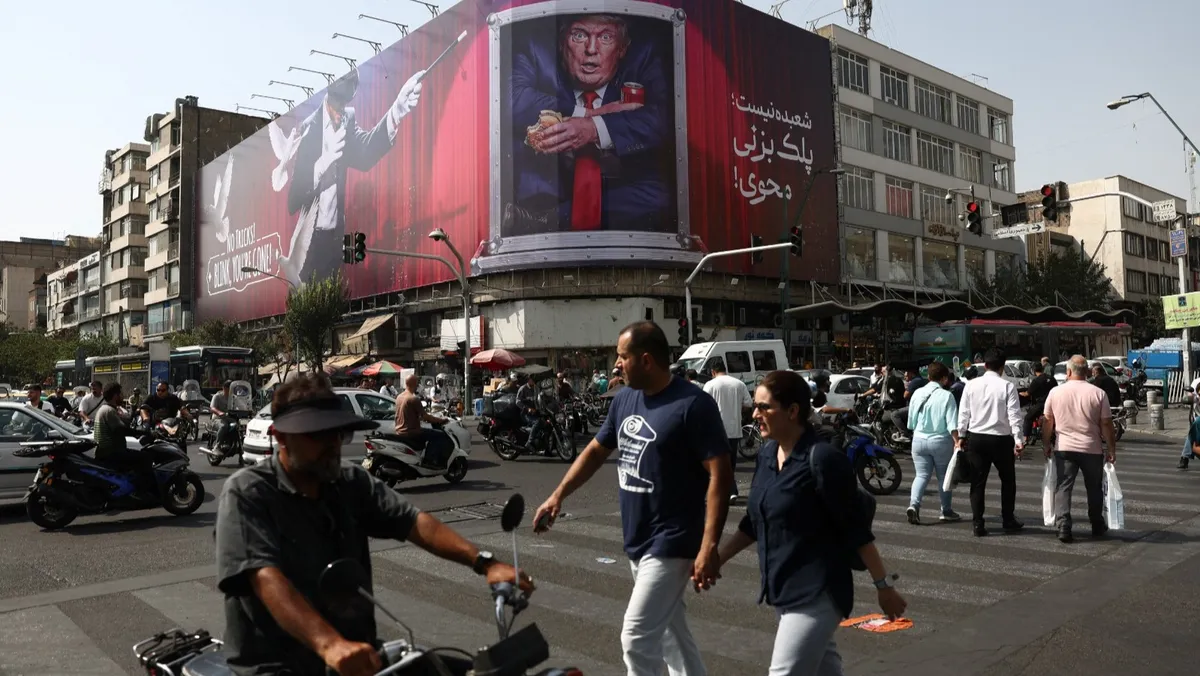
US Central Command strikes three Iranian oil tankers in the Strait of Hormuz after ballistic missile attack. — Source: dailynewsegypt
Iran effectively shut the Strait of Hormuz, through which 20 percent of the world’s oil supplies flowed, in retaliation for the US-Israeli attacks that began on February 28 [1]. The US imposed its blockade on Iranian ports after Iran effectively shut the Strait of Hormuz, an important waterway that carried one-fifth of the world's oil supply before the war [2]. Some 20 million barrels of oil flowed daily before the war began [1]. The attacks on tankers come as the US claims that an increasing volume of oil has started to flow through the strait, though the exact figures are still debatable, while the naval blockade of Iranian ports continues [1]. Last week, Bessent claimed that some 17 million barrels of crude oil a day had been shipped out recently, according to a report in the United Kingdom’s The Times newspaper [1]. Figures from marine analytics firm Kpler show only six vessels crossed the strait on Wednesday, 11 on Tuesday and five on Monday, with a 10-day average of just 13 vessels per day [1]. Iran is the third-largest producer in the Organization of the Petroleum Exporting Countries and exported 90 per cent of its crude via Kharg Island before the war [2].
Economic and Oil Market Impact
Brent crude futures closed on Friday at $96.28 a barrel, their highest level since July 24, up from roughly $70 before the war [1]. Brent crude futures closed at their highest level since Jul 24 on Friday, at US$96.28 a barrel, as tensions in the Middle East drive global supply concerns [2]. Diesel hit a new record price in the US on Friday, soaring to an average of $5.85 a gallon ($1.55 per litre) for the first time ever [1]. The national average price for gasoline has surged to $4.14 per gallon, up from $3.19 a year ago [3]. To mitigate the economic impact, the Trump administration has drawn heavily from emergency oil reserves, leaving the US Strategic Petroleum Reserve at its lowest level since 1983, according to CNN [3]. The latest exchanges further dim hopes for a de-escalation through diplomacy as the US-Israel war on Iran has disrupted energy supplies and slowed economic growth around the world [1].
Political Fallout in the United States
A Reuters/Ipsos survey conducted in late August found that only 31 percent of Americans back the war, while 63 percent are against it [1]. The same polling suggested Trump’s approval rating has dropped to 33 percent, down from 40 percent since the fighting began [1]. A University of Massachusetts poll released on Monday showed that more than two-thirds of Americans disapprove of Trump’s handling of the conflict, dragging his overall approval rating down to 32% [3]. Trump agreed with Vice President JD Vance’s recent assertion that the hostilities should not be classified as a “war,” noting that major combat operations concluded months ago [3]. “I call it a military conflict… because it is small potatoes for us, it is not a big deal,” Trump told reporters on Friday [3]. Reports indicate the conflict cost Washington approximately $40 billion through July [3].
Assessments of Future Escalation
The renewed exchanges of strikes between Iran and the US mark an escalation in the six-month-long conflict, according to the director of the Middle East studies programme at George Washington University, Sina Azodi [1]. Azodi told Al Jazeera that neither side will “cave in” because it “will not look good on them, so the only option is to escalate” [1]. He said unless there is a political settlement, the war will continue [1]. “There’s going to be more clashes between the Iranians and the Americans. There can be miscalculations. There can be more civilian casualties”, especially on the Iranian side, Azodi said [1]. CNN, citing sources familiar with stockpile reports, indicated the military has exhausted approximately 80% of its interceptors for one of its primary missile defence systems [3]. Since the conflict began, the US has consumed nearly four-fifths of its Terminal High Altitude Area Defense (THAAD) system interceptors and roughly half of its Patriot interceptors compared to pre-war levels [3].
Background on the Seven-Month Conflict in Current Wars in the World
The conflict began with US-Israeli strikes on Iran on February 28, leading Iran to shut the Strait of Hormuz through which 20 percent of global oil flowed, followed by a US naval blockade of Iranian ports in April [1]. The exchange of attacks followed an escalation in the past week that threatens to deepen a conflict that has continued since the US and Israel launched strikes on Iran in February [2]. On Aug 31, Trump issued a one-line social media post accompanied by an AI-generated video depicting Kharg Island being "blown to smithereens" [2]. He said on Jun 11 that he wanted to take over the island, but then said a US military operation there was off the table, days before Tehran and Washington signed an interim agreement aimed at ending the war on Jun 17 [2]. The President contrasted the 18 American military fatalities in the Iran conflict with the 58,220 US personnel who died in the Vietnam War, according to US National Archives records [3]. Reports indicate the conflict cost Washington approximately $40 billion through July [3].
What to watch next: US intelligence warns Iran is preparing a prolonged escalation to influence November midterm elections, while both sides aim to impose costs until the other backs down, with depleted US munitions stocks raising sustainability concerns [3].