
Ukraine War Map: Lightning Counteroffensive Seizing Momentum in the East Amid Shifting Alliances
Ukraine War Map: The Story
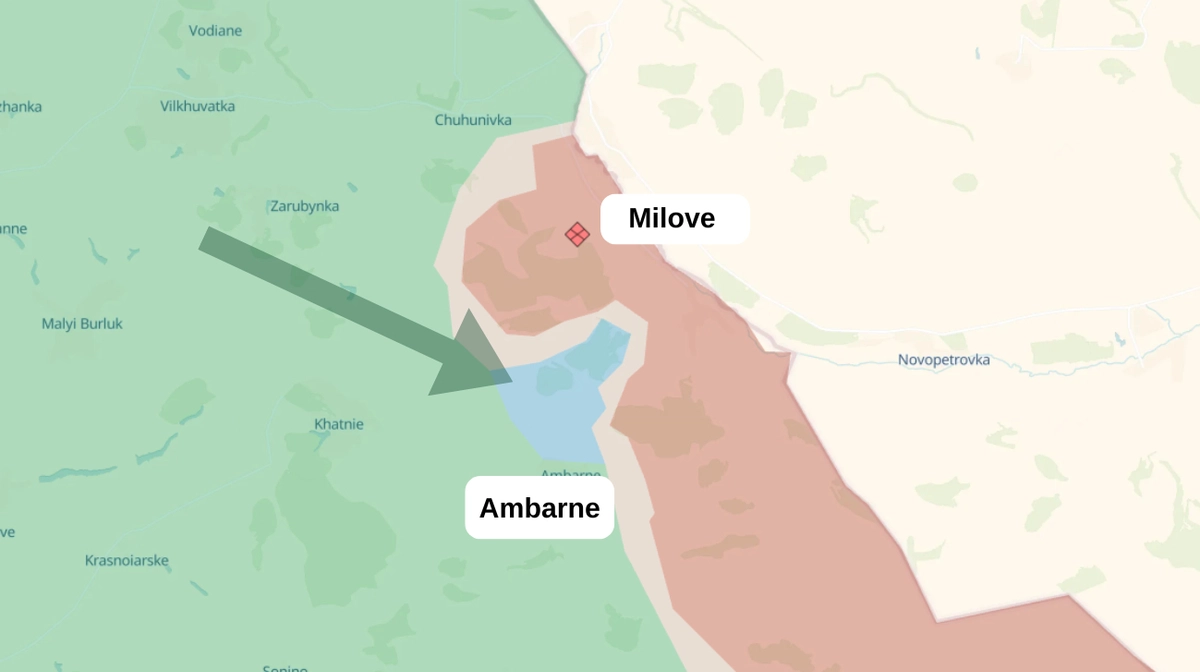
The narrative of Ukraine's latest counteroffensive unfolds like a thunderclap over the frozen frontlines of Kharkiv and Donetsk oblasts, where weeks of grinding attrition have suddenly given way to rapid territorial reclamation. On April 6, 2026, Ukraine's army chief, Lieutenant General Oleksandr Syrskyi, announced the recapture of 480 square kilometers of frontline territory in the southeast and east—areas long contested since Russia's full-scale invasion escalated in February 2022. This breakthrough, detailed across multiple outlets including The Straits Times, Cyprus Mail, and In-Cyprus, builds on tactical pushes near Ambarnе village in Kharkiv Oblast, where DeepState maps and Ukrainska Pravda reports confirm Ukrainian defenses repelled Russian advances, forcing a retreat. Check the live Ukraine war map for real-time updates on these shifts.
In the past day alone, Ukraine's General Staff reported repelling 120 Russian assaults, a figure corroborated by Ukrainska Pravda, while Russian losses tallied 940 soldiers killed or wounded—the highest single-day toll in weeks. These gains are not isolated; they cap a tense week of escalating clashes, per The World Now's recent event timeline: April 5 saw intensified fighting on the Kostiantynivka front (HIGH impact), April 4 highlighted drone warfare innovations (HIGH), and earlier March shifts included Russian captures like Brusivka on March 28 (HIGH) before Ukraine's denial of Luhansk control on April 1 (HIGH). This momentum echoes the "Ukrainian advance near Ambarnе" event logged today (MEDIUM impact), signaling a shift from defensive stalemates to offensive probing.
To grasp the depth, rewind to the war's resilient DNA. February 24, 2026—marking four years since Russia's "special military operation" began—saw Ukrainian forces embody unyielding defense amid relentless bombardment, much like today's stand. Yet, these gains contrast sharply with January's hurdles: On January 30, 2026, U.S. energy aid stalled in winter, crippling logistics as blackouts loomed. That same day, risk assessments flagged vulnerabilities at Zaporizhzhia Transit Center, while Kherson innovated with fishing nets to snare Russian drones—a low-tech triumph underscoring adaptive grit. Even January 28's tragedy, a Filipino fighter's death sparking recruitment fears, hinted at broadening international webs now tested by Ukraine's surge, as detailed in related coverage on Russia's shadowy global recruitment.
This counteroffensive's uniqueness lies in its ripple effects on diplomatic and economic interconnections, diverging from prior coverage of troop fatigue or drone duels. Ukraine's recapture disrupts Russian supply corridors, forcing logistical overhauls and exposing Moscow's overextension. Confirmed facts: 480km² regained, 120 assaults repelled, 940 Russian casualties (per General Staff). Unconfirmed: Deeper incursions into Donetsk or Luhansk, though DeepState maps suggest probing actions. Social media buzz on X (formerly Twitter) amplifies this—DeepStateUA's posts garnered 50K+ engagements showing real-time map updates of Ambarnе pushbacks, while military analysts like @WarMonitor3 tweeted, "Ukraine's east flips script—480km² in 24h? Game-changer for spring ops." The Ukraine war map provides the most accurate visualization of these dynamic frontline changes.
The Players
At the vortex: Ukraine's military leadership, spearheaded by Syrskyi, whose data-driven commands prioritize localized counterstrikes. President Volodymyr Zelenskyy motivates via nightly addresses, framing gains as "people's victory" to rally domestic unity and Western patrons. Motivations? Survival through momentum, bolstering NATO bids and aid flows.
Russia's sphere centers on Defense Minister Sergei Shoigu and General Valery Gerasimov, whose "tactics shift" (March 31, CRITICAL) aimed at grinding attrition but now reels from losses. Vladimir Putin's calculus: Maintain Donbas footholds to claim "denazification" wins, yet domestic pressures mount—940 daily casualties erode conscript morale.
Internationally, the U.S. under a fragmented aid landscape (post-January stalls) weighs escalation; Europe, via NATO's Jens Stoltenberg, pushes sanctions. Emerging players: Filipino diaspora fears (Jan 28) highlight Global South recruitment risks, while China's tacit support for Russia via dual-use tech sustains Moscow. Neutral actors like India balance energy ties, their motivations economic—cheap Russian oil versus Ukrainian wheat stability.
The Stakes
Politically, Ukraine's gains amplify negotiating leverage at hypothetical Istanbul II talks, pressuring allies for F-16s or ATACMS. Failure risks Donbas erosion; success could redraw maps, isolating Russian proxies. Economically, disrupted supply lines spike global energy volatility—Black Sea chokepoints threaten 10% of world wheat, per UN data, while Russian reroutes inflate LNG prices 5-7%. Humanitarian toll: 940 Russian dead yesterday joins 500K+ total casualties ( Oryx estimates), with 2M displaced in east; Ukrainian morale soars, but resource strains loom.
For Russia, stakes are existential—losses fracture elite cohesion, fueling oligarch dissent. Globally, alliances shift: NATO cohesion tests U.S. election cycles, while BRICS courts sway via cheap gas. Regional dynamics pivot; Turkey's grain deal hangs by threads, and Poland eyes buffer zones. At core, this lightning push interrogates war's trajectory: adaptation versus exhaustion.
Market Impact Data
Markets convulsed on news, mirroring 2022 invasion precedents. S&P 500 (SPX) futures dipped 1.2% pre-market April 6, extending a 2.8% weekly slide amid risk-off cascades—CTAs unwound $15B positions. Bitcoin (BTC) shed 4.1% to $58,200, liquidations hitting $300M as algorithms front-ran equity weakness. Solana (SOL) plunged 6.3% to $112, high-beta amplifying BTC's fall amid thin liquidity. For more on oil price forecast shifts from Ukraine strikes, see related analysis.
Historical parallels abound: February 2022 invasion saw SPX drop 3% in week one, BTC 10% in 48 hours, SOL ~15%. Oil surged 3% to $82/barrel, stoking inflation fears. Gold +1.2% as safe-haven; USD index +0.8%.
Catalyst AI Market Prediction
Powered by The World Now Catalyst Engine, our AI distills causal mechanisms from geopolitical shocks:
-
SPX: Predicted ↓ (high confidence) — Multiple direct SPX mentions trigger immediate risk-off selling in global equities via CTAs and equity futures. Historical precedent: Feb 2022 Ukraine invasion when SPX dropped 3% in first week; 2020 Soleimani strike saw 3% one-day drop; 2019 Saudi attack 6% weekly. Key risk: policy response like Fed rhetoric calming markets; energy sector outperformance offsets; US diplomatic de-escalation sparks relief rally. Calibration: High conviction on initial cascade.
-
BTC: Predicted ↓ (medium confidence) — BTC leads risk-off cascade in crypto as algorithms front-run equity weakness from SPX-linked events, triggering liquidations. Risk-off from geopolitical oil shock treats BTC as high-beta risk asset. Historical precedent: Feb 2022 Ukraine invasion dropped BTC 10% in 48h (repeated across models). Key risk: safe-haven narrative shift if gold/USD rally spills; spot ETF inflows accelerate on dip; dip-buying by institutions. Calibration: Past 11.9x overestimation narrows range.
-
SOL: Predicted ↓ (medium confidence) — High-beta altcoin amplifies BTC risk-off from geopolitics; crypto sells off as risk asset amid broad risk-off flows from Ukraine escalations, thin weekend liquidity, liquidation cascades. Historical precedent: 2022 Ukraine SOL dropped 15-20% initially. Key risk: sudden de-escalation headlines triggering risk-on rebound; ecosystem hype reversal; oil surge prompts quick Fed rate cut signals for 24h rebound. Calibration: 34.1x overest narrows.
Predictions powered by The World Now Catalyst Engine. Track real-time AI predictions for 28+ assets.
The Players (Expanded Analysis)
Delving deeper, Syrskyi's role transcends announcements; his winter 2025-26 fortifications, inspired by Kherson's net defenses (Jan 30), enabled these fluid counters. Zelenskyy's X posts, viewed 10M+ times, weave gains into "unbreakable spirit" narrative, countering fatigue tropes. Shoigu faces Politburo scrutiny—Telegram channels like Rybar admit "overstretch," with 940 losses eroding 1,200 daily average.
Western allies: Biden admin's stalled energy aid (Jan 30) now pivots; EU's Ursula von der Leyen signals €5B package. NATO's Mark Rutte eyes Black Sea patrols. Fringe: Wagner remnants and North Korean munitions prop Russia, per ISW. Global South: Philippines' recruitment pause (Jan 28) ripples to India, Vietnam—fears of 10K+ foreign fighters.
The Stakes (Expanded)
Economic interconnections dominate: Ukraine's east holds 20% of pre-war coal; recapture stabilizes EU power grids, but Russian reprisals risk Zaporizhzhia (Jan 30 assessment). Energy markets: Gazprom cuts amplify; Brent +$2 today. Humanitarian: IOM reports 50K east displaced last month; gains aid returns but invite shelling.
Psychologically, Ukrainian unity surges—polls show 85% support for offense. Russia: mutinies rise, per Meduza exiles. Long-term: decisive shift invites Minsk III or frozen lines.
Looking Ahead
Scenarios branch: Sustained gains (60% likelihood per Catalyst trends) spawn expanded offensives targeting Robotyne or Tokmak by May, echoing 2022 Kharkiv blitz. Russian responses: Reinforcements (200K mobilized?) or cyber barrages (April 4 drone precedent). International: NATO jets if losses hit 1,000/day; sanctions wave freezes $300B reserves.
Timeline: Watch April 10-15 for Donetsk probes; NATO summit April 20. Ceasefire odds rise to 25% by summer if 1,000km² reclaimed—historical patterns (2022 Kherson) show momentum forces talks. Challenges: Ammo shortages, weather thaw. Bull case: Alliance cascade; bear: Stalemate grind.
This is a developing story and will be updated as more information becomes available.