
Trump Vows Unprecedented Sanctions on Iran as Tehran Warns Allies
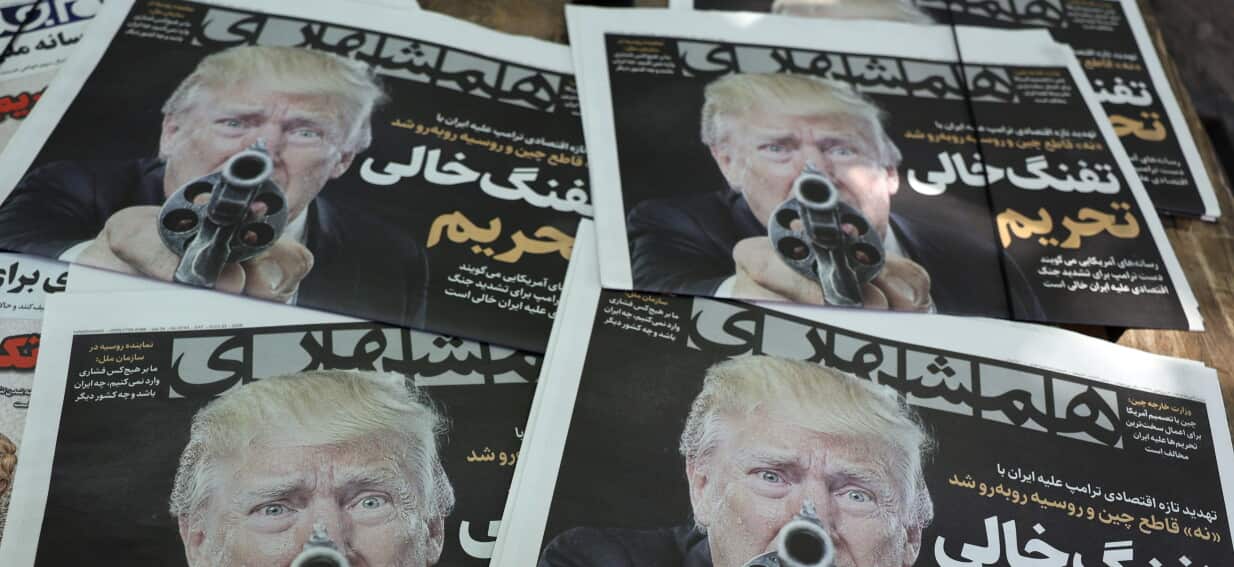
US President Donald Trump has vowed to impose unprecedented sanctions on Iran next week as Washington pushes allies to further isolate Tehran's economy amid the six-month-old war, prompting Iran to warn that any participating countries will be considered enemies.
Trump Administration Announces New Iran Sanctions
US President Donald Trump has vowed to hit Iran hard economically after Treasury Secretary Scott Bessent said Washington would impose measures on Tehran that have "never been seen" as soon as next week. Bessent is due to hold a press conference at 4am AEST on Tuesday announcing the measures. [1] The United States, the United Nations and the European Union have applied sanctions, implemented trade embargoes and frozen Iranian assets since the late 1970s. Since the US and Israel launched the war on Iran in February, Washington has levied additional maritime, energy and financial sanctions and started a naval blockade. [1] Washington has pushed its allies to join Trump's new campaign to isolate the Iranian economy as the US president's unpopular war drags toward the six-month mark. [1]
Iran Warns of Retaliation Against Participating Nations
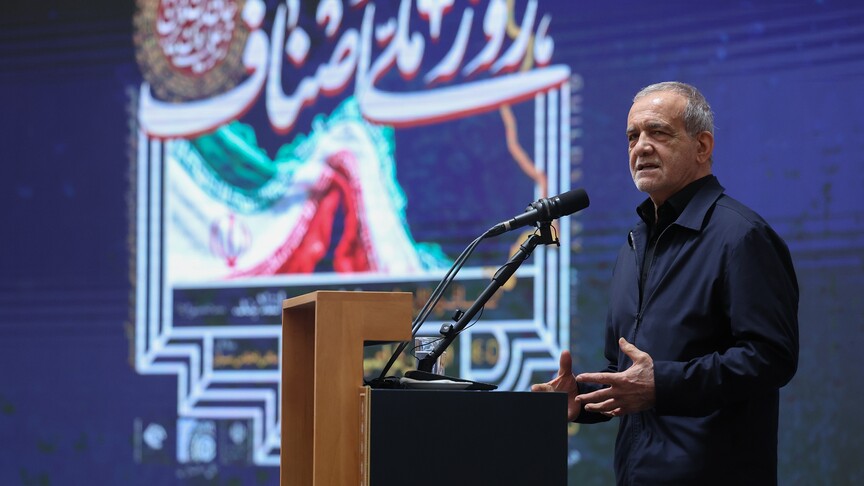
Iran said countries that join in the United States' "economic war" would be considered enemies. [1] Iran's security chief Mohsen Rezaei declared on television that any country joining the US economic war is an enemy and Tehran will target their interests. [1] "We declare to all countries ... do not join the economic war waged by the United States," said Mohsen Rezai, the head of Iran's supreme national security council, on Iranian television. "Any country participating in the imposition of economic restrictions against us is considered an enemy." [1] Iran has denounced US plans to announce new sanctions and on Sunday warned countries against participating in the United States' "economic war" against the country. [1] China has criticised the US initiative, arguing sanctions would not resolve the conflict in the Middle East. [1]
Trump Claims Strait of Hormuz as US Territory
US President Donald Trump has posted a map on his Truth Social account marking the Strait of Hormuz as "NEW U.S. Territory". It is the second time in a week that Trump has shared the image, but he included no caption or commentary this time. [3] On Friday, Trump told a public rally that he views Hormuz as "an American territory right now" and vowed Iran cannot be allowed to have a nuclear weapon. [3] Trump reposted a map on Truth Social marking the Strait of Hormuz as 'NEW U.S. Territory' for the second time in a week, after telling a rally he views it as American territory. [4] Iran security chief Mohsen Rezaei says any state joining US sanctions against Iran will be considered an enemy, and Tehran will target their interests in retaliation. [4]
Existing US Measures and Impact on Oil Trade
Data from the US treasury department's Office of Foreign Assets Control shows the agency has imposed sanctions on more than 1,000 people, vessels and aircraft since Trump began his second term. [1] Recent measures have targeted Iran's shadow oil fleet; shipping insurers; entities and people enabling Iran's acquisition of weapons; and digital exchanges, freezing an estimated US$500 billion in Iran-linked cryptocurrency. [1] Oil shipments are at a virtual standstill in the Strait of Hormuz, with Tehran threatening to strike any unauthorised oil tankers that try to transit the vital waterway. [1]
Potential Further Sanctions Options
Experts say the Trump administration can try the following options to put more pressure on Iran. Sanctions on Chinese 'teapot' refiners: Chinese independent refineries known as "teapots" account for a quarter of Chinese refinery capacity. They operate with narrow and sometimes negative profit margins. China buys more than 80 per cent of Iran's shipped oil, according to 2025 data from analytics firm Kpler. [1] Sanctions on Chinese banks: OFAC has imposed secondary sanctions on smaller China- and Hong Kong-based entities accused of processing billions of dollars in Iranian oil and helping to fund weapons procurement. The US treasury department has warned two larger Chinese banks they could face secondary sanctions if Iranian funds were found moving through their systems, but has stopped short of designating them. [1] 'Whack-a-mole': The United States could continue targeting Iranian individuals and entities, as well as others in China and the Gulf, that are helping Tehran evade sanctions to collect revenues for its war effort. [1] Land blockade: Some US and Israeli officials have floated the prospect of a land blockade, which would require assistance from Iran's neighbours: Iraq, Türkiye, Pakistan, Afghanistan, Turkmenistan, Azerbaijan and Armenia. [1] Secondary tariffs: Trump has repeatedly threatened tariffs on goods from countries that do business with Iran, although the US Supreme Court struck down the legal basis for such taxes. The US Senate passed a sweeping Russia sanctions bill last week that included new Iran sanctions and would give Trump new tariff powers that he could potentially use against countries that aid Iran's commerce and weapons procurement. That legislation must still pass the US House of Representatives. [1]
Global Shipping Shifts and Arctic Route Trial
South Korea sent its first trial container ship through the Arctic on Saturday, as the Middle East war rattles global shipping, while environmental groups warned the route could accelerate polar ice melt. [2] The Middle East conflict, sparked by US-Israeli strikes on Iran in February, has roiled global shipping, sending governments and shipping firms scrambling to seek alternative routes. [2] Sailing from Busan New Port, the "PanStar Acro" container ship is to sail to Europe via the Arctic, testing whether a route opened by melting sea ice can be commercially viable. [2] The voyage follows that of the Chinese container ship "Dubai Tower", which left the eastern port city of Ningbo for Europe this month, heading north through the Bering Strait before turning west along Russia's Arctic coast. [2] The usual maritime route between Asia and Europe runs through the Suez Canal, but travelling through the Arctic can cut the journey by around 7,000 kilometers and about 10 days, according to the Korea Institute for International Economic Policy. [2] Some experts warn South Korean ships using the Arctic route could risk breaching Western sanctions on Russia as they would receive Russian navigation and weather services involving payments. [2] Environmental groups warned growing traffic along the shorter NSR could accelerate Arctic sea ice loss already driven by global warming. [2]
What to watch next: Bessent is scheduled to hold the press conference announcing the measures at 4am AEST on Tuesday, while the US Senate's Russia sanctions bill that includes new Iran provisions must still pass the House of Representatives.