
Iran Tensions Rise as President Pezeshkian Urges End to US War from Position of Strength
Iranian President Masoud Pezeshkian called for an end to the nearly six-month war with the United States from a 'position of strength' as the US redirects ships, imposes new sanctions, and maintains control over the Strait of Hormuz amid ongoing Iran tensions. [2][3]
Iranian President Calls for End to War
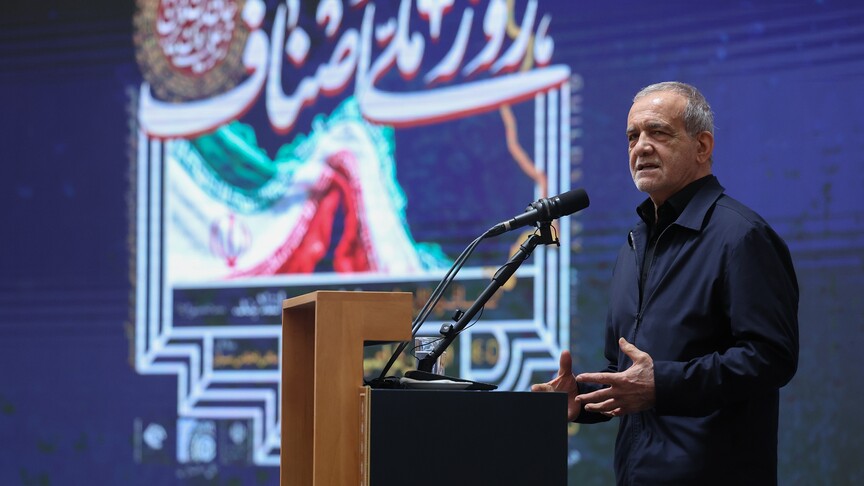
Iranian President Masoud Pezeshkian stated it is better to end the war now while Iran holds a position of power and dignity. [3] He claimed the world acknowledges Iran's victory and criticizes US attacks on schools, hospitals, and infrastructure. [3] Pezeshkian made the remarks during a meeting with doctors on Friday. [3] He also defended the June memorandum of understanding agreed with Washington against hardline domestic critics in parliament. [3] Pezeshkian said critics cannot find even a single clause in the agreement that indicates capitulation and noted that all the commitments concern the other side. [3] His authority as president is ultimately subordinate to Iran’s Supreme Leader Mojtaba Khamenei. [3] The call comes while negotiations between Washington and Tehran remain stalled. [3]
Trump Asserts US Control Over Hormuz
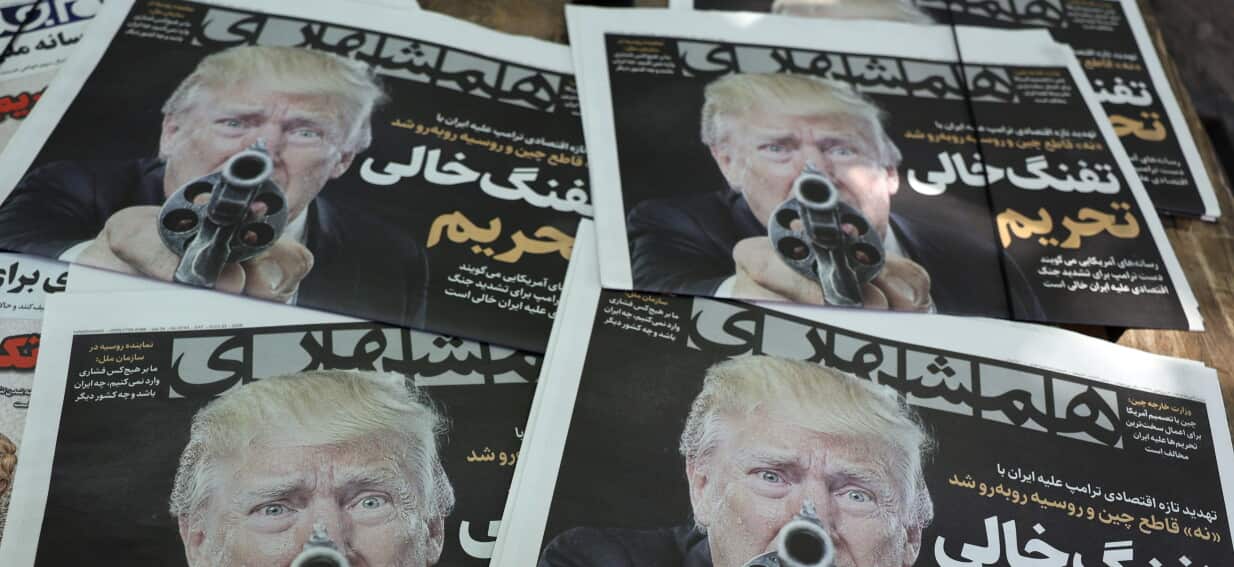
US President Donald Trump said Iran wants to make a deal but is not prepared to make the right one. [2] Trump asserted the US has total control over the Strait of Hormuz region including land areas. [2] He told reporters that the situation means the US is seeing what happens and that Iran would love to make a deal but they are not ready to make the right deal in his opinion. [3] Trump has warned of economic consequences against any country that provides any type of lifeline to Iran. [3]
US Blockade and Sanctions Shift
The US has redirected 68 ships, disabled three, and boarded two as part of a blockade in the Strait of Hormuz. [2] US planning includes new economic sanctions intended to collapse the Iranian government and buy time until after US midterm elections. [2] US Treasury Secretary Scott Bessent warned that Washington would collapse the Iranian government with a sanctions campaign. [3] Bessent is expected to outline planned sanctions against Iran at a news conference at the Department of the Treasury on Monday. [3] The shift marks a pivot by the Trump administration towards economic rather than military pressure as the war nears the six-month mark. [3] Iran’s Ministry of Foreign Affairs has condemned the US plan and accused Washington of economic terrorism. [3] China’s Ministry of Foreign Affairs spokesman Lin Jian also criticised the US measures. [3]
Oil Spills Escalate Environmental Risks
Oil tankers going dark to evade Iranian attacks have led to three separate oil spills in the Persian Gulf and Gulf of Oman. [4] One oil spill has already reached Iran's Qeshm Island and its mangrove ecosystems. [4] The Qeshm Island slick likely stemmed from a leak from the Minoan Pioneer, a Liberia-flagged dry bulk ship hit by an unknown projectile close to Oman’s coast in a suspected Iranian attack while sailing through the Strait of Hormuz on August 3. [4] Another oil spill resulted from an attack on the Caroline Bezengi tanker and spread around a nature reserve, reaching Oman's coastline. [4] The Caroline Bezengi ran aground on June 30 near an Omani marine nature reserve that is home to wildlife including humpback whales, green sea turtles, endangered hawksbill, thriving coral reefs, and Socotra cormorants. [4] The oil slick now covers an estimated 400 to 500 square miles. [4] A third slick was seen near an oil and gas hub in the center of the Gulf, the island of Sirri. [4] Since March 1, there have been 1,514 dark crossings in and out of the Persian Gulf. [4] Experts warn that the risks are increased by more ships resorting to unsafe tactics. [4]
Diplomatic Efforts and Military Posture
Omani and Iranian foreign ministers discussed resuming dialogue and navigation issues in the Strait of Hormuz in a phone call on Friday. [3] Iran’s military warned it remains ready to respond devastatingly to new threats. [3] Major-General Ali Abdollahi, chief of staff of Iran’s armed forces, stated that with preparedness across land, sea, air, air defence and cyberspace, Iran’s armed forces will respond to the enemy’s new threats with crushing, punishing and devastating responses. [3] Tehran continues to keep the key waterway partially shut while Washington persists with a naval counterblockade. [3]
Context of the Six-Month Conflict
Israel and the US launched Operations Roaring Lion and Epic Fury on February 28, with the stated aim of creating conditions for regime change. [2] Ayatollah Ali Khamenei was killed by an Israeli strike on a Tehran bunker. [2] Iran’s defense minister and several IRGC generals were also killed in the largest-ever aerial attack by the IAF. [2] Iran retaliated by firing across the Middle East at Gulf nations and US military bases in the region. [2] Thirty-nine IDF soldiers and 23 civilians have been killed, and at least 7,693 more injured in ballistic missile attacks across Israel since February 28. [2] Eighteen US soldiers have been killed, according to CENTCOM. [2] A ceasefire deal was announced on April 7 and went into effect on April 8. [2]
What to watch next: Omani and Iranian foreign ministers continue efforts to create suitable conditions for resuming dialogue while the US Treasury prepares to outline new sanctions on Monday and Iran’s armed forces maintain readiness across multiple domains.