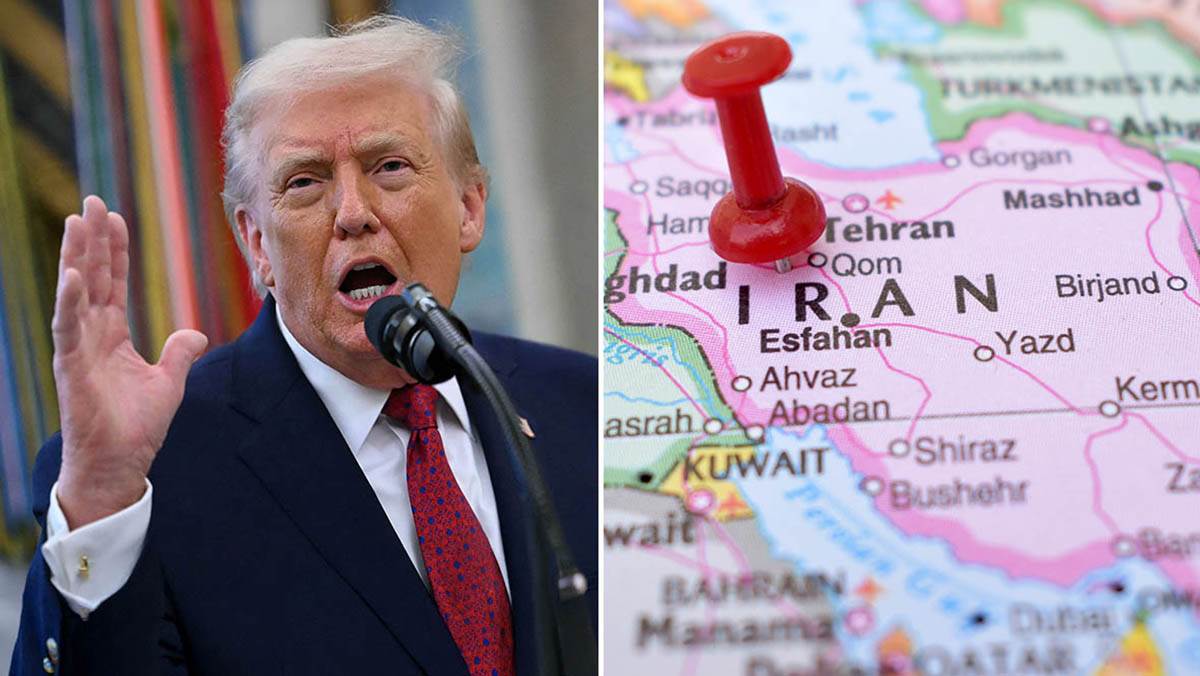
Trump Cancels Strikes on Iran as US-Iran Talks Resume Monday
Trump Cancels Major Strikes on Iran
US President Donald Trump stated that the halted strikes would have been the biggest attack since World War II and would have been disastrous for Iran. [1] He agreed to cancel the planned US and Israeli strikes after requests from Iran and other Middle Eastern countries, noting that the perimeter of a deal had been agreed. [3] The scale of prior US strikes on Iran on Thursday was described by a US official as about twice the size of the previous night, with the operations characterized as wide, extensive, and impactful. [1] Trump explained that the foes have been at war since Feb 28, when the US and Israel launched surprise strikes against Iran. [3] He posted on his Truth Social platform that he had been asked by Iran and other Middle Eastern countries to hold off any attack because the perimeters of a deal had been agreed to. [3] Based on this request, Trump agreed to cancel the attack for the future benefit of the world and the survival of a successful and prosperous Iran. [3]
Renewed Talks Set for Monday
Renewed US-Iran talks on the Strait of Hormuz and denuclearization are set to start on Monday, Trump says. [1] Iranian President Masoud Pezeshkian called the Islamabad Memorandum of Understanding the center of gravity for Iran’s future foreign relations and said efforts are underway to revive it. [3] He stated that the memorandum is the result of the collective wisdom of Shura Council’s members and that all members are in sympathy with it. [3] Pezeshkian added that the security of the country, the region, and Iran’s allies will be enhanced by this memorandum. [3] Iranian lawmaker Hassan Ghashghavi, spokesman for the parliament’s national security commission, said mediators are trying to revive the Islamabad memorandum of understanding that was agreed in June. [3] Ghashghavi noted that mediators know the main issue and the key to the matter right now is the issue of the Strait of Hormuz, so there is an exchange of views. [3] Trump also spoke with Saudi Arabia’s Crown Prince Mohammed Bin Salman, who stressed the necessity of prioritizing dialogue to de-escalate tensions in the Middle East. [3]
Iran-Oman Hormuz Route Agreement Nears
Iran and Oman are nearing an understanding on a new route through the Strait of Hormuz that respects both sides’ sovereign rights. [3] Iranian foreign ministry spokesman Esmaeil Baqaei told state television that Iran is now going to reach an understanding on a route acceptable to both sides, neither the northern route nor the southern route, but one that respects the sovereign rights of both sides and safeguards national interests and security. [3] He insisted that such an agreement does not mean the reopening of the strait. [3] Foreign Minister Abbas Araghchi said negotiations with Oman were on track for finalization and were going through their final stages. [3] Trump signaled a possible easing of tensions over the weekend by writing on his Truth Social platform that Iran and other Middle Eastern countries had asked for time to finalize a deal that would ensure the immediate, complete and total reopening of the Strait of Hormuz and an end to Iran’s nuclear threat. [4]
Israel's Planned Role in Attack
Israel was set to join the major US attack on Iran before it was called off. [1] According to one official, Israel told the United States that if the attack did not strike Iranian regime targets and sites tied to Iran’s economy, there was no point in striking at all. [1] Israel reportedly intended to join the now-canceled US attack on Iran. [1] The US halted an attack on Iran that would have been the biggest attack since World War II. [1]
Oil Prices Drop on De-escalation Hopes
Oil prices tumbled more than 6 percent on hopes of eased tensions, with Brent falling as low as $82.41 a barrel. [4] As of 7:10 am, WTI crude was down 4.75 percent at $80.65 a barrel, while Brent crude fell 4.40 percent to $84.06 a barrel. [4] The sharp decline followed a rally of more than 20 percent in both benchmark contracts last month, fueled by renewed conflict between the US and Iran and attacks on several tankers near Oman. [4] Shipping data showed two Saudi oil tankers crossed the Bab el-Mandeb Strait from the Red Sea over the weekend, while movement through the Strait of Hormuz slowed following reports of vessel attacks. [4] The United Kingdom Maritime Trade Operations said three more tanker attacks had been reported since Saturday. [4]
OPEC+ Raises Output Quota
OPEC+ approved a production quota increase of around 188,000 barrels per day from September, completing the unwind of voluntary cuts. [3] The September increase finishes the phased rollback of a 1.65 million barrels per day supply cut originally agreed in 2023. [3] Due to export disruptions from the Gulf, Russia and Kazakhstan caused by the Iran and Ukraine wars, successive monthly OPEC+ hikes over most of this year have remained largely on paper with little impact on the market. [3] Even with the planned increase, the market has seen little impact because export disruptions in the Gulf, Russia and Kazakhstan caused by the Iran and Ukraine wars have meant most of OPEC+’s monthly output hikes this year have not translated into additional supply. [4]
What to watch next: Renewed US-Iran talks on the Strait of Hormuz and denuclearization are scheduled to begin Monday, with mediators continuing efforts to revive the Islamabad memorandum of understanding amid ongoing questions over whether the diplomatic effort will succeed.