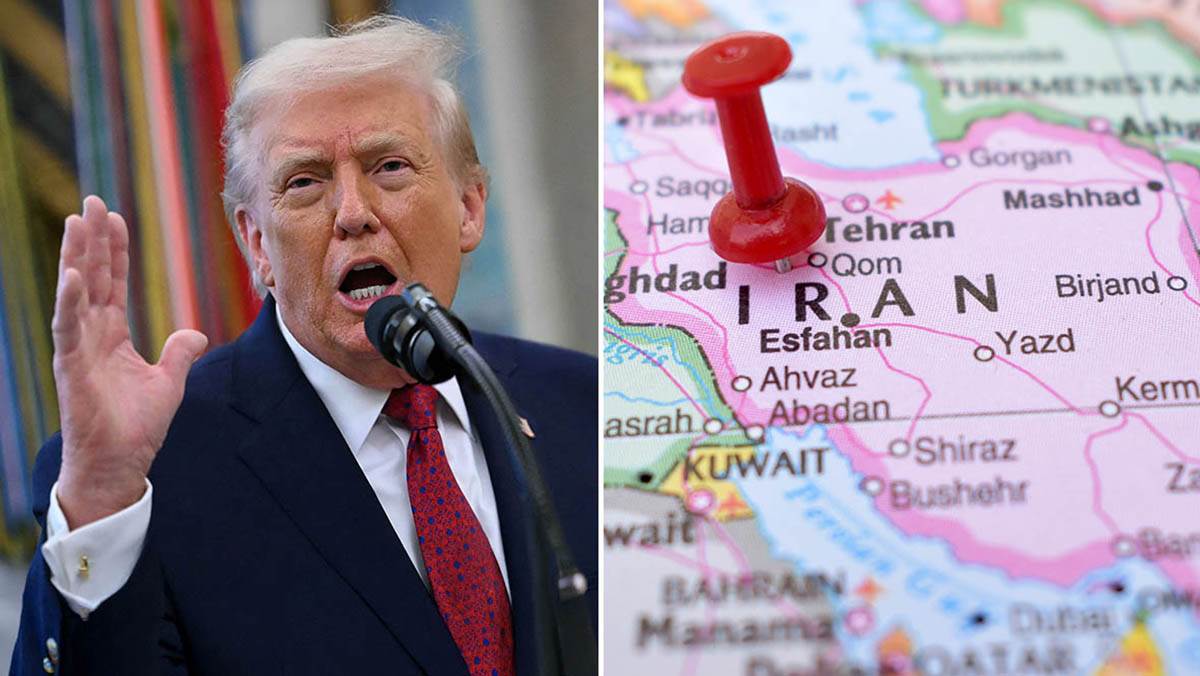
Iran Tensions Ease as Trump Cancels Attack and Sets Monday Talks
US President Donald Trump canceled a planned major attack on Iran and announced that talks with Tehran will begin on Monday afternoon with no set deadline, as oil prices tumbled more than 4 percent amid easing Iran tensions. [2] [1]
Trump Cancels Planned Strike on Iran
US President Donald Trump stated he called off what would have been the biggest attack since World War II after receiving requests from Iran and Middle Eastern countries including Saudi Arabia to allow time for a deal on reopening the Strait of Hormuz and ending Iran's nuclear threat. [4] Trump said the United States had been locked and ready to confront the Islamic Republic of Iran with military force that had not been seen since World War II, yet he agreed to cancel the operation provided a deal could be reached rapidly. [4] The president noted that Saudi Crown Prince Mohammed bin Salman had expressed concerns during a phone call that strikes could lead to Iranian retaliation against Gulf states, including attacks on oil facilities, power plants, and vital infrastructure in Saudi Arabia and other Gulf countries. [4] Trump added that the Saudi leader preferred a deal as opposed to an attack because the outcome of strikes remained uncertain and could bring disaster. [5] He also claimed that Israel joined him in the commitment to cancel the strike. [4]
Talks Set to Begin Monday
Trump said talks with Iran will happen on Monday but declined to set a deadline for an agreement after earlier saying he had called off an imminent attack in hopes of quickly reaching a deal. [2] As he returned to Washington from a weekend in New Jersey, Trump told reporters on Sunday that a negotiation would begin on Monday afternoon but did not provide details of where it would take place or who would be involved. [2] Asked if there was a deadline for Iran to come to an agreement, Trump declined to answer and stated he would rather make a deal because people die in large numbers during attacks and he did not want that outcome. [2] He suggested a deal on reopening the Strait of Hormuz may be close while he would also continue to pursue a path toward denuclearization in Iran. [5]
Focus on Strait of Hormuz and Nuclear Issues
Trump had said late on Saturday on his Truth Social platform that Iran and other Middle Eastern countries had asked for time to complete a deal that would lead to the immediate, complete and total reopening of the strait and an end to Iran's nuclear threat. [2] Iranian officials reported that negotiations with Oman over a new route through the Strait of Hormuz are in final stages, though separate from decisions on opening or closing the waterway, which Iran has largely closed. [2] Iranian Foreign Minister Abbas Araghchi said negotiations between Iran and Oman are in the final stages, with the two countries discussing a new route through the strait. [5] Iranian Foreign Ministry spokesperson Esmaeil Baghaei said the talks had no link to the Strait of Hormuz being opened or closed and that this remained a separate discussion. [2] Baghaei blamed the United States for the waterway being closed to shipping traffic. [5]
Regional Diplomacy and Israeli Position
Iranian Foreign Minister Abbas Araqchi held phone calls with his Saudi counterpart Prince Faisal bin Farhan and Pakistan's army chief Asim Munir to discuss diplomatic efforts, Iran's state media reported on Sunday. [2] Eli Cohen, Israel's energy minister and a member of Prime Minister Benjamin Netanyahu's security cabinet, said there was close security and intelligence coordination between Israel and the United States on everything happening in the region. [2] He added that with or without an agreement, and regardless of any external commitments, if Iran attempts to renew its nuclear program or advance its ballistic missile industries, Israel would take action and strike. [2] Trump and Netanyahu met on Tuesday in Washington, with an Israeli official saying they had explored all possible paths to curb Iran's nuclear program, including diplomacy, economic pressure and force. [2] Tehran denies it is seeking a nuclear weapon. [2]
Oil Prices Tumble on De-escalation
Oil prices were down more than 4 percent in early trading on Monday. [2] Oil tumbles 6 percent as Trump cancels attack on Iran to reach nuclear deal. [1] Iran has largely closed the Strait of Hormuz, a conduit for 20 percent of the world's oil and liquefied natural gas, before the start of the war, causing energy prices to rise and stoking broader inflation. [2] The US president has argued that his stated goal of keeping Iran from gaining nuclear weapons justifies higher fuel costs in the near term, but the economic pain has put political pressure on him to find a way to end the conflict. [2] Oil fell sharply in early trading Monday following the announcement. [5]
Background on the Ongoing Conflict
Trump has repeatedly issued threats that he would escalate the war on Iran he launched along with Israel in late February, only to allow more time for talks, which have so far not led to a comprehensive deal. [2] Attacks have spread across the Gulf to the Red Sea and even a Mediterranean facility in Egypt. [2] Waves of tit-for-tat Iranian attacks on American allies have targeted countries across the Middle East, while Tehran's effective closure of the Strait of Hormuz has driven sharp swings in energy prices. [5]
What to watch next: Trump indicated negotiations would begin Monday afternoon with no deadline set, while Israeli Energy Minister Eli Cohen stated Israel would strike Iran if it advances its nuclear or ballistic missile programs regardless of any deal.