
Sudan Conflict Spreads as Army Strikes RSF Convoy Inside Chad
The Sudan conflict is spreading to neighboring countries with Sudanese Armed Forces striking an RSF convoy inside Chad and shooting down a drone launched from Ethiopia, while the United States calls for extending the Darfur arms embargo nationwide amid escalating drone attacks and RSF defections.
Cross-Border Incidents Involving Chad and Ethiopia
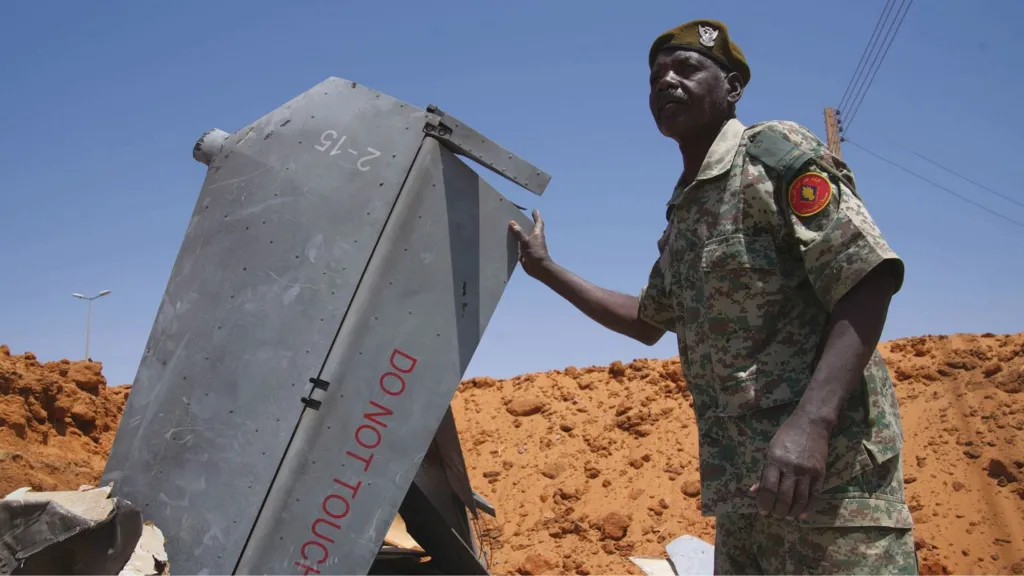
The most serious incident occurred on August 21, when the SAF, using aircraft and drones, pursued and bombed an RSF convoy that had entered approximately 100 kilometers into Chadian territory. [1] Sudanese air strikes targeted an RSF convoy south of the border triangle between Sudan, Libya and Chad. [1] According to the Sudanese army, the convoy consisted of around 200 combat vehicles coming from the Kufra camps in Libya. [1] Khartoum claims that a supply chain originates in the United Arab Emirates, passes through Benghazi and Tobruk, and crosses the Libyan-Chadian border before reaching Darfur in western Sudan. [1] Sudanese authorities say there is another supply route running directly through Chadian territory. [1] According to Khartoum, aircraft from the United Arab Emirates are stopping at at least two Chadian airports, Amdjaras and N'Djamena, to deliver supplies destined for the RSF, which are then transported overland to militia-controlled areas. [1] In response, the government in N'Djamena placed its troops on maximum alert and warned the Sudanese warring parties against extending the conflict across the border. [1] N'Djamena also reiterated that it reserves the right to defend its territorial integrity. [1] On August 23, a drone believed to have been launched from Ethiopia was shot down by the SAF in Blue Nile State, near Dindiro. [1] Images of the wreckage appear to show that the drone was armed with a Turkish-made laser-guided miniature munition and that the aircraft itself was also manufactured in Turkey. [1] As early as May 23, the SAF had reported shooting down a Turkish-made drone near Ed Damazin, claiming that it had come from Ethiopia, which it accused of hosting a base from which such aircraft are launched. [1] The drone shot down in Blue Nile State was reportedly hit by Sudanese forces using a similar aircraft, also Turkish-made. [1]
Sudanese Army Advances in North Kordofan
US envoy urges nationwide Sudan arms embargo amid rising drone strikes and cross-border RSF attacks. — Source: myjoyonline
The clearest recent gains have come in North Kordofan, a state in central Sudan that links the capital, Khartoum, with the country’s western regions. [2] In late July, the army announced that it had retaken Bara, Jabra al-Sheikh and Umm Sayala, along with other positions in the state. [2] The advances also secured the national Exports Road, a key route linking Khartoum, through Omdurman, with el-Obeid, the capital of North Kordofan. [2] The army’s control of the Exports Road has strengthened its position in North Kordofan and added pressure on RSF supply lines. [2] The army was continuing efforts to cut those supply lines as fighting expanded across Kordofan, Darfur and the Blue Nile region. [2]
Rising RSF Defections and Internal Pressures
The battlefield pressure has coincided with a marked increase in defections from the RSF. [2] On August 20, the army announced that about 318 people, including four officers, had joined its ranks, arriving in Northern state in about 50 combat vehicles before moving to Omdurman. [2] Separate groups from Kordofan and Khartoum, including 270 people, among them 21 field commanders, as well as 45 fighters and commanders from the Bara area who surrendered to the army. [2] The timing links the growing defections to several factors, including battlefield developments, internal problems within the RSF, social and tribal dynamics, and pressure created by the army’s advances and efforts to disrupt RSF supply lines. [2] The trend does not by itself mean the RSF is collapsing. [2] If the trend continues, it could become increasingly significant, particularly if more commanders and fighters conclude that the battlefield balance is shifting against the RSF. [2] The more cautious conclusion is that battlefield pressure may be affecting the RSF’s cohesion without yet amounting to a broader breakdown of the organisation. [2]
Al-Burhan's Dual Military and Political Track
{IMAGE_3}
On August 15, al-Burhan announced that the state would provide temporary immunity and legal, political and security guarantees to participants in a national dialogue managed by an independent national mechanism. [2] Criminal proceedings against participants facing charges would be suspended during their involvement in the dialogue, without removing the rights of those who had filed complaints. [2] Al-Burhan said the initiative came from a group of Sudanese who had approached him with a proposal for dialogue. [2] He said the group would independently manage the process and that the state would not determine its agenda or outcomes. [2] He also said he had begun engaging with national forces that had supported the state and its institutions, with the aim of involving them in completing state institutions, including a legislative council. [2] Al-Burhan said he would not accept what he called a “peace without substance” that would bring RSF commander Mohamed Hamdan Dagalo, also known as Hemedti, and his supporters to power. [2] He also said the path to peace begins with the RSF leaving cities and being gathered in designated areas. [2] On August 21, al-Burhan said the fighting would continue until what he described as the rebellion was ended, while the army was working to cut RSF supply lines. [2] He also rejected a truce that would allow the RSF to reorganise, while saying he remained open to a just peace and national dialogue that excluded the RSF. [2] Malik Agar, deputy chairman of the Transitional Sovereignty Council, said the current option was military resolution unless serious conditions for negotiations emerged. [2] Agar said the RSF would have to withdraw from cities and residential areas before negotiations could begin, stressing that the government remained open to initiatives that preserve Sudan’s unity and state institutions. [2] In a separate interview, Agar said the army would win but that the war would ultimately end through negotiations. [2] Agar argued that Sudan’s crisis was rooted in deeper problems, including the weakness of the state and the failure of political elites to manage the country’s ethnic, cultural, religious and geographic diversity. [2]
UN Push for Nationwide Arms Embargo
In an effort to contain the spread of the conflict, the United States has called on the UN Security Council to extend to the whole of Sudan the arms embargo currently in force for the Darfur region. [1] "This Council should take measures to limit the fueling of the conflict, especially because external support also risks drawing regional actors and neighboring countries even deeper into the conflict in Sudan," U.S. envoy Massad Boulos said during a meeting of the UN panel tasked with monitoring the Sudan war. [1] Boulos also called for the arms embargo to include drones and for the number of experts on the panel responsible for monitoring the implementation of sanctions to be increased. [1] The UN Security Council "must act to stop external financial and military support to the parties, such as drones and related technologies, from entering Sudan," Massad Boulos said. [3] A wider arms embargo would require a Security Council vote, with Russia and China opposing the move. [3] They said it would affect Sudan's army's effectiveness. [3] Sudan's UN envoy agreed, adding it would weaken protection for civilians. [3] Boulos said the US plan included a proposal to increase the number of experts monitoring the embargo. [3] He asked the council to take steps to curtail "external actors" fuelling the conflict, adding that this "risks drawing more regional actors and neighbours deeper into Sudan's conflict". [3] An arms embargo covering the Darfur region has been in place for more than two decades - and will expire next month if not amended or renewed. [3] At the council meeting, UN's humanitarian chief, Tom Fletcher, warned that fighting had in recent weeks been "characterised by the heavy use of drones". [3] Rosemary DiCarlo, the UN's under secretary-general for political and peacebuilding affairs, told the council that civilians were facing "the unrelenting consequences of one of the worst humanitarian crises of our time". [3] "Drones launched by both sides have repeatedly struck markets, schools, fuel stations and water infrastructure," she said, adding that the UN had documented that 1,100 civilians had died in drone strikes between January and June this year. [3]
Broader Conflict Context and Humanitarian Toll
Now in its fourth year, the conflict has killed tens of thousands of people and forced 14 million more to flee their homes. [3] The army controls much of Sudan's central and eastern regions, while the RSF is headquartered in the western region of Darfur and also controls areas in the south. [3] Observers say the Darfur embargo seems to have done little to stop the flow of weapons into Darfur, which has witnessed some of the worst fighting since the conflict erupted in April 2023. [3] Ethnic violence witnessed 20 years ago has reignited in Darfur, with UN experts saying atrocities allegedly committed by RSF fighters as they took over the city of el-Fasher last October showed the "hallmarks" of genocide. [3] DiCarlo noted that the true death toll since the war began was uncertain but was "likely to be in the hundreds of thousands". [3] The continued use of "sophisticated weaponry" pointed to ongoing external support to both sides, she added. [3] The flow of weapons into Sudan has been analysed by various experts. [3] Amnesty International has in the past said it found evidence of weapons manufactured in Serbia, Russia, China, Turkey, Yemen and United Arab Emirates (UAE) being used in Sudan. [3] The UAE in particular is accused of being the main provider of arms and support to the RSF, who in turn is accused of using the UAE as a marketplace for illicit gold sales. [3] Both parties have repeatedly denied these allegations. [3] Sudan's military has used Turkish and Iranian drones, and it receives political and other backing from Egypt, Qatar and Saudi Arabia. [3] The two warring rivals had been allies - coming to power together in a coup in 2021 - but fell out over an internationally backed plan to move towards civilian rule. [3]
What to watch next: The army’s gains in North Kordofan have strengthened its position along a strategically important route while growing defections from the RSF are raising questions about the force’s cohesion, and the US envoy’s proposal for a nationwide arms embargo faces opposition from Russia, China and Sudan’s envoy at the UN Security Council.