Myanmar Troops Clear Land for Russian-Backed Dawei Port Project
Myanmar’s military junta is expanding offensives to secure land for the Russian-backed Dawei Special Economic Zone while its leader seeks investment and political cover in Moscow and Minsk, amid ongoing global conflict risks including attacks in Mali, insecurity in the Central African Republic, Houthi clashes in Yemen and damage to Russian Black Sea Fleet vessels.
Myanmar Junta Offensive Secures Russian-Backed Dawei Project
Myanmar junta troops have deployed to clear villages and seal off land for the Dawei SEZ project, which is backed by a February 2025 Russia-Myanmar investment memorandum for a port and oil refinery. [3] Reuters reported that Myanmar’s military deployed hundreds of troops in Tanintharyi to clear areas marked for the planned Dawei Special Economic Zone. [3] Resistance sources and a local activist told Reuters that troops burned villages and sealed off land. [3] Reuters said it could not independently verify those accounts. [3] Myanmar authorities have long marketed the project as a gateway to South and Southeast Asia, potentially creating a cargo route that bypasses the congested Strait of Malacca. [3] It includes a deep-sea port, power generation (potentially nuclear) and industrial facilities. [3] The strategic rationale is obvious, but it must not obscure the cost of securing the project through conflict and displacement. [3] Russia and Myanmar signed an investment memorandum for the Dawei zone in February 2025, covering a port and oil refinery. [3] These events are overtly connected. [3] They show a military regime trying to turn territorial control achieved through violence into strategic infrastructure, foreign investment and international legitimacy. [3] Myanmar is no longer only a humanitarian catastrophe or an ASEAN problem. [3] It is at risk of becoming an authoritarian hub where military repression, Russian strategic ambition and sanctions-evasion networks converge. [3] That outcome would endanger Myanmar’s people and weaken regional security, US-led sanctions enforcement and the global rules-based order. [3] No port can be described as development if land is secured through coercion, village burnings, or attacks on civilians. [3]
Min Aung Hlaing’s Moscow Visit Expands Military-Economic Ties
Senior General Min Aung Hlaing visited Moscow on 18 August where Vladimir Putin discussed expanded cooperation in energy, defense, hydrocarbons, LNG and space. [3] Coinciding with the carnage, coup leader Senior General Min Aung Hlaing has traveled through Moscow and Minsk seeking investment, political cover and commercial relationships that can help sustain his military rule. [3] During Min Aung Hlaing’s Moscow visit on August 18, Russian President Vladimir Putin said Russia was considering further cooperation on a refinery, hydrocarbon exploration and production, and liquefied natural gas supplies to Myanmar, including potential onward transit to neighboring countries. [3] Putin also highlighted cooperation in energy, defense and space. [3] The Russia-Myanmar relationship is therefore moving beyond arms sales and political protection and is rapidly becoming an infrastructure, energy, technology and logistics partnership, potentially anchored in a military operation against the communities living around Dawei. [3] Banks, insurers, shippers, contractors, and investors connected to Dawei should face enhanced human-rights due diligence. [3] Governments should make clear that infrastructure enabled by forced displacement or military abuses cannot be treated as a legitimate commercial asset. [3]

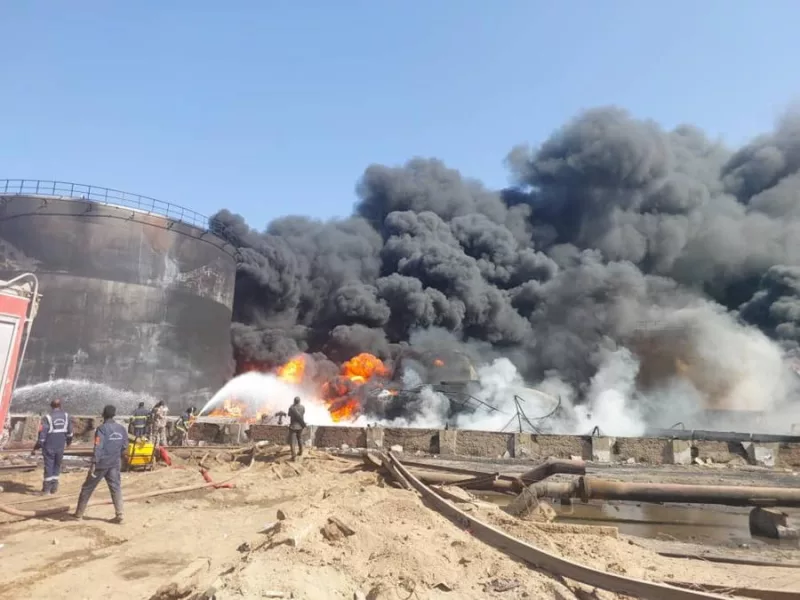
Myanmar junta troops clear villages for Russian-backed Dawei Special Economic Zone project. — Source: reliefweb
Sanctions-Evasion Risks Rise With Misused Myanmar Flags
Russia-linked tankers have begun falsely flying Myanmar and Syrian flags, increasing sanctions-evasion risks in a jurisdiction with weak transparency and growing Russian commercial ties. [3] Maritime reporting based on Windward data has found that Russia-linked tankers have begun falsely flying Myanmar and Syrian flags. [3] Myanmar does not operate an international ship registry, meaning any tanker claiming a Myanmar flag should immediately draw scrutiny from insurers, port authorities, banks, traders and sanctions-enforcement agencies. [3] The reports do not establish that Myanmar’s authorities approved the misuse of its flag or coordinated with individual tankers. [3] But they do highlight why Myanmar should be regarded as an expanding sanctions-evasion-risk jurisdiction, characterized by weak transparency, a military regime seeking foreign currency and investment, and growing Russian commercial ties giving it potential access to strategic port infrastructure. [3] US Treasury Secretary Scott Bessent’s new sanctions campaign against Iran offers a relevant lesson. [3] Washington has warned that companies and countries maintaining business ties with Iran can face secondary sanctions, particularly where they facilitate revenue flows and sanctions evasion through shipping, oil, aviation, technology, gold and digital assets. [3] Myanmar warrants comparable scrutiny. [3] Any credible evidence that Myanmar-based entities are purchasing, financing, transporting or facilitating Iranian petroleum products should trigger investigation by US authorities and heightened due diligence by banks, insurers, shipping firms, and port operators. [3] The relevant question is not whether every Myanmar-Iran commercial transaction is illegal. [3] It is whether transactions involve sanctioned entities, prohibited financial services, deceptive shipping, opaque ownership or conduct that exposes participants to secondary sanctions. [3] The response should be precise, not punitive toward Myanmar’s ordinary people. [3] Target the military’s procurement, energy and commercial networks — not Myanmar’s civilian population. [3] Foreign companies, brokers and financial institutions should not be able to plead ignorance while facilitating a system that enables military rule and potentially provides channels for sanctioned commerce. [3]
Humanitarian and Security Crises Persist Across Africa
In Mali, armed group attacks have heightened risks of disinformation, rumors and incitement to violence, prompting sensitization messages to promote social cohesion and protect vulnerable communities. [1] A la suite des attaques perpétrées par les groupes armés dans plusieurs localités du Mali, les risques de désinformation, de propagation de rumeurs et d’incitations à la violence se sont accrus. [1] Dans ce contexte, ces messages visent à promouvoir la cohésion sociale, à prévenir les violences alimentées par la désinformation et à renforcer la protection des communautés, en particulier des personnes les plus vulnérables. [1] In the Central African Republic, insecurity continues to hamper humanitarian aid delivery in Vakaga prefecture while over 800 households received food assistance in Ouham-Fafa. [2] L’insécurité compromet l’acheminement et la délivrance de l’aide humanitaire dans la Vakaga. [2] Le CERF alloue 3 millions de dollars pour appuyer les efforts de prévention à l’Ebola. [2] Plus de 800 ménages bénéficient d’une assistance alimentaire dans l’Ouham-Fafa. [2] Préfecture de la Vakaga – Nord-Est La dégradation de la situation sécuritair. [2]
Red Sea and Black Sea Conflict Developments
Eight Houthi fighters were killed in clashes in Yemen’s Taiz governorate, and damaged Russian Black Sea Fleet vessels including a missile boat and two large landing ships were observed in Sevastopol bays. [4] [5] A damaged missile boat and two large landing ships belonging to Russia's Black Sea Fleet have been spotted in the bays of temporarily occupied Sevastopol. [5] The channel posted a photo sent by a subscriber and described the ships pictured as "crippled tubs" belonging to Russia's Black Sea Fleet. [5] According to Krymsky Veter, a 1959-built rescue vessel Epron is moored in the foreground of the photo near an empty dry dock. [5] "A damaged Project 1241 Molniya-class missile boat (1987-1989) is limping through Sevastopol Bay. Part of its superstructure is missing and covered with camouflage nets," the channel said. [5] Further away, in Sukharnaya Bay, the channel's authors spotted two large landing ships. [5] "... on the left is a Project 775 large landing ship (1988-1990), which has also been hit repeatedly. On the right is a Project 1171 Tapir-class large landing ship (1968 or 1975), which was damaged in 2023 following a missile strike by Ukraine's defence forces," Krymsky Veter said. [5] In April, the Project 775 large landing ship Konstiantyn Olshanskyi and the Project 1171 ship Nikolai Filchenkov were hit in Sevastopol Bay. [5] According to OSINT analysts, both ships were put out of service. [5] Meanwhile, the Russians installed protective anti-drone structures at the port of Novorossiysk in Russia's Krasnodar Krai. [5] Satellite imagery shows nets, boom barriers and barges near the Russian Black Sea Fleet base and on approaches to the naval harbour. [5]
Calls to Deny Legitimacy and Enforce Sanctions
ASEAN and other governments should not validate that claim. [3] ASEAN’s Five-Point Consensus on Myanmar’s crisis calls for an immediate cessation of violence. [3] Yet recent diplomacy has increasingly shifted toward the weaker language of a “reduction of violence” and calibrated engagement. [3] That change is not semantic. [3] “Cessation” establishes a clear demand. [3] “Reduction” risks treating ongoing attacks on civilians as manageable rather than unacceptable. [3] ASEAN should maintain its demand for cessation, continue excluding junta political representatives from leaders’ summits and foreign ministers’ meetings and reject a military-managed election conducted amid conflict, mass displacement, political imprisonment and repression as a route to restored legitimacy. [3] Engagement may be necessary to secure humanitarian access or reduce immediate danger. [3] But it must be conditional, independently verified and inclusive. [3] It must include the opposition’s National Unity Government, ethnic resistance organizations, civil society, women’s groups, humanitarian networks and conflict-affected communities. [3] The junta cannot credibly determine who speaks for Myanmar while it imprisons, attacks and brutally excludes its opponents. [3] The same principle applies to the United Nations. [3] Ambassador Kyaw Moe Tun has continued to occupy Myanmar’s UN seat after rejecting the 2021 coup. [3] Any attempt to remove him — or to leave Myanmar’s seat empty under the guise of procedural compromise — would not be neutral. [3] It would erase Myanmar’s democratic voice at the UN and give the military a strategic gain without a political settlement. [3] Governments should begin organizing now for the next credentials cycle. [3] China and Russia previously allowed the current arrangement to continue. [3] They may not do so indefinitely. [3] Russia should not be allowed to build energy, port and logistics relationships with a military regime that continues to attack civilians and is reportedly clearing land for strategic projects through force. [3] Nor should other governments seeking rare earths, new shipping routes or geopolitical advantage treat accommodation with Myanmar’s military rulers as an acceptable price. [3] China, India, Japan, ASEAN governments and Western states share an interest i. [3]
What to watch next: ASEAN should maintain its demand for cessation of violence while governments organize for the next UN credentials cycle and enforce heightened due diligence on any Myanmar-linked shipping or investment tied to the Dawei project.