
Sudan Conflict Sees African Union Delegation Visit Khartoum After Capital's Liberation
The African Union has reopened its liaison office in Khartoum following the Sudanese Armed Forces' recapture of the capital from the Rapid Support Forces, with a high-level AU delegation visiting the city to express solidarity and discuss support for restoring security and advancing peace efforts in the Sudan conflict.
AU Delegation Visits Liberated Khartoum
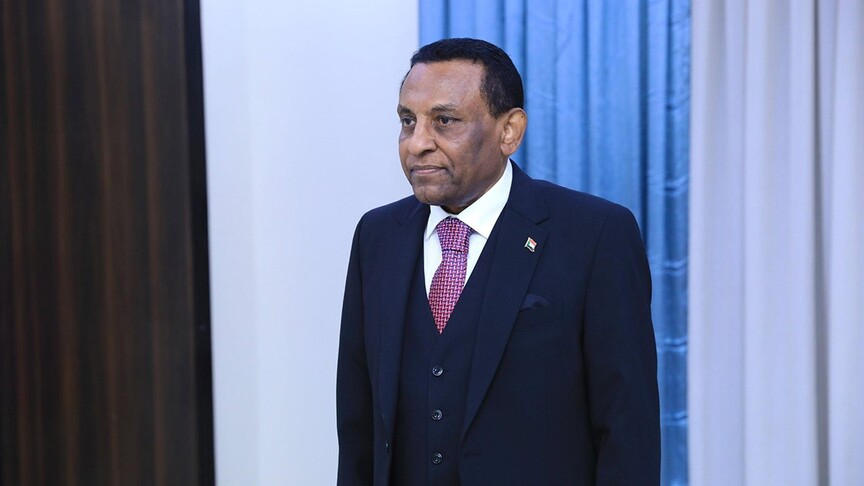
Foreign Minister Mohi-Eddin Salem described the AU delegation's visit as historic, coming after Khartoum's liberation, the defeat of the RSF militia, and the restoration of security. [1] The meeting included a documentary on RSF crimes and violations. [1] Algeria's Permanent Representative to the AU, Ambassador Mohamed Khaled, reaffirmed the Peace and Security Council's solidarity with Sudan, commitment to restoring security and stability, respect for sovereignty, unity, and non-interference. [1] Sudanese Prime Minister Kamil Idris stated that a national dialogue will begin soon to pave the way for comprehensive reconciliation and elections, as the army advances on the ground in Kordofan. [3]
Reopening of AU Liaison Office
The AU's return aims to provide on-the-ground technical support, maintain communication channels, enhance information exchange, and pressure parties toward dialogue, while navigating challenges of neutrality, security, and coordination with existing mediation efforts such as the Quintet and intra-Sudanese dialogue. [2] The liaison office was established to advance the 2005 peace agreement that ended over two decades of war between North and South Sudan. [2] The 2003-2006 Darfur war and South Sudan's secession in 2011 led to the office's mandate being extended following the formation of two AU high-level panels on Darfur, and on Sudan and South Sudan. [2] Since May 2019 the office has been led by the AU Commission Chairperson's Special Representative to Sudan, Ambassador Mohamed Belaiche. [2] After the coup in April that year that toppled Omar al-Bashir, it facilitated meetings between transitional authorities, AU officials and political and civil society groups, culminating in the August 2019 power-sharing agreement. [2]
{IMAGE_2}
Challenges Facing AU Engagement
The AU and many international and regional organisations withdrew their staff in April 2023 when fighting erupted in Khartoum. [2] AU personnel were relocated to its headquarters in Addis Ababa, forcing the organisation to conduct virtual shuttle diplomacy with Sudan's warring parties. [2] Belaiche visited General Abdel Fattah al-Burhan, head of Sudan's Sovereign Council and chief of the Sudanese Armed Forces, on 8 July to discuss reopening the office. [2] To avoid being seen as partisan, the AU needs political backing from all sides, not just the Sovereign Council. [2] The plethora of armed groups, civilian and political actors, requires nuanced consultations and support to validate the AU's approach to the Sudanese conflict. [2] The AU is engaged in multiple mediation efforts to stabilise Sudan, which may be jeopardised if its position is perceived as negatively affecting peace processes. [2] These include mainly the Quintet and the AU's intra-Sudanese dialogue between the warring parties' political wings, namely the SAF-led transitional government and the Sudan Founding Alliance (Tasis), which is allied with the Rapid Support Forces. [2] Al-Burhan recently announced a national dialogue facilitated by an independent mechanism. [2] After the SAF recaptured Khartoum in April 2025, the transitional government has sought to rebuild the capital, yet there are significant limitations in water, electricity and internet services. [2]
Sudanese Government Plans for Dialogue and Reconciliation
Sudanese Prime Minister Kamil Idris stated that a national dialogue will begin soon to pave the way for comprehensive reconciliation and elections, as the army advances on the ground in Kordofan. [3] Foreign Minister Mohi-Eddin Salem affirmed Sudan's welcome of the visit by the delegation of African Union ambassadors and members of the African Peace and Security Council to Khartoum, noting that the visit followed the liberation of Khartoum, the defeat of the terrorist militia, and the restoration of security and stability to the capital. [1] The Foreign Minister said the visit was historic in every sense, allowing the delegation to witness firsthand the scale of the destruction caused by the Rapid Support Forces militia. [1] The meeting included symbolic participation by representatives of some political forces and parties. [1] Algeria's Permanent Representative to the African Union and Chairperson of the African Peace and Security Council for the current month of August, Ambassador Mohamed Khaled, affirmed the African Union's solidarity with Sudan and the Sudanese people. [1]
{IMAGE_3}
Regional Spillover and Cross-Border Tensions
The Sudanese conflict has regional dimensions, with mutual accusations between Sudan and Ethiopia over support for opposing factions including the RSF and TPLF, recent border clashes in western Tigray that spilled into Sudan, and risks of escalation involving Eritrea and Gulf actors. [4] On August 1, clashes erupted in the Shererina area of western Tigray, near the Sudanese border, between forces of the Tigray People's Liberation Front and Ethiopian federal forces. [4] Heavy artillery and drones were used in the fighting. [4] Shelling also crossed into Sudan, hitting refugee camps on Sudanese territory and resulting in an unspecified number of casualties, according to the Sudanese Interior Ministry and Commission for Refugees. [4] After a day of clashes, the fighting subsided, but an unspecified number of civilians and wounded TPLF fighters fled towards Sudan and are now receiving treatment in hospitals in eastern Sudan. [4] On August 10, an Ethiopian army drone hit a secondary school and nearby riverbed in Merewa, killing three TPLF fighters and injuring seven others. [4] Sudanese authorities have accused the Addis government of arming and training the Rapid Support Forces within its territory, while the TPLF claims the RSF participated in this month's fighting in western Tigray. [4] In February, Reuters, citing sources and satellite imagery, revealed a secret camp in Ethiopia's Benishangul-Gumuz region, which it said was being used to train an estimated 4,300 RSF fighters. [4]
Prospects for AU Role in Peace Process
The AU's return aims to provide on-the-ground technical support, maintain communication channels, enhance information exchange, and pressure parties toward dialogue. [2] A physical presence offers unique benefits by securing the AU's role as the primary interlocutor in Sudan's peace processes and as the only Quintet member with a political presence on the ground. [2] The UN Integrated Transition Assistance Mission in Sudan closed in February 2024, and most diplomatic missions relocated their embassies to neighbouring countries, limiting direct information and exchange with Sudanese stakeholders. [2] The liaison office could enhance information exchange and exert new pressure on adversaries to commit to good-faith dialogue. [2] The AU could help coordinate a broad-based national convening, but only if it mitigates concerns of inclusivity and neutrality, and can leverage progressive and meaningful outcomes from the transitional, military-aligned government. [2] To be effective, the office needs a clear mandate and commitment to neutrality. [2] A presence on the ground allows the AU to meet with and integrate the voice and vision of all Sudanese actors. [2] The transitional government could also benefit from the AU's return as continental and international diplomatic recognition is paramount and is part of its strategy to defeat the RSF on all fronts. [2]
What to watch next: The AU liaison office may offer pathways for the transitional government to influence AU decisions while analysts note that regional alignments in the area do not form rigid blocs as key powers pursue distinct self-interested agendas involving Eritrea and Gulf actors.