Iran War Extends USS Abraham Lincoln Deployment to 250 Days at Sea as Ceasefire Expires
The U.S.-Iran ceasefire memorandum of understanding expires on August 17, 2026, with no extension agreed and uncertainty whether negotiations will resume, as the ongoing Iran war continues to strain U.S. military assets including the USS Abraham Lincoln, now at nearly 250 days at sea.
Expiration of U.S.-Iran Ceasefire Agreement
The 14-point MoU signed in June was intended to halt military operations for 60 days to allow negotiations on a permanent settlement covering the Strait of Hormuz, sanctions, Iranian oil exports, frozen funds and Tehran’s nuclear programme, but it began to unravel with mutual accusations of violations. [2] Iranian Foreign Minister Abbas Araghchi stated that Tehran has not decided on restarting negotiations, with only messages exchanged through mediators. [2] The expiration of the MoU does not necessarily mean fighting will immediately resume, but the lack of a clear extension and the absence of formal negotiations leave the ceasefire highly fragile. [2] Disputes over the status of Hormuz and the broader terms of the ceasefire have since become major obstacles to diplomacy. [2]
Strait of Hormuz Disruptions and Mediation
Shipping through the Strait of Hormuz has slowed sharply with no vessels passing on August 16 compared to 31 the prior week. [2] Iranian Foreign Minister Abbas Araghchi said Iran and Oman are negotiating a temporary route to facilitate the safe passage of vessels through the strait, which could eventually become a permanent arrangement. [2] He said, however, that the full reopening of Hormuz depends on conditions that Washington must meet. [2] President Donald Trump has said the United States would maintain control over the strategic waterway, while Washington has continued to press Tehran economically and militarily. [2] The uncertainty is also affecting global energy markets as Hormuz is a major route for oil and gas shipments. [2]

U.S. President Donald Trump meets with Iranian official Mojtaba in ceasefire negotiations. — Source: khaamapress
Conditions Aboard USS Abraham Lincoln
Twelve U.S. senators sent a letter to Defense Secretary Pete Hegseth criticizing the decision to start the Iran war as exacerbating poor conditions aboard the USS Abraham Lincoln, which has been deployed in the Middle East since November 2025 with reports of mental health crises, suicide attempts, supply shortages, water contamination and deteriorating living conditions. [1] Lincoln has spent nearly 250 consecutive days at sea without making land since its departure from San Diego in November 2025. [1] US military newspapers Navy Times and Stars and Stripes last week reported that several service members had attempted to jump overboard, citing concerned family members. [1] The senators argued in their letter that the situation on Lincoln was preventable and similar to issues USS Gerald R. Ford faced during its over 300-day deployment earlier this year. [1] The USS Lincoln was redirected to the Middle East as the Iran war began and has remained there as that war has dragged on with no clear endpoint. [1]
Congressional Demands for Answers
The senators presented Hegseth with a list of 12 questions about Lincoln's current status, living conditions, morale, and the health of its crew, as well as the well-being of the families of the service members onboard, and demanded written answers. [1] The letter was signed by US Committee on Armed Services Ranking Member and Senator Jack Reed (Rhode Island), Senator Gary C. Peters (Michigan), Senator Jeanne Shaheen (New Hampshire), Senator Mark Kelly (Arizona), Senator Tim Kaine (Virginia), Vice Chair of the Senate Appropriations Committee Patty Murray, Senator Richard Blumenthal (Connecticut), Senator Mazie K. Hirono (Hawaii), Senator Tammy Duckworth (Illinois), Senator Elissa Slotkin (Michigan), Senator Kirstin Gillibrand (New York), and Senator Angus S. King Jr (Maine). [1] Last week, Blumenthal sent his own letter to Hegseth and Acting US Navy Secretary Hung Cao about Lincoln. [1] Citing reports of supply shortages, water contamination, and several other issues that have arisen over the past months, Blumenthal granted the US Navy until August 27 to provide answers. [1] In his questions to the naval force, Blumenthal requested details on Lincoln’s extended deployment, how the Navy assesses the mental health and morale of its soldiers, and how it has worked to solve the quality-of-life problems reported on board the carrier. [1]
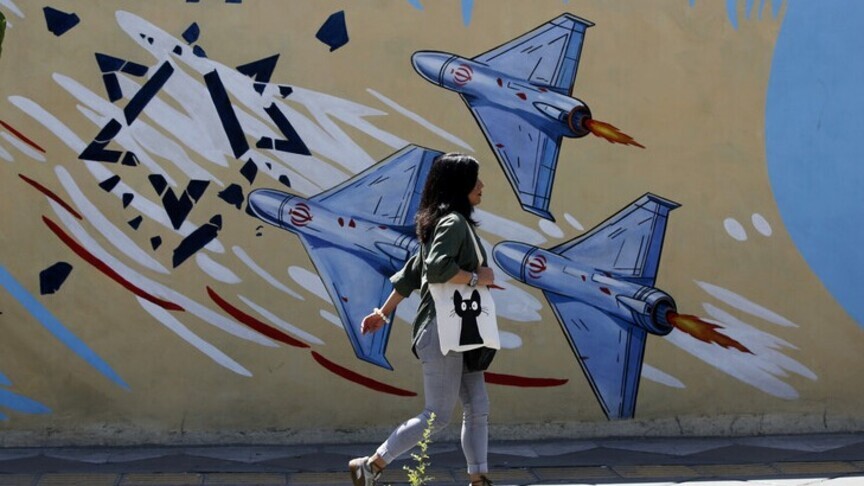
Iranian Foreign Minister Abbas Araghchi criticizes Canada's involvement in US operations against Iran. — Source: anadolu
Regional Aviation and Economic Impacts
The war has caused long-term damage to Middle Eastern aviation, with IATA projecting a $4.3 billion net loss for regional airlines in 2026, reduced passenger demand, suspended flights by many European and Asian carriers, higher jet fuel prices 45.8 percent above the previous year, and a 46.5 percent drop in private jet traffic from Gulf countries. [4] The International Air Transport Association's (IATA) June outlook estimated that airlines operating from the Middle East will see a $7.2bn net profit in 2025 become a $4.3bn net loss in 2026. [4] Most major regional carriers have resumed operations, including Emirates, Etihad and Qatar Airways, but not at full capacity. [4] Emirates CEO Tim Clark told the Financial Times in June his planes were flying at three-quarters capacity. [4] Conversely, most European and Asian airlines' flights in the region remain suspended. [4] Air France expects to resume in late August and Lufthansa in September, while British Airways, Cathay Pacific and Singapore Airlines are all targeting late October. [4] Air Canada is not planning to resume before mid-January 2027. [4] The EU Aviation Safety Agency’s most recent bulletin advises operators to avoid the airspace of Bahrain, Kuwait, Qatar, the UAE and part of the Gulf of Oman until 31 August 2026. [4] Middle East cargo demand grew roughly a third slower than the rest of the industry’s, at 5.6 percent year on year, behind the global rate of 8.5 percent. [4] As of 10 August, overall private jet traffic originating in Gulf countries was down 46.5 percent since the war began. [4] Jet fuel prices fell 20 percent in June as Gulf oil flows temporarily improved, but remained 45.8 percent higher than a year earlier. [4]
Iranian Criticism of International Involvement
Iran has condemned Canada’s participation in the U.S.-led war, while Oman continues mediation efforts on a temporary maritime route through the Strait of Hormuz that could become permanent, though full reopening depends on conditions Washington must meet. [3] Iranian Foreign Ministry spokesman said Ottawa participates in the US-led unlawful war of choice against Iran, to appease Washington. [3]
What to watch next: Oman’s mediation efforts and the negotiations over maritime access through Hormuz could provide one of the few remaining channels for de-escalation, while the US Navy has until August 27 to respond to questions on the Lincoln deployment.