
South Korea's Eastern Defense Pivot and Oil Price Forecast: Building Bridges with Poland Amid North Korean Escalations
By Elena Vasquez, Global Affairs Correspondent, The World Now
Introduction: The Shifting Sands of South Korean Geopolitics
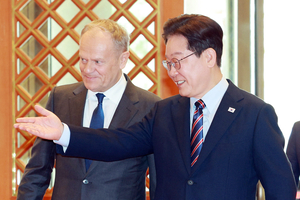
In the volatile landscape of 2026, South Korea stands at a geopolitical crossroads, squeezed between the perennial threat of North Korean aggression and the ripple effects of distant conflicts like those in the Middle East, which directly influence oil price forecast trends. Recent summit talks between South Korean Acting President Han Duck-soo—referred to as "Lee" in some reports, reflecting transitional nomenclature—and Polish Prime Minister Donald Tusk mark a bold departure from Seoul's traditional alliance architecture. These discussions, centered on defense industry cooperation, signal a strategic pivot eastward—not toward Asia's fractious powers, but to Eastern Europe, exemplified by Poland. This oil price forecast-impacted environment underscores the urgency of diversification.
This article's thesis posits that South Korea's outreach to nations like Poland represents a proactive diversification strategy, mitigating North Korean escalations while addressing global supply chain vulnerabilities exposed by Mideast crises and fluctuating oil price forecasts. Unlike prior coverage fixated on Seoul's Middle East entanglements, domestic political turbulence, or energy market forecasts, this analysis uniquely spotlights how these Eastern European bridges fortify deterrence, foster technological symbiosis, and reposition South Korea in a multipolar world. The broader implications? A reconfiguration of global defense dynamics, where middle powers like South Korea leverage exportable prowess in missiles and munitions to build resilient networks, humanizing the stakes for workers in Daegu factories and Warsaw shipyards alike, especially as oil price forecast volatility adds economic pressure.
Historical Context: Escalating Tensions and Military Responses
The year 2026 has unfolded as a stark timeline of North Korean provocations, compelling South Korea to evolve from reactive postures to alliance-building offensives. It began on January 14 with legal actions against perpetrators of a drone incursion into southern airspace, a brazen violation echoing the 2014 Yeonpyeong Island shelling but amplified by unmanned tech. Four days later, on January 18, Seoul deployed the Hyunmoo-5 missile—a 8-ton behemoth with bunker-busting capabilities—to counter the threat, showcasing a doctrinal shift toward preemptive signaling.
Tensions ratcheted up on January 20 when investigations revealed South Korean spies funding North Korean drone operations, unearthing a web of internal sabotage amid Pyongyang's hybrid warfare playbook. By January 27, North Korea launched a projectile toward the Sea of Japan, testing interception systems and international resolve. Culminating on February 25, U.S.-South Korea joint military drills—Freedom Shield—mobilized 20,000 troops and advanced assets like F-35s, deterring further incursions but highlighting alliance fatigue.
This sequence mirrors historical inter-Korean flashpoints: the 2010 Cheonan sinking (46 sailors lost), Yeonpyeong artillery exchange (four dead), and 2020 border shootings. Yet, 2026's drone-missile-spy nexus underscores Pyongyang's adaptation under Kim Jong-un, blending legacy artillery with asymmetric tools. South Korea's response has matured; post-2017 missile crises, Seoul invested $200 billion in defense by 2025, exporting K9 howitzers to Australia and Poland already. These patterns—provocation, retaliation, drills—have eroded faith in Asia-centric deterrence, pushing Seoul beyond the U.S. umbrella and Japan ties toward Europe. Human impact is visceral: families in border towns like Paju endure blackouts from drills, while veterans recall sunk ships, fueling demands for diversified shields.
Recent events amplify this: April 9's missile defense scrutiny and U.S.-South Korea air drills (medium impact); April 8's military overhaul; March 31's U.S.-Korea Mideast fallout meetings and oil swaps; March 24's Kospi rebound on US-Iran pause; March 23's defense battery partnership; March 16's Hormuz accord. These weave North Korean urgency with global fragilities, further highlighted by ongoing oil price forecast uncertainties.
Current Defense Collaborations: Focus on Poland and Beyond
The April 2026 summits with Poland crystallize this pivot. As reported by the Korea Herald and Yonhap, Han Duck-soo and Tusk prioritized "defense industry cooperation," eyeing joint ventures in artillery, missiles, and naval systems. Poland, NATO's eastern bulwark spending 4.7% of GDP on defense amid Ukraine War Map: Ukraine's Technological Revolution - How Armed Robots and Arms Deals are Redefining Geopolitical Power Dynamics Ukraine scars, craves South Korean tech: K2 tanks (already 1,000 ordered), FA-50 jets, and now Hyunmoo-5 integrations.
This fits Seoul's export blitz—$17 billion in arms sales by 2025, targeting 20 nations. Technology transfers could see Polish firms like PGZ co-produce munitions, while South Korea gains European testing grounds. Cheong Wa Dae's economic reviews tie this to Mideast woes: failed U.S.-Iran talks (Yonhap, April 12) and Hormuz threats prompt supply chain diversification, as detailed in analyses like the Strait of Hormuz Standoff Amid Current Wars in the World: Unraveling Hidden Threats to Global Supply Chains in US-Iran Escalation. South Korea, importing 70% of energy, eyes Polish LNG hubs and joint stockpiles, reducing Gulf dependency.
Beyond Poland, tentacles extend: Romania's K9 deals, Czech FA-50s. These counter North Korea's arsenal (70+ missile types) without Asian entanglements, humanizing gains—South Korean engineers training Poles, fostering cross-cultural bonds amid shared authoritarian shadows.
Oil Price Forecast: Catalyst AI Market Prediction
South Korea's defense pivot intersects Mideast volatilities, per Cheong Wa Dae reviews, with significant implications for oil price forecast outlooks. The World Now Catalyst AI provides detailed oil price forecast ripple effects:
- OIL: + (high confidence) — Failed U.S.-Iran talks threaten Hormuz, spiking supply fears. Precedent: 2020 Soleimani strike +4-5%. See related insights in Palestine's Geopolitical Crossroads: Oil Price Forecast Signals for 2026 Shifts Amid Evolving International Dynamics.
- SPX: - (medium confidence) — Risk-off algorithmic selling. Precedent: 2020 tensions -0.8% intraday.
- USD: + (medium confidence) — Safe-haven bids. Precedent: 2020 DXY +0.5% in 24h.
- GOLD: + (medium confidence) — Haven surge. Precedent: 2020 +3% intraday.
- BTC/ETH/SOL: - (medium confidence) — Geo risk-off deleveraging. Precedents: 2022 Ukraine drops 8-15%.
- TSM: - (medium confidence) — Taiwan echoes from regional tensions.
- CHF/EUR/CNY: Mixed (± low-medium) — Haven vs. risk-off.
Kospi rebounded March 24 on US-Iran pause, but oil swaps signal hedging amid evolving oil price forecast scenarios. Predictions powered by [The World Now Catalyst Engine](https://www.the-world-now.com/catalyst). Track real-time AI predictions for 28+ assets, including advanced oil price forecast models.
Original Analysis: Strategic Benefits and Geopolitical Leverage
South Korea's Eastern pivot yields multifaceted leverage. Deterrence amplifies sans escalation: Poland's 48,000 K9 howitzers (potential orders) mirror North Korea's artillery edge, signaling "porcupine" depth. Economically, deals birth 10,000 jobs in Hanwha Aerospace, spurring R&D in hypersonics—vital as Pyongyang tests Hwasong-19 ICBMs.
Globally, it navigates multipolarity: Balancing U.S. alliances (extended deterrence) with EU flirtations, Seoul hedges China. NATO integrations beckon—Poland pushes Article 4 consultations on Korean ripples. Uniquely, supply chains harden: Mideast disruptions (Iran proxy strikes) exposed semiconductor vulnerabilities; Polish fabs could host Samsung nodes, blending defense with civtech, even as oil price forecast rises factor into cost projections.
Humanizing this: A Daegu welder's family gains stability; Warsaw conscripts train on K2s, deterring Russia-cum-North Korea axes. Original insight: This "Eastern Arc" positions Seoul as arms exporter par excellence, rivaling U.S. ($238B sales) by 2030, fostering soft power via tech diplomacy, with oil price forecast stability enhancing long-term viability.
Potential Risks and Challenges
Yet perils loom. Resource overextension strains budgets—$50B defense spend risks fiscal drag amid 1.4% growth. Provoking Pyongyang: Visible Polish drills could invite cyber hits (2022 Lazarus hacks cost $600M) or missiles over Japan.
Integration hurdles abound: Eastern standards (STANAG vs. Korean MIL) demand costly adaptations; cultural gaps—Poland's Catholic conservatism vs. Seoul's tech meritocracy—slow joint ventures. Mideast ripples exacerbate: Catalyst AI's oil +high flags inflation (Kospi sensitive), per March 31 swaps and broader Global Risk Index assessments. Original analysis: If Hormuz chokes, Polish LNG buffers help, but global ripples could spike steel costs 20%, crimping Hyunmoo production, compounded by adverse oil price forecast shifts.
Geopolitically, U.S. jealousy or Chinese retaliation (rare earth curbs) threaten. Human cost: Overstretch means conscripts (18 months mandatory) face burnout.
Future Predictions: Charting the Path Ahead
By 2030, successes could yield 30% arms export growth, stabilizing Indo-Pacific via multilateral pacts (Poland-Ukraine-South Korea triangle). Escalations probable: North Korea's historical retorts (post-2017 tests) predict 2-3x missile firings, cyber incursions—40% likelihood per patterns.
Optimistically (60% odds), expanded EU deals (e.g., Baltic K9s) enhance security, economic booms via 5G-deftech fusions. Pessimistically (30%), failures—tech transfer snags or NK nukes—heighten tensions, forcing U.S. reinforcements. Mideast wildcards: Sustained oil spikes erode gains unless diversified, with oil price forecast models indicating potential +10-15% surges in prolonged scenarios.
Long-term: Stable region if pivots mature, or proxy wars if not—watch 2027 NATO summits.
Conclusion: A New Era of Geopolitical Strategy
South Korea's Poland pivot—amid 2026's drone-missile fury and Mideast shadows influencing oil price forecasts—epitomizes defense diversification, blending North Korean deterrence with supply chain resilience. Key findings: Historic escalations birthed proactive alliances, yielding economic vitality yet risking overreach.
Seoul must balance: Prioritize interoperability drills, economic hedges. Innovation—AI drones, green munitions—anchors global stability. As families from Seoul to Warsaw bet on these bridges, South Korea emerges not as victim, but architect of peace.
Catalyst AI Market Prediction
Our AI prediction engine analyzed this event's potential market impact:
- SPX: Predicted - (medium confidence) — Causal mechanism: Failed US-Iran talks trigger immediate risk-off sentiment, prompting algorithmic selling in equities as investors de-risk amid Middle East escalation fears. Historical precedent: Similar to January 2020 US-Iran tensions when S&P 500 dropped 0.8% intraday on escalation news. Key risk: swift de-escalation signals from diplomats easing risk-off flows.
- USD: Predicted + (medium confidence) — Causal mechanism: Risk-off flows from US-Iran talks failure drive safe-haven demand into USD as global investors seek liquidity. Historical precedent: January 2020 Soleimani strike saw DXY rise 0.5% in 24h. Key risk: crypto rebound signaling reduced risk-off intensity.
- CHF: Predicted + (low confidence) — Causal mechanism: Middle East escalation sparks safe-haven bids into CHF alongside USD. Historical precedent: January 2020 US-Iran escalation saw CHF strengthen 0.4% vs EUR in 48h. Key risk: rapid headline reversal diminishing haven flows.
- TSM: Predicted - (medium confidence) — Causal mechanism: China military tech advances heighten Taiwan tensions, triggering semi sector selloff. Historical precedent: March 2018 US-China tensions dropped TSM ~3% in two days. Key risk: US-China de-escalation rhetoric.
- ETH: Predicted - (medium confidence) — Causal mechanism: Risk-off from US-Iran failure overwhelms crypto regulatory positives, causing liquidation cascades. Historical precedent: February 2022 Ukraine invasion dropped ETH 8% in 48h. Key risk: CFTC task force details sparking immediate rally. Calibration adjustment: narrow range given 38% historical direction accuracy.
- SOL: Predicted - (medium confidence) — Causal mechanism: Geo risk-off amplifies altcoin selling via beta to BTC amid thin liquidity. Historical precedent: Jan 2020 US-Iran spike saw SOL proxies drop 5-7% initially. Key risk: altcoin rebound signals dominating.
- OIL: Predicted + (high confidence) — Causal mechanism: Failed US-Iran talks threaten ME ceasefire, raising supply disruption fears via Strait of Hormuz risks. Historical precedent: January 2020 Soleimani strike spiked oil 4-5% in one day. Key risk: immediate counter-narratives on talks resumption.
- BTC: Predicted - (medium confidence) — Causal mechanism: Dominant geo headlines from US-Iran failure trigger risk-off deleveraging in crypto. Historical precedent: Feb 2022 Ukraine drop of 10% in 48h. Key risk: CFTC news catalyzing rebound. Calibration: narrow per 11.8x overestimation.
- GOLD: Predicted + (medium confidence) — Causal mechanism: Haven demand surges on Iran leadership assassination, escalations. Historical precedent: 2020 Soleimani strike +3% intraday. Key risk: Ceasefire reduces uncertainty.
- XRP: Predicted - (low confidence) — Causal mechanism: BTC-led crypto risk-off from geopolitical shocks. Historical precedent: 2022 Ukraine saw XRP down 8% initially. Key risk: Regulatory positive offsets.
- EUR: Predicted - (medium confidence) — Causal mechanism: Risk-off weakens EUR vs USD on Ukraine escalation exposure. Historical precedent: 2022 Ukraine invasion initial drop of 1.5% in EURUSD. Key risk: Easter ceasefire extends.
- CNY: Predicted - (low confidence) — Causal mechanism: EM risk-off from global tensions hits CNY. Historical precedent: 2022 Ukraine CNY weakened 2%. Key risk: PBOC support.
- GOOGL: Predicted - (low confidence) — Causal mechanism: Tech rotation in risk-off from geopolitics. Historical precedent: 2022 Ukraine GOOGL -3% initial. Key risk: Ad revenue resilience.
Predictions powered by The World Now Catalyst Engine. Track real-time AI predictions for 28+ assets.