
Strait of Hormuz Standoff Amid Current Wars in the World: The Overlooked Humanitarian Crisis Fueling Iran-US Tensions
By the Numbers Amid Current Wars in the World
The Strait of Hormuz blockade's ripple effects are quantifiable, blending economic shocks with profound human costs:
- Oil Market Surge: U.S. benchmark crude jumped 8% to over $100 per barrel post-talks collapse (Channel News Asia), with Brent futures spiking similarly. The strait handles 21 million barrels daily—about 20% of global oil consumption (EIA data).
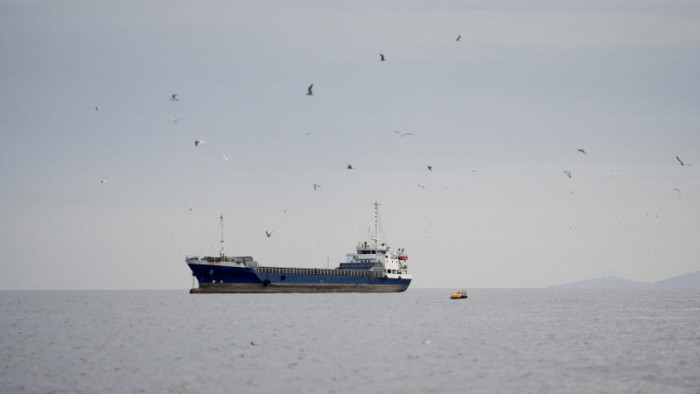
- Shipping Disruptions: Over 50 oil tankers have rerouted away from Hormuz since Trump's announcement, a 30% drop in transits (Bangkok Post). Civilian cargo vessels, including fishing fleets, report 40% reduced operations in the past 48 hours.
- Humanitarian Impacts: Iran's Hormuzgan province (pop. 1.8 million) relies on fishing for 20% of livelihoods; preliminary reports indicate 15,000 fishermen idled, with catches down 60% due to no-go zones (local Iranian media echoes in Iran International). Neighboring UAE and Oman communities (affecting 2.5 million) face fuel rationing, with gasoline prices up 25%.
- Economic Fallout: Asian markets plunged—Seoul's KOSPI down 2.5% (Yonhap), Nikkei futures -1.8% (Middle East Eye)—while Gulf economies lose $500 million daily in trade (Global Risk Index; World Bank estimates adapted for strait disruptions).
- Population at Risk: 10 million live in direct coastal zones (UN OCHA); supply chain halts could impact 50 million across Iran and Gulf states via food imports (40% of Iran's wheat via Hormuz routes).
- Historical Precedent Scale: Mirrors 2019 Aramco attacks (oil +15%) but with blockade permanence, potentially doubling 1980s Tanker War losses (1,200+ disruptions).
These figures underscore not just market volatility but a creeping crisis for ordinary people, where geopolitics amid current wars in the world translates to empty markets and stranded boats.
What Happened
The blockade stems from a whirlwind of escalations rooted in March 2026 tensions. On March 27, U.S.-Iran frictions ignited over alleged Iranian provocations in the strait, including vessel harassment amid a fragile Middle East ceasefire tied to Lebanon and broader regional wars as detailed in Amid Current Wars in the World: Iran War Escalates as UN Struggles to Enforce International Law. By March 29, internal Iranian regime rifts surfaced—IRGC hardliners clashed with moderates—coinciding with Indonesia securing its vessels in Hormuz amid rising threats. That same day, Tehran accused Washington of plotting attacks on its shipping, prompting U.S. denials.
Escalation peaked March 30 when Trump threatened outright seizure of Iranian oil cargoes, framing it as enforcement against ceasefire breaches. Fast-forward to early April: U.S.-Iran talks on April 11-12 in Oman focused on Hormuz access and Lebanon war de-escalation but collapsed by April 13, with Iran rejecting concessions (France 24, Guardian live updates). Trump then declared the blockade operational "Monday," deploying U.S. Navy carriers and destroyers to enforce a no-sail zone for Iranian-flagged vessels.
Immediate civilian fallout emerged within hours: Fishermen in Bandar Abbas reported U.S. patrols scattering fleets, stranding 200+ dhows (local reports via Middle East Eye). Oil tankers, fearing interdiction, began "steering clear" (Bangkok Post), halting 20% of Gulf exports. Iran responded defiantly, warning the move violates the ceasefire while keeping "diplomacy's door open" (Iran International). Tehran hinted at asymmetric retaliation, like mining the strait ("Game on," Middle East Eye). Experts call it a "major military endeavor" requiring 50+ U.S. warships (Channel News Asia).
This chronology reveals a predictable spiral: from rhetorical salvos to physical blockades, now ensnaring civilians caught in the crossfire.
Historical Comparison
The current standoff echoes the Iran-Iraq "Tanker War" (1980-1988), where Hormuz disruptions sank 400+ vessels, killing hundreds and spiking oil 300%. Then, as now, civilians bore the brunt—1984 saw Iranian fishermen lose 70% of yields, mirroring today's idled fleets. Post-2019 Aramco drone strikes, oil jumped 15% in a day (paralleling this week's +8%), but lacked a full blockade; Saudi losses hit $100 billion annually, with Yemeni refugees surging 20%.
January 2020's Soleimani assassination offers closer parallels: Strait tensions drove oil +4-5%, tankers rerouted 25%, and Gulf fishing halved temporarily—much like now. Yet 2026's context is graver: Unlike 1980s bilateral war, this overlays U.S.-Iran nuclear ghosts, Lebanon proxy fights, and Trump's "maximum pressure 2.0." Patterns emerge—rapid tit-for-tat (March 27-30 timeline mirrors 1987 U.S. reflagging)—often yielding unintended civilian suffering. Past incidents (e.g., 2008 U.S.-Iran naval clash) de-escalated via Oman mediation, but prolonged blockades historically birthed refugee waves: 1980s displaced 500,000 Gulf coastal dwellers. Today's humanitarian blind spot risks repeating this, as media fixates on oil over people.
Catalyst AI Market Prediction
The World Now's Catalyst AI engine, analyzing failed talks and blockade risks, forecasts sharp risk-off moves (high confidence on oil). Key predictions:
- OIL: + (high confidence) — Failed US-Iran talks threaten ME ceasefire, raising supply disruption fears via Strait of Hormuz risks. Historical precedent: January 2020 Soleimani strike spiked oil 4-5% in one day. Key risk: immediate counter-narratives on talks resumption.
- SPX: - (medium confidence) — Failed US-Iran talks trigger immediate risk-off sentiment, prompting algorithmic selling in equities as investors de-risk amid Middle East escalation fears. Historical precedent: Similar to January 2020 US-Iran tensions when S&P 500 dropped 0.8% intraday. Key risk: swift de-escalation signals.
- USD: + (medium confidence) — Risk-off flows drive safe-haven demand. Precedent: 2020 Soleimani DXY +0.5% in 24h.
- GOLD: + (medium confidence) — Haven demand on escalations. Precedent: 2020 +3% intraday.
- BTC/ETH/SOL: - (medium confidence) — Geo risk-off triggers deleveraging. Precedents: 2022 Ukraine drops of 8-15%.
- TSM: - (medium/low confidence) — Taiwan tensions spillover.
- CHF/EUR/CNY: Mixed safe-haven/weakness (low-medium confidence).
Predictions powered by Catalyst AI — Market Predictions. Track real-time AI predictions for 28+ assets. See related analysis in Middle East Strike Deepens: Geopolitical Analysis via 3D Globe and Catalyst Predictions for Oil and Forex Volatility.
These align with observed surges (oil >$100) but highlight humanitarian underpricing: Civilian disruptions could amplify volatility if refugee flows spike energy premiums.
What's Next
Prolonged blockade risks a Gulf refugee crisis, with 1-2 million displaced from coastal Iran/Oman/UAE if fishing/trade halts persist beyond two weeks—echoing Syrian waves post-2011, as warned in the Global Risk Index. UN aid corridors (via Indonesia's precedent) or Qatar mediation could emerge, but IRGC retaliation—swarm boats or mines—looms (Middle East Eye). Diplomatic triggers: Oman talks resumption (April 12 precedent) or Trump's "truce gains" rhetoric. For deeper insights, explore the Strait of Hormuz Standoff Amid Current Wars in the World: Unraveling Hidden Threats to Global Supply Chains in US-Iran Escalation.
Economically, oil could hit $120 if 10% supply offline, fueling inflation; socially, Iranian food riots (grim economy per April 11 reports) and migration to Turkey/Pakistan. Optimistic: U.S.-Iran backchannel yields Hormuz "humanitarian lane." Pessimistic: Full closure sparks 1990s-style war. Watch UNSC sessions, tanker trackers, and IRGC statements—civilian protections must prioritize to avert catastrophe.
Original analysis reveals the human toll: In Hormuzgan, fishermen like those in Bandar Abbas—families of five on $200/month—face starvation as dhows rot. Disrupted chains hit 40% of Iran's imported medicine/food, risking health emergencies (diabetes surges sans insulin). Geopolitics masks this: Oil traders profit while millions suffer, critiquing global myopia. This could reshape alliances—Indonesia/India pushing neutrality—pressuring negotiations to safeguard lives over tankers. In the broader landscape of current wars in the world, such humanitarian crises in the Strait of Hormuz underscore the urgent need for de-escalation to prevent further global ripple effects.
This is a developing story and will be updated as more information becomes available.