
Russian Strike Kills 12 in Kyiv Region as Missiles Hit Residential Building and Railway Depot
Russian forces launched a massive overnight strike using missiles and drones on Kyiv and its surrounding region, killing at least 12 civilians including an Indian national and wounding dozens more.
Casualties and Immediate Impact in Kyiv Region
The attack damaged a residential building in Boryspil, a railway depot in Kyiv, fuel infrastructure, and non-military sites across multiple districts of the capital. [3] [4] Among the 12 civilians killed, four were in a residential building in Boryspil, about thirty kilometres from the capital. [3] In Boryspil, four people were killed and 13 others injured after a five-storey residential building was hit. [3] The Kyiv-region strike killed at least eight people and injured seven in the capital itself, including three children. [4] Seven people were killed in a ballistic missile strike on a railway depot in Kyiv, including six railway employees. [3] The attack on the Kyiv region also damaged a fuel station, where one person was reported killed, and caused fires at various points. [4] In Boryspil, rescuers evacuated 48 people and freed two from rubble. [4] Damage to non-military infrastructure was recorded in five districts of Kyiv: Holosiivskyi, Darnytskyi, Dniprovskyi, Sviatoshynskyi and Solomianskyi. [4] The strikes formed part of six consecutive nights of Russian attacks on the area. [4]
Damage to Odesa Power Plant
Russian strikes also hit the Odesa Combined Heat and Power Plant, damaging main and auxiliary equipment. [1] Russian forces attacked the Odesa CHP plant of the Naftogaz Group with missiles and drones. [1] Naftogaz stated that some of the main and auxiliary equipment was damaged and that debris removal was ongoing. [1] The company said a full assessment of the plant’s condition would be carried out once debris had been cleared and that it was coordinating with emergency services and local authorities. [1] Russian forces have also attacked the Kherson CHP plant with guided aerial bombs, completely destroying and disabling all remaining heat- and power-generating equipment. [1]
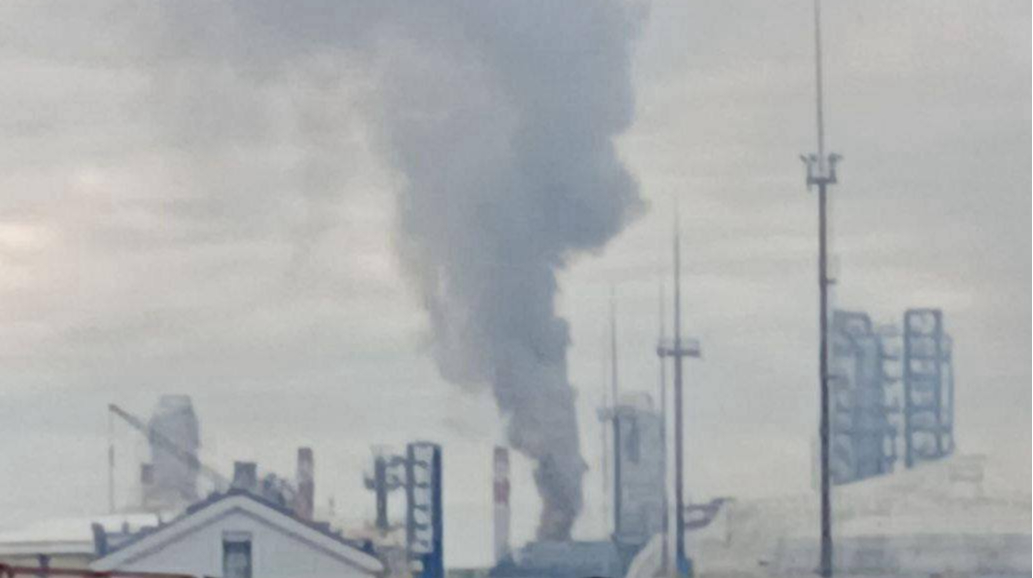
Russian strike damaged residential building and railway depot in Kyiv region. — Source: ukrainskapravda
Ukrainian Strike on Russian Oil Facility
Ukraine's Defence Intelligence conducted a retaliatory strike on the Novatek-Ust-Luga oil refinery and port in Russia's Leningrad Oblast, causing a large fire and hitting key processing units. [2] Ukraine’s Defence Intelligence confirmed that the Novatek-Ust-Luga oil refinery and port was struck on the morning of 1 September. [2] Operators from the Active Operations Department and the Unmanned Systems Department of the Defence Intelligence struck the facility as part of a joint deep-strike operation. [2] Key components of the oil processing unit and technological equipment were hit, and the attack caused a large-scale fire at the plant. [2] The Novatek-Ust-Luga production and export complex is designed for the fractionation and processing of stable gas condensate with a capacity of almost 8 million tonnes of feedstock per year. [2] The facility is involved in supporting Russia’s war against Ukraine. [2] Ust-Luga is one of Russia’s largest commercial seaports on the Baltic Sea and has repeatedly been targeted by drone attacks, with significant volumes of strategic cargo including oil, petroleum products, coal and mineral fertilisers passing through the port. [2] The port area includes major industrial and transshipment facilities operated by Russian companies Novatek and EuroChem. [2] Units of Ukraine’s defence forces had previously hit the Novatek-Ust-Luga facility on the night of 13-14 August, causing a large fire. [2] The governor of Russia’s Leningrad Oblast later confirmed the attack and the fire. [2]
Russian Claims and Justification
Russia claimed the Ukrainian strikes targeted military-industrial and energy facilities supplying the Ukrainian armed forces. [3] Moscow stated it had bombarded enterprises of the military-industrial complex and the energy sector in Kyiv and its region, involved in the production of missile systems, unmanned systems and their components, as well as in supplying fuel to the Ukrainian armed forces. [3] Russian forces also struck a locomotive depot in a district of the capital. [3] The ministry announced attacks on infrastructure in the Ukrainian ports of Odesa and Chornomorsk. [3]
Broader Context and International Response
The Kyiv-region strike is part of six consecutive nights of Russian attacks, occurring as EU defence ministers meet to discuss air-defence support for Ukraine. [3] [4] EU defence and foreign ministers met in Ireland amid a resurgence of hybrid attacks attributed to Russia and massive strikes against Ukraine. [3] The EU foreign policy chief stated that hybrid attacks by Russia would not deter the European Union from supporting Ukraine. [3] She said Russia was targeting Europe through a growing wave of hybrid attacks and was seeking to dissuade allies from helping Ukraine. [3] EU ministers discussed the supply of missile interceptors to Ukraine, noting that some countries hold interceptors nearing expiration that could be donated. [3] Russian forces gained some 90 square kilometres of territory in Ukraine during August, an increase from 38 square kilometres in July and 30 square kilometres in June. [3] The EU described the presence of the Russian finance minister at the G20 meeting organised by the United States as inappropriate. [3]
Conditions in Frontline Areas
Daily life in Kramatorsk involves constant vigilance under frequent Russian air strikes. [5] Russian FPV drones attack people and vehicles every day, and fibre-optic cables from these drones are scattered across streets, sometimes tangling around people’s feet. [5] Shards of glass and metal and burned-out cars remain visible, with traces of blood occasionally seen on asphalt. [5] Almost no homes in the city have escaped damage, with facades marked by strikes, shattered windows and destroyed roofs. [5] Russian attacks have forced shops and cafés to close, businesses to relocate and families with children to evacuate, while rail services to the city have been suspended. [5] Many residents remain because they have no relatives or homes in safer regions and lack savings to start anew elsewhere. [5] Kramatorsk and neighbouring Sloviansk play a key role in the defence of northern Donetsk region, and their capture would allow Russian forces to push further west. [5]
What to watch next: EU defence ministers will continue discussions on supplying additional air-defence interceptors to Ukraine while Russian forces maintain pressure on frontline cities such as Kramatorsk.