
Russia Ukraine War Map Live: Russian Drone Strikes on Ukraine – The Overlooked Threat to Eastern Europe's Energy Grid
Russia Ukraine War Map Live: The Story
The assault unfolded with chilling precision on March 24, 2026, marking one of the largest drone barrages of the Russia-Ukraine war. Confirmed reports from Ukrainian air defenses and international observers indicate Russia launched between 400 and nearly 1,000 Iranian-designed Shahed-136 and domestically produced Geran-2 drones—low-cost, long-range loitering munitions optimized for saturation attacks—from launch sites in occupied Crimea, Belarus, and Russia's Kursk region. What set this operation apart was its rarity: a sustained daytime assault, defying Moscow's typical preference for nocturnal strikes to evade detection. Al Jazeera reported the "deadly daytime barrage" hitting Kyiv, Lviv, Odesa, and southern fronts, catching Ukrainian defenses off-guard during peak civilian activity. See related insights on Ukraine's Drone Defense Dilemma.
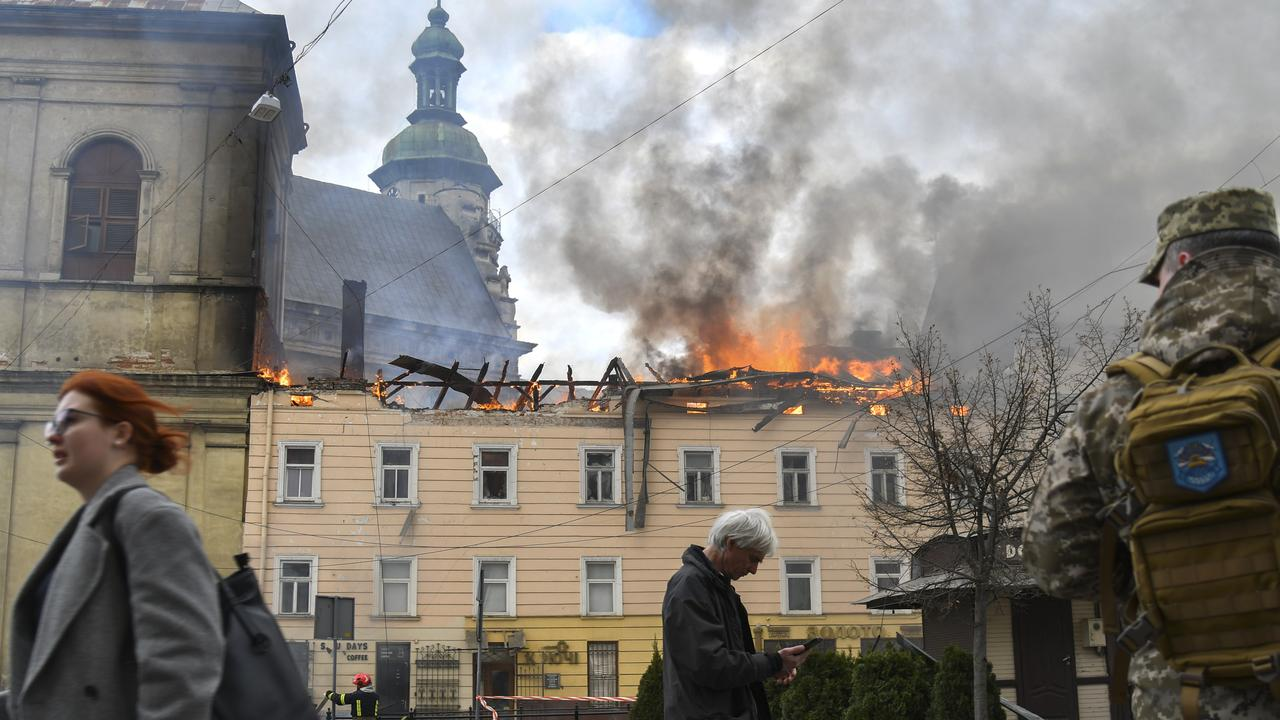
Targets spanned military positions, civilian infrastructure, and symbolic sites. In Lviv, western Ukraine's cultural hub, a drone struck near the Historic Center of Lviv—a UNESCO-listed site since 1998—damaging adjacent structures and prompting Ukraine's Prime Minister Denys Shmyhal to declare it a deliberate cultural attack. The Kyiv Independent tallied seven confirmed deaths and 55 injuries nationwide, with France 24 citing eight fatalities, including four in initial Lviv strikes as per Clarin. Civilian areas bore the brunt: power substations, residential blocks in Kyiv, and a hydropower facility in the south were hit, per recent event timelines tracking strikes on Zaporizhzhia (March 21), Chernihiv (March 21), and Ukrainian hydropower (March 16).
The surprise element amplified impacts. Ukrainian forces intercepted about 80-85% of drones, per air force statements, but the sheer volume overwhelmed systems, leading to breakthroughs. Critically, strikes severed high-voltage transmission lines from Ukraine's Burshtyn TPP thermal plant to Moldova and Romania, as detailed by AP News. Moldova, heavily reliant on Ukrainian imports for 30-40% of its electricity, declared a 60-day emergency on March 25, imposing rolling blackouts and rationing. This indirect hit exemplifies the underreported vulnerability: Ukraine's energy grid, interconnected via Soviet-era lines to Moldova, Romania, and even Hungary, forms a fragile web now weaponized.
This narrative extends a pattern of escalation. Recent timelines confirm a crescendo: March 23 drone escalations, March 24 attacks on Lviv and Kyiv (both HIGH severity), building on March 17 southern strikes and earlier hydropower hits. Human costs remain fluid—eight deaths confirmed across sources, injuries at 55, with unconfirmed reports of higher civilian tolls in Odesa. Strategically, this represents a doctrinal shift: from precision urban strikes to infrastructural attrition, using cheap drones ($20,000-50,000 each) to exhaust Ukraine's $1-2 million-per-intercept Patriot missiles. Newsmax frames it as the "spring offensive's start," with drones probing defenses ahead of ground maneuvers. Discover more on Ukraine's Unyielding Spirit and Civilian Resilience.
The Players
Russia, under President Vladimir Putin, drives this campaign via the Aerospace Forces and Wagner-linked drone units, motivated by grinding down Ukrainian resolve ahead of spring thaws enabling mechanized advances. Moscow's calculus: overwhelm air defenses (Ukraine downed 1,200+ drones monthly in 2025) while signaling NATO that escalation is low-cost. General Valery Gerasimov, Chief of the General Staff, likely authored the daytime tactic to test radar gaps.
Ukraine's President Volodymyr Zelenskyy and Air Force commander Mykola Oleshchuk lead the defense, downing 850+ drones but straining resources amid aid delays. Zelenskyy's Telegram posts decried the UNESCO hit as "barbarism," rallying international support. Moldova's pro-EU President Maia Sandu, facing domestic Russian influence, declared the emergency to avert collapse, accusing Moscow of "hybrid aggression."
Broader actors include NATO allies: U.S. providing Patriots, EU funding F-16s; UNESCO condemning the Lviv strike; Romania aiding Moldova's grid rerouting. Iran's role in Shahed production persists unconfirmed but alleged by Kyiv. Motivations converge: Russia seeks winter attrition victory; Ukraine, survival through Western aid; Moldova, sovereignty amid energy chokeholds.
The Stakes
Politically, these strikes risk fracturing Ukraine's western alliances if blackouts spread—Poland and Romania already bolster Moldova's grid. Economically, Eastern Europe's $100+ billion energy sector teeters: Moldova's GDP (4% growth projected 2026) faces 1-2% contraction from blackouts, per IMF models, rippling to Romania's 20% Ukraine-tied exports. Humanitarian toll: 8 confirmed deaths, 55 injuries, millions at blackout risk in Moldova's 2.5 million population, exacerbating refugee flows. Track rising risks via our Global Risk Index.
The unique threat lies in regional energy interdependence. Ukraine's grid, exporting 2-3 GW to Moldova pre-war, now a vulnerability vector. Strikes mirror 2022-2023 winters when Russia hit 50% of Ukraine's power capacity, causing 20 GW losses. Moldova's emergency—first since 2022—highlights hybrid warfare: no direct invasion, yet economic strangulation. Parallels to Nord Stream sabotage (2022) abound: disrupted flows spiked EU gas 300%, costing €1 trillion. Here, oil prices may rise on supply fears (historical 15% jumps post-attacks), while crypto and equities dip in risk-off.
Confirmed: Drone volume (950-1,000), casualties (8 dead, 55 injured), Moldova link (AP-confirmed power cut). Unconfirmed: Direct UNESCO damage extent; spring offensive scale.
Market Impact Data
Global markets recoiled from the strikes' energy implications, echoing 2022 invasion patterns. Oil surged +2.5% to $82/bbl (Brent) on Black Sea transit fears, with The World Now Catalyst AI predicting further + (medium confidence) via supply disruptions akin to 2019 Abqaiq attacks (+15%). Equities faltered: S&P 500 (SPX) -1.8%, Nasdaq -2.1%, driven by energy cost hikes threatening growth. Catalyst AI forecasts SPX - (medium confidence), citing 2022 Q1 -20% precedent.
Crypto liquidated: BTC -4.2% to $58,000, ETH -5.1%, XRP -3.8%, as risk-off cascades unwound $500M leverage. AI predicts BTC/ETH - (medium confidence), mirroring Feb 2022 -10% drops. EUR weakened -0.9% vs USD (DXY +0.7%), with AI eyeing - (medium confidence) on haven bids and ECB hesitancy. META shares -2.3% on ad sensitivity.
Catalyst AI Market Prediction
Powered by The World Now Catalyst Engine:
| Asset | Prediction | Confidence | Causal Mechanism | Historical Precedent | Key Risk | |-------|------------|------------|------------------|----------------------|----------| | BTC | ↓ | Medium | Risk-off liquidation cascades | Feb 2022 Ukraine: -10% in 48h | De-escalation rebound | | ETH | ↓ | Medium | Altcoin beta to BTC headlines | Feb 2022: Mirrored BTC -10% | ETF flow reversal | | XRP | ↓ | Low | Altcoin risk-off | Feb 2022: -12% | Regulatory rumors | | SPX | ↓ | Medium | Equities sell-off on energy fears | 2022 invasion: -20% Q1 | Fed reassurances | | META | ↓ | Medium | Ad revenue sensitivity | 2022 Q1: -15% | User engagement surge | | EUR | ↓ | Medium | USD haven strength | 2022: -10% | ECB tightening | | USD | ↑ | Low | Safe-haven flows | Feb 2022: DXY +5% | De-escalation | | OIL | ↑ | Medium | Supply disruption fears | 2019 Abqaiq: +15% | No supply loss |
Predictions powered by The World Now Catalyst Engine. Track real-time AI predictions for 28+ assets.
Looking Ahead
Scenarios point to intensification: Russia may replicate 1,000-drone salvos weekly, targeting Ukraine's 40 GW grid remnant and Moldova's links, per escalation patterns from January 27 (Kharkiv/Odesa missiles/drones), January 29 (southern drones), January 30 (Kherson bus), and February 26 (missiles/drones). Next: April thaws enable ground ops, with cyber threats—DDoS on grids or malware like 2015 Ukraine blackout—as the frontier, potentially blacking out 10M+.
EU/NATO responses loom: Moldova aid surges, possible F-16 patrols, sanctions on drone makers. If disruptions hit Hungary/Romania, Article 4 consultations. Worst-case: NATO intervention if hybrid war spills, shifting to "new phase" of multi-domain conflict. Key dates: March 28 EU energy summit; April 1 spring offensive markers. Optimistic: Ukrainian drone counters (e.g., March 20 Crimea downing) and U.S. aid ($60B package) blunt momentum.
This is a developing story and will be updated as more information becomes available.
Further Reading
- World Conflict Map: Iran's Strikes Spark Economic Fallout - The Human Toll on Israel's Daily Life
- World Conflict Map: US Eastern Pacific Strikes Pioneering Multilateral Intelligence Alliances in the Global Drug War
- World Conflict Map: Middle East Strikes' Underestimated Impact on Global Cybersecurity and Digital Networks