Pentagon Questionnaire Asks NATO Allies About Support for US Iran Policy
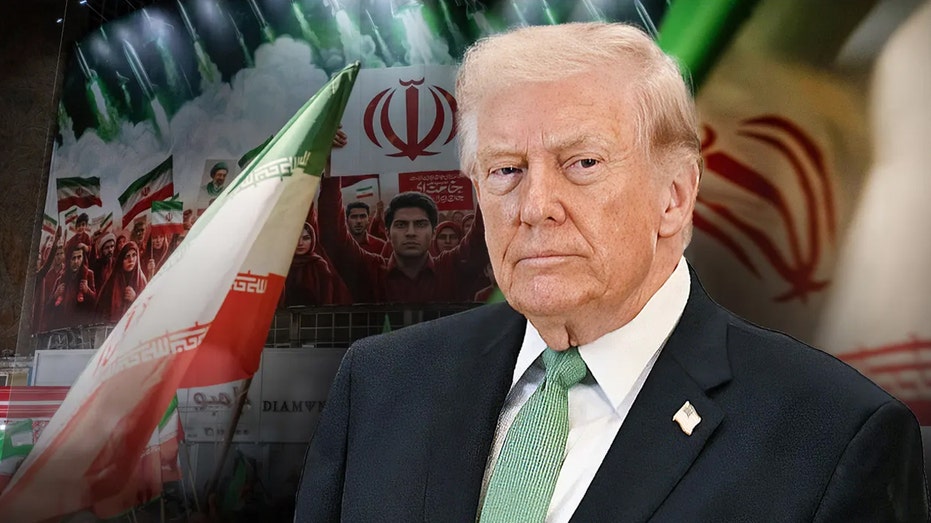
The Pentagon has distributed a questionnaire to NATO allies probing their political loyalty and alignment with US foreign policy priorities under President Donald Trump, including support for actions related to the war on Iran. This development highlights United States tensions over expectations for allied backing amid ongoing conflicts.
Pentagon Questionnaire Probes NATO Loyalty
The three-page document titled “Questions for NATO Allies & Other Key Stakeholders” asks whether allies have been publicly supportive of US foreign policy priorities and shown alignment with the US approach to being “strong, clear, and quiet,” a phrase used by Defense Secretary Pete Hegseth. [1] The markings on the document and the phrasing suggest the questions are meant to guide interactions between US officials and their NATO counterparts during an ongoing six-month Pentagon review of American forces in Europe. [1] The document was obtained from an official who received it, and Bloomberg News first reported on parts of the questionnaire. [1]
Focus on Restrictions Linked to Iran War
Questions address whether allies have placed restrictions on US access to bases and military flights, an issue that arose after several European countries imposed limits following the start of the US-Israel war on Iran on February 28, and inquire if they are willing to reduce or eliminate such restrictions. [1] Several European countries imposed such restrictions after the start of the war on February 28. [1] Experts say the document reflects a growing effort under Trump to involve US allies in the Iran war, even if the conflict falls outside the purview of NATO’s collective defence pact. [1]
NATO 3.0 and Defence Spending Demands
The questionnaire asks whether allies have endorsed the Trump administration’s “NATO 3.0” concept calling for Europeans to take more responsibility for their own defence with more limited US support, and echoes demands for higher defence spending and greater contributions to NATO. [1] The questionnaire asks whether allies have endorsed the Trump administration’s “NATO 3.0” concept, which calls for European allies to take on more responsibility for their own defence with “more limited US support.” [1] Other lines echo Trump’s demands that the allies spend more on defence and contribute more to NATO’s command and makeup of forces. [1] Trump, for instance, has repeatedly berated Spain over its decision to seek an exemption from a 2025 agreement among NATO allies to raise their military spending to 5 percent of their gross domestic products. [1]
Official and Expert Reactions
Experts and officials describe the document as reflecting an effort to involve US allies in the Iran war outside NATO’s collective defence pact and note it may be used to develop a case for “vindictive” reductions in US force presence in Europe. [1] A senior defence official from a NATO ally said on condition of anonymity that “This administration has been confusing NATO topics with unilateral US military operations.” [1] A senior European official, speaking on condition of anonymity, noted that the questionnaire “doesn’t explicitly condition US military presence on political loyalty” but reflects “the Pentagon’s desire to develop the case for specific, almost vindictive force presence reductions.” [1] US former Deputy Assistant Secretary of Defense Jim Townsend told Al Jazeera’s This is America programme that “These kinds of issues do come up in the conversation, Democrat or Republican” and that “We do know this administration cares very much about loyalty, whether it’s their own people or the allies, particularly.” [1]
US Sanctions on ICC Officials Draw Wide Condemnation
Separately, the US has imposed sanctions on ICC President Tomoko Akane and a prosecutor, prompting the ICC to call it a “flagrant attack” on its independence, with strong criticism from the UN, EU, and several European nations. [4] The International Criminal Court on Wednesday condemned the US after Washington slapped sanctions on ICC President Tomoko Akane, calling it a "flagrant attack" on the court's independence. [4] The US sanctioned Akane of Japan and trial lawyer Abdoulaye Seye of Senegal on Tuesday. [4] The court itself said in a statement: "These sanctions are a flagrant attack against the independence of an impartial judicial institution." [4] UN’s Guterres is seriously concerned by the US sanctions on the ICC. [2] The United Nations rights chief Volker Turk and the EU's top officials threw their support behind Akane and her top officials. [4] Germany's foreign ministry also called the court's independence "of central importance"; while the Netherlands, which hosts the court at The Hague, also voiced its disapproval. [4] A spokesman for the French foreign ministry said "France condemns all threats and coercive measures against the court." [4] Spain described the court as "the cornerstone of the international criminal justice system". [4] Japan also objected to the sanctions. [4]
Trump Approval Slips as Iran War Continues
Trump’s approval rating has fallen to 33 percent amid the ongoing Iran war that has raised gas prices and inflation. [5] Only 33% of those surveyed in a new Reuters/Ipsos poll approve of the president's job in the White House. [5] The rating is down from 35% last week. [5] A survey of 1,166 respondents showed that 64% disapproved of Trump's job performance. [5] Eighty percent of survey respondents said they expect the war in Iran "will go on for an extended period of time." [5] Since the war began, national average gas prices have jumped from just under $3 per gallon to just over $4 per gallon, according to American Automobile Association (AAA) data. [5] According to the Bureau of Labor Statistics (BLS), year-over-year inflation in February was 2.4%. That number now sits at 3.4%. [5] White House spokesperson Olivia Wales told Fox News Digital that "President Trump has signed the largest middle-class tax cuts in history, lowered the cost of prescription drugs, sealed the border, driven violent crime to the lowest level in nearly a century, unleashed an energy revolution and sent Americans’ 401(k)s climbing to record highs." [5]
What to watch next: The White House did not comment on whether there is a target date for ending the war, while Democrats have seized on the war, which only 35% of Americans support according to Reuters/Ipsos, along with affordability in their attempts to retake the House and Senate in November. [5]