
Palestine Conflict Death Toll Tops 73,400 as Israeli Attacks Continue
Gaza's death toll has surpassed 73,400 as Israeli attacks killed seven more Palestinians in the past 24 hours, while more than 8,000 people remain missing and Israeli control over restricted areas in the enclave has expanded to nearly 65 percent since a ceasefire took effect in October 2025 amid the Palestine conflict. [1]
Latest Casualties and Ceasefire Violations
Gaza's Health Ministry reports 23 others wounded in the latest 24-hour period amid ongoing Israeli ceasefire violations across the enclave. [1] More than 1,200 Palestinians have been killed and over 4,100 injured since the October 2025 ceasefire began, according to UN figures from the Health Ministry. [4] The ceasefire that took effect in Gaza in October 2025 brought a sharp decline in the intensity of fighting, but it did not end the conflict. [4] When the US-Israeli war with Iran erupted in February 2026, international media attention shifted decisively toward the Iranian front, while Israeli military operations continued and lines of control inside Gaza kept moving. [4] Al Jazeera documented this paradox in April, noting that international coverage of Gaza had declined as global attention shifted toward the war between the United States, Israel, and Iran, despite the continuation of Israeli military operations. [4] It also reported that Israel carried out attacks in Gaza on 36 of the 40 days following the outbreak of the war with Iran. [4]

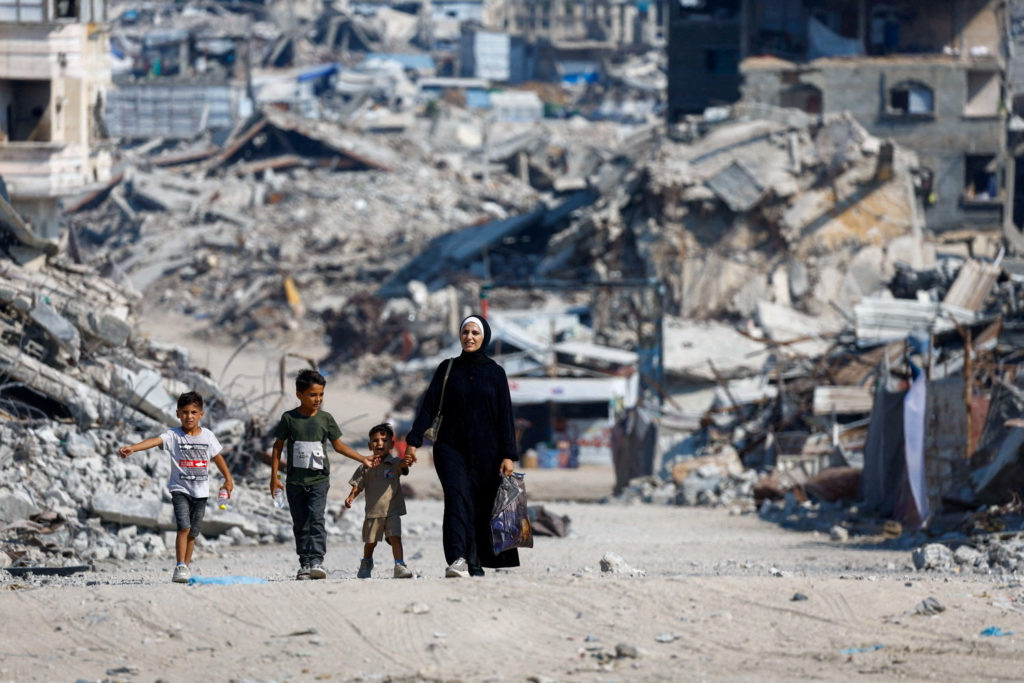
Families search for missing relatives amid Gaza conflict with over 8000 people unaccounted for. — Source: bbc
Rising Death Toll and Missing Persons
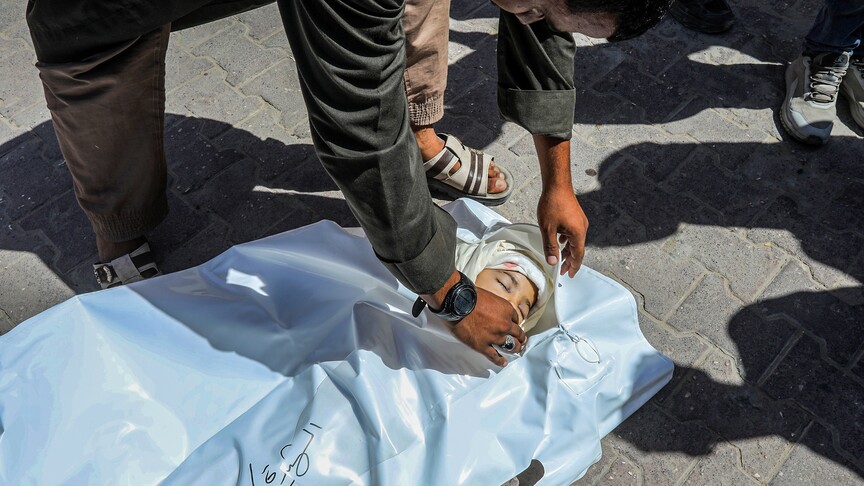
More than 73,000 people have been killed in Gaza since Israel launched its military campaign, including about 1,200 since a ceasefire was announced last October, according to the territory's Hamas-run health ministry. [2] The true death toll could be significantly higher because the ministry's count does not include bodies buried under rubble; the Gaza Civil Defence estimates more than 8,000 missing, while the Red Cross has received over 5,000 tracing requests. [2] Bodies are being discovered on a daily basis. [2] Earlier this month, a mass funeral took place in Gaza City for more than a hundred people killed in an Israeli attack in 2023. [2] Their remains were only recently recovered and identified, allowing them to be laid to rest. [2] The Red Cross says recovering bodies is difficult given the scale of the destruction and a lack of bulldozers. [2]
Families Searching for the Missing
Families continue searching for missing relatives who may be dead under rubble or held in Israeli detention without charge. [2] Ahmed al Madhoun, who has Down's syndrome, has been missing since May 2025. [2] From her partially destroyed home in Gaza City, his mother Majdiya shows videos of him on her phone. [2] "Everyone was his friend," Majdiya tells the BBC. [2] "He was loved wherever he went, and he always had a smile on his face." [2] But Ahmed is missing after disappearing in May 2025 after popping to the local shop. [2] Majdiya al Madhoun has been searching for her son for more than a year. [2] Aida al Drimli from the Sabra district of Gaza City shows a picture of her son, Mahmoud, who disappeared in 2024. [2] "He was a calm well-mannered young man," Aida says. [2] "He loved everyone and everyone loved him." [2] A photo emerged on social media showing two Israeli soldiers posing with a Palestinian detainee, blindfolded and bound, and Aida is certain it's Mahmoud. [2]
Expansion of Israeli Restricted Areas
Since the ceasefire, Israel has retained military positions inside Gaza and the 'Yellow Line' of restricted areas has gradually shifted, reaching 64.9 percent of the Gaza Strip per OCHA data, including agricultural land, populated zones, water facilities and humanitarian infrastructure. [4] In June, OCHA reported that areas subject to heightened Israeli restrictions had reached approximately 64.9% of the Gaza Strip, amid further movements of the line and indications of an Israeli push to extend the area to roughly 70%. [4] The restricted areas included agricultural land, populated areas, water and sanitation facilities, and humanitarian infrastructure. [4] The figure of 64.9% does not mean that Israeli forces maintain a permanent military presence in every square meter of that territory. [4] The second phase of the agreement—intended to pave the way for security and political arrangements, Israeli withdrawal, civilian administration, and reconstruction—remains stalled amid disagreements over Hamas’s disarmament and the conditions for Israeli withdrawal. [4]

UNRWA map shows expanded Israeli control over 65 percent of Gaza since October 2025 ceasefire. — Source: reliefweb
Detentions and Lack of Notification
Around 1,300 Gaza detainees are held in Israeli jails without trial per the Israeli rights group HaMoked, with families often not notified of arrests. [2] As of this month, around 1,300 detainees from Gaza were being held in Israeli jails without charge or trial, according to the Israeli human rights group HaMoked. [2] The group says these figures do not include Gaza detainees held directly by the Israeli military. [2] Palestinian families have frequently not been notified by Israel of the arrest or whereabouts of their relatives, according to HaMoked and other rights groups. [2] The BBC has asked the IDF and Israel Prison Service (IPS) about their reported failure to contact relatives of those they have detained. [2] Israeli authorities have previously said prolonged detentions were due to wartime security grounds and rejected claims that detentions are arbitrary. [2] The Al Drimli family has asked the Red Cross to try to find out if Mahmoud has been detained. [2] But Israel does not allow the Red Cross access to its prison records. [2] Tal Steiner, an Israeli lawyer who works to locate Palestinians who may have been detained by Israel, told the BBC "Oct 7th changed everything". [2]
Humanitarian and Operational Challenges
UNRWA and other humanitarian actors continue to face mounting operational challenges that are affecting the delivery of essential services across Gaza. [3] The prolonged shortage of lubricant oil and other critical supplies has compounded difficulties for aid groups operating in the Gaza Strip and the occupied West Bank. [3] All information in the latest UNRWA Situation Report is updated for 29 July - 11 August 2026. [3]
What to watch next: the second phase of the agreement remains stalled amid disagreements over Hamas’s disarmament and the conditions for Israeli withdrawal, while the map on the ground continues to shift with restricted areas expanding.